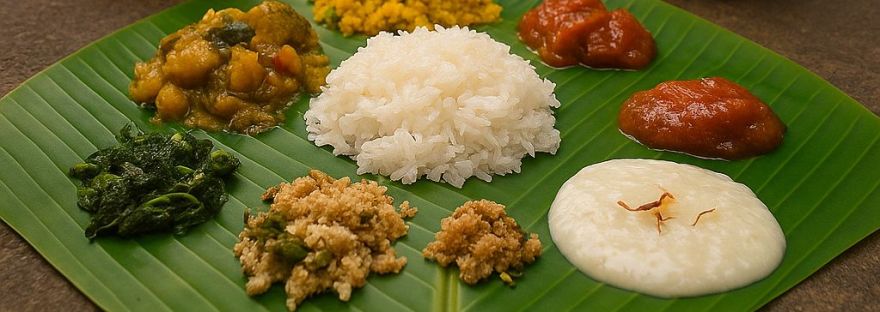
A Sacred Meal, A Living Tradition
There are meals that fill your stomach and then there are meals that fill your soul.
For every Odia, Abadha is not just food; it’s faith served on a banana leaf.
If you walk into Puri’s Jagannath Temple around midday, you’ll hear temple bells echoing, smell the faint sweetness of ghee, and see clouds of steam rising from hundreds of earthen pots bubbling away in sacred kitchens.
This is the Rosha Ghara the world’s largest sacred kitchen, where over 500 cooks (Suaras) prepare the Mahaprasad of Lord Jagannath every single day.
And at the heart of it all is Abadha a complete meal representing harmony, purity, and divine balance.
The first time I ate Abadha in Puri, I was a child sitting cross-legged with my mother on the cool temple floor. The brass ladle gleamed as the temple volunteer served one dish after another steaming Khechudi, fragrant Dalma, golden Kanika, tangy Khatta, earthy Saga, and a small dollop of creamy Kheeri. The food was simple, but something about it felt transcendental.
That first bite of Khechudi with ghee mild, humble, yet satisfying tasted like peace itself.
The Philosophy Behind Abadha
Abadha represents the philosophy of Jagannath inclusiveness and equality.
It is offered first to the Trinity Lord Jagannath, Lord Balabhadra, and Devi Subhadra and then shared with everyone, regardless of caste, creed, or wealth.
Once it’s offered, it becomes Mahaprasad blessed food that carries divine energy.
It’s believed that every element in Abadha is symbolic:
Rice – purity and stability
Dalma – nourishment and humility
Khatta – balance between sweetness and tang
Kanika – prosperity and festivity
Kheer – ultimate bliss
Together, they represent the essence of life balance, harmony, and surrender.
The Sacred Kitchen – Rosha Ghara
The temple’s kitchen is said to be 5,000 years old, spread across multiple chambers with 752 wood-fired clay hearths called chulhas.
All cooking is done in earthen pots, stacked one above the other sometimes up to nine levels high.
Here lies the miracle:
Though the fire burns from below, the pot at the top cooks first, followed by the ones beneath it a mystery that defies logic and is considered divine.
Each cook (Suara) follows ritual purity rules, bathing before entering the kitchen and chanting mantras as they stir the pots.
No onion, garlic, or processed ingredients are ever used. Only natural, seasonal vegetables, desi ghee, and temple-grown rice fill the sacred air.
The aroma of burning wood, roasted cumin, and steaming rice lingers like incense.
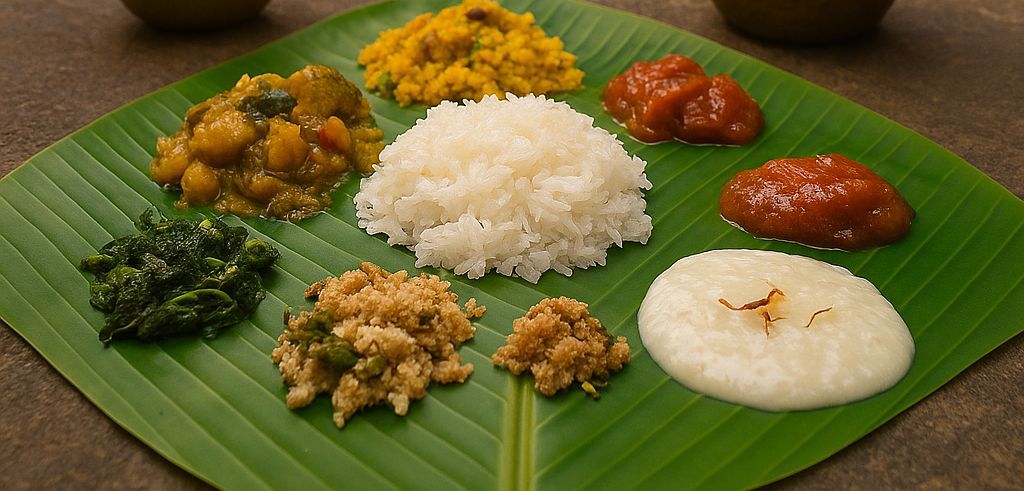
The Components of Abadha Thali
While the temple’s Chhappan Bhog (56 offerings) is vast, a home-style Abadha Thali generally includes:
1. Khechudi (Rice & Moong Dal Khichdi) – soft, buttery, temple-style khichdi made with ghee and turmeric.
2. Dalma – the soul of Odia cuisine; lentils and vegetables cooked together with ghee and cumin.
3. Kanika – sweet, fragrant ghee rice with cardamom, raisins, and cashews.
4. Khatta – tangy-sweet relish made from ou (elephant apple), raw mango, or tomato with jaggery and mustard.
5. Saga Bhaja – sautéed leafy greens (like amaranth or spinach) with mustard seeds.
6. Badi Chura – crushed lentil dumplings mixed with mustard oil, green chili, and salt.
7. Dahi Pakhala – fermented rice water with curd, salt, and chili for cooling.
8. Kheeri (Rice Kheer) – thick, creamy pudding made with milk, ghee, and jaggery.
Each dish complements the other — light and heavy, sweet and savory, mild and sharp — much like life itself.
Preparing Abadha at Home (4 Servings)
Below is a simplified, home-style Abadha recipe that captures the spirit of temple food while being practical for everyday kitchens.
1. Khechudi (Temple-Style Khichdi)
Ingredients:
1 cup rice
½ cup moong dal
2 tbsp ghee
½ tsp turmeric
1 tsp cumin seeds
Salt to taste
Method:
1. Dry roast moong dal until aromatic.
2. Add rice, turmeric, and 3 cups water. Cook till soft and mushy.
3. Temper with ghee and cumin seeds before serving.
2. Dalma (Lentil and Vegetable Curry)
Ingredients:
1 cup arhar dal
2 cups mixed vegetables (pumpkin, brinjal, papaya, raw banana, drumstick)
1 tsp cumin powder
1 tsp grated ginger
2 tbsp ghee
Salt to taste
Method:
1. Pressure cook dal and vegetables with turmeric and salt.
2. In ghee, roast cumin seeds and red chilies.
3. Add to dal mixture and simmer for 10 minutes.
4. Finish with grated coconut and ghee.
3. Kanika (Sweet Ghee Rice)
Ingredients:
1 cup basmati rice
2 tbsp ghee
¼ cup sugar or grated jaggery
2 tbsp chopped dry fruits
½ tsp cardamom powder
Method:
1. Heat ghee, fry dry fruits till golden.
2. Add soaked rice and stir for 2 minutes.
3. Add sugar and water (1.5 cups).
4. Cook covered until fragrant and fluffy.
4. Khatta (Sweet-Tangy Chutney)
Ingredients:
1 cup raw mango or tomato (chopped)
2 tbsp jaggery
1 tsp mustard seeds
1 tsp oil, salt, and pinch of turmeric
Method:
1. Heat oil, add mustard seeds and turmeric.
2. Add mango/tomato and cook till soft.
3. Add jaggery and simmer until thick and glossy.
5. Saga Bhaja
Ingredients:
2 cups amaranth or spinach leaves (chopped)
1 tsp mustard seeds
1 tsp oil, pinch of salt
Method:
1. Heat oil, add mustard seeds.
2. Add greens and stir-fry till just wilted.
6. Kheeri (Temple-Style Rice Kheer)
Ingredients:
1 liter full-fat milk
¼ cup rice
¼ cup jaggery or sugar
2 tbsp ghee
½ tsp cardamom powder
Method:
1. Boil milk and add soaked rice.
2. Simmer till thick and creamy.
3. Add jaggery, ghee, and cardamom.
4. Serve warm or chilled.
Serving the Abadha Thali
Traditionally, Abadha is served on fresh banana leaves in a specific sequence
Rice in the center,
Dalma on the right,
Khatta and Besara at the top,
Kheeri at the bottom right,
And Saga or Badi Chura to the left.
Every serving begins with a prayer —
“Anna Brahma, Jala Vishnu, Agni Rudra, Vasundhara Lakshmi” —
meaning Food is God, Water is Vishnu, Fire is Shiva, and Earth is Goddess Lakshmi.
The first morsel is offered mentally to Lord Jagannath before eating.
Expert Tips for Authentic Taste
Use earthen or brass cookware for the best aroma.
Cook on slow flame temple food is never rushed.
No onion or garlic satvik simplicity is key.
Add freshly grated coconut to dalma and saga bhaja for richness.
Use pure cow ghee it’s both flavor and offering.
Abadha – A Symbol of Equality
What makes Abadha truly special is not its taste, but its philosophy.
In Puri, everyone from priests to pilgrims, from royals to farmers sits in one row and eats the same food. No differences, no hierarchies, no ego.
That’s the magic of Mahaprasad.
It unites everyone under one truth that we are all children of the same divine kitchen.
Closing Note
Every time I prepare Abadha, my kitchen feels like a temple. The sound of boiling rice, the soft crackle of cumin, and the smell of ghee remind me that cooking can be a form of prayer.
Abadha teaches us patience, humility, and gratitude the three flavors life is made of.
So, if you ever crave peace, don’t look far.
Light a diya, spread a banana leaf, cook a simple meal of rice, dalma, and kheer and eat slowly, reverently, joyfully.
Because Abadha isn’t just food it’s Odisha’s soul served with devotion.

 The Pinch of Masala