satvik food

Kosambari – Traditional Moong Dal Salad from Karnataka

A Memory from Festival Mornings

Every Ugadi morning in our home began with the scent of jasmine flowers, fresh mango leaves adorning the doorway, and the rhythmic clang of steel tumblers as everyone hurried through the morning pooja rituals. Amidst all this, one quiet dish always sat on the kitchen counter, waiting to be mixed Kosambari.

I remember my grandmother preparing it with her graceful calm while the rest of us were caught up in festive chaos. The yellow moong dal would be soaked early in the morning, perfectly timed to soften by lunch. She’d peel crisp cucumbers, grate snowy coconut, and chop tiny green chilies that looked so innocent but packed quite the punch.

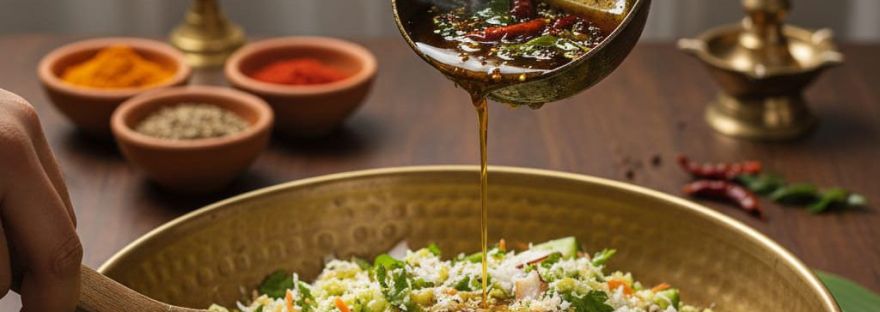
When she finally mixed everything together the tender lentils, crunchy cucumber, and coconut it wasn’t just a salad; it was a tradition in a bowl. And when the tempering hit the mixture, the mustard seeds crackled like firecrackers and the aroma filled the kitchen, signaling the start of the festive meal.

Even today, one bite of that cool, lightly seasoned salad takes me back to those temple lunches on banana leaves where Kosambari sat beside Payasam, Puliyogare, and Sagu balancing every spicy, rich flavor with its quiet simplicity.

Recipe Card

Servings: 3–4
Prep Time: 10 minutes
Cook Time: 0 minutes
Resting Time: 1 hour (for soaking moong dal)

Ingredients

For the Salad

½ cup split yellow moong dal (hesaru bele)

1 small cucumber, finely chopped

2 tablespoons fresh grated coconut

1–2 green chilies, finely chopped (adjust spice to taste)

1 tablespoon lemon juice (or more, depending on sourness)

2 tablespoons fresh coriander leaves, finely chopped

Salt, to taste


For Tempering (Optional but Traditional)

1 teaspoon ghee or oil

½ teaspoon mustard seeds

1 pinch asafoetida (hing)

5–6 curry leaves

Step-by-Step Instructions

1. Soak the Moong Dal

Rinse the moong dal 2–3 times until the water runs clear.
Soak it in a cup of water for about 1–2 hours, until the lentils turn slightly soft but retain their shape.
Drain completely using a sieve and keep aside.
(Tip: Don’t over-soak the lentils should have a bite, not become mushy.)


2. Prepare the Salad Base

In a large mixing bowl, combine the soaked dal, chopped cucumber, grated coconut, green chilies, lemon juice, and salt.
Mix everything gently with a spoon until well combined.
Add freshly chopped coriander for that bright, herbal touch.


3. Make the Tempering (Optional but Traditional)

In a small pan, heat ghee (or oil).
Add mustard seeds and let them splutter.
Then add hing and curry leaves, and fry for a few seconds until aromatic.
Pour this sizzling tempering over the salad mixture.

The moment it touches the bowl, you’ll hear a soft hiss that’s when you know the magic is happening. Stir lightly to coat everything evenly.


4. Chill and Serve

Kosambari tastes best slightly chilled or at room temperature.
Let it rest for 10–15 minutes before serving, so the flavors from the tempering, lemon, and coconut meld beautifully.

Serve it in a small bowl or banana leaf cup (donne) alongside your festive meals or enjoy it solo as a light, protein-rich snack.

Expert Tips for Authentic Flavor

Soaking Time: The ideal texture of the moong dal is soft yet firm. Soak for about 1–2 hours not more. Over-soaking makes it mushy and ruins the crunch.

Fresh Ingredients Matter: Always use fresh coconut and tender cucumbers. The combination gives the salad its signature lightness and fragrance.

Temple-Style Version: Skip the onions or garlic entirely. Use ghee instead of oil for the tempering to capture the satvik temple flavor.

For a Twist: You can add grated carrot, finely chopped raw mango (for tanginess), or pomegranate seeds (for sweetness and color).

Serving Tip: Kosambari is best served immediately after mixing. If making ahead, keep the soaked dal and chopped veggies separate and mix just before serving.

Pairing Suggestion: Serve it alongside South Indian festive dishes like Puliyogare, Chitranna, or Bisi Bele Bath for a complete Karnataka-style thali.

Closing Note

Every family has that one recipe that feels like sunshine in a bowl for me, Kosambari is exactly that.
It’s humble, refreshing, and quietly nourishing. In a world where food often feels complicated, this simple salad reminds us that true comfort lies in simplicity in the rhythm of soaking lentils, the crunch of cucumber, and the scent of tempering drifting through a festive home.

When I make Kosambari today, I still serve it the way my grandmother did in a small steel bowl, with a drizzle of ghee and a smile that says, “Eat slow, this is how traditions taste.” 💛
Lunch & Dinner

🌾 Masala Oats Khichdi – Light, Comforting & Wholesome

A Bowl of Warmth on a Busy Day

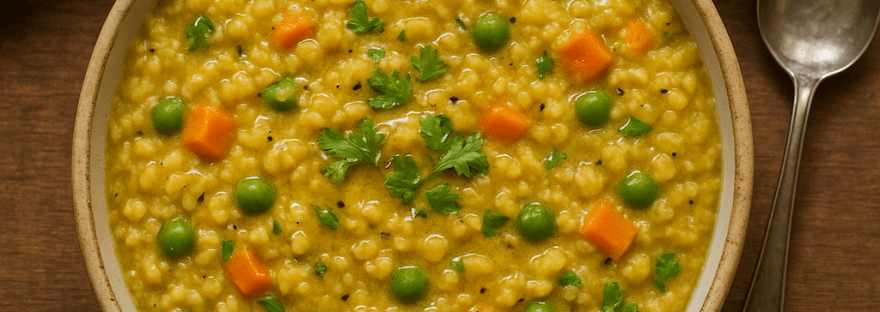
There are days when I need a meal that hugs from the inside — comforting, light on the stomach, yet nourishing. On those days, Masala Oats Khichdi is my go-to.

I first made it on a rainy afternoon when I had just oats and leftover moong dal in the kitchen. No elaborate prep, no fancy ingredients. Just simple things coming together in a pressure cooker. The first bite — warm, slightly spiced, with the goodness of vegetables — reminded me of the khichdi my mother made, only lighter and faster.

Since then, it has become a weekly staple. Especially during detox days or when I want to eat clean without compromising on taste.


🌿 Ingredients (Serves 2–3)

½ cup yellow moong dal (split)

½ cup quick oats

1 tablespoon ghee or oil

1 teaspoon cumin seeds

1 pinch of hing (asafoetida)

1 green chili (chopped)

1 small onion (finely chopped)

1 tomato (chopped)

½ cup chopped carrots

½ cup green peas

¼ teaspoon turmeric powder

½ teaspoon coriander powder

Salt to taste

3 cups water

Fresh coriander leaves (for garnish)

Optional: 1 teaspoon ginger-garlic paste


🔪 Method

Pressure Cooker Method (Fastest):

1. Wash and soak the moong dal for 10–15 mins (optional for quicker cooking).


2. Heat ghee in a pressure cooker. Add cumin seeds and let them splutter. Add a pinch of hing.


3. Sauté green chili, onion, and ginger-garlic paste (if using) for 2–3 mins.


4. Add tomatoes, turmeric, and coriander powder. Cook until tomatoes turn soft.


5. Add chopped carrots and peas. Sauté for a minute.


6. Add moong dal and 3 cups of water. Pressure cook for 2 whistles.


7. Open the cooker and stir in oats. Simmer for 4–5 minutes until thick and creamy.


8. Adjust salt. Finish with a spoon of ghee and chopped coriander.


Pan Method:

Follow the same process in a deep pan. Simmer the dal with lid on until soft, then add oats and continue as above. Add more water as needed.


🍽️ Serving Suggestion

Serve hot with a dollop of ghee, curd or raita, and papad on the side. A wedge of lemon or mango pickle adds brightness. For a diabetic-friendly version, skip the ghee or go light and add more vegetables.

Breakfast

Moonglet – The Viral Veg Omelette Without Eggs


Prep Time: 10 mins
Cook Time: 15 mins
Total Time: 25 mins
Serving: 2


About the Recipe

Moonglet is a fluffy, protein-rich, street-style dish made from soaked moong dal and veggies — often called the “vegetarian omelette.” It’s crispy on the outside, soft inside, and perfect for breakfast or light dinner. With no eggs or maida, it’s light, filling, and trending across food lovers online.

I stumbled upon this gem during lockdown while binge-watching food reels. What started as a curiosity soon became a staple — my family now asks for it almost every week!

Fluffy vegetarian moonglet omelette made with moong dal and mixed vegetables, served in a skillet.

Ingredients

1 cup moong dal (soaked 4–5 hrs or overnight)

1 green chili

½ inch ginger

¼ tsp turmeric

Salt to taste

A pinch of asafoetida (hing)

½ tsp baking soda (optional, for extra fluffiness)


Veggies (mix-in):

¼ cup chopped onions

¼ cup chopped tomatoes (deseeded)

¼ cup capsicum (any color)

2 tbsp chopped coriander leaves

Optional: grated carrot, beetroot, spinach


Other:

Oil or ghee for shallow frying

Chaat masala for sprinkling


Instructions

1. Prepare the Batter:

Drain soaked moong dal and blend with green chili, ginger, turmeric, salt, and a splash of water until smooth but thick (like dosa batter).

Just before cooking, add baking soda and mix lightly (optional).


2. Mix the Veggies:

Fold in onions, tomatoes, capsicum, and coriander into the batter.


3. Cook the Moonglet:

Heat 1 tsp oil in a small nonstick pan or iron tawa.

Pour a ladleful of batter and spread slightly thick (like a mini pizza).

Cover and cook on medium flame for 3–4 mins till golden at the bottom.

Flip gently and cook uncovered until both sides are golden.


4. Garnish & Serve:

Sprinkle chaat masala. Serve hot with mint chutney or tomato ketchup.

Craving more healthy breakfast ideas? Check out my Oats Khichdi and Ragi Paratha.


Tips & Variations

For extra crisp edges, use a well-seasoned iron pan.

Add cheese or paneer inside for a fusion twist.

Make mini versions as party starters or lunchbox ideas.


FAQs

Q: Can I store leftover batter?
A: Yes! Store in the fridge for 1 day. Stir before use and add soda fresh.

Q: Can I make this without soaking?
A: Quick tip — soak in hot water for 1 hour as a shortcut.