A Memory from Festival Mornings
Every Ugadi morning in our home began with the scent of jasmine flowers, fresh mango leaves adorning the doorway, and the rhythmic clang of steel tumblers as everyone hurried through the morning pooja rituals. Amidst all this, one quiet dish always sat on the kitchen counter, waiting to be mixed Kosambari.
I remember my grandmother preparing it with her graceful calm while the rest of us were caught up in festive chaos. The yellow moong dal would be soaked early in the morning, perfectly timed to soften by lunch. She’d peel crisp cucumbers, grate snowy coconut, and chop tiny green chilies that looked so innocent but packed quite the punch.
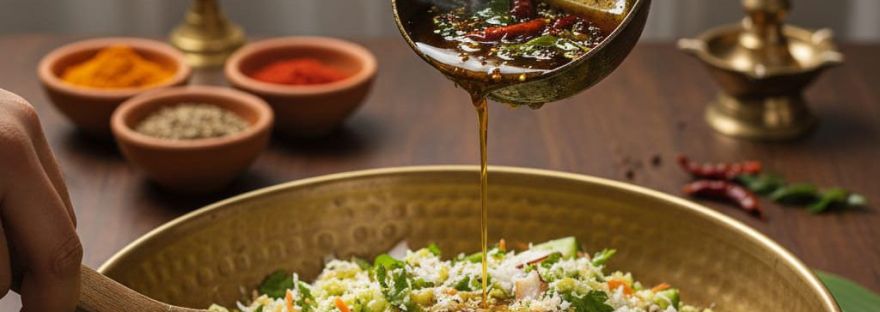
When she finally mixed everything together the tender lentils, crunchy cucumber, and coconut it wasn’t just a salad; it was a tradition in a bowl. And when the tempering hit the mixture, the mustard seeds crackled like firecrackers and the aroma filled the kitchen, signaling the start of the festive meal.
Even today, one bite of that cool, lightly seasoned salad takes me back to those temple lunches on banana leaves where Kosambari sat beside Payasam, Puliyogare, and Sagu balancing every spicy, rich flavor with its quiet simplicity.
Recipe Card
Servings: 3–4
Prep Time: 10 minutes
Cook Time: 0 minutes
Resting Time: 1 hour (for soaking moong dal)

Ingredients
For the Salad
½ cup split yellow moong dal (hesaru bele)
1 small cucumber, finely chopped
2 tablespoons fresh grated coconut
1–2 green chilies, finely chopped (adjust spice to taste)
1 tablespoon lemon juice (or more, depending on sourness)
2 tablespoons fresh coriander leaves, finely chopped
Salt, to taste
For Tempering (Optional but Traditional)
1 teaspoon ghee or oil
½ teaspoon mustard seeds
1 pinch asafoetida (hing)
5–6 curry leaves
Step-by-Step Instructions
1. Soak the Moong Dal
Rinse the moong dal 2–3 times until the water runs clear.
Soak it in a cup of water for about 1–2 hours, until the lentils turn slightly soft but retain their shape.
Drain completely using a sieve and keep aside.
(Tip: Don’t over-soak the lentils should have a bite, not become mushy.)
2. Prepare the Salad Base
In a large mixing bowl, combine the soaked dal, chopped cucumber, grated coconut, green chilies, lemon juice, and salt.
Mix everything gently with a spoon until well combined.
Add freshly chopped coriander for that bright, herbal touch.
3. Make the Tempering (Optional but Traditional)
In a small pan, heat ghee (or oil).
Add mustard seeds and let them splutter.
Then add hing and curry leaves, and fry for a few seconds until aromatic.
Pour this sizzling tempering over the salad mixture.
The moment it touches the bowl, you’ll hear a soft hiss that’s when you know the magic is happening. Stir lightly to coat everything evenly.
4. Chill and Serve
Kosambari tastes best slightly chilled or at room temperature.
Let it rest for 10–15 minutes before serving, so the flavors from the tempering, lemon, and coconut meld beautifully.
Serve it in a small bowl or banana leaf cup (donne) alongside your festive meals or enjoy it solo as a light, protein-rich snack.
Expert Tips for Authentic Flavor
Soaking Time: The ideal texture of the moong dal is soft yet firm. Soak for about 1–2 hours not more. Over-soaking makes it mushy and ruins the crunch.
Fresh Ingredients Matter: Always use fresh coconut and tender cucumbers. The combination gives the salad its signature lightness and fragrance.
Temple-Style Version: Skip the onions or garlic entirely. Use ghee instead of oil for the tempering to capture the satvik temple flavor.
For a Twist: You can add grated carrot, finely chopped raw mango (for tanginess), or pomegranate seeds (for sweetness and color).
Serving Tip: Kosambari is best served immediately after mixing. If making ahead, keep the soaked dal and chopped veggies separate and mix just before serving.
Pairing Suggestion: Serve it alongside South Indian festive dishes like Puliyogare, Chitranna, or Bisi Bele Bath for a complete Karnataka-style thali.
Closing Note
Every family has that one recipe that feels like sunshine in a bowl for me, Kosambari is exactly that.
It’s humble, refreshing, and quietly nourishing. In a world where food often feels complicated, this simple salad reminds us that true comfort lies in simplicity in the rhythm of soaking lentils, the crunch of cucumber, and the scent of tempering drifting through a festive home.
When I make Kosambari today, I still serve it the way my grandmother did in a small steel bowl, with a drizzle of ghee and a smile that says, “Eat slow, this is how traditions taste.” 💛
 The Pinch of Masala