Lunch & Dinner

Authentic Punjabi Aloo Gobi: Traditional Dry Sabzi Recipe

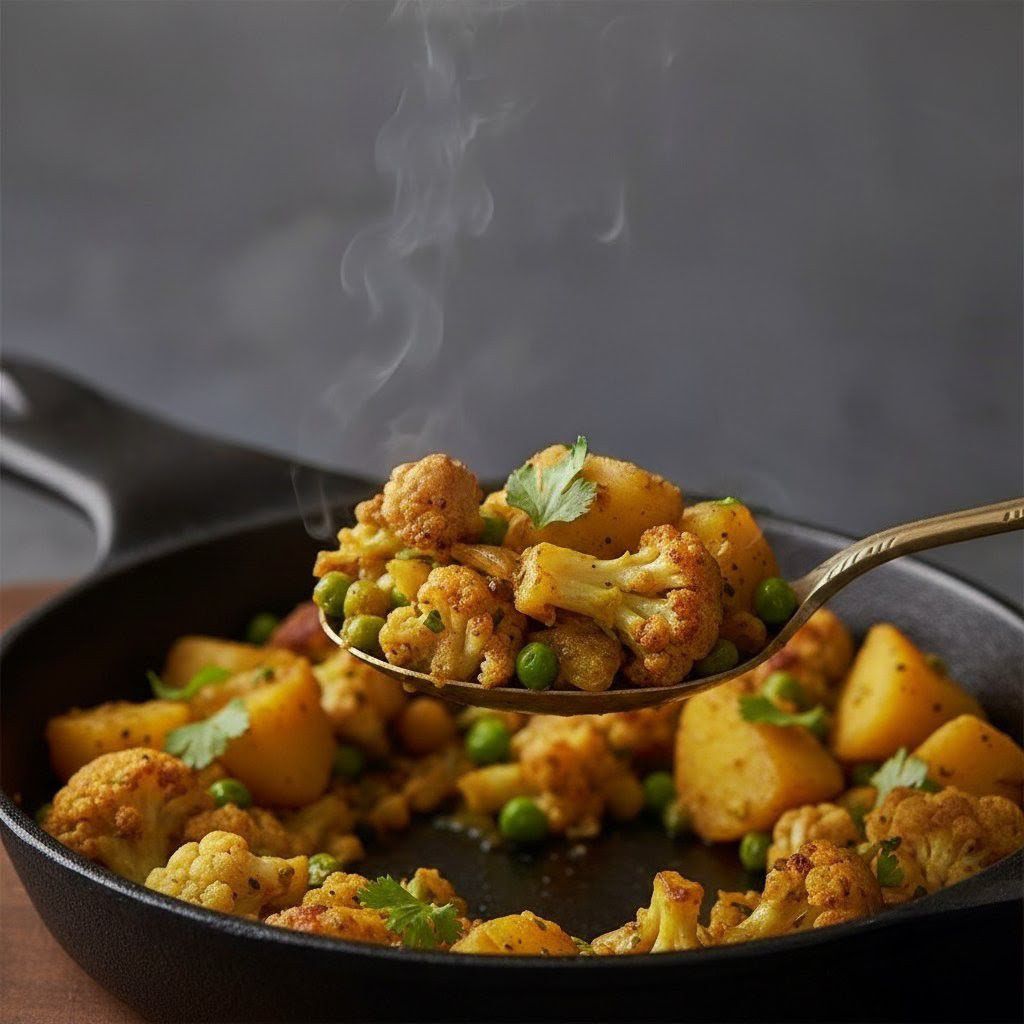
In our house, the definitive sound of a winter Saturday was the crisp thwack of a knife hitting a fresh head of cauliflower. While the recipe for Aloo Gobi (Potato and Cauliflower) was an heirloom from my grandmother, it was my mother who turned it into a masterclass of texture. She believed that a mushy cauliflower was a sign of a cook who didn’t respect the vegetable’s “spirit”.
I remember her sitting in the kitchen as the morning mist cleared, meticulously separating the cauliflower into even-sized florets. She never used a food processor; she believed your hands needed to feel the firmness of the vegetable to know how it would react to the fire. My mother viewed this dish as a “Parasocial Companion” a sturdy, dependable meal that had the power to make a simple Roti feel like a royal feast.
Today, at The Pinch of Masala, we are reclaiming the art of the “Dry Sauté.” We are moving away from the watery, grey mashes of the past and returning to the “Quiet Luxury” of a vibrant, charred-gold sabzi that honors every grain of spice.

The barrier to a perfect Aloo Gobi is the moisture. Cauliflower is approximately 92% water, which can easily turn your stir-fry into a mushy paste. To master the “Eternal Crunch,” follow my mother’s three non-negotiable rules:
The “Headstart” Rule: Potatoes and cauliflower cook at different speeds. My mother always sautéed the potato cubes in oil first for 5 minutes to give them a “seal” and a headstart before the delicate cauliflower florets entered the pan.
The “No-Water” Mandate: This is the ultimate “Digital Anthropologist” secret. Most people add a splash of water to cook the veggies, but my mother believed the steam trapped under a tight lid was all the moisture needed. Adding liquid water ruins the “Bhuna” (roasting) effect and makes the florets soggy.
The “Batch Sear”: To prevent overcrowding which leads to steaming instead of frying she would often fry the cauliflower florets separately until they were golden-spotted before mixing them with the masala base.

Prep time: 15 mins | Cook time: 25 mins | Servings: 4
Diet: Vegan, Gluten-Free | Cuisine: North Indian Heritage
Ingredients:

1 Medium Head Cauliflower (Gobi): Cut into medium-large florets.

2 Medium Potatoes (Aloo): Peeled and chopped into even cubes.

The Aromatics: 1 Large Onion (finely chopped), 1.5 tsp Ginger-Garlic paste, and 2 Green Chillies (slit).

The Base: 1 Ripe Tomato (finely chopped).

Fat: 3 tbsp Oil or Ghee.

The Spice Bloom: 1 tsp Cumin seeds (Jeera), 1 tsp Kasuri Methi (the secret to that restaurant aroma).

Powder Spices: 1 tsp Red Chili powder, ½ tsp Turmeric, 1 tsp Coriander powder, and 1 tsp Aamchur (Dry Mango Powder) for the essential tang.

The Finish: ½ tsp Garam Masala and a handful of fresh Coriander leaves.

Instructions:

The Prep: Rinse cauliflower in warm salted water to remove any impurities. Drain and pat dry completely.

The Golden Fry: Heat 2 tbsp oil in a heavy pan. Sauté cauliflower florets until golden brown edges appear. Remove and set aside. In the same pan, sauté potato cubes until they are 80% cooked and golden. Remove and set aside.

The Bloom: Add the remaining oil. Sizzle cumin seeds and kasuri methi until aromatic. Add onions and sauté until translucent.

The Masala Base: Add ginger-garlic paste and chillies. Sauté for a minute, then add the tomato and dry spices. Cook until the oil separates from the sides.

The Union: Carefully add the fried aloo and gobi back into the pan. Mix gently with a flat spatula to avoid breaking the florets.

The Slow Cook: Lower the heat to its absolute minimum. Cover with a tight-fitting lid and let the vegetables cook in their own steam for 8-10 minutes.

The Reveal: Check if the potatoes are fork-tender. Sprinkle garam masala and toss one last time on high heat for 60 seconds to “sear” the flavors in.

Serve: Garnish with fresh coriander. Serve hot with buttery Phulkas or as a side to Dal-Chawal.


The Stalk Stir-fry: In the 2026 “Use-Up” economy, we value every part of the plant. Do not throw away the thick cauliflower stalks! Peel the tough outer layer, dice the tender inner core, and sauté them with mustard seeds and turmeric for a crunchy, high-fiber side dish the next day.
Lunch & Dinner

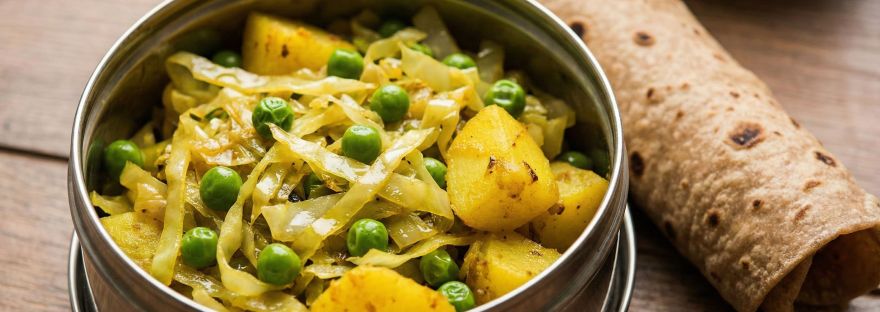
Aloo Patta Gobhi Matar: The Unsung Hero of the Indian Winter Lunch

Introduction
Let’s be honest Cabbage (Patta Gobhi) often gets a bad reputation. It’s seen as “boring hostel food” or that watery vegetable you eat only when there is nothing else in the fridge.
But if you ask any North Indian mother, she will tell you that a well-made Patta Gobhi Ki Sabzi is a masterpiece of texture. It shouldn’t be a soggy mash; it should be a vibrant stir-fry where the potatoes are soft as butter, the peas pop in your mouth, and the cabbage retains a slight “bite” and sweetness.
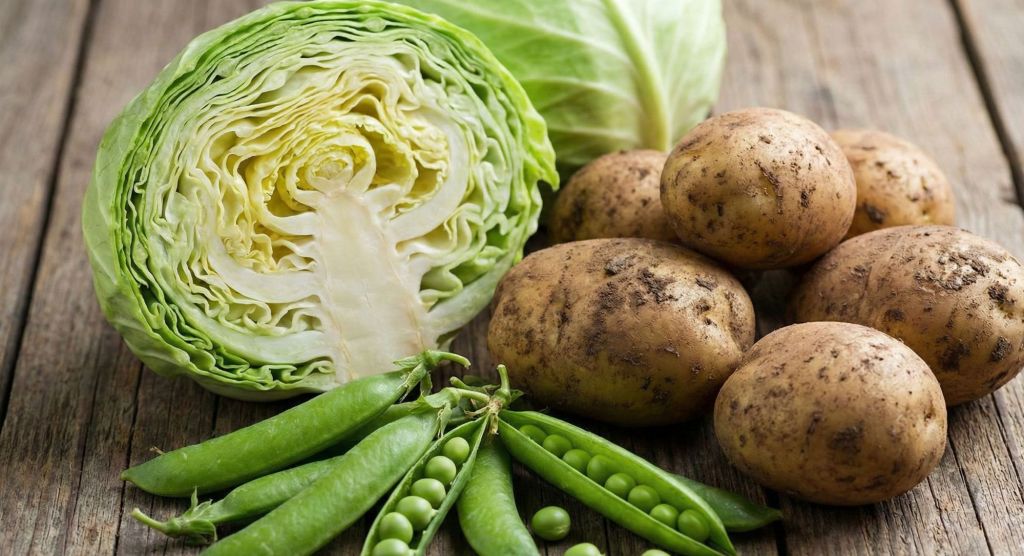
This recipe is the classic “Winter Tiffin” version. We are using the seasonal trio: Cabbage, New Potatoes (Naya Aloo), and Fresh Green Peas. There is no onion or garlic in this traditional version (often called Satvik style), allowing the natural sweetness of the veggies to shine through the spices.
The “Crunch” Secret
Why does restaurant cabbage stay crunchy while homemade cabbage gets watery?
The Cut: Don’t use a food processor. Hand-shredding the cabbage into long, thin ribbons ensures it cooks evenly without turning into a paste.
Salt Timing: This is the most crucial tip. Do not add salt at the beginning. Salt draws out moisture, making the cabbage soggy. We add salt only towards the end of the cooking process.
The Recipe Card
Prep time: 15 mins | Cook time: 20 mins | Servings: 3-4

Ingredients:
500g Cabbage: Shredded (remove the hard core/stalk).
2 Medium Potatoes: Peeled and cut into 1-inch cubes.
½ Cup Green Peas: Fresh (winter peas) are best, but frozen works too.
1 inch Ginger: Finely chopped (the main aromatic).
2 Green Chilies: Slit lengthwise.
2 tbsp Mustard Oil: For that authentic pungent kick (or any vegetable oil).
Spices: 1 tsp Cumin Seeds (Jeera), ½ tsp Turmeric (Haldi), 1 tsp Coriander Powder (Dhaniya), ½ tsp Red Chili Powder, ½ tsp Garam Masala, ½ tsp Amchur (Dry Mango Powder).
Fresh Coriander: Lots of it for garnish.
Instructions:
The Potato Fry: Heat the mustard oil in a heavy-bottomed pan (Kadhai) until it smokes gently. Lower the heat. Add cumin seeds and let them crackle. Add the chopped potatoes and sauté them on medium heat for 5-7 minutes. We want the potatoes to get a golden crust and be 80% cooked before the cabbage goes in.
The Aromatics: Add the chopped ginger, green chilies, and green peas. Sauté for another 2 minutes until the raw smell of ginger disappears.
The Cabbage Entry: Add the shredded cabbage. Increase the flame to high for 2 minutes and toss everything vigorously. This “sears” the cabbage.
The Spice Mix: Lower the heat. Add turmeric, coriander powder, and red chili powder. Mix well. Do NOT cover the pan. Covering it creates steam and makes the cabbage soggy. Let it cook open for 5-7 minutes, stirring occasionally.
The Final Seasoning: Once the potatoes are fully soft and the cabbage has shrunk but still looks vibrant, add Salt, Amchur, and Garam Masala.
The “Bhuna” Finish: Crank the heat up again for the last 1 minute to dry out any remaining moisture. Stir well.
Serve: Turn off the heat and mix in a generous handful of fresh coriander. Serve hot with Parathas and Dal.


The “Pinch of Thrift” Tip (Zero Waste)
The “Gobhi Paratha” Hack: Leftover cabbage sabzi is arguably better than fresh sabzi because the flavors have matured.
How to use: Mash the leftover sabzi with a fork (squash the potato chunks). Stuff this mixture inside whole wheat dough to make Stuffed Gobhi Parathas for breakfast. You don’t even need extra spices the filling is already seasoned!

satvik food

Winter Dalma: A Heartwarming Odia Lentil Curry

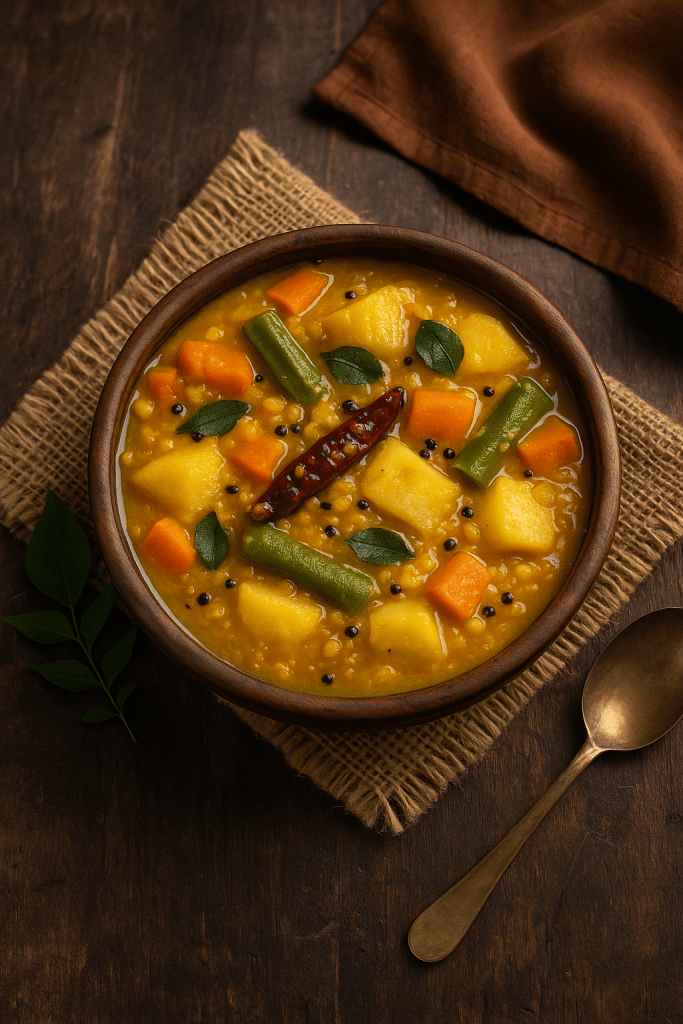
The cold months in Odisha bring a bounty of vegetables. Local haats overflow with cauliflower heads, pumpkins, raw bananas and tubers, as one blogger marvels at *“the most glorious winter produce on display. Greens dominated the scene with generous pools of white. Reds, pinks and purples stood out conspicuously…”*. Every Odia kitchen begins to crave comfort foods. Among them, Dalma – a spiced lentil-and-vegetable stew – is king. It’s a dish steeped in tradition and warmth: *“a traditional dish from Odisha…known for its wholesome combination of lentils and vegetables”*. Before tucking in, families often whisper the old prayer “Anna Brahma… Vasundhara Lakshmi” – acknowledging food as divine. In fact, Dalma is so revered that Puri’s Jagannath temple serves it daily as Mahaprasad. On chilly nights, a pot of this ghee-scented stew is as welcome as a warm blanket, filling the home with nostalgia and devotion.

In this cozy bowl of Winter Dalma, steamed rice is ready to receive the curry. Our recipe starts with arhar dal (toor dal) simmered soft with seasonal veggies. For example, one recipe suggests adding chopped pumpkin, potato, tomato and raw banana – you can also stir in cauliflower florets, green beans, carrots or drumsticks as available. After the dal is cooked, we make a fragrant tempering: heat ghee (or mustard oil) and crackle a teaspoon of each Panch Phoran seed (fenugreek, nigella, cumin, mustard, fennel) with dried red chilies. At home we always add minced garlic cloves at this stage for extra warmth (temple cooks omit garlic for purity). The sizzling spices go into the dal-pot, giving the Dalma its signature aroma. This humble ghee‑rich curry is deeply rooted in Odia life – it even figures on the Lord Jagannath Abadha (kitchen offerings) every day, a true symbol of Odisha’s rustic, devotional cuisine.

Ingredients

1 cup toor dal (arhar dal) – washed (you may soak it 20–30 minutes to shorten cooking).

Water – about 3 cups for cooking dal (plus additional for vegetables).

Seasonal vegetables, roughly chopped: e.g. 1 cup cauliflower florets, ½ cup diced pumpkin, 1 raw banana (sliced), 1 medium potato (cubed), ½ cup green beans (cut into 2″ pieces). (Feel free to add carrot, yam, drumsticks or taro as available.)

1–2 tomatoes, chopped (optional – adds tang and color).

1 teaspoon turmeric and salt to taste.

3 tablespoons ghee (or mustard oil).

Garlic – 2–3 cloves, minced (omit for satvik version).

Panch Phoran mix – ½ teaspoon each of mustard seeds, cumin seeds, fenugreek seeds, nigella seeds (kalonji), and fennel seeds; or use 1 tsp each cumin and mustard seeds (jeera‑rai) if Panch Phoran isn’t on hand.

2 dried red chilies.

Pinch of asafoetida (hing) (optional, for aroma).

Fresh grated coconut (for temple-style variation).

Fresh cilantro (coriander), chopped (for garnish).


Method

1. Pressure-cook the dal: Drain the soaked dal. In a pressure cooker, combine the dal with 3 cups water, turmeric and a pinch of salt. Cook for 3–4 whistles (or until very soft). Allow the pressure to release naturally, then mash the dal lightly with the back of a spoon.


2. Cook the vegetables: While the dal cooks, heat 1 tbsp ghee in a pan and briefly sauté the firmer veggies. Add the pumpkin cubes, potato, raw banana, and any yam or root veggies; toss with a little salt and cook for 2–3 minutes. (This step ensures very hard veggies start to soften.) Transfer these into the dal along with another 1–2 cups of hot water. Add the remaining vegetables (beans, cauliflower, tomatoes) on top. Pressure-cook again for 1–2 whistles, or simmer in a covered pot until all veggies are just tender. (By adding delicate veggies later, you keep them from turning to mush.)


3. Prepare the tempering: In a small pan, warm the remaining 2 tbsp ghee. Add the Panch Phoran seeds (or cumin and mustard seeds) and let them sputter. Slip in the dried chilies and minced garlic, and a pinch of hing if using. Fry gently until the garlic is golden and everything smells fragrant.


4. Combine and simmer: Pour the hot tempering into the dal-vegetable stew. Stir well. Check seasoning and salt. Let the curry simmer on low for 3–5 minutes so the flavors marry. If using coconut (see variation below), stir it in now. The Dalma should be stew-like – add a little extra hot water if it seems too thick. (If it’s too thin, simply simmer uncovered a few minutes to reduce it.)


5. Finish with aromatics: Turn off the heat. Adjust salt and consistency. Swirl in a teaspoon of ghee and garnish with chopped cilantro (and a sprinkle of grated coconut for extra richness, if you like).


Temple-Style Satvik Dalma (No Onion/Garlic)

For a pure satvik or temple version, skip garlic entirely. The Dalma is cooked slowly in an earthen pot or heavy-bottomed pan. In place of the usual tempering, you simply stir in fresh grated coconut at the end along with the ghee. Pinch of Masala notes that temple Dalma is “slow-cooked… No onion or garlic — satvik simplicity is key” and that one should “add freshly grated coconut to dalma… for richness”. The result is a light, creamy curry laced with coconut’s sweetness – solemn and sacred, perfect for puja offerings or fast days.

Tips for Perfect Dalma

Adjust the consistency: Dalma thickens as it cools. If it’s too watery, simmer a little longer uncovered to reduce it; if it’s too stiff, add hot water when reheating. A well-balanced Dalma should coat the vegetables but still be slightly runny. Simmering uncovered will thicken it up, while a splash of boiling water thins it out.

Stagger the veggies: Add hardy vegetables (yam, pumpkin, potato) first, then tender ones (beans, tomatoes, greens) later. This way nothing overcooks – “vegetables should be tender but not mushy”. (For example, add spinach or mustard greens right at the end off the heat, so they wilt but keep color.)

Balance the flavors: Taste before the final simmer. You can brighten it with a squeeze of lemon or a dash of jaggery if you like, but traditional Dalma needs little else besides salt and turmeric. Finish with a flourish of ghee or grated coconut for luxury.

Reheating: Leftovers get thicker in the fridge. Warm Dalma slowly on the stove with a splash of water. Stir occasionally; the dal will loosen up and the spices mellow. Stored in an airtight container, Dalma keeps well for 2–3 days.

Authentic aroma: For the most “temple-like” aroma, cook on a gentle flame and, if possible, in an earthen or cast-iron pot. Use pure cow’s ghee (it’s considered an offering in itself) and never rush the cooking.


Serving Suggestions: The Odia Thali

Winter Dalma is best enjoyed with steaming rice (or pakhala, fermented rice) to soak up its juices. Round out the meal with crunchy, tangy sides. In Odisha, it’s common to serve rice and Dalma with bādi chura (a mix of crushed sun-dried lentil dumplings mixed with onions and chilies) and sāga bhajā (stir-fried leafy greens). These provide a textural contrast – the crisp, spicy badi chura and sautéed greens balance the creamy Dalma. A simple aloo chakata (spiced mashed potatoes) and a zesty pickle on the side are traditional favorites, too. Together, they recreate the festive, comforting vibe of an Odia winter feast: hearty, wholesome, and served with heartfelt devotion.