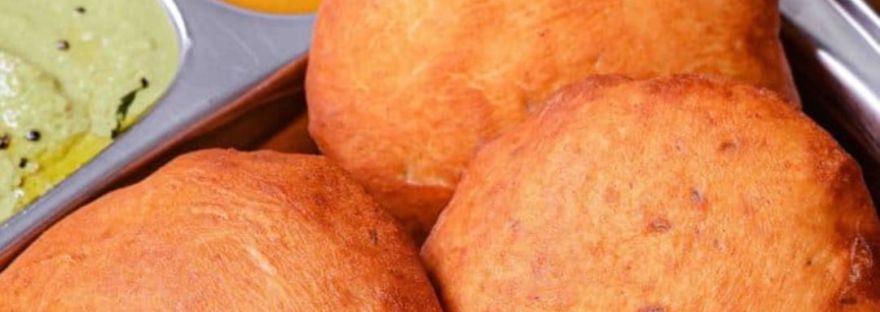
I still remember the first time I tasted Mangalore buns at a seaside café in Udupi during a sunny summer morning. We had been exploring the old temples and my stomach growled as soon as the sweet smell of banana mixed with frying oil wafted through the air. Sitting on a wooden bench by the coast, I bit into a warm, puffed bun – crispy on the outside and fluffy inside, with a gentle sweetness and a faint hint of spice. It felt like biting into a soft banana cake hidden inside a puri. Those golden-brown buns quickly became a favorite memory of my coastal travels, and I’ve been craving to recreate that homely snack ever since.
Servings
Makes about 12 buns (serves 4–6)
Prep Time
15 minutes (plus 4–6 hours resting time)
Cook Time
15 minutes

Ingredients
2 ripe bananas (preferably with brown spots), mashed
2½ cups all-purpose flour (maida) – or use whole wheat atta for a healthier twist (texture will change)
¼ cup plain yogurt (curd), at room temperature
3 tablespoons sugar (adjust to taste, depending on banana sweetness)
1 teaspoon cumin seeds (jeera)
½ teaspoon baking soda (soda bicarbonate)
½ teaspoon salt (or to taste)
Oil, for deep frying
Instructions
1. Mash the bananas: In a large mixing bowl, mash the ripe bananas thoroughly with a fork. (Avoid using a blender; hand-mashing preserves texture.)
2. Mix wet ingredients: Stir in the yogurt, sugar, and a pinch of salt into the mashed banana until smooth. The mixture will be runny – that’s okay.
3. Combine dry ingredients: In a separate bowl, whisk together the flour, cumin seeds, and baking soda.
4. Form the dough: Add the dry flour mixture to the banana mixture. Gently combine and knead into a smooth, non-sticky dough. If it’s too dry, add a little more yogurt or water. If too sticky, sprinkle a bit more flour. (The dough should be softer than chapati dough.)
5. Rest the dough: Lightly grease the dough with a teaspoon of oil or ghee and cover with a damp cloth. Let it rest in a warm place for at least 4–6 hours (or overnight). This resting time (fermentation) is crucial – it makes the buns puff up and gives them a chewy, bread-like texture.
6. Shape the buns: After resting, knead the dough a couple of times. Divide it into 10–12 equal parts and roll each into a smooth ball. Dust each ball lightly with flour and roll it out on a floured surface into a circle about 4–5 inches in diameter (slightly thicker than a regular puri, about 1/4 inch thick). Thicker rolls ensure the buns puff up nicely without tearing.
7. Heat the oil: Pour enough oil into a deep pan to submerge a bun. Heat it over medium heat. To test, drop a small piece of dough: if it sizzles and rises steadily, the oil is ready.
8. Fry the buns: Carefully slide one rolled dough circle into the hot oil. Gently press it down with a slotted spoon; it should puff up. Fry each side for about 30–60 seconds or until golden brown. Keep the flame at medium-low so the insides cook through without burning the exterior. Remove and drain on paper towels. Repeat with remaining dough.
9. Serve hot: Serve the Mangalore buns immediately while warm. They go wonderfully with coconut chutney, a lentil curry (sagu), or simply with a cup of hot masala chai. These banana buns are equally comforting plain, as their natural sweetness shines through.
Tips
Use very ripe bananas: Overripe bananas (with black spots) give the best flavor and sweetness. The natural sugars help in fermentation too.
Allow proper resting: Don’t skip the long rest. Fermenting the dough for ~6–8 hours (or overnight) makes the buns soft and fluffy. In cold weather, place the covered dough in a slightly warm oven or microwave (turned off) to help rising.
Roll thickly: Roll the discs thicker than a regular puri. Very thin circles may stay dense; a thicker shape puffs up into a nice ball.
Check oil temperature: Keep the frying oil at medium heat. If too hot, the exterior browns quickly but the inside remains doughy. If too cool, the buns absorb oil. The right heat means a gradual, even golden color.
Enjoy warm or cooled: These buns are at their fluffiest when hot, but they remain soft and tasty even after cooling. If you have leftovers, reheat briefly on a skillet or serve at room temperature.
Closing Note
As you can see above, the homemade Mangalore buns turn out perfectly puffed and golden. Enjoy them fresh from the pan with spicy coconut chutney or a steaming cup of chai. Even when cooled, these banana puris stay soft and delicious. I hope this recipe brings a bit of coastal Karnataka to your kitchen – these sweet little buns are comfort food at its finest. Happy cooking and happy eating!
 The Pinch of Masala