Breakfast, Lunch & Dinner

Lachha Paratha – Flaky Layered Punjabi Flatbread

Introduction

Picture a lazy Sunday in a Punjabi household: the whole family gathers as the kitchen fills with the mouthwatering aroma of ghee. On the tawa (griddle), Lachha Parathas sizzle and puff up, promising a hearty treat. Lachha Paratha is a beloved North Indian flatbread (often dubbed a Punjabi bread) known for its crisp, flaky layers. In many Punjabi families, weekend meals or festive thalis (traditional feast platters) feel incomplete without a stack of these golden, multi-layered parathas at the center. The name “lachha” literally means layers (or rings), and indeed each paratha reveals concentric rings of dough when cooked, a testament to the unique folding technique that creates its signature flaky texture. It’s an all-time favorite comfort food, lovingly served during special breakfasts, family get-togethers, and celebratory dinners alike. One bite into a warm lachha paratha – with those ghee-brushed layers melting in your mouth – and you’ll understand why this bread holds a special place in Punjabi cuisine.

Lachha Parathas are traditionally cooked on a hot griddle with ghee until they turn flaky and crisp, revealing their beautiful ring-like layers. These buttery flatbreads are best enjoyed fresh off the tawa with a dollop of ghee or butter melting on top for extra indulgence. Serve them immediately while hot to fully appreciate the tender layers and golden-brown crunch of each paratha.


Ingredients

To make Lachha Paratha at home, you’ll need just a few pantry staples:

Whole Wheat Flour (Atta) – 2 cups (the base for an authentic Punjabi lachha paratha)

Salt – 1 teaspoon (to taste)

Ghee or Oil – ~4 tablespoons (use ghee for genuine flavor and flakiness; some for the dough and more for cooking)

Water – ~¾ to 1 cup (for kneading a soft dough)


Optional: A tablespoon of all-purpose flour (maida) can be mixed into the wheat flour for extra softness, and a pinch of ajwain (carom seeds) can be added for aroma (this is optional, but some traditional recipes include it for a subtle flavor). You can also keep a little extra dry flour handy for dusting and a bit more ghee for layering and frying.

Step-by-Step Instructions

Follow these steps to prepare flaky, layered Lachha Parathas from scratch:

1. Make the Dough: In a mixing bowl, combine the whole wheat flour and salt. Drizzle 1 tablespoon of melted ghee (or oil) into the flour. Rub the ghee into the flour with your fingers until it’s well incorporated (this step makes the parathas soft and flavorful). Gradually add water, a little at a time, and mix until a shaggy dough forms. Knead the dough for about 5–8 minutes to make it smooth and pliable. The dough should be soft but not sticky. (Tip: A well-kneaded dough is key – kneading develops the gluten, making it easier to roll out thin layers.) Gather the dough into a ball, smear a tiny bit of ghee on its surface, and cover it with a damp cloth. Let it rest for 20–30 minutes. Resting relaxes the dough, making it easier to roll out later.


2. Divide and Shape Balls: After resting, give the dough a quick second knead. Divide it into equal portions – you should get about 6–8 medium dough balls from this quantity (for larger parathas, make 6). Roll each portion between your palms to make smooth balls. Keep the dough balls covered to prevent drying out.


3. Roll Out the Disc: Take one dough ball at a time. Dust your work surface and rolling pin lightly with dry flour. Flatten the ball and roll it out into a thin disc, roughly 8–10 inches in diameter. Don’t worry if it’s not a perfect circle – the key is to get it thin (around 1 mm thickness). You should almost be able to see a bit of light through the rolled dough.


4. Apply Ghee and Flour (Layering): Spread a generous teaspoon of ghee all over the surface of the rolled dough – use a brush or your fingers to coat it evenly. Next, sprinkle a pinch of dry flour on top of the greased dough. (This little flour trick helps create distinct flaky layers by preventing the folded dough from fully sticking together.) Now comes the classic lachha folding: starting from one end of the circle, fold the dough into pleats as if you’re making a paper fan or a sari pleat. Make ½-inch pleats all the way to the other end – the more pleats, the more layers your paratha will have. You’ll end up with a long strip of pleated dough.


5. Form the Layers: Gently stretch the pleated strip a bit longer. Then roll it up tightly into a coil, like a spiral or “snail shell,” tucking the end underneath. You will now have a coiled dough round that already shows a spiral pattern of layers. Lightly press it with your palm to flatten it slightly. Prepare all dough balls this way. If you have time, let the coiled dough rounds rest for 5–10 minutes (this helps the layers fuse and prevents shrinking when rolling out).


6. Roll Out the Paratha: Take one coiled dough round, dust it lightly with flour on both sides, and gently roll it out again. Do not press too hard while rolling – use a light hand to preserve those layers. Roll it into a flat circle about 6–7 inches in diameter. It will be thicker than a regular roti, and you should see the spiral layers within the rolled dough. If needed, dust off excess flour. Repeat this process for all the coiled dough portions.


7. Cook on Tawa: Heat a heavy tawa or flat skillet over medium heat. When hot, carefully place the rolled paratha onto the tawa. Cook for about 30 seconds to 1 minute until the bottom side gets light brown spots and the dough changes color. Flip the paratha. Now drizzle ~½ teaspoon of ghee around the edges and on top. Cook this side until it sizzles and develops golden-brown patches. Flip again and apply ghee on the other side as well. Gently press the paratha’s surface and edges with a spatula, moving it in circles – this helps it puff up in places and ensures even cooking. Cook until both sides are golden-brown and crisp, with distinct flaky layers visible on the surface. Each paratha may take 2–3 minutes to cook. Adjust the flame between low-medium as needed: too high heat can brown it too fast leaving inner layers undercooked, while moderate heat allows it to crisp up nicely. Once done, remove from heat and optional: brush a bit more butter or ghee on top. Serve hot. Continue frying the remaining parathas the same way.


Tips for Perfect Flaky Layers

Creating those bakery-style flaky layers in Lachha Paratha can be tricky, but these tips will help you get it just right:

Use Ghee Generously: Ghee is the magic ingredient that yields soft yet crispy layers. Knead a bit of ghee into the dough and definitely use ghee (not just oil) for layering and frying – it imparts a rich aroma and keeps the paratha tender and flaky. Parathas made with ghee will be much more flavorful and crisp than those made with oil.

Sprinkle Flour Between Layers: When you brush the rolled dough with ghee, also sprinkle a pinch of dry flour over it before folding. This clever trick helps to separate the layers. As one recipe notes, even about half a teaspoon of flour over the greased dough can prevent the layers from sticking completely, yielding ultra-flaky results.

Pleat Tightly & Roll Gently: Make as many pleats as you can – thin, accordion-like folds ensure numerous layers. Roll the pleated strip into a tight coil to build up the layers. Later, when rolling out the layered dough, be gentle. Do not apply heavy pressure with the rolling pin; otherwise you’ll squish the layers together. Roll lightly and only to the size needed. A thicker paratha (within reason) will have more visible flaky tiers, whereas rolling too thin can merge the layers.

Moderate Heat is Key: Cook the paratha on a moderately hot tawa. Too low heat will dry it out and make it hard rather than flaky. Too high heat will char the outside quickly while inner dough may remain raw. A steady medium flame allows the paratha to crisp up beautifully and cook through. You want a golden-brown color on each side. Add ghee during frying to help it turn a lovely golden and to fry the layers to a slight crisp.

Toss or Crush to Separate Layers: A pro tip for extra-flaky texture – once a paratha is cooked, gently crush it or clap it between your hands (careful, it’s hot!) to separate the layers slightly. You’ll see the lachha layers “bloom” out. This also keeps it from becoming flat or soggy. Restaurants often lightly smack the parathas to highlight the flaky layers.

Serve Immediately: Lachha Parathas taste best when they’re fresh off the pan. The longer they sit, the more they tend to toughen or lose flakiness. Have everything else ready to eat, so you can enjoy the parathas piping hot. If you must reheat, use a tawa on low heat rather than a microwave (which can make them chewy).


By following these tips – using plenty of ghee, proper folding technique, and the right heat – you’ll get parathas with gorgeous, bakery-like layers that are flaky on the outside and soft on the inside.

Serving Suggestions

Lachha Paratha is a versatile bread that pairs well with many North Indian dishes. Here are some classic pairings to complete your meal:

Dal Makhani: A rich, slow-simmered lentil dal (usually made with whole black urad dal and kidney beans) cooked with butter and cream. The creamy, smoky flavor of Dal Makhani is a match made in heaven with flaky lachha parathas – perfect for scooping and savoring.

Paneer Butter Masala: This smooth tomato-based curry with soft cottage cheese (paneer) chunks is mildly spiced and slightly sweet. Scooping up the luscious Paneer Butter Masala gravy with a crisp lachha paratha is pure bliss. The buttery paratha complements the buttery gravy beautifully.

Punjabi Chole (Chickpea Curry): Spicy, tangy chickpea masala (chana masala or Pindi chole) makes for a hearty combo. The layers of the paratha soak up the flavorful gravy. Add some sliced onions and a squeeze of lemon on the side, and you have a rustic Punjabi favorite.

Pickle and Curd: For a simple accompaniment, serve lachha parathas with a side of achar (Indian pickle – such as mango or chili pickle) and plain dahi (yogurt) or raita. The tang of the pickle and the coolness of yogurt balance the paratha’s richness. Many enjoy a hot paratha just with a dollop of homemade white butter, a bit of mango pickle, and a spoon of creamy yogurt – comfort food at its best.

Paneer Bhurji or Curry: Aside from Paneer Butter Masala, any paneer dish works well. Paneer bhurji (spiced scrambled paneer) or Palak Paneer (spinach and paneer curry) are great choices to serve alongside. The paratha’s mild taste lets the curry shine, and its texture stands up to thick gravies.

Breakfast Combo: You can even enjoy lachha parathas for breakfast by pairing them with masala chai (spiced milk tea) and perhaps an omelette or fried eggs. In Punjab, a common breakfast is parathas with lassi (a sweet or salted yogurt drink) – filling and satisfying.


Whether you serve these parathas with a deluxe curry like Dal Makhani or something simple like spiced pickle and curd, be sure to relish them hot. The flaky layers, when warm, are wonderful for mopping up any sauce or flavorful curry. And don’t forget to add that pat of butter or ghee on top of the parathas just before serving – it takes the indulgence to the next level!

Lunch & Dinner

Sarson ka Saag – The Heartwarming Punjabi Winter Delicacy

There’s a chill in the air and the fields are a sea of yellow mustard blossoms. In Punjabi households, this can only mean one thing: sarson ka saag season is here. Growing up, I remember sitting in my grandmother’s kitchen on a sunny winter afternoon, watching her patiently cook sarson ka saag in a heavy brass pot over the chulha (wood-fired stove). The aroma of mustard greens, spinach, and bathua simmering slowly with ginger and garlic would fill the house, building our anticipation. She would use a wooden madhani (hand churner) to gently mash the greens – an old-fashioned technique that gave the saag its rustic, slightly coarse texture. No blenders back then, just slow cooking and a lot of love. It’s often said that authentic sarson ka saag is a labor of love, requiring time and patience to get the flavors just right. And truly, after hours of bubbling away, what emerged was a pot of gold (or rather, emerald green) – creamy, hearty saag ready to comfort everyone on a cold evening.

A Taste of Tradition: Sarson ka saag isn’t just food; it’s a tradition and an emotion. This dish of spiced, pureed mustard greens is the pride of Punjabi winters, commonly enjoyed from late November through February when mustard leaves are freshest. Winter is the season when mustard (sarson) and bathua grow abundantly in North India, which is why this saag became a quintessential cold-weather dish in Punjab. Families often mix mustard greens with other seasonal greens like spinach and bathua (wild goosefoot) to balance the mustard’s spicy bitterness. The result is an earthy, mildly bitter greens curry that’s bursting with flavor and nutrients (so much so that an extra dollop of butter on top is completely justified!). Traditionally, the saag was slow-cooked for hours in a brass patila (pot) or clay handi on a low fire, which old-timers swear deepens the flavor. I’ve heard of folks using a century-old brass pot passed down through generations to make this dish, stirring it periodically with that wooden churner until the greens reach silky perfection. It’s no wonder that come winter, Punjabis look forward to cozy meals of sarson ka saag and makki di roti (maize flour flatbread) to warm the soul.

Nostalgia in Every Bite: The very serving of sarson ka saag can evoke nostalgia. Picture a brass thali (plate) or katori brimming with luscious green saag, a pat of homemade white butter (makkhan) melting slowly on top. Beside it rests a stack of Makki di Roti swathed in ghee, and on the side, a few sticks of gur (jaggery) and slices of crisp white radish. In my family, we’d even finish the meal with a bite of jaggery – the sweetness perfectly balances the slight bitterness of the greens and signifies the end of a hearty Punjabi feast. As a food writer once described, a tiny bowl of glistening homemade butter slathered on warm makki rotis and dipped into the saag can entice even the pickiest eater. Indeed, sarson ka saag with makki di roti isn’t just a meal – it’s winter comfort on a plate, a symbol of Punjabi hospitality, and a reminder of simpler times when food was slow-cooked with love.

Ingredients

To make traditional Sarson ka Saag, you will need the following:

Mustard greens (Sarson) – ~1 bunch (500 g), stems trimmed. These peppery mustard leaves give the saag its signature pungent flavor and are the star of the dish.

Spinach (Palak) – ~1/2 bunch (250 g). Adds mild sweetness and balances the mustard’s bitterness.

Bathua leaves – ~1/2 bunch (150–250 g), if available. Bathua (wild goosefoot) is a traditional addition that gives authentic flavor and helps mellow the mustard greens. If you can’t find bathua, you can use a little extra spinach or even fenugreek leaves.

Ginger & Garlic – 2 inches ginger and 6–8 cloves of garlic, finely chopped or grated. These aromatics infuse warmth and depth into the saag.

Green Chilies – 2–3 (or to taste), slit or chopped. For that gentle heat. You can adjust or skip for a milder saag.

Maize flour (Makki ka Atta) – 2–3 tablespoons. This fine cornmeal is crucial – it thickens the saag and also tones down the bitterness of the mustard.

Onion – 1 medium, finely chopped. Used in the tempering (tadka) for a subtle sweetness.

Ghee or Butter – 3–4 tablespoons. Used for cooking and for the finishing tadka. Ghee adds a lovely richness and authentic flavor.

Spices & Seasonings: Cumin seeds (1 tsp), salt (to taste), red chili powder (1/2 tsp, adjust to taste), turmeric powder (1/4 tsp, optional for color), garam masala (1/2 tsp, optional). Punjabi recipes are actually quite restrained with spices for this dish – the emphasis is on the greens. Just a hint of spices enhances the saag without overpowering the natural flavors.


Note: The ratio of greens can be adjusted. A common traditional proportion is 2 parts mustard : 1 part spinach : 1 part bathua. So if you have 500 g mustard, use ~250 g each of spinach and bathua. Don’t worry if you can’t be exact – the beauty of this recipe is that you can tweak the mix of greens based on availability. Fenugreek leaves (methi) or radish greens can also be thrown in for a twist, but mustard should remain the dominant portion.

Instructions (Step-by-Step Recipe)

Follow these steps to prepare Sarson ka Saag the traditional way. This recipe is meant to be leisurely, so put on some music or maybe call your mom for a chat while the greens cook – we’re channeling slow cooking, Punjabi-style!

1. Prep the Greens: Thoroughly wash all the leafy greens (mustard, spinach, bathua) to remove any grit – this may take 3-4 rinses since mustard leaves can be quite muddy. Chop the leaves roughly and discard any thick stems. (Tip: Cleaning the greens well is the most labor-intensive part, but it’s essential for a grit-free saag.) You should have a big mound of mixed greens; don’t worry, it will cook down significantly.


2. Cook until Tender: Place the cleaned, chopped greens in a large deep pot. Add about 2–3 cups of water (just enough to cover the greens). Toss in 2-3 chopped garlic cloves, half the ginger, and 1-2 green chilies. Also add 1/2 tsp salt to help the greens cook. Bring to a boil, then reduce to a low simmer and cover, allowing the greens to cook until completely soft. This can take around 30-40 minutes on the stovetop, stirring occasionally. (Traditionally, the greens were simmered for even longer, sometimes over an hour on low heat, to achieve that melt-in-mouth texture and to let the flavors deepen – truly slow cooking!). You’ll know it’s ready when the mustard leaves are tender and the kitchen smells like verdant, earthy goodness. (Quick alternative: You can pressure cook the greens with a little water for 1-2 whistles to save time, but purists prefer the slow simmer method for maximum flavor.)*


3. Mash/Blend the Greens: Once the greens are cooked, let them cool slightly. Then mash them into a coarse purée. Traditional method: Use a wooden madhani (hand churner) or a masher to churn the greens in the pot for several minutes. This manual mashing gives a wonderful rustic texture – you want the saag to be somewhat coarse, not a baby-food puree. Modern method: Alternatively, transfer the softened greens (with a bit of the cooking liquid) to a blender and pulse a few times until you get a medium-coarse paste. Do this in batches if needed. (Be careful with hot liquids in a blender; allow cooling or use an immersion blender.) Do not over-blend – authentic sarson ka saag has some leafy texture to it, so it shouldn’t be completely smooth.


4. Simmer with Makki ka Atta: Return the mashed greens to the pot (if you removed them) and place it back on low heat. Stir in the maize flour (makki ka atta), sprinkling it evenly and mixing continuously to avoid lumps. The cornmeal will thicken the saag as it cooks. Add a splash of hot water or the reserved cooking liquid if the mixture looks too thick initially. Now let the saag simmer on low heat for another 15-20 minutes, stirring every few minutes so it doesn’t stick to the bottom. This slow cooking with the corn flour is important – it eliminates the raw taste of the cornmeal and really allows all the flavors to meld beautifully into a creamy, homogenous saag. You’ll see the color of the saag deepen and the texture become velvety. (At this stage, your patience will be rewarded – as the pot bubbles gently, the aroma is irresistible!)


5. Prepare the Tadka (Tempering): In a separate pan, heat 2-3 tbsp of ghee (or butter). Add 1 tsp of cumin seeds and let them sizzle for a few seconds until aromatic. Then add the chopped onions and sauté on medium heat until they turn golden-brown. Next, add the remaining chopped garlic and ginger. Sauté for another minute until the raw smell disappears. (Some families also add 1-2 chopped tomatoes at this point, cooking them down to add a slight tang, but the traditional recipe often skips tomatoes. Feel free to include one tomato, chopped, and cook until it’s soft and the oil separates, especially if you like a hint of tang in your saag.) Now sprinkle in the spices: a pinch of turmeric, red chili powder to taste (if you want extra heat or color), and 1/2 tsp garam masala (if using). Stir for a few seconds to bloom the spices in the ghee – be careful not to burn them.


6. Combine Tadka with Saag: Pour this hot, fragrant onion-garlic masala (tadka) into the simmering pot of saag. You’ll hear a satisfying sizzle as it all meets. Stir everything together so the tempered ghee and aromatics mix well with the greens. Let the combined saag cook for another 5-10 minutes on low heat, so the flavors marry. At this point, check for seasoning and add salt if needed. If the saag looks too thick, you can add a bit more water and simmer a few minutes; if it’s too thin, cook a little longer to evaporate excess liquid. The final consistency should be like a medium-thick porridge – not runny, but flowing and creamy.


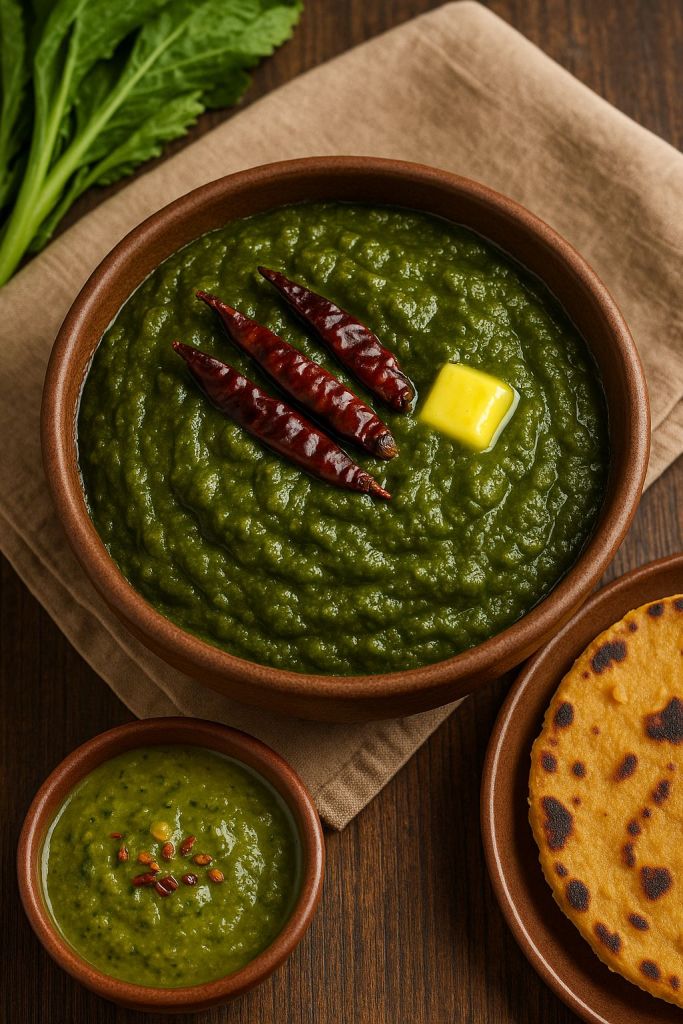
7. Finishing Touch (Optional Tadka): For extra indulgence and aroma, you can do a quick final tempering. In a small tadka pan, heat 1 tbsp ghee. Add 1-2 sliced garlic cloves and 1 dried red chili (broken). Fry for just half a minute until the garlic turns lightly golden and the red chili infuses the ghee (don’t let them burn). Turn off the heat and sprinkle a pinch of red chili powder in the hot ghee – this will instantly release a wonderful color and aroma. Drizzle this infused ghee on top of the prepared sarson ka saag just before serving. This step is optional but highly recommended for that restaurant-quality presentation and an extra layer of flavor. You’ll see the red-spiced ghee shimmering on the green saag – mouthwatering!


8. Serve: Sarson ka saag is best served hot, straight from the pot, with a generous dollop of makkhan (white butter or ghee) melting on top. The traditional accompaniment is Makki di Roti, the famous golden-yellow cornmeal flatbread, which you can make by kneading maize flour with warm water into a dough, patting it into flatbreads and cooking on a hot tawa (griddle). Serve the saag with makki rotis smeared with butter – this combination is soul-satisfying and authentic. Don’t forget to keep some sides like chopped onions, green chilies, and mooli (white radish) to munch on for freshness and crunch. And as many Punjabi households do, serve a little piece of jaggery (gur) on the side – a bite of jaggery after a spicy saag and roti mouthful is a divine sweet contrast that also helps cut any lingering bitterness. Now dig in and enjoy your hearty winter meal!


A traditional Punjabi spread of Sarson ka Saag with Makki di Roti on a brass thali, accompanied by white butter, radish, and even a bowl of boondi raita. The vibrant green saag is garnished with a drizzle of aromatic ghee tempered with garlic and red chili, and a dollop of homemade butter on top. A few slices of white radish (mooli), some green chili, and jaggery on the side complete this homestyle winter feast.

Conclusion

In the end, Sarson ka Saag is more than just a recipe – it’s a celebration of seasonal eating and a testament to the richness of Punjabi culture. Every bite carries the memory of grandmother’s kitchens, the warmth of the angeethi (hearth), and the joy of family gathered around a hearty meal. This winter, give yourself the pleasure of cooking this traditional dish slowly, and relish it with extra butter and love. As you scoop up the saag with pieces of makki di roti, you’ll understand why this simple greens curry has a legendary status. It’s homestyle Indian comfort food at its best – warm, earthy, and made with love. Happy cooking and Sat Sri Akal (salute to the truth)!

Lunch & Dinner

Homestyle Dal Makhani – A Nostalgic North Indian Comfort Food Recipe

Introduction

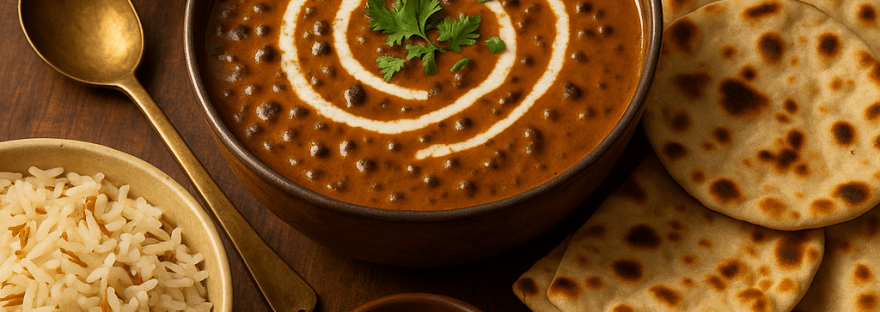
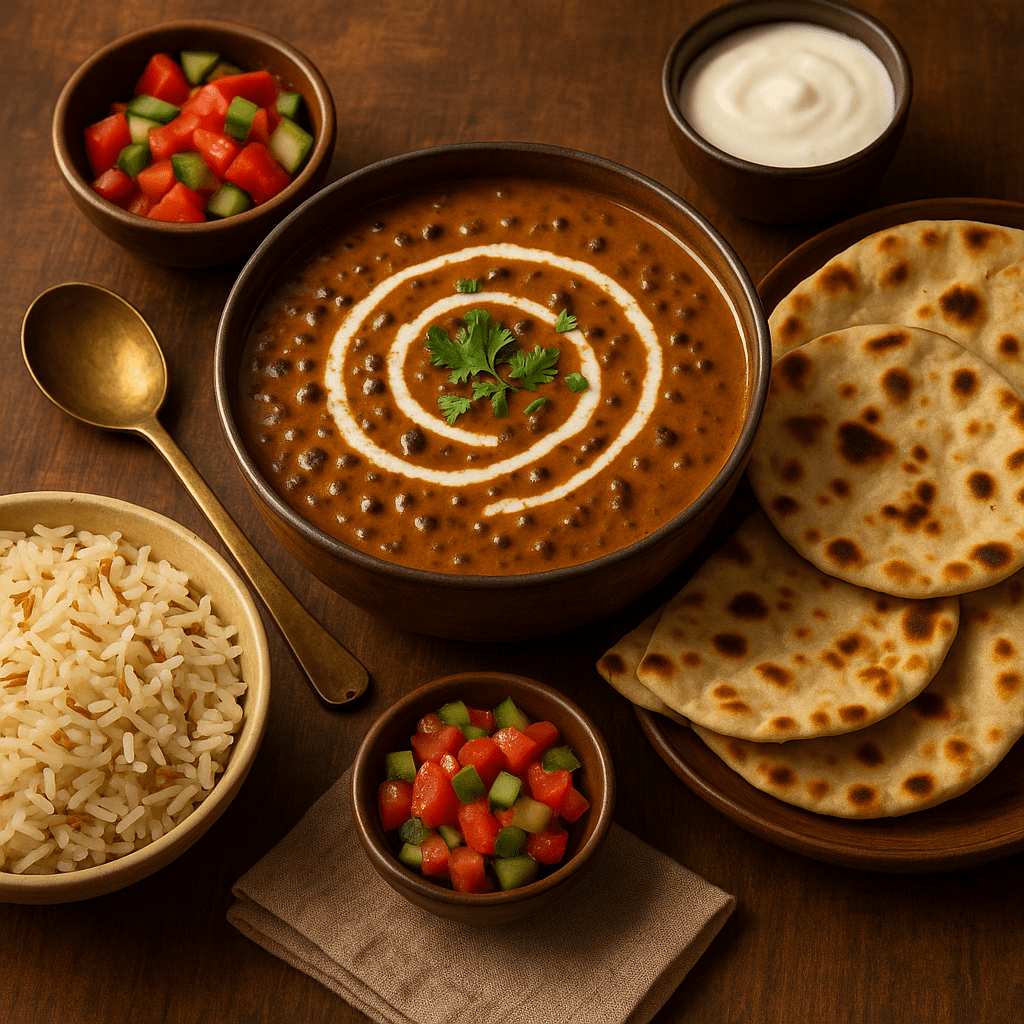
Every Sunday evening, I can still smell my grandmother’s kitchen filled with the rich aroma of butter, garlic, and spices. A big pot of Dal Makhani would be simmering on the stove, its creamy steam promising a hearty, comforting meal.  We kids knew it was ready when the bubbling pot slurped gently and she ladled the velvety lentils into bowls.  Sitting around the table, passing naan and rice, every bite felt like a warm hug – this slow-cooked black lentil curry was truly food for the soul.

Dal Makhani is renowned in Punjabi cuisine as “a rich, creamy and popular Punjabi dish made with slow-cooked black lentils (urad dal) and kidney beans (rajma), simmered with butter, cream and aromatic spices”.  Its very name hints at indulgence – makhani means butter – and indeed “both cream and butter contribute to the richness” of this curry.  The result is a luscious, buttery stew that is, as one recipe puts it, almost “bound to be decadent” with its generous dairy and spices.  In many North Indian homes, Dal Makhani is considered a “labour of love,” because it’s traditionally left to cook for hours on a gentle flame or over coals until the lentils almost melt into gravy.  Legend even credits Delhi’s famous Moti Mahal restaurant for inventing this dish (attributed to Kundan Lal Gujral), but any Punjabi grandmother will tell you the home-cooked version—simply seasoned and slowly simmered—is the true classic.  After the long simmer, butter and fresh cream are stirred in to give it that signature thick, creamy finish.

In our family, Dal Makhani always meant we gathered together.  We’d serve it piping hot, with plenty of warm, buttered naan or fragrant cumin-spiced rice.  The first taste of that creamy dal, draped over a fluffy piece of naan, brings back all those memories of home, warmth, and togetherness.

Ingredients

Whole black urad dal (kali dal): 1 cup (soaked overnight)

Red kidney beans (rajma): ¼ cup (soaked overnight)

Water: about 3 cups (for cooking the lentils)

Ghee or butter: 2–3 tablespoons (plus more for finishing)

Cumin seeds: 1 teaspoon

Whole spices: 2–3 cloves, 2 green cardamoms, 1 black cardamom, 1-inch cinnamon stick, 1 bay leaf (tej patta)

Onion: 1 medium, finely chopped

Green chilies: 1–2, slit (adjust to taste)

Ginger-garlic paste: 1 tablespoon (or freshly grated ginger + garlic)

Tomatoes: 2–3 medium, pureed (or 1 cup tomato puree)

Red chili powder: 1 teaspoon (Kashmiri chili for color, or paprika)

Nutmeg: a pinch, freshly grated (optional, for warmth)

Salt: to taste

Water or stock: 1 cup (to adjust consistency if needed)

Heavy cream: ½ cup (or fresh cream/yogurt, for richness)

Kasuri methi (dried fenugreek leaves): ½ teaspoon, crushed (optional)

Fresh cilantro (coriander): chopped, for garnish

Optional (smoky “dhungar”): 1 small piece charcoal (heated red-hot) and 1 tsp ghee


Method

1. Soak the lentils and beans. In a large bowl, cover the urad dal and rajma with plenty of water. Let them soak for 8–10 hours or overnight. Drain and rinse well before cooking.


2. Cook the dal and rajma. Transfer the drained lentils and beans to a pressure cooker. Add about 3 cups of fresh water and a pinch of salt. Cover and cook on high heat until the cooker whistles about 18–20 times (roughly 30–40 minutes). Then turn off the heat and allow the pressure to release naturally. The lentils should be very soft, almost falling apart – “melt in the mouth” tender.


3. Prepare the spice base (tadka). While the lentils cook, heat 2 tablespoons ghee or butter in a heavy-bottomed pot or deep pan over medium heat. Add the cumin seeds, cloves, green cardamoms, black cardamom, cinnamon stick, and bay leaf. Sauté for 30 seconds until fragrant.


4. Sauté onions and aromatics. Add the chopped onion and green chilies to the pot. Cook until the onion is translucent and just beginning to brown. Stir in the ginger-garlic paste and continue cooking for another minute, until the raw smell goes away.


5. Add tomatoes and spices. Pour in the tomato puree and a splash of water. Season with the red chili powder, a pinch of nutmeg, and salt. Cook the mixture, stirring often, until it thickens and the oil begins to separate from the masala.


6. Combine lentils and simmer. Stir the cooked dal and rajma (with its cooking liquid) into the pot. Add extra water or stock if needed to reach your desired consistency. Bring everything to a gentle boil, then reduce the heat to low. Slow simmer uncovered for 20–30 minutes, stirring occasionally. (As one chef notes, *“the more you slow cook it, the better it tastes.”*) This slow cooking helps the dal become creamy and develop a rich flavor.


7. Finish with dairy. Mash a few lentils against the side of the pot to naturally thicken the sauce. Stir in the heavy cream and mix well. Add a knob of butter or a splash of more ghee. Sprinkle in the crushed kasuri methi for a fragrant boost and adjust salt or spices to taste.


8. Optional smoke (dhungar). For the classic smoky aroma, light a piece of charcoal over an open flame until it glows. Carefully place it in a small metal cup or foil in the center of the pot, pour 1 teaspoon ghee over the hot coal, and immediately cover the pot for 2–3 minutes. The resulting smoke will infuse the dal with that restaurant-style smokiness. (Only do this if you’re comfortable with it and watch safety closely.)


9. Garnish and serve. Remove the whole spices if desired. Garnish the Dal Makhani with chopped cilantro and a drizzle of cream. Serve it hot as the star of a family dinner.


Suggested Accompaniments

Soft, buttery naan or garlic naan: Perfect for scooping up every last bit of dal.

Jeera (cumin) rice: Fragrant basmati rice tempered with cumin seeds complements the rich dal.

Roti or paratha: Warm flatbreads are also wonderful if you prefer.

Fresh salad or raita: A simple kachumber salad (chopped cucumber, tomato, onion with lemon) or cool yogurt raita balances the richness.

Pickles and lemon: Mango pickle, mixed achar or lemon wedges add a tangy punch.

Papadums (papads): Crispy lentil crackers make a nice crunchy side.