Introduction & Nostalgia
For many North Indian families (mine included), a chilled glass of lassi was a summer staple. I vividly recall summer mornings at my grandmother’s house, where sweet lassi was a breakfast essential. She would hand-churn the yogurt in a tall steel pot using a wooden mathani (traditional whisk) until the drink turned creamy and frothy. We’d often scoop off the fresh butter (makhan) that rose to the top and plop a dollop on our lassi – a true old-fashioned treat! Those memories of sitting in the courtyard, savoring the cold, velvety dahi lassi in steel tumblers, remain unmatched.
Three types of chilled lassi – from front: sweet lassi topped with saffron strands, a classic salted lassi with a cumin sprinkle, and a mint masala lassi with fresh mint. Each is creamy, frothy, and perfect for summer.
Dahi Lassi is a traditional Indian yogurt-based drink served chilled and enjoyed especially in the hot months. Originating in the Punjab region, this creamy concoction has become popular all over India (and beyond) as a cooling refreshment. It’s essentially whisked yogurt with water or milk and seasonings – sugar and aromatic spices for the sweet version, or salt and spices for the salty version. Lassi is not only delicious but also probiotic and great for digestion, thanks to the live cultures in yogurt. There are countless variations – from fruity mango lassi to fragrant rose lassi – but in this post we’ll focus on the two classic styles: meethi lassi (sweet lassi) and namkeen lassi (salted lassi).
The beauty of lassi lies in its simplicity and versatility. A sweet lassi can feel like a rich dessert drink, often topped with a swirl of cream or sprinkled with nuts, while a salty lassi (sometimes called chaas when thinner) is light, savory, and known to aid digestion with its spices. No matter which you prefer, a well-made lassi is creamy, smooth, and frothy – the perfect antidote to a sweltering afternoon or a spicy meal. Below, I’ll share the complete ingredient lists, step-by-step instructions (with tips to get that perfect froth), flavor variations, and tips on serving, storing, and enjoying this timeless yogurt drink.
Ingredients
Sweet Lassi (Meethi Lassi) (2 servings)
Yogurt (Dahi): 2 cups, chilled (use fresh whole-milk yogurt for best results)
Water: ½ to 1 cup, chilled (adjust to desired thickness; start with ½ cup). Optional: Instead of water, you can use a mix of 2–3 ice cubes plus a splash (~¼ cup) of cold milk or cream for extra richness.
Sugar: 3 to 4 tablespoons (adjust to taste; you can substitute honey or jaggery).
Green Cardamom Powder: ¼ to ½ teaspoon (from about 2–3 pods, crushed freshly for best aroma).
Rose Water: 1 teaspoon (optional, for a floral hint).
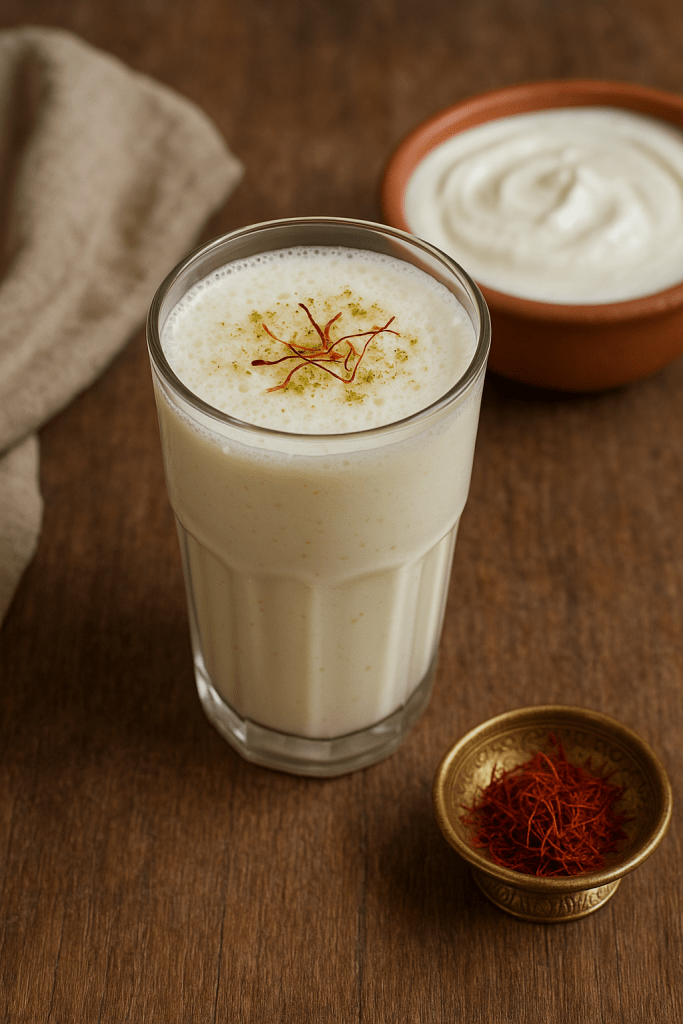
Saffron Strands (Kesar): a pinch (optional, for color & aroma; soak in 1 tablespoon warm milk for 5 minutes before using).
Chopped Nuts: 1 tablespoon almonds or pistachios (optional, for garnish).
Ice Cubes: 2–3 (optional, to blend for extra chill and froth).
Salted Lassi (Namkeen Lassi) (2 servings)
Yogurt (Dahi): 2 cups, chilled (whole-milk yogurt recommended).
Water: ~½ cup, chilled (you can adjust up to 1 cup for a thinner consistency).
Salt: ¼ to ½ teaspoon (to taste; use plain salt or Himalayan pink salt for traditional flavor).
Roasted Cumin Powder: ½ teaspoon (bhuna jeera powder, for that earthy, aromatic note).
Black Salt (Kala Namak): a pinch (optional, adds tangy depth and aids digestion).
Chaat Masala: 1–2 pinches (optional, for a tangy chaat flavor kick).
Fresh Mint Leaves: a few (optional, to blend for a mint lassi or to garnish).
Ice Cubes: 2–3 (optional, for blending a chilled, frothy lassi).
Tip: Using full-fat, fresh yogurt is key for a creamy lassi. If your yogurt is very thick (like Greek yogurt), you might need a bit more liquid; if it’s homemade and slightly thin, start with less water. Also, make sure the yogurt isn’t too sour – fresh, slightly tangy dahi is ideal for the best flavor.
Step-by-Step Instructions
Sweet Lassi (Meethi Lassi) – Directions:
1. Prep: Ensure the yogurt and water are nicely chilled before you start (you can refrigerate them in advance). If using saffron, soak the strands in warm milk now so they release color and flavor.
2. Whisk the Yogurt: In a mixing bowl or blender jar, add the 2 cups of chilled yogurt. Whisk it well (using a hand whisk or mathani) until it’s smooth and there are no lumps. This step breaks up the curd and makes the base creamy.
3. Add Sweeteners & Flavor: Add the sugar to the yogurt, along with the cardamom powder and the saffron-infused milk (if using). Also add the rose water now if you want that flavor. Whisk everything together until the sugar dissolves and the yogurt mixture is uniform. You’ll notice the aroma of cardamom and saffron as you mix.
4. Add Liquid & Froth: Pour in about ½ cup of the chilled water (or water+milk/ice combo). Now whisk briskly for a minute or two, until the lassi becomes light and foamy. You can see bubbles or froth forming on top. *(If using a blender, blend on medium speed for 30–60 seconds until frothy – you may add a couple of ice cubes while blending for extra froth, but avoid over-blending.)* The goal is a creamy, airy texture; traditionally, people would pour the lassi back and forth between two containers to make it foamy!
5. Adjust Consistency: Check the taste and thickness. If it’s too thick for your liking, add a little more cold water (or milk) and whisk again. If you prefer it sweeter, mix in another spoon of sugar. Remember, lassi can be made as thick as a milkshake or more drinkable – adjust to your preference. (I like mine thick but still pourable.)
6. Serve: Pour the sweet lassi into serving glasses. Garnish by sprinkling a pinch of cardamom powder or a few saffron strands on top, and add the chopped nuts if desired. Serve immediately, chilled, and enjoy every sip of this creamy delight!
Salted Lassi (Namkeen Lassi) – Directions:
1. Whisk the Yogurt: As with the sweet version, start by whisking the 2 cups of chilled yogurt in a bowl or blender until it’s completely smooth and creamy. No lumps should remain – a smooth dahi is the base for a good lassi.
2. Add Spices & Salt: To the whisked yogurt, add the salt (start with ¼ tsp and adjust later), the roasted cumin powder, and a pinch of black salt if using. If you like a little zing, add a pinch of chaat masala as well. Whisk these into the yogurt so they’re well combined. The yogurt will take on the wonderful aroma of cumin.
3. Add Liquid & Froth: Pour in about ½ cup of chilled water. Whisk vigorously for a couple of minutes until the lassi is light and frothy. You should see a good head of foam on top. (If using a blender, you can toss in a few ice cubes and blend on medium for ~30 seconds until frothy.) Be careful not to over-blend into butter – stop as soon as it’s smooth and slightly foamy.
4. Adjust to Taste: Taste the salted lassi. You can add more salt if you feel it’s needed, or a extra pinch of cumin for a stronger spice note. If it’s too thick, whisk in a bit more water until it’s to your desired consistency. Salt lassi is usually a bit thinner than sweet lassi, but it’s your call how thick you want it.
5. Serve: Pour the namkeen lassi into glasses. Garnish with a light sprinkle of cumin powder on top or a tiny pinch of chaat masala. You can drop a fresh mint leaf or two into each glass (or float on top) for a pop of color and refreshing aroma. Serve it chilled (you can even add an ice cube to the glass). This savory lassi is incredibly refreshing, especially after a heavy or spicy meal.
Tip: Both sweet and salted lassi are best enjoyed immediately after preparation, when they’re frothy and cold. If you let lassi sit around, the foam will subside and the drink may thicken as the yogurt settles. So serve it up at once for that freshly made texture and taste!
Tips for a Perfect Lassi
Use Chilled Ingredients: Temperature can make or break your lassi. Always use cold yogurt and ice-cold water/milk, and serve the lassi immediately while chilled. Using chilled ingredients helps keep the lassi creamy and prevents it from separating quickly. In fact, lassi is meant to be enjoyed nice and cold – if it’s not cold, it just doesn’t taste as refreshing. You can even chill your serving glasses in the fridge beforehand.
Choose Fresh, Whole-Milk Yogurt: The quality of yogurt (dahi) is key. Use plain whole milk yogurt (homemade curd is fantastic if you have it). This yields a richer flavor and texture. Avoid yogurt that is overly sour or anything with gelatin/stabilizers (which can affect the texture). If your yogurt tastes too tangy on its own, your lassi might come out too tart – in that case, balance it with a bit more sugar or opt for making a salty lassi instead. Fresh, slightly tangy (not bitter) yogurt makes the best lassi.
Don’t Over-Blend: While a blender makes quick work of lassi, be cautious not to over-blend the mixture. Over-blending can churn the fat in the yogurt and start turning your lassi into butter or butter-milk (especially if using very high-fat yogurt or cream) – not what we want! The traditional hand-churning method with a wooden whisk incorporates air more gently, giving a frothy texture without over-processing. If you use a blender, just blend until everything is mixed and frothy – no more than a minute. You can always pulse in short bursts to be safe.
Incorporate Air for Froth: The signature foamy top on lassi comes from air bubbles integrated into the yogurt. If whisking by hand, use a rapid circular motion (or even better, pour the lassi back and forth between two containers) to create froth. If using a blender, adding a couple of ice cubes and blending briefly can help create foam. Just remember the point above – stop blending once a nice froth has formed on top.
Adjust Thickness to Your Liking: Lassi’s thickness is personal preference. Street-style lassi in Punjab is often very thick and served with a spoon (nearly like a thin milkshake), whereas home-style lassi might be more fluid. Feel free to adjust the yogurt-to-liquid ratio. For an ultra-rich thick lassi, use less water and even add a tablespoon of heavy cream (this makes it decadent and silky). For a lighter lassi, add a bit more water or milk until it’s easily sippable. There’s no wrong consistency as long as you enjoy it!
Sweet vs. Salt – No Double Dipping: Traditional wisdom says lassi is either sweet or salted, but not both. So if you’re making sweet lassi, you generally wouldn’t add salt (except maybe a tiny pinch to enhance flavor), and if making salted lassi, you skip the sugar. This keeps the flavors clean. Of course, modern recipes sometimes play with a sweet-salty balance, but classic lassi sticks to one or the other.
Use a Pinch of Salt (for Sweet Lassi): This might sound counterintuitive, but adding a tiny pinch of salt to sweet lassi can actually heighten the sweetness and balance the flavor (similar to adding salt to desserts). Don’t overdo it – just a pinch can make the sweet flavors pop. (This is totally optional and not traditional, but a useful trick in general.)
Experiment with Aromatics: Cardamom (elaichi) is the superstar spice for lassi – its warm, floral aroma is what makes a plain lassi heavenly. Always use freshly ground cardamom if possible, as it’s far more fragrant. Saffron and rose are other aromatics that can elevate your lassi (more on these in variations below). Even in salted lassi, a hint of mint or cumin aroma defines the experience.
Serve Fresh and Frothy: Lassi is best served immediately while it’s still frothy and chilled. Over time, the froth will die down and the lassi can thicken or separate slightly. For the optimal texture, drink it up sooner rather than later. If you must hold it for a short while, give it a quick whisk before serving to revive some of the foam.
By following these tips, you’ll get a lassi that’s creamy, frothy, and utterly satisfying every time!
Flavor Variations and Add-Ins
One of the joys of lassi is how customizable it is. Once you have the basic recipe down, you can get creative and add different flavors to switch things up. Here are some popular lassi variations you can try:
Mango Lassi: Perhaps the most famous variation internationally! To make a mango lassi, blend in about ½ to 1 cup of ripe mango pulp (fresh mango pieces or canned pulp) with the yogurt and sugar. Alphonso or Kesar mangoes (when in season) work great for an authentic flavor. If the mango is very sweet, feel free to reduce the added sugar. This golden, tropical lassi is like a smoothie-meets-milkshake – thick, fruity, and indulgent. Tip: Use chilled mangoes and/or a few ice cubes to keep it cold, and consider adding a pinch of cardamom to complement the mango flavor.
Rose Lassi: For a delightful floral twist, add a bit of rose flavor to your sweet lassi. You can use 1–2 tablespoons of rose syrup such as Rooh Afza (a concentrated rose sherbet syrup) – its vibrant pink color and sweet rose essence will transform your lassi. If using rose syrup, reduce or omit other sugar since the syrup is sweet. Alternatively, add 1 teaspoon of rose water for a subtler fragrance. Stir the rose syrup or water into the prepared lassi. Garnish: a few dried rose petals on top for a gorgeous presentation. Rose lassi is especially refreshing and often enjoyed during the spring and summer.
Kesar Pista (Saffron Pistachio) Lassi: Elevate your sweet lassi by infusing it with saffron. Soak a generous pinch of saffron strands in 2 tablespoons of warm milk for 10 minutes, then add this golden milk while blending your lassi. It imparts a beautiful color and a rich aroma. To make it kesar pista lassi, also mix in 1–2 tablespoons of finely chopped or ground pistachios (or almonds). The nuts add texture and a nice nutty flavor that pairs with saffron. Saffron lassi feels regal – in fact, kesar lassi is a prized variant in many Indian households. (You can sweeten this with a touch of honey which goes well with saffron.)
Cardamom Lassi: We already use cardamom in the classic recipe, but you can make it the star. For a stronger elaichi flavor, add an extra ¼ teaspoon (or more) of freshly ground green cardamom to your sweet lassi. You can even lightly crush a cardamom pod and drop it into the lassi while it chills for an hour (then remove it) to infuse more flavor. Cardamom lassi is aromatic and soothing. Sometimes, a pinch of cinnamon or nutmeg can be added alongside cardamom for a spiced lassi (though not traditional).
Mint Lassi (Pudina Masala Lassi): A refreshing variation on salted lassi. Blend a handful of fresh mint leaves into the yogurt along with the salt and cumin. You can also add a small pinch of grated ginger or a green chili (de-seeded) for a real chaas style kick. A squeeze of lemon juice brightens it up further. This mint masala lassi comes out green-flecked and ultra-refreshing – perfect for the hottest days when you need something cool and savory. Mint aids digestion, so it’s great after a heavy meal. Serve this lassi with an extra sprinkle of chaat masala on top and a mint sprig as garnish.
Bhang Lassi (Holistic variation): Bhang is an edible cannabis preparation traditionally mixed into a lassi during certain Indian festivals like Holi. Bhang Lassi has a mild intoxicating effect and is a festive special. (This is definitely an adults-only variation and very region-specific!) It involves grinding bhang paste into a sweet lassi, often with spices and nuts. Unless you’re specifically looking for this, stick with the yummy fruit and spice variations above – but it’s an interesting cultural footnote.
Other Fruit Lassis: Beyond mango, you can experiment with other fruits to make fruity lassi smoothies. Strawberry Lassi – blend a handful of strawberries with yogurt and sugar (the lassi will turn a lovely pink). Banana Lassi – add a ripe banana; this yields a super creamy, sweet lassi (you might skip extra sugar because banana is sweet). Berry Lassi – blueberries, raspberries, or cherries can all be blended in for unique flavors and colors. When using fruits, it’s often best to use the sweet lassi base (with sugar or honey) and omit cardamom/rose to let the fruit flavor shine. A dash of vanilla can pair nicely with some fruits. These are not traditional, but they are delicious modern twists – almost like healthy yogurt smoothies.
Feel free to get creative! The base of yogurt + liquid + a bit of sweetness or salt is a blank canvas. You can blend in ripe guavas (for a guava lassi), chikoo (sapodilla) for a tropical treat, or even dates and figs for a rich, shake-like lassi. Just remember to adjust the main flavors (sweet or salty) accordingly and strain fibrous fruits if needed for a smoother drink.
Serving Suggestions and Pairings
Lassi is wonderfully easy to serve – just pour it out and enjoy. That said, here are some serving tips and pairing ideas to make the most of your Dahi Lassi experience:
Serving Vessels: Traditionally, lassi may be served in tall metal glasses or even in earthen clay cups called kulhars/kulhad for an authentic feel. The clay imparts a nice earthy aroma and keeps the drink cool. At home, any tall glass will do. In Punjabi dhabas (roadside eateries), you’ll often get lassi in a huge tumbler with a layer of malai (clotted cream) or makhan (white butter) floating on top! If you want to be indulgent, you can mimic this by adding a spoonful of lightly whipped cream or a scoop of vanilla ice cream on top of your sweet lassi when serving – a decadent touch for guests or special occasions.
Garnishes: As mentioned, garnishes can elevate the presentation. For sweet lassi, sprinkle a few saffron strands or a pinch of cardamom on the foam, and scatter some chopped pistachios or almonds. It not only looks pretty but adds a nice texture when you sip. You can even place a few rose petals if you flavored it with rose. For salted lassi, a light dusting of roasted cumin powder on top is classic. You could also dust a pinch of chili powder or paprika for color, and pop a small mint leaf on the surface. The aroma hits as you bring the glass to your lips. Presentation-wise, those little touches make your homemade lassi feel like a treat.
When to Enjoy: Lassi is often enjoyed during the daytime, especially in summer. It’s a fantastic cooler for hot afternoons – picture yourself relaxing in the shade with a cold lassi in hand. Sweet lassi can serve as a dessert or a mid-morning/afternoon snack on its own. In Punjab, a tall sweet lassi is sometimes breakfast by itself because it’s so filling (rich with yogurt and butter/cream). Salted lassi (or chaas) is commonly drunk alongside meals or after meals. Its salty, spice-infused taste complements food and can soothe the stomach if you’ve eaten something heavy or spicy. In fact, many people have a glass of salted lassi after lunch to aid digestion and cool off.
Pairing with Foods: Because lassi is cooling, it pairs beautifully with spicy or rich foods. Here are some pairing ideas:
Enjoy a sweet lassi with a spicy Punjabi meal like chole bhature (spiced chickpeas and fried bread) or butter chicken with naan. The sweetness and cold yogurt tone down the heat and provide a contrast to tangy, spiced gravies. It’s also great with biryani or pulao – take a sip of lassi between bites to refresh your palate.
Sweet lassi is a match made in heaven for parathas stuffed with potato or paneer. In many North Indian homes and dhabas, aloo paratha with lassi is an iconic breakfast combo – the lassi helps wash down the hearty, flaky paratha and you truly don’t need anything else!
If you’re having a heavy or oily meal (like something fried or a rich curry), a salted lassi alongside works wonders. Try namkeen lassi with pakoras (fried fritters) or samosas – it’s a classic pairing, as the tangy salted lassi offsets the oiliness and spice. It’s also excellent with biryanis or grilled meats (like tandoori tikka) where the subtle sourness and salt of the lassi complement the savory flavors.
For a light meal or snack, have a glass of salted lassi with a simple rice dish or just by itself to hydrate. And of course, mint lassi or masala lassi (salted lassi with spices and herbs) is great after any meal to help digest and prevent that heavy feeling.
Seasonal Touch: In summer months, serving lassi extra chilled is key. You can even blend in some crushed ice or keep the glasses in an ice bucket if serving outdoors. In winter, people drink lassi less often (since it’s cooling by nature), but if you do, you might skip the ice. Some even enjoy warm sweet lassi (just room temperature, not chilled) in cooler weather or add warming spices like cinnamon – but that’s more an experimental twist. Generally, lassi = summer bliss.
Serving Quantity: Lassis can be very filling, so serve modest portions if it’s accompanying a meal (about 1 cup per person). If it’s the star (say, a standalone snack or beverage), you can go generous – those big Punjabi lassi glasses can be 12-16 ounces or more! You might want to provide spoons if your lassi is extremely thick or has a malai topping, so guests can scoop and eat the cream first (that’s the traditional way in Punjab – eat the butter/cream, then drink the lassi). Otherwise, a straw or just sips from the glass work for thinner lassi.
However you serve it, make sure it’s cold and fresh. An under-chilled lassi or one that’s been sitting around warm is not nearly as enjoyable. A perfectly served lassi should have a light froth on top, be garnished appealingly, and feel like a soothing balm as it goes down!
Storage Tips
Lassi is best enjoyed fresh, but if you need to make it ahead or have leftovers, here’s how to store it properly:
Refrigeration: Transfer your lassi to a jug or bottle with a lid and keep it in the refrigerator. It will stay good for about a day – possibly up to 2 days – in the fridge. However, for the best taste and texture, try to consume it within 12-18 hours or so. After that, it can start to lose the fresh yogurt flavor or become more sour as fermentation conti
 The Pinch of Masala