Breakfast

My Mother’s Pink Ritual: The Story of Our Favorite Winter Beetroot Paratha

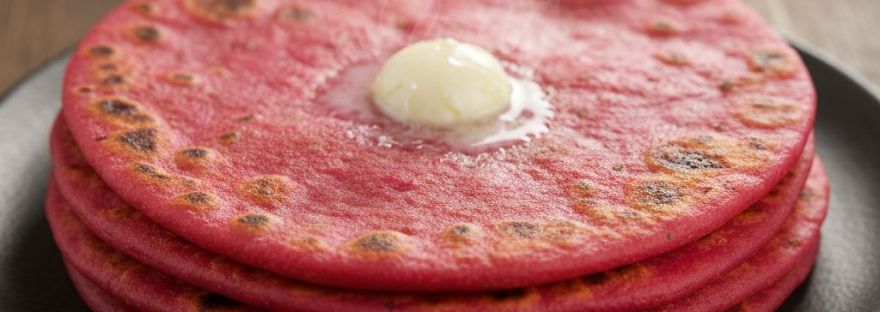
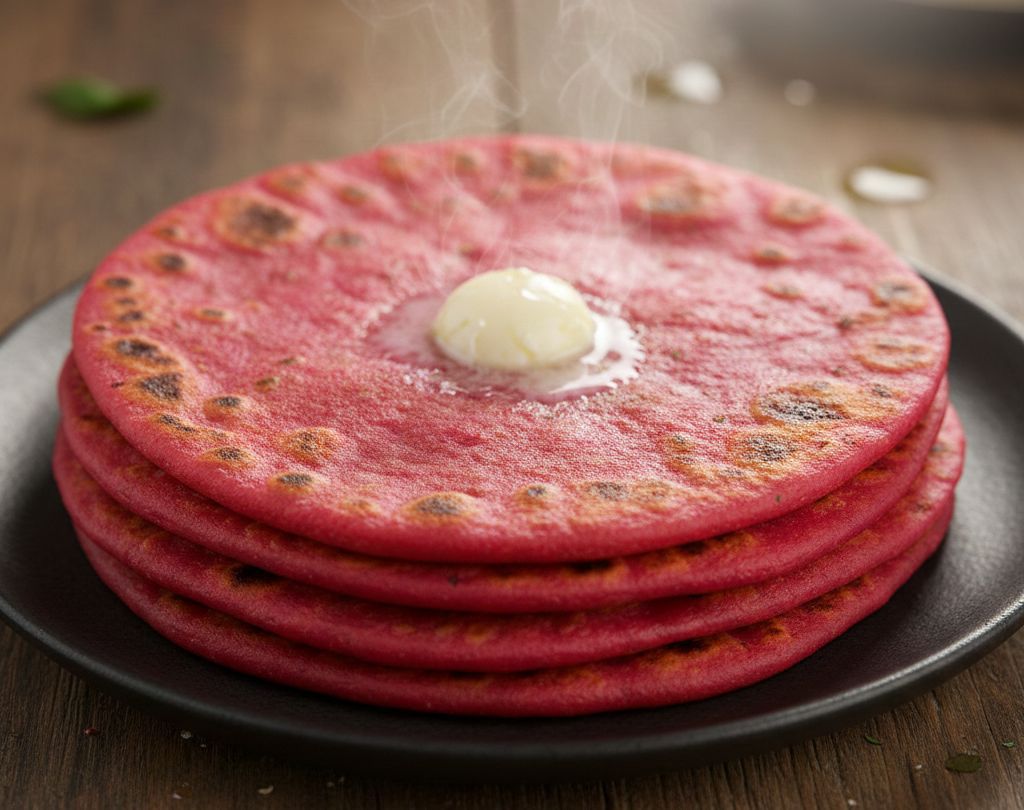
In our home, the arrival of winter was announced by my mother’s pink-stained palms. I remember her sitting in the morning light, a bowl of deep-red beetroots before her. To her, Beetroot Paratha wasn’t just a “healthy alternative”; it was a visual celebration of the season.
She treated the beetroot with a level of precision that felt almost scientific. She believed that the vibrancy of the paratha was a direct reflection of the cook’s patience. “If the color fades, the spirit of the root is gone,” she would say. She taught me that the secret to a royal beetroot paratha lay in the “Quiet Luxury” of a dough that was as smooth as silk and as bright as a winter sunset.
Today, at The Pinch of Masala, we are documenting her technique for a 2026 audience that craves “Ingredient Integrity” and the “Fibremaxxing” power of whole-plant eating.

The primary struggle with beetroot paratha is managing the moisture and the “earthy” raw smell. To master the “Vibrant Pink,” follow my mother’s three non-negotiable rules:

The “Brief Blanch” Rule: To remove the raw, pungent flavor that often puts children off, you must cook the beetroot briefly. My mother would sauté or steam the grated beetroot for just 2 to 3 minutes. Be careful: if you cook it longer than 8–10 minutes, the vibrant red color begins to suffer.

The Mixed-Dough Mastery: While some prefer stuffing, my mother always used the Mixed Dough method, kneading the beetroot puree directly into the wheat flour. This ensures the color is perfectly even and makes it much easier for novice cooks to avoid the hassle of leaking stuffing.

The “Thick Roll” Secret: In 2026, we value “Technical Excellence”. My mother always rolled her parathas slightly thicker than a standard chapati. If you roll them too thin, the beetroot fibers lose their moisture on the tawa, and the paratha will turn hard instead of staying soft and pliable.

Prep time: 15 mins | Resting time: 30 mins | Cook time: 20 mins | Servings: 6 parathas
Diet: Vegan, High-Fiber | Cuisine: North Indian Heritage
Ingredients:

1.5 cups Whole Wheat Flour (Atta): Sifted for a smooth dough.

1 cup Beetroot Puree: Prepared from grated and lightly steamed beets.

The Aromatics: 1 tsp ginger paste, 1 finely chopped green chili.

Spices: 1 tsp Cumin seeds (Jeera), ½ tsp Ajwain (Carom seeds), ½ tsp Garam Masala, and ½ tsp Amchur (Dry Mango Powder).

Fat: Ghee or oil for roasting.

Instructions:

The Prep: Grate your fresh, juicy beetroot grating it first speeds up the cooking process significantly.

The Puree: Sauté or steam the grated beetroot with ginger and chili for just 2–3 minutes until tender. Cool and blend into a smooth paste without adding any extra water.

The Mix: In a large bowl, combine flour, spices, and the vibrant beetroot puree.
The Knead: Knead into a smooth, soft, non-sticky dough. If the dough feels too sticky, add a little extra flour.

The Rest: Cover with a damp cloth and let the dough rest for at least 15–30 minutes to allow the gluten to relax.

Rolling: Divide into balls. Dust with flour and roll into discs that are slightly thicker than a chapati.

The Roast: Place on a hot tawa. When bubbles appear, flip it. Apply ghee or oil and press gently with a spatula to help it puff.

Serve: Cook until golden-brown spots appear. Serve hot with fresh yogurt, raita, or a spicy pickle.

The Nitre-Boost: Beetroots are a superfood rich in nitrates, which research suggests can help regulate blood pressure and improve heart health. By using my mother’s “Brief Blanch” method, you preserve these heat-sensitive antioxidants while enjoying a delicious, fiber-rich meal.
Lunch & Dinner

Aloo Matar: My Mother’s Winter Afternoon in a Bowl

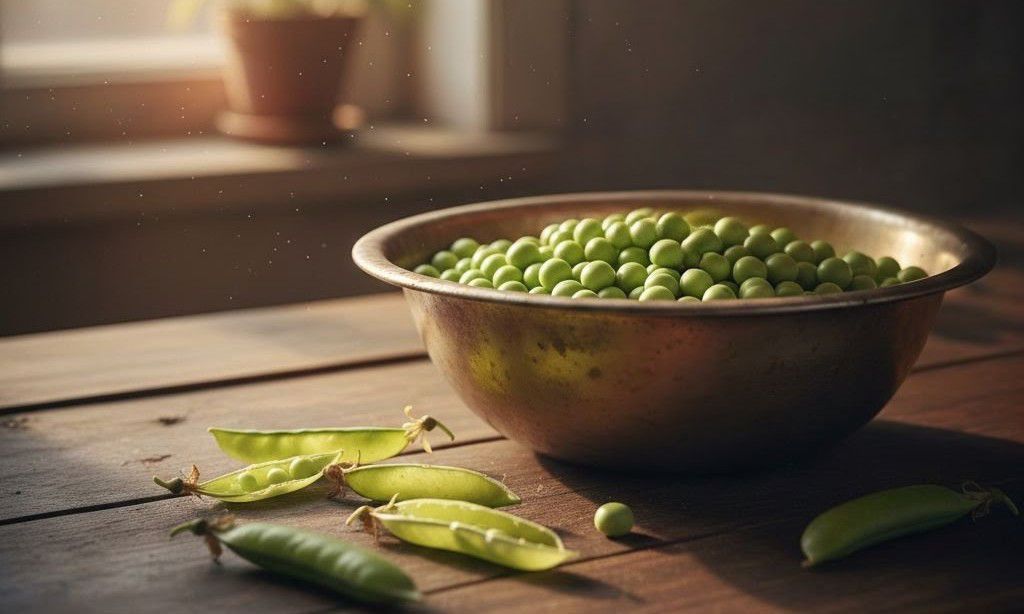
In our house, the definitive sound of winter wasn’t the whistling wind; it was the steady pop-pop-tinkle of fresh green peas hitting a steel bowl. I remember my mother sitting on a low stool in the afternoon sun, a mountain of pea pods in her lap. She never rushed the task. To her, shelling peas was a visual meditation a way to ensure that only the sweetest, most “intentional” grains made it into the pot.
“A potato is just earth,” she would say, “but the pea is the spirit.” She taught me that the secret to a royal Aloo Matar wasn’t in the spices, but in the hierarchy of the cook. You had to respect the potato’s need for a headstart and the pea’s delicate desire to remain vibrant. This dish is a “Parasocial Companion” on our lunch table a warm, reliable hug that has survived generations of winter Sundays .
Today, at The Pinch of Masala, we are moving away from the “frozen-bag” culture and returning to the “Quiet Luxury” of hand-shelled winter bounty and my mother’s “Golden Sear” technique.

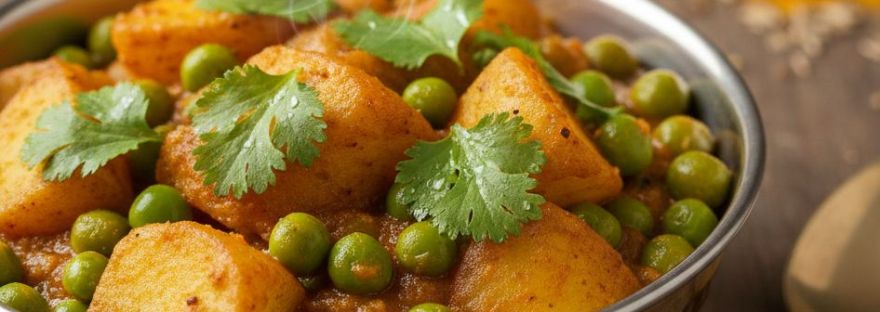
The most common mistake in Aloo Matar is ending up with a mushy, greyish mash. To keep your sabji looking “emerald and gold,” you must follow my mother’s two technical rules:
The “Golden Sear” Rule: Never boil the potatoes in the gravy from the start. You must sauté the potato cubes in oil or ghee until they develop a thin, golden crust. This “sealing” prevents the starch from leaking into the gravy, keeping it clean and allowing the potatoes to retain their shape.
The “Steam Trap” Finish: In 2026, we prioritize “Simplicity with Purpose”. My mother would never add excess water. She would cover the pan with a tight-fitting lid and cook the vegetables in their own juices. This “Steam Trap” method concentrates the natural sugars of the winter peas, making them taste like candy rather than water.

Prep time: 20 mins | Cook time: 20 mins | Servings: 4
Diet: Vegan, Gluten-Free | Cuisine: North Indian Heritage

Ingredients:
2 cups Fresh Green Peas: Hand-shelled winter peas are best.
3 Medium Potatoes: Peeled and diced into ¾-inch cubes.
The Aromatics: 1 Large Onion (finely chopped), 1 inch Ginger (grated), 3 Garlic cloves (crushed).
The Base: 2 Ripe Tomatoes (pureed).
Fat: 2 tbsp Mustard Oil or Ghee.
Spices: 1 tsp Cumin seeds (Jeera), ½ tsp Turmeric (Haldi), 1 tsp Coriander powder, ½ tsp Red Chili powder, and ½ tsp Garam Masala.
The Finish: A handful of fresh Coriander leaves and a squeeze of Lemon juice.
Instructions:
The Sear: Heat oil in a heavy pan. Add the potatoes and a pinch of salt. Sauté on medium-high for 5–7 minutes until the edges are golden brown. Remove and set aside.
The Bloom: In the same oil, add cumin seeds. Once they sizzle, add the onions. Sauté until they are a deep translucent pink.
The Masala Base: Add the ginger and garlic. Sauté for 30 seconds, then pour in the tomato puree and dry spices. Cook until the oil begins to separate from the sides.
The Union: Add the seared potatoes and the fresh peas. Toss well to coat every piece in the masala.
The Steam Trap: Add only ¼ cup of water (or our Pod Stock, see below). Cover tightly and cook on low heat for 10–12 minutes.
The Reveal: Check if the potatoes are fork-tender. If the gravy is too thin, cook open for 2 minutes to thicken.
Final Touch: Stir in the garam masala and coriander. Squeeze lemon juice just before serving to “brighten” the earthy potatoes.

The Pod Stock: In the 2026 “Use-Up” economy, we value “Ingredient Integrity” . Do not throw away those fresh, green pea pods! Wash them thoroughly and boil them in water with a pinch of salt for 15 minutes. Strain this liquid and use it as the “Pod Stock” for your gravy. It adds a concentrated green sweetness and extra fiber, aligning with the current “Fibremaxxing” movement.