Lunch & Dinner

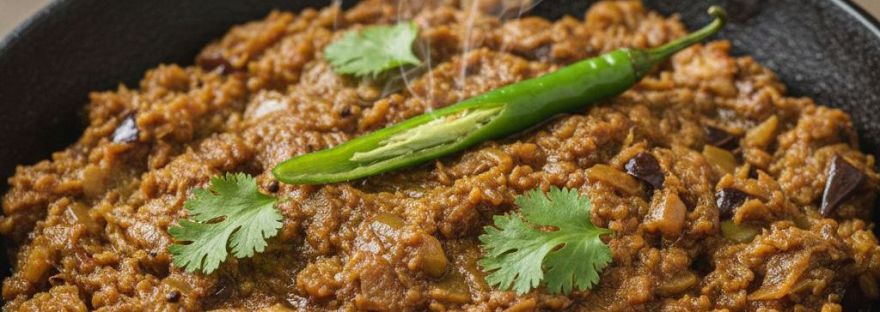
Baingan Bharta: My Mother’s Smoky Winter Ritual of Fire and Soul

In our home, the arrival of winter wasn’t marked by a calendar, but by the scent of charred eggplant skin wafting from the kitchen. I remember my mother standing over the gas stove, her face glowing in the blue flame as she patiently rotated a large, purple globe of brinjal. She called it the “Smoky Soul” of the season.
“You cannot rush the fire,” she would say, explaining that an oven or a microwave could never replicate the deep, primordial aroma of skin meeting an open flame. My mother was a self-taught scientist of flavor; she knew that the char wasn’t just burnt skin it was a signature of authenticity. She viewed this dish as a “Parasocial Companion,” a reliable bridge to her own childhood that she was now documenting for me.
Today, at The Pinch of Masala, we are reclaiming the art of the “Slow Roast.” In a world of 2026 “Quiet Luxury” and “Simplicity with Purpose,” this recipe stands as a testament to the idea that the most profound flavors are often the most technical to achieve.

To ensure your Baingan Bharta has that unmistakable “Dhaba-style” depth without becoming a soggy mess, you must follow my mother’s two non-negotiable rules:
The “Aromatic Infusion” Slit: Most people mash the garlic separately. My mother would make deep gashes in the raw eggplant and tuck whole garlic cloves inside before roasting. As the eggplant chars, the garlic steams in the vegetable’s own juices, softening into a sweet, buttery paste that infuses the entire pulp with flavor.
The “Texture over Mash” Philosophy: In 2026, we value “Ingredient Integrity”. My mother never processed her vegetables into a paste. She insisted on roughly chopping the roasted eggplant and onions to maintain a rustic “hash” texture rather than a smooth puree. This provides a better “mouthfeel” and honors the “Fiber Revolution” by keeping the vegetable structures intact.

Prep time: 15 mins | Cook time: 30 mins | Servings: 4
Diet: Vegan, Gluten-Free | Cuisine: North Indian Heritage

Ingredients:
1 Large Eggplant (Bharta Baingan): Choose one that is light in weight; heavy ones are full of bitter seeds.
4-6 Cloves of Garlic: To be tucked into the eggplant.
2 Green Chillies: Slit.

The Masala Base: 2 Large Onions (roughly chopped), 3 Medium Tomatoes (roughly chopped), and 1 inch Ginger (grated).

Fat: 2 tbsp Mustard Oil (essential for that authentic “Heritage” zing).

Spices: 1 tsp Cumin seeds (Jeera), ½ tsp Turmeric, 1 tsp Kashmiri Red Chili powder, and ½ tsp Garam Masala.

The Finish: A handful of fresh Coriander and a squeeze of Lemon juice.
Instructions:

The Roasting Ritual: Wash and dry the eggplant. Make 3–4 deep slits and insert the garlic cloves. Brush the skin lightly with mustard oil to prevent it from drying out too fast.

Fire Roast: Place the eggplant directly over an open gas flame. Rotate every 2 minutes for about 15–20 minutes until the skin is completely charred and black, and the flesh is very soft.

The Sweat: Remove from heat and place in a covered bowl for 5 minutes. The steam will help loosen the skin for easier peeling.

The Mash: Peel off the charred skin and discard the stem. Mash the eggplant and the roasted garlic with a fork leave it slightly chunky.

The Bhuna Base: Heat mustard oil in a pan until it smokes. Add cumin seeds. Once they sizzle, add the onions and green chillies. Sauté until the onions turn a deep golden brown.

The Red Union: Add the ginger, tomatoes, turmeric, and chili powder. Cook until the tomatoes break down and you see oil separating from the sides.

The Final Mix: Add the mashed eggplant. Stir well and cook uncovered for 5–8 minutes to let the flavors meld.

Serve: Season with salt, garam masala, and lemon juice. Garnish with plenty of fresh coriander.

The Liquid Gold: When you peel the roasted eggplant, you will see flavorful juices pooling on the plate. In the 2026 “Use-Up” economy, we value every drop. Pour those smoky juices back into the pan with the eggplant mash. It holds the most concentrated essence of the fire-roasting process and adds a depth of flavor that no spice can match.
Breakfast

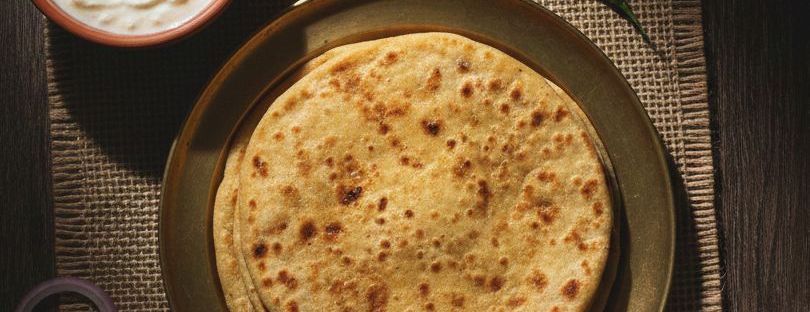
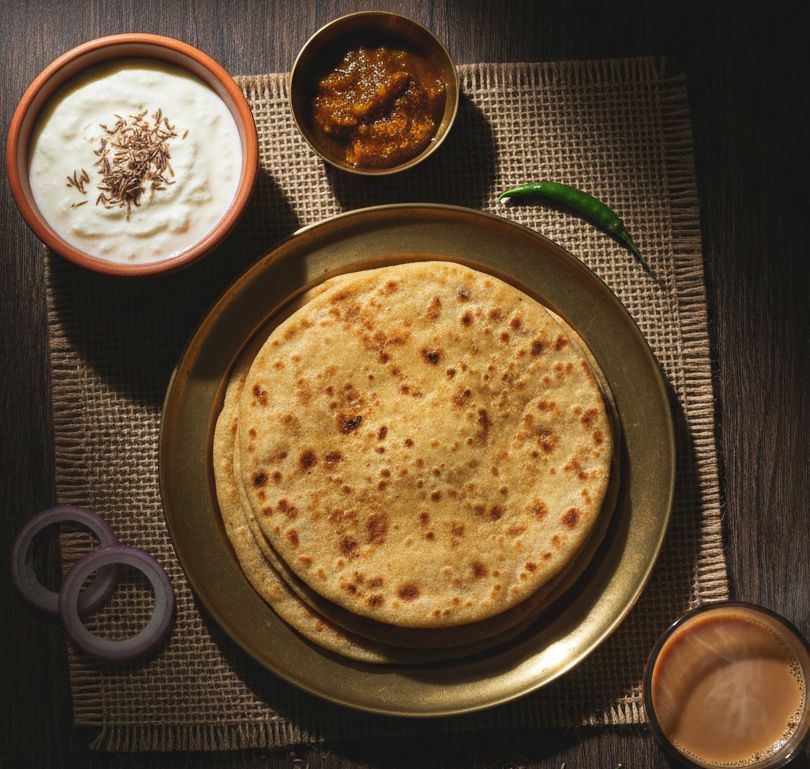
Gobi Paratha: The Art of the Non-Soggy Punjabi Winter Breakfast

In a Punjabi household, the sound of winter isn’t the wind it’s the rhythmic skritch-skritch of a grater against a fresh head of cauliflower.
Winter gobi is different. As the season shifts, the cauliflower sweetens, becoming tender and fragrant in a way that summer gobi never quite manages. I remember my grandmother (Nani) sitting in the kitchen as the morning fog lifted, her hands white with flour. She didn’t just make recipes; she performed rituals. One bite of her Gobi Paratha with its crisp, ghee-brushed edges and a soft, spiced center was proof that love really could be kneaded into dough.
But she was also a scientist of the kitchen. She knew that cauliflower is 92% water. If you don’t respect that moisture, your paratha will tear, your tawa will smoke, and your breakfast will be a mess. Today, I’m sharing her three-step secret to the perfect, dry, flavor-packed stuffing that never leaks.

To master the Gobi Paratha, you must win the war against moisture. Here are Nani’s golden rules:
The Room Temp Rule: Never grate cold cauliflower straight from the fridge. It releases more juice. Let it come to room temperature first.
The Salting Ritual: After grating, add a pinch of salt and wait 15 minutes. The salt draws the water out. Then, place the gratings in a muslin cloth and squeeze with all your might. That “cauliflower water” is liquid gold keep it for your dough!
The Ajwain Touch: Always add a pinch of Ajwain (carom seeds). Not only does it add a January-coded warmth, but it also helps digest the cauliflower.

Prep Time: 20 mins | Cook Time: 25 mins | Servings: 4

Ingredients:
For the Dough: 2 cups Whole Wheat Atta, a pinch of salt, 1 tsp ghee, and the reserved cauliflower water (or plain water).
For the Stuffing:
2 cups Cauliflower (grated and squeezed dry).
1 tsp Ajwain (carom seeds).
1 tbsp Ginger (finely chopped).
2 Green Chillies (chopped).
½ tsp Amchur (dry mango powder) for tang.
½ tsp Garam Masala.
A handful of Fresh Coriander (chopped).
For Roasting: Ghee or butter.
Instructions:
Knead: Mix flour, salt, and ghee. Gradually add water to form a soft, pliable dough. Let it rest for 15 minutes this “relaxes” the gluten so it stretches without tearing.
Prep Stuffing: Mix the dried cauliflower with spices and herbs just before you are ready to roll. If the mixture sits too long, it will start releasing water again.
Stuff: Take a lemon-sized ball of dough, flatten it, and place 2-3 tbsp of stuffing in the center. Pleat the edges together, pinch off the excess dough, and seal it tight.
Roll: Sprinkle some flour and roll gently. Use a “left-forward, right-backward” motion to spread the filling evenly to the edges.
Roast: Place on a medium-hot tawa. Once bubbles appear, flip it. Apply ghee to both sides and press down with a spatula until golden-brown spots appear and the edges are crisp.
Serve: Top with a blob of white butter. Serve with chilled dahi (yogurt) and tangy lemon pickle.

Stalk Sabzi: Don’t discard the thick cauliflower stalks! In the 2026 “Use-Up” economy, we value every part of the plant. Peel the tough outer layer of the stalks, dice the tender inner core, and sauté them with mustard seeds and turmeric for a crunchy side dish the next day.

Dessert

The Winter Ritual: Nani’s Slow-Cooked Gajar Ka Halwa

Introduction
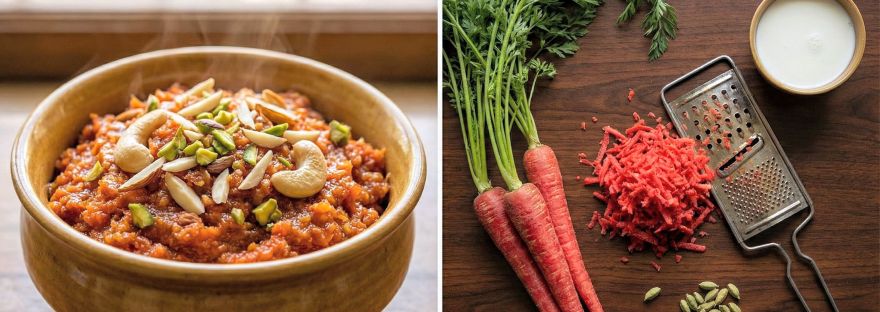
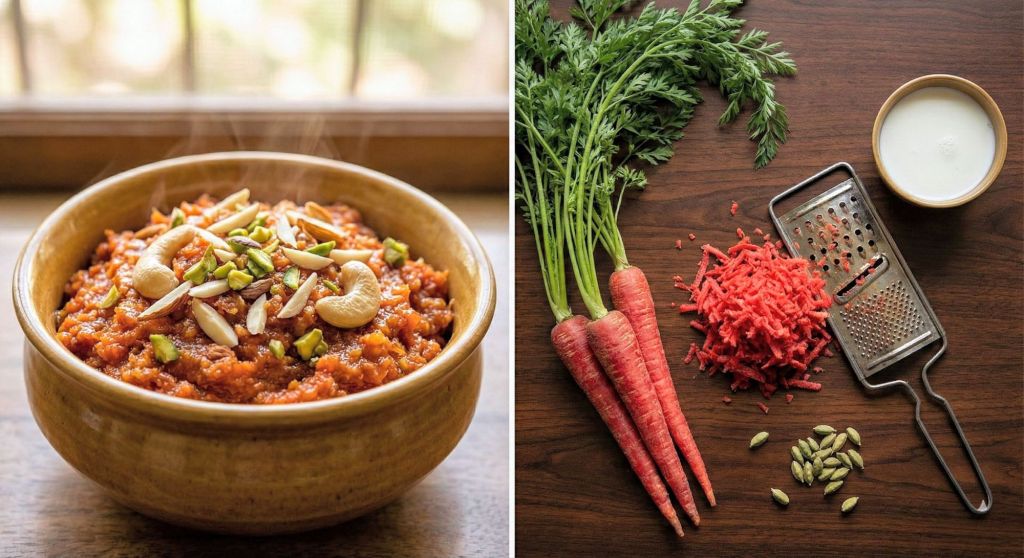
In my family, winter didn’t officially begin when the calendar turned to December. It began when the vegetable market turned red.
I am talking about the arrival of Delhi Gajar those long, ruby-red, sweet carrots that are only available for a few precious months of the year. My grandmother (Nani) used to say that making Gajar Ka Halwa with orange carrots was a crime against the season. “Orange carrots are for salads,” she would say, dismissing them with a wave of her hand. “Red carrots are for the soul.”
This recipe is not the “instant” version you see on TikTok. There is no condensed milk, no microwave, and no shortcuts. This is an act of preservation a “Digital Anthropologist” attempt to document the way it was made before we all got too busy. It is slow, it uses just milk and patience, and it tastes exactly like a winter afternoon in a sunlit courtyard.
Why We Cook It Slowly
In 2026, we talk a lot about “slow living,” but our grandmothers invented it. The magic of this dish lies in the Maillard reaction the caramelization of the milk solids as they slowly reduce into khoya (dried milk solids) right inside the pot.
When you cook the carrots in milk for an hour, they don’t just get soft; they absorb the richness of the dairy until they turn into jewel-like confections. It requires time, but I promise you, the first bite is worth every second.
The Recipe Card
Prep time: 20 minutes | Cook time: 60 minutes | Servings: 4

Ingredients:
1 kg Red Winter Carrots (Delhi Gajar): Washed, peeled, and grated. Tip: Hand grating gives a better texture than a food processor.
1.5 Liters Full-Fat Milk: Do not use skim milk. We need the fat content for that rich mouthfeel.
4 tbsp Ghee (Clarified Butter): Plus a little extra for frying nuts.
3/4 Cup Sugar: The red carrots are naturally sweet, so we use less sugar than standard recipes.
1 tsp Cardamom Powder (Elaichi): Freshly pounded.
A handful of Cashews & Almonds: Chopped.
1 tbsp Kishmish (Raisins): Optional, but traditional.
Instructions:
The “Bhuna” Start: Heat 1 tablespoon of ghee in a heavy-bottomed Kadhai (wok). Add the grated carrots and sauté on medium heat for 8-10 minutes. This releases the moisture and deepens the red color.
The Milk Bath: Pour in the milk. Bring it to a gentle boil, then turn the heat down to low. Now, let it simmer. Stir it every few minutes so it doesn’t stick to the bottom.
The Reduction: This is where patience comes in. Cook until the milk has almost completely evaporated. You will see tiny grains of milk solids mixing with the carrots. This takes about 45 minutes.
Sweetening: Add the sugar. The mixture will turn glossy and liquid again as the sugar melts. Keep cooking until the liquid evaporates once more.
The Ghee Finish: Add the remaining ghee, cardamom powder, and nuts. Roast (bhuna) the mixture for another 10 minutes. The halwa should leave the sides of the pan and have a deep, reddish-brown shine.
Serve: Serve piping hot.
The “Pinch of Thrift” Tip (Zero Waste)
Leftover Magic: If you have leftover Halwa that is a few days old, don’t throw it away! Use it to make “Gajar Halwa Spring Rolls.” Stuff a spoonful of cold halwa into a spring roll wrapper, fry it until crisp, and serve with vanilla ice cream. It gives the traditional dish a modern, crunchy texture and ensures nothing goes to waste.