chutney

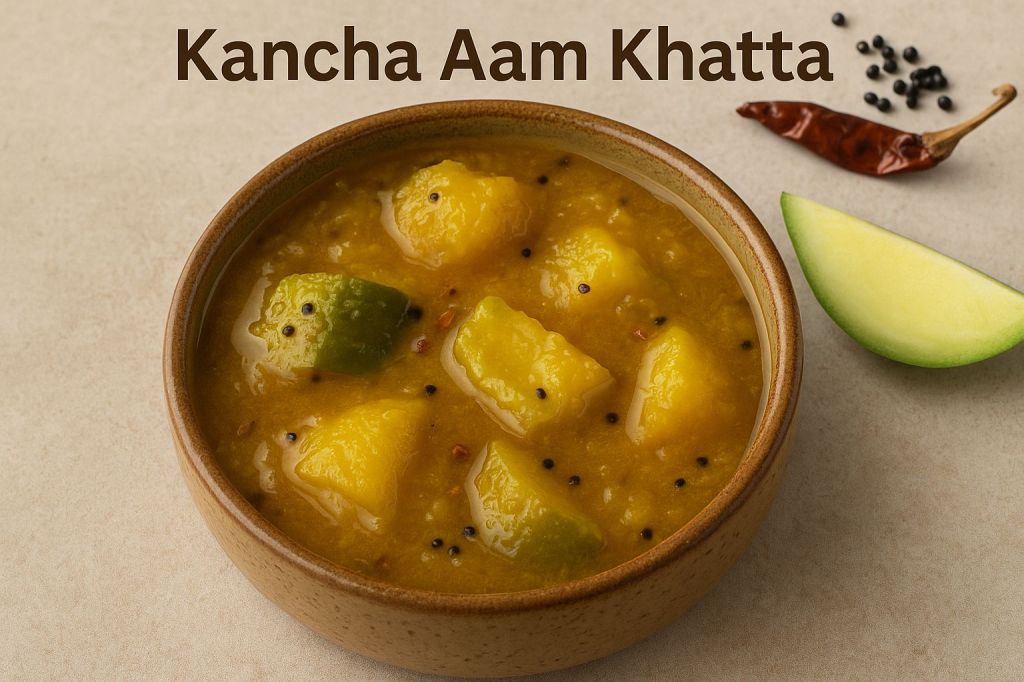
Kancha Aam Khatta – Odia-Style Raw Mango Sweet & Sour Chutney

Intro: Sweet, Tangy, and Nostalgic

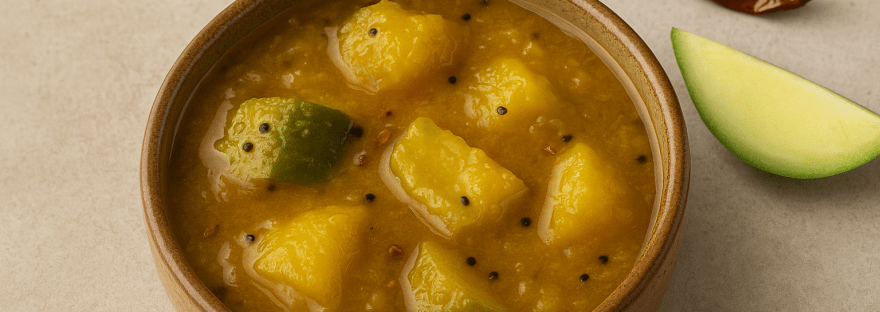
When raw mangoes start to flood the markets in Odisha, there’s only one thing on my mind—Kancha Aam Khatta. This humble dish carries the flavour of summer, childhood, and banana leaf lunches. Sweet, sour, slightly spicy, and often eaten chilled, it’s a dish that balances heat—both from the food and the sun.

In my village home, it was always made in batches, cooled in earthen pots, and served as a must-have side with dalma, fish curry, or pakhala.

Ingredients:

1–2 raw mangoes (preferably green, firm)

½ cup jaggery (or adjust to taste)

¼ tsp turmeric

½ tsp red chili powder

Salt to taste

1 cup water


For Tempering:

1 tsp mustard seeds

1 dry red chili

1 tsp oil (preferably mustard oil)

Optional: a pinch of roasted cumin powder at the end


Steps:

1. Prep the Mangoes

Peel and cut raw mangoes into medium chunks (with seed if soft).

Boil mango pieces with turmeric, salt, and water until soft.


2. Sweeten It

Add jaggery and red chili powder to the boiled mango.

Stir well and simmer until the sauce thickens slightly.


3. Temper It

In a separate pan, heat oil.

Add mustard seeds and red chili. Let splutter.

Pour over the mango mixture.


4. Final Touch

Optional: Add a pinch of roasted cumin powder before serving.

Serve warm or chilled.


Serving Suggestions:

With dalma and rice

As a side with pakhala

With dry sabzi or fried fish to balance spice


Why I Love It

Kancha Aam Khatta is more than a chutney—it’s a childhood memory, a seasonal ritual, and a burst of balance on the plate. It brings relief in heat and harmony on the tongue.

Lunch & Dinner

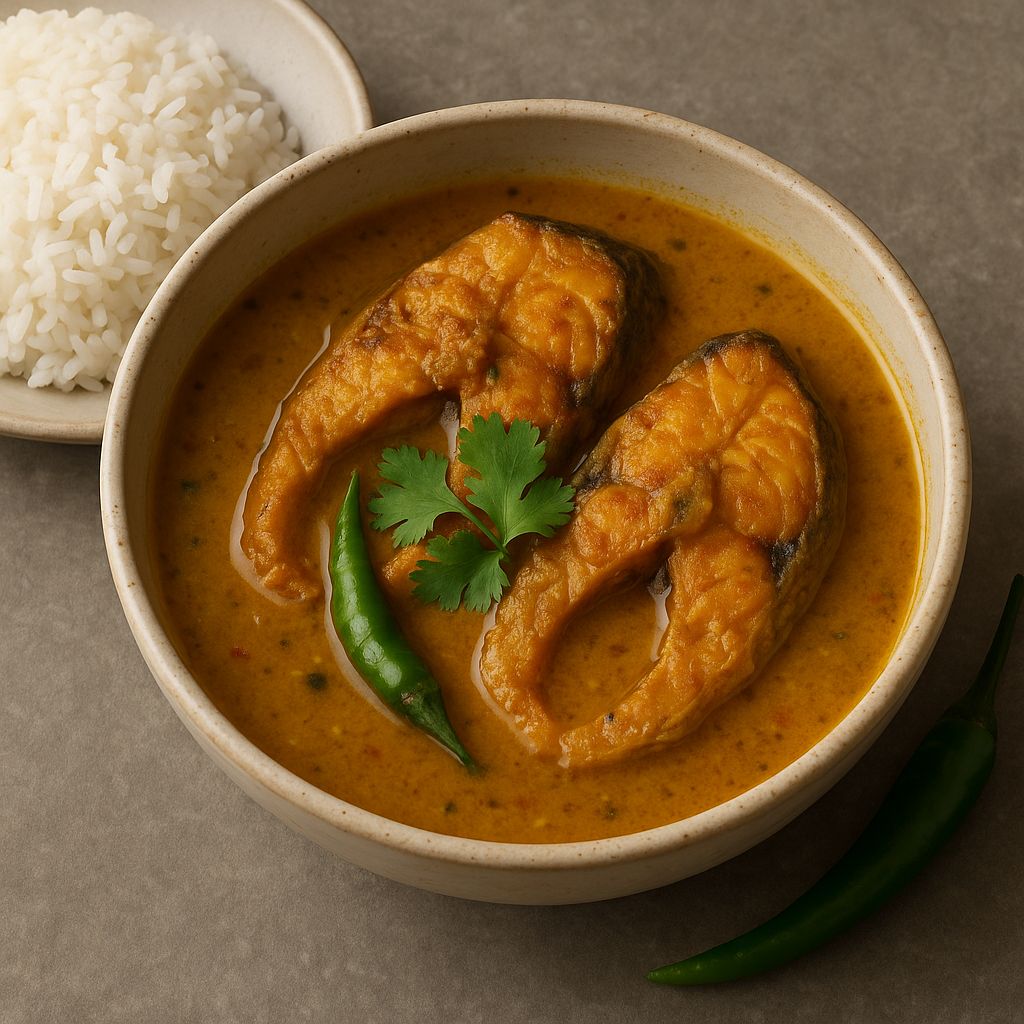
Rohi Besara – Odia-Style Mustard Fish Curry

Intro: A Curry Close to Home

In most Odia households, Sunday lunch has a rhythm of its own—and that rhythm often smells like rohi besara. Made with mustard paste, a hint of garlic, and green chilies, this curry isn’t fiery—it’s earthy, sharp, and deeply satisfying.

Whether served with steaming rice or pakhala, this dish is not just food, it’s emotion on a plate.

Ingredients:

For the Fish:

4–5 rohu (rohi) fish pieces

½ tsp turmeric

Salt to taste

Mustard oil for frying


For the Mustard Paste:

2 tbsp yellow mustard seeds

1 tbsp poppy seeds (optional)

2–3 garlic cloves

2 green chilies

Water to grind


For the Curry:

1 medium tomato (chopped or grated)

½ tsp panch phoron (or mustard + fennel mix)

1 tsp turmeric

Salt to taste

1–2 slit green chilies

1 cup warm water

A few curry leaves or chopped coriander (optional)


Steps to Prepare:

1. Prepare the Fish

Clean fish pieces and rub with salt + turmeric.

Let marinate for 10–15 mins.

Heat mustard oil until smoking, shallow fry fish till golden on both sides. Keep aside.


2. Make the Mustard Paste

Soak mustard seeds (and poppy seeds if using) for 20 mins.

Grind with garlic, green chilies, and a little water into a smooth paste. Strain if needed to avoid bitterness.


3. Cook the Curry

Heat oil, add panch phoron or just mustard + fennel seeds.

Add tomato and cook till soft.

Add mustard paste, turmeric, salt. Cook on low flame until oil separates.

Add water and slit chilies. Let simmer for 3–4 minutes.


4. Add Fried Fish

Gently slide in the fish pieces. Simmer for 5–6 mins on low.

Garnish with coriander or curry leaves (optional). Let rest for 10 mins before serving.


Serving Tip:

Pair with plain rice or even pakhala on a hot day. A side of aloo bharta and green chili completes the experience.


Why I Love It

Rohi Besara is a dish that speaks of home, heritage, and humility. Its strong mustard bite reminds me of lazy summer Sundays, banana leaf lunches, and second servings always requested.

Fastival Food

Chakuli Pitha with Aloo Dum – A Raja Festival Classic

Intro: Raja Mornings and the Aroma of Tradition

Every Odia home has one dish that smells like celebration—and in mine, it’s the pairing of chakuli pitha and aloo dum. Especially during Raja Parba, when kitchens slow down, and women rest, we wake up to the comforting rhythm of the tawa sizzling and the aroma of boiling potatoes soaked in spices.

Chakuli is soft, like a dosa but thicker and spongier. Aloo dum is rich, deep, and slow-cooked to perfection. Together, they are a perfect festive pair.


Chakuli Pitha Recipe

Ingredients:

1 cup parboiled rice

½ cup white urad dal

Salt to taste

Water as needed

Oil or ghee for cooking


Steps:

1. Soak & Grind

Soak rice and urad dal separately for 4–6 hours

Grind to a smooth batter. Mix and ferment overnight


2. Prepare the Pitha

Add salt. Heat a tawa or iron skillet

Pour a ladle of batter and spread gently (like thick dosa)

Cover and cook on one side with ghee/oil. No need to flip

Remove once edges lift and center is soft but firm


Aloo Dum Recipe (Odia Style)

Ingredients:

4–5 medium potatoes, boiled & peeled

2 onions, finely chopped

1 tsp ginger-garlic paste

1 tomato, grated

½ tsp turmeric

½ tsp red chili powder

½ tsp cumin

1 tsp garam masala

1 tsp sugar

Salt to taste

Oil for cooking

Coriander leaves to garnish


Steps:

1. Prep the Masala

Heat oil. Add cumin, onions, ginger-garlic paste

Sauté till golden. Add tomato, turmeric, chili, salt, sugar

Cook till oil separates


2. Add Potatoes & Simmer

Crush potatoes lightly. Add to masala with little water

Simmer for 10–15 mins till thick and flavorful

Add garam masala and coriander before serving


Serving Suggestion

Stack warm chakulis. Pour hot aloo dum on top or serve in a katori on the side. Garnish with coriander. For an extra festive touch, serve with jaggery water or banana slices.


Why This Combo is Special

This dish isn’t just a breakfast—it’s a Raja morning memory. The first bite takes me to my village, barefoot in the courtyard, where chakulis were flipped on earthen tawa and aloo dum simmered in iron kadai.

Fastival Food

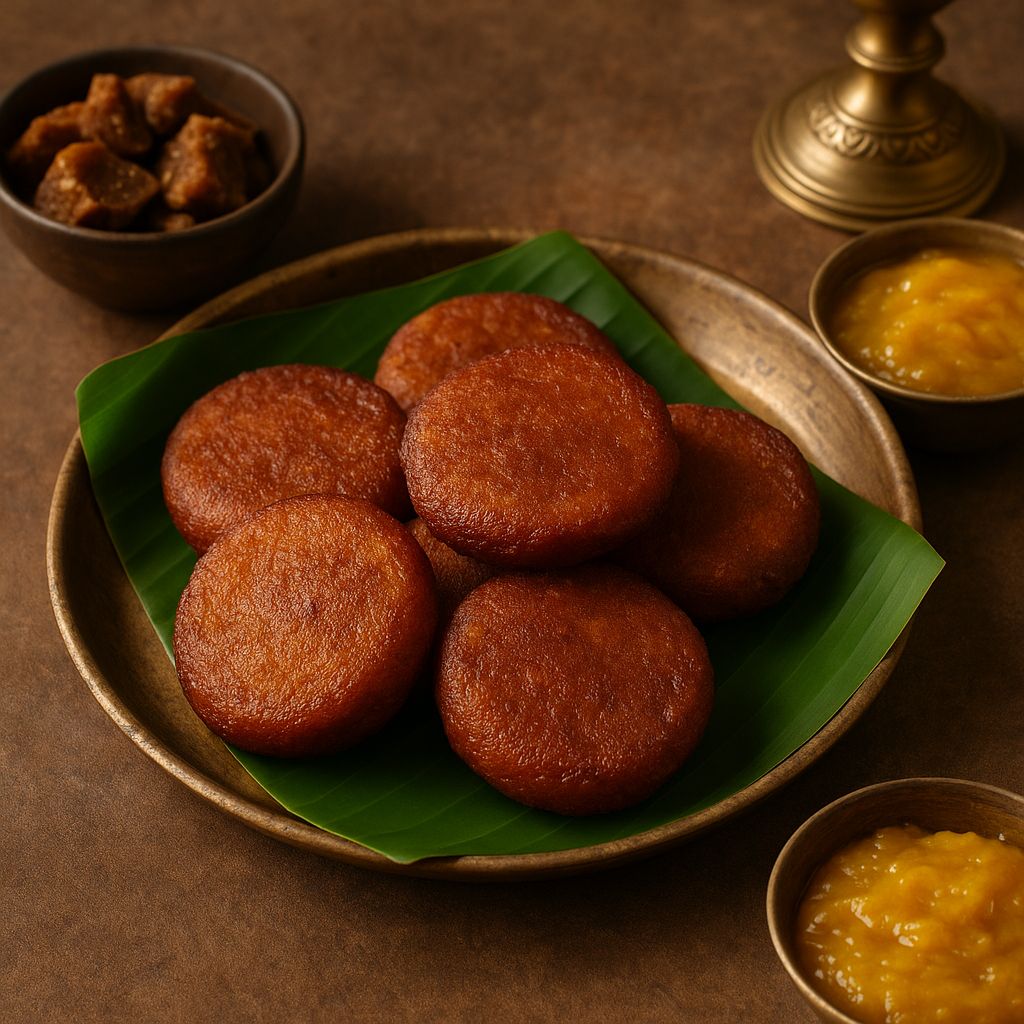
Tala Pitha – The Monsoon Magic of Palm Fruit Sweets


Intro: When the Palms Ripen, the Kitchens Celebrate

In Odisha, the arrival of tala (palm fruit) signals the true monsoon. The air is earthy, markets smell like jaggery and fresh pulp, and kitchens begin preparing Tala Pitha—deep-fried, golden discs full of flavor and nostalgia.

This isn’t just a sweet. It’s a seasonal celebration, mostly made in the months following Ratha Yatra, when palm fruit matures. The flavor is bold, slightly fermented, and unmistakably Odia.

Ingredients

1 cup tala pulp (strained, ripe palm fruit)

¾ cup rice flour

½ cup grated coconut

½ cup jaggery (adjust to taste)

1–2 crushed cardamoms (elaichi)

A pinch of black pepper (optional)

Oil or ghee for shallow or deep frying


Method

1. Prepare the Pulp

Soak tala fruit and extract pulp by removing fibers.

Strain through a fine sieve to remove threads.


2. Make the Batter

Combine tala pulp, jaggery, rice flour, coconut, and spices into a thick batter (like vada batter).

Let it rest for 10–15 mins (optional).


3. Fry the Pithas

Heat oil or ghee in a kadai.

Drop batter in small rounds using a spoon or hand.

Fry on medium flame until golden brown and crisp outside.


4. Cool & Serve

Drain excess oil and serve warm or at room temperature.


Tips

Always use ripe, strained pulp to avoid bitterness.

Adjust jaggery based on sweetness of the tala pulp.

You can also steam these for a healthier version (like palm idlis!).


Why I Love It

No other sweet captures the flavor of monsoon in Odisha like Tala Pitha. It’s strong, sweet, and rustic. The kind of dessert that demands quiet, patience, and a second helping.

Fastival Food

Poda Pitha – The Smoky, Sweet Soul of Odia Festivals


Intro: A Cake Made in Fire and Memory

In Odisha, festivals aren’t complete without the scent of poda pitha filling the kitchen. The name itself means “burnt cake,” but don’t let that fool you—it’s a deliciously caramelized rice flour cake, slow-roasted to perfection.

Whether made for Raja Parba, served as bhog during Ratha Yatra, or prepared with tala pulp during monsoon, poda pitha is deeply woven into our festive lives.


Ingredients You’ll Need

Dry Mix:

2 cups rice flour (preferably fresh ground)

1 cup grated coconut

¾ cup jaggery (or as per taste)

1 tsp fennel seeds (saunf)

A pinch of black pepper (optional)

A pinch of salt


Optional (for special version):

½ cup tala pulp (only after Ratha Yatra when tala matures)


Other:

1–2 tbsp ghee for greasing

Banana leaves or baking paper

An oven or thick-bottomed tawa/iron kadai with lid


Method – The Traditional Way

1. Prep the Pitha Mix

Mix rice flour, grated coconut, jaggery, fennel seeds, pepper, and salt.

Add little water to form a thick batter — not runny.

Mix in tala pulp if using (optional, for richer flavor).


2. Line the Vessel

Grease a baking tray or kadai with ghee.

Line with banana leaf for that smoky aroma.


3. Roast It Low and Slow

Pour the batter in, spread evenly.

Roast on low flame (covered) for 45–60 minutes OR

Bake at 180°C (350°F) for 50–60 mins until golden edges form and center is set.

Optional: Flip midway for even charring.


4. Cool & Slice

Let it cool fully before slicing. Poda pitha tastes better the next day!


Serving Suggestions

Serve with a drizzle of ghee

Pair with chilled milk or tea

Often eaten as breakfast during Raja or with bhog during Rath Yatra


Why I Love It

Poda Pitha carries stories in its smoke. From my mother slow-roasting it over wood fire to me baking it in a modern oven, the essence remains the same. When I bite into its crusty corners and soft center, I taste tradition.

Story

5 Ingredients I Can’t Live Without – The Heart of My Odia Kitchen

Intro: The Soul Behind the Spice Box

In every kitchen, there are a few ingredients that feel like home. You reach for them instinctively. You know their smell, their sound in hot oil, the way they color your food and your memories.

For me, these five ingredients are more than essentials—they’re a connection to my roots in eastern coastal Odisha, where flavors speak louder than words.

1. Mustard Oil – The Bold Foundation

There is no Odia cooking without mustard oil. Its pungent aroma is a sign that the kitchen is open. Whether it’s a sizzle in pakhala badi chura or the golden base of machha jhola, mustard oil brings both flavor and heat.

How I use it:

Drizzled raw over aloo bharta or badi chura

Tempered for fish curry or dry sabzi

Added to pickles and even spicy chutneys


2. Panch Phoron – The Five-Spice Whisper

This blend of mustard, fennel, cumin, fenugreek, and nigella seeds is the first thing that hits the pan in many Odia dishes. Its aroma changes everything—instantly lifting dal, chutneys, and vegetable stir-fries.

How I use it:

In tempering for dalma and chutneys

With mustard oil for simple sautéed greens (saga bhaja)

Sometimes as dry masala in paratha stuffing!


3. Turmeric – The Golden Thread

We use haldi not just for color, but for comfort, healing, and tradition. In Odia homes, turmeric isn’t optional—it’s essential. It goes into curries, rice, pickles, and even skincare!

How I use it:

A pinch in every curry or dal

In fish marinades (always!)

Mixed with water and salt to clean veggies


4. Green Chilies – The Gentle Fire

Odia food isn’t heavy on masalas, but the heat of green chilies balances everything. Crushed into bharta, sliced over murmura, or blended into chutneys—they add more flavor than just spice.

How I use it:

Raw over pakhala or puffed rice

In mashed sides like aloo or baigana bharta

In green chutneys or mustard pastes


5. Dry Red Chilies – For Depth and Drama

While green chilies bring sharpness, dry red chilies add smokiness and depth. Roasted in oil, they lend their fire to dals, ghanta, and tempering that lingers long after the meal.

How I use it:

In tadka for dal

Roasted with garlic for spicy tomato chutney

Crushed into oil for a quick chili oil twist


Wrapping Up – More Than Ingredients

These 5 ingredients are my constant companions. They remind me of my roots, my mother’s kitchen, and everything I love about Odia cooking—simple, honest, and full of soul.

If you’re stocking an Indian kitchen or trying Odia recipes, start with these. They’re not just staples—they’re storytellers.

Story

A Day in My Odia Kitchen – Simple Meals, Big Flavours


A Kitchen Rooted in Rhythm

Life in an Odia kitchen isn’t rushed. It follows a rhythm passed down through generations. From the scent of mustard oil hitting a hot pan to the quiet comfort of bhata-dalma at night, every meal is made with intention, not urgency.

Let me take you through a typical day in my kitchen — a space where memory and meal go hand in hand.

Morning – Murmura & Curry

Our day begins early with a humble bowl of murmura (puffed rice). Not plain — it’s soaked and mixed with leftover curry, alu chuin tarkari, or sometimes dal. Topped with mustard oil, a pinch of salt, and a little green chili — it’s not just breakfast, it’s warmth in a bowl.

Related Recipe: Oats Khichdi
Looking for a modern version of comfort? This soft, wholesome oats khichdi is my go-to for busy mornings.

Lunch – Rice, Curry & a Crisp Bhaja

Lunchtime is the heart of the day. It’s when the kitchen is most alive with sounds and smells:

Steamed rice

Rohu or hilsa fish curry (machha besara or sorisa jhola)

A crispy bhaja — maybe aloo, baigana, or karela

A spoonful of kancha amba khatta or a seasonal chutney


Related Recipes: Fish Head Ghanta | Poi Chingri Curry
Food is served warm, eaten slow, and followed by a little rest.


Evening – Pakhala or Murmura, Depending on the Mood

Summer evenings in Odisha are special — and flexible. Sometimes we go light with a fresh batch of murmura, tossed with chopped onions, chilies, roasted peanuts, and a drizzle of mustard oil.

Other days, it’s a second serving of pakhala — because in peak heat, pakhala is all-time food. Be it 10 a.m., 1 p.m. lunch, or dinner — it cools the body and comforts the soul.

Served with:

Badi Chura – crushed lentil fritters with raw onion and mustard oil

Aloo Bharta – mashed potatoes, mustard oil, green chilies

Saga Bhaja – stir-fried greens like spinach or amaranth


Related Recipes: Badi Chura | Aloo Bharta | Saga Bhaja


Dinner – Light & Comforting

Dinner is simple. Often rice again, or chapati, paired with dal and a light vegetable sabzi like pumpkin, ridge gourd, or raw banana. The food is light, warm, and familiar — something that helps the body rest and wind down.

There’s always a jar of homemade pickle that makes its way to the plate, no matter the season.


Why It Matters

This daily rhythm — starting with murmura, resting with fish curry, cooling down with pakhala — is more than a routine. It’s a quiet inheritance, carried forward from the kitchens I grew up watching.

Every recipe I share on The Pinch of Masala is an extension of that life. Simple. Seasonal. Rooted.

Snacks

My First Cooking Memory – Potato Fry in a Hostel Kitchen

Cooking didn’t come to me through family traditions or childhood kitchen experiments. It came to me out of pure necessity—on a quiet evening in my hostel room. Far from home, missing the flavors I grew up with, and too broke to order food, I found myself holding two humble potatoes and thinking, “Let’s try.”

We had no spices beyond salt, turmeric, and chili powder. The pan was shared, and the stove was temperamental. But I sliced those potatoes, heated a little oil, and let them sizzle. It wasn’t just about making food—it was about creating something comforting, something mine.

I burnt a few slices, added too much chili, and had no clue what I was doing. But when my roommates tasted it and asked for more—I felt proud. That day, I didn’t just cook—I connected with something inside me.

Today, after so many recipes and memories later, that simple potato fry still reminds me how food can ground us—even in unfamiliar places.

Hostel-Style Potato Fry Recipe

Ingredients:

2 medium potatoes, thinly sliced

2 tbsp oil

½ tsp turmeric

½ tsp red chili powder

Salt to taste

Optional: pinch of cumin or garam masala


Steps:

1. Heat oil in a pan. Add sliced potatoes.


2. Stir and cook on medium until lightly browned.


3. Add turmeric, chili powder, and salt. Stir well.


4. Cook till edges are crispy and golden.


5. Serve hot—solo, with dal-rice, or roti.


From Frying to Blogging

That little cooking moment eventually sparked my journey into food blogging. It wasn’t about perfect technique—it was about flavor, memory, and that smile of satisfaction. And that’s what The Pinch of Masala is all about.

Breakfast

Moonglet – The Viral Veg Omelette Without Eggs


Prep Time: 10 mins
Cook Time: 15 mins
Total Time: 25 mins
Serving: 2


About the Recipe

Moonglet is a fluffy, protein-rich, street-style dish made from soaked moong dal and veggies — often called the “vegetarian omelette.” It’s crispy on the outside, soft inside, and perfect for breakfast or light dinner. With no eggs or maida, it’s light, filling, and trending across food lovers online.

I stumbled upon this gem during lockdown while binge-watching food reels. What started as a curiosity soon became a staple — my family now asks for it almost every week!

Fluffy vegetarian moonglet omelette made with moong dal and mixed vegetables, served in a skillet.

Ingredients

1 cup moong dal (soaked 4–5 hrs or overnight)

1 green chili

½ inch ginger

¼ tsp turmeric

Salt to taste

A pinch of asafoetida (hing)

½ tsp baking soda (optional, for extra fluffiness)


Veggies (mix-in):

¼ cup chopped onions

¼ cup chopped tomatoes (deseeded)

¼ cup capsicum (any color)

2 tbsp chopped coriander leaves

Optional: grated carrot, beetroot, spinach


Other:

Oil or ghee for shallow frying

Chaat masala for sprinkling


Instructions

1. Prepare the Batter:

Drain soaked moong dal and blend with green chili, ginger, turmeric, salt, and a splash of water until smooth but thick (like dosa batter).

Just before cooking, add baking soda and mix lightly (optional).


2. Mix the Veggies:

Fold in onions, tomatoes, capsicum, and coriander into the batter.


3. Cook the Moonglet:

Heat 1 tsp oil in a small nonstick pan or iron tawa.

Pour a ladleful of batter and spread slightly thick (like a mini pizza).

Cover and cook on medium flame for 3–4 mins till golden at the bottom.

Flip gently and cook uncovered until both sides are golden.


4. Garnish & Serve:

Sprinkle chaat masala. Serve hot with mint chutney or tomato ketchup.

Craving more healthy breakfast ideas? Check out my Oats Khichdi and Ragi Paratha.


Tips & Variations

For extra crisp edges, use a well-seasoned iron pan.

Add cheese or paneer inside for a fusion twist.

Make mini versions as party starters or lunchbox ideas.


FAQs

Q: Can I store leftover batter?
A: Yes! Store in the fridge for 1 day. Stir before use and add soda fresh.

Q: Can I make this without soaking?
A: Quick tip — soak in hot water for 1 hour as a shortcut.

Lunch & Dinner

Gobi Chilli – Indo-Chinese Crispy Cauliflower

Prep Time: 15 mins
Cook Time: 20 mins
Total Time: 35 mins
Serving: 3–4


About the Recipe

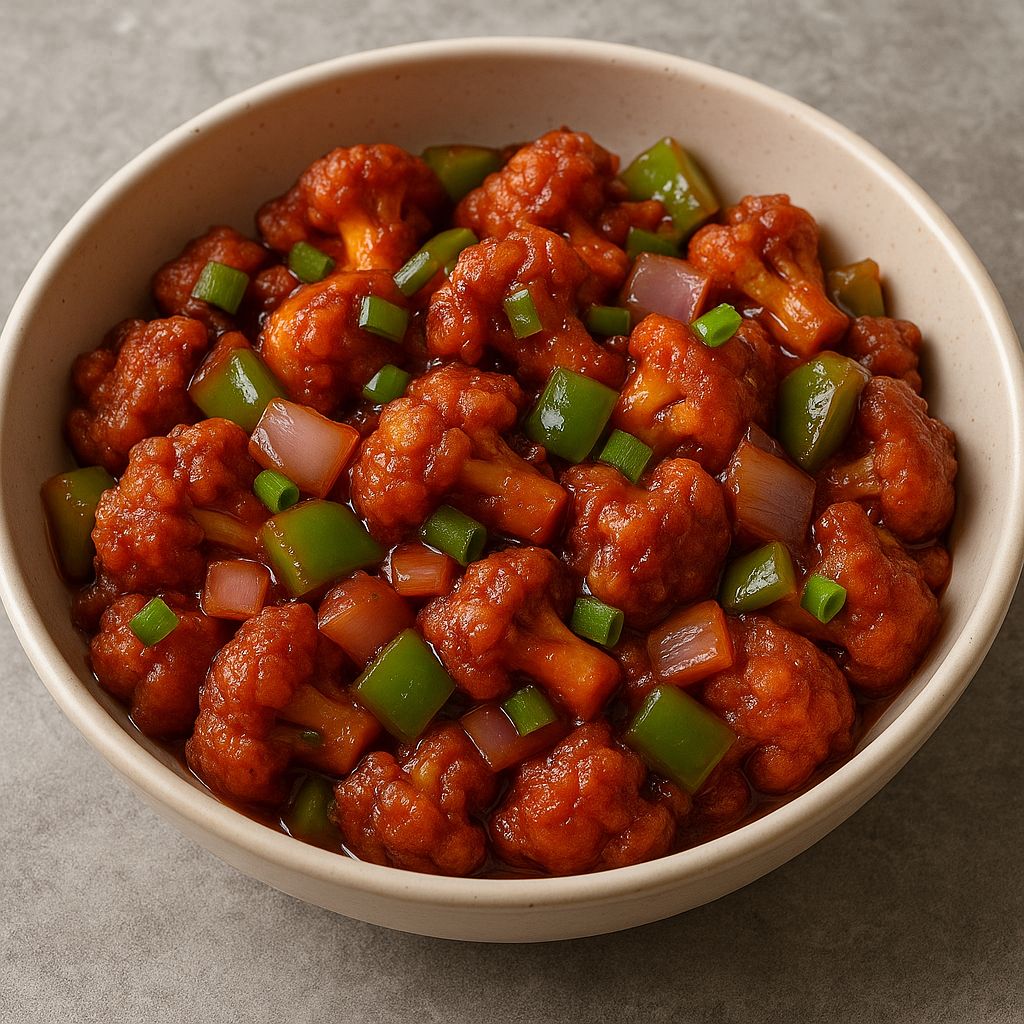
Gobi Chilli is a crowd-favorite Indo-Chinese fusion dish made with crispy batter-fried cauliflower tossed in a spicy, tangy sauce. It’s bold, addictive, and perfect as a starter, side dish, or even a party snack. Serve it dry as an appetizer or make it semi-gravy for a perfect pairing with fried rice or noodles.

Looking for more Indo-Chinese starters? Try my Cabbage Pakora or Moonglet for a twist!

Crispy gobi chilli tossed in spicy garlic sauce with bell peppers and onions – Indo-Chinese recipe


Ingredients

For Frying Cauliflower:

2 cups cauliflower florets

½ cup all-purpose flour (maida)

¼ cup cornflour

1 tsp ginger-garlic paste

¼ tsp pepper powder

Salt to taste

Water (to make a thick batter)

Oil (for deep frying)


For the Sauce:

1 tbsp oil

1 tbsp finely chopped garlic

1 tsp finely chopped ginger

2 green chilies, slit

1 small onion, diced

1 small capsicum, diced

2 tbsp spring onion whites (optional)

1 tbsp soy sauce

1 tbsp red chili sauce

1 tbsp tomato ketchup

½ tsp vinegar

½ tsp sugar

Salt to taste

Spring onion greens (for garnish)


Step-by-Step Instructions

1. Prepare Cauliflower:

Parboil cauliflower florets in salted hot water for 2–3 minutes. Drain and set aside.

Mix maida, cornflour, pepper, ginger-garlic paste, salt, and a little water to make a thick batter.

Coat cauliflower florets in the batter and deep-fry until golden and crispy. Set aside on paper towels.


2. Make the Sauce:

Heat oil in a wok or pan. Sauté garlic, ginger, and green chilies until aromatic.

Add onions and capsicum. Stir-fry on high flame for 2–3 minutes.

Add soy sauce, chili sauce, ketchup, vinegar, sugar, and salt. Mix well.


3. Toss & Serve:

Add the fried cauliflower to the sauce. Toss quickly to coat evenly.

Garnish with chopped spring onions. Serve hot!


Tips & Variations

Double fry the cauliflower for extra crispiness.

Add a tsp of red chili paste or Kashmiri chili powder for more vibrant color.

For a gravy version, mix 1 tsp cornflour in ¼ cup water and add to the sauce before tossing cauliflower.


FAQs

Q: Can I make this ahead of time?
A: Fry the cauliflower and prep the sauce in advance. Toss just before serving to retain crispiness.

Q: Is it gluten-free?
A: Substitute all-purpose flour with rice flour for a gluten-free option.