
In my childhood summers, raw mangoes were a prized ingredient in our kitchen. When the sun was blazing, my mother knew exactly how to turn that heat into comfort: with a pot of tangy Raw Mango Dal simmering on the stove. She’d toss tart green mango pieces into creamy yellow lentils, and the whole house would fill with a mouthwatering aroma. One sip of that sour-and-spiced dal and I’d be instantly refreshed – it was like summer vacation served in a bowl, bringing a smile to my sun-tired face every time.
Raw Mango Dal is a seasonal Indian lentil dish that combines the protein-packed goodness of dal with the bright tang of unripe mango. It’s especially popular during mango season in many regions of India. (In Andhra, for example, a similar mango dal is known as mamidikaya pappu, and in Bengal, aamer dal.) Essentially, we cook lentils like toor dal or moong dal with chunks of raw green mango so that the dal absorbs that lovely sourness. A simple tempering of spices (tadka) poured on top makes it truly sing with flavor. The result is a light, homestyle dal that’s comforting yet zesty – just the thing for hot days when you crave something soothing but also appetizing.
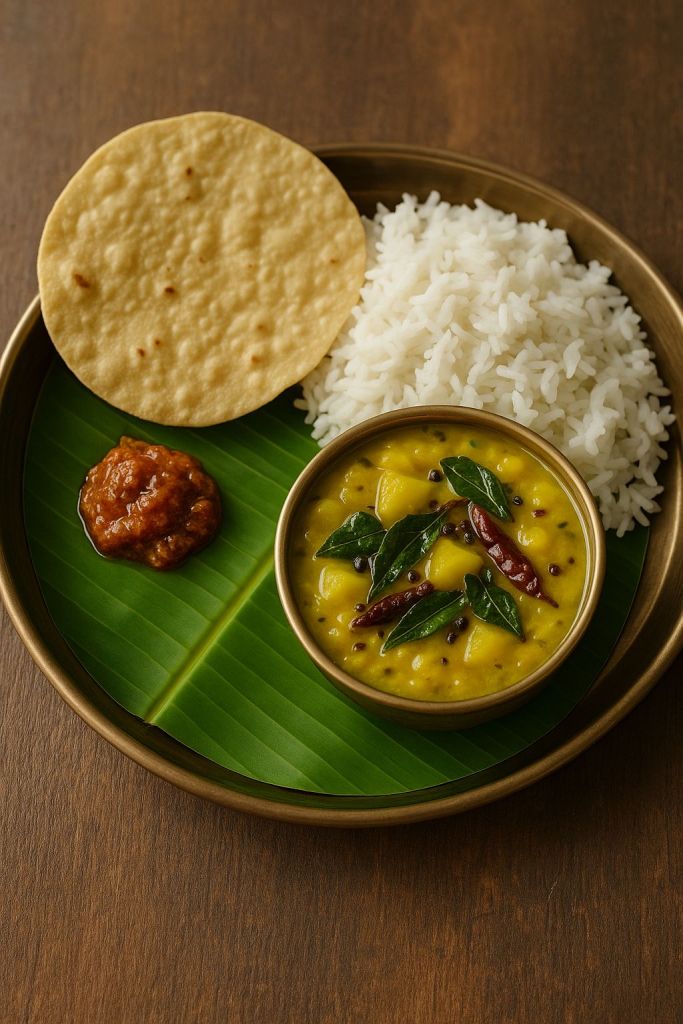
Ingredients (Serves 4)
1 cup toor dal (split pigeon peas) or moong dal (yellow lentils)
1 medium raw green mango, peeled and cut into chunks (about 1 cup of pieces)
2 green chilies, slit (adjust to taste)
2½ cups water (for cooking the dal, approximately)
½ teaspoon turmeric powder
Salt to taste (add after cooking the dal)
2 tablespoons ghee or oil (for tempering)
½ teaspoon mustard seeds
½ teaspoon cumin seeds
1–2 dried red chilies
¼ teaspoon asafoetida (hing)
8–10 fresh curry leaves
2 cloves garlic, sliced (optional)
½ teaspoon red chili powder (optional, for extra heat & color)
2 tablespoons fresh coriander leaves, chopped (to garnish)
Step-by-Step Preparation
1. Pressure Cook the Dal & Mango: Rinse the dal a couple of times under water. In a pressure cooker, combine the rinsed dal, raw mango pieces, green chilies, turmeric, and about 2½ cups of water. Cook for 3–4 whistles (or until the dal is soft and mushy). If you don’t have a pressure cooker, boil the dal in a pot until the lentils are very tender (this may take 30–40 minutes, adding more water as needed). Allow the pressure to release naturally.
2. Mash & Adjust Consistency: Once the dal is cooked and soft, open the cooker and gently mash the dal with a spoon or whisk to your desired consistency. The cooked mango will be very tender and will mostly blend into the dal, adding a tangy flavor. If the dal looks too thick, stir in a bit of hot water to thin it out. Now add salt to taste. Keep the dal on low heat, simmering gently, while you prepare the tempering.
3. Prepare the Tadka (Tempering): In a small pan, heat the ghee or oil over medium heat. Add the mustard seeds and cumin seeds and let them splutter for a few seconds. Then add the dried red chilies, garlic slices (if using), and curry leaves. Sauté for about 30 seconds until the garlic turns lightly golden and the spices release their aroma (be careful, the curry leaves will crackle!). Turn off the heat and stir in the asafoetida. If you want an extra kick of heat and color, add the red chili powder now, stirring it into the hot oil (this prevents it from burning).
4. Combine & Serve: Carefully pour this hot tempering over the simmering dal. You should hear a satisfying sizzle! Give the dal a good stir so all that spiced ghee/oil blends in. Let the dal simmer together with the tempering for another 1–2 minutes to let the flavors meld, then turn off the heat. Sprinkle the chopped fresh coriander on top. Your Raw Mango Dal is ready – serve it piping hot with your favorite accompaniments and enjoy the tangy goodness!
Tips for Perfect Raw Mango Dal
Lentils: You can use either toor dal or moong dal for this recipe, or even a mix of both. Toor dal gives a slightly thicker, earthier base, while moong dal makes the texture a bit lighter and silkier. Both absorb the mango flavor well – so choose based on your preference or what’s on hand. (If using moong dal, you might not need to pressure cook as long since it softens faster.)
Tanginess: The tanginess of the dal will depend on your mango’s sourness. Feel free to adjust the amount of raw mango to your taste – if you want it extra tangy, add a few more mango pieces, and if your mango is very sour or you prefer a milder tang, you can use a little less. Pro tip: If the cooked dal turns out too sour for your liking, stir in a pinch of sugar or jaggery. It won’t make the dal sweet, but it will balance the sourness nicely without dulling that mango flavor.
Thickness: For a thicker, more porridge-like dal, mash the lentils well and simmer a bit longer to evaporate some water. For a thinner, soupier dal, add a little more water when cooking or after and don’t mash the lentils completely. You have complete control over the consistency – so make it as hearty or as light as you prefer. Remember, the dal will also thicken a bit as it cools, so aim slightly thinner if you plan to serve it later.
Flavor: Using ghee for the tempering gives a lovely rich aroma and taste (that nutty fried garlic and cumin in ghee is heavenly). If you’re vegan or want to keep it lighter, use any neutral cooking oil – it will still be delicious. Don’t skip the curry leaves and asafoetida if you can help it; even a small pinch of hing and those few curry leaves add an authentic depth of flavor that makes the dal taste like grandma’s recipe. Adjust the chilies to your heat preference – green chilies give a fresh heat while dried red chilies add warmth and a smoky touch. And if you love garlic, that optional sliced garlic in the tadka really brings an extra homestyle warmth to the dish.
Serving Suggestions
Classic Rice Meal: Raw Mango Dal is best enjoyed with plain steamed rice. Ladle the hot, tangy dal over a mound of rice, add a little drizzle of ghee on top, and serve it with a crispy papad and a side of spicy pickle (mango or lime pickle pairs exceptionally well). This combination of soft rice, sour dal, crunchy papad, and fiery pickle is simple yet absolutely satisfying – a classic summer comfort meal in many Indian homes.
Roti or Paratha: You can also relish this dal with chapatis, rotis, or parathas. Because it’s on the thinner side compared to gravies, make sure to cook the dal a bit thicker if you plan to scoop it up with bread. The tangy lentils make a great accompaniment to whole wheat flatbreads, especially when paired with a dry vegetable sabzi or a potato fry on the side. It’s a wonderful change from the usual dal sabzi routine and perks up your everyday dinner or lunch plate.
In a Thali: Include Raw Mango Dal as part of a larger summer thali (platter). It goes wonderfully next to other dishes like a light veggie stir-fry, maybe a cucumber salad or raita, and some jeera rice or pulao. The dal’s bright flavor can really balance richer dishes. And if you’re like me, you might even enjoy slurping a little bowl of this dal like a soup – it’s light and refreshing enough for it! However you serve it, make sure to have some extra papads or fryums on hand, because everyone will want something crunchy to munch with this tasty dal.
Why I Love It
I love Raw Mango Dal because it tastes like summer in a bowl. It’s amazing how a simple everyday dal transforms into something special just by adding a few pieces of raw mango. The moment that tangy mango hits the pot, it fills the kitchen with an irresistible aroma – a signal that my favorite time of year has arrived. Each spoonful is a beautiful balance: the comforting, creamy texture of lentils on one hand, and a zingy, mood-lifting sharpness on the other. It’s the dish that cheered me up on many a sweltering afternoon as a kid, and to this day, it never fails to make me happy. When I miss home or when the heat saps my appetite, I know I can cook up this dal and instantly bring back both my appetite and a flood of sweet summer memories. 🌼
 The Pinch of Masala