Uncategorized

Mangalore Buns (Banana Puri) Recipe


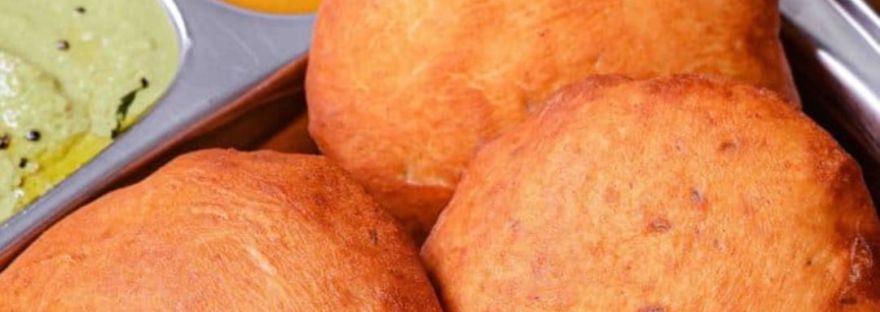
I still remember the first time I tasted Mangalore buns at a seaside café in Udupi during a sunny summer morning.  We had been exploring the old temples and my stomach growled as soon as the sweet smell of banana mixed with frying oil wafted through the air.  Sitting on a wooden bench by the coast, I bit into a warm, puffed bun – crispy on the outside and fluffy inside, with a gentle sweetness and a faint hint of spice.  It felt like biting into a soft banana cake hidden inside a puri.  Those golden-brown buns quickly became a favorite memory of my coastal travels, and I’ve been craving to recreate that homely snack ever since.

Servings

Makes about 12 buns (serves 4–6)

Prep Time

15 minutes (plus 4–6 hours resting time)

Cook Time

15 minutes

Ingredients

2 ripe bananas (preferably with brown spots), mashed

2½ cups all-purpose flour (maida) – or use whole wheat atta for a healthier twist (texture will change)

¼ cup plain yogurt (curd), at room temperature

3 tablespoons sugar (adjust to taste, depending on banana sweetness)

1 teaspoon cumin seeds (jeera)

½ teaspoon baking soda (soda bicarbonate)

½ teaspoon salt (or to taste)

Oil, for deep frying


Instructions

1. Mash the bananas: In a large mixing bowl, mash the ripe bananas thoroughly with a fork. (Avoid using a blender; hand-mashing preserves texture.)


2. Mix wet ingredients: Stir in the yogurt, sugar, and a pinch of salt into the mashed banana until smooth. The mixture will be runny – that’s okay.


3. Combine dry ingredients: In a separate bowl, whisk together the flour, cumin seeds, and baking soda.


4. Form the dough: Add the dry flour mixture to the banana mixture. Gently combine and knead into a smooth, non-sticky dough. If it’s too dry, add a little more yogurt or water. If too sticky, sprinkle a bit more flour. (The dough should be softer than chapati dough.)


5. Rest the dough: Lightly grease the dough with a teaspoon of oil or ghee and cover with a damp cloth. Let it rest in a warm place for at least 4–6 hours (or overnight). This resting time (fermentation) is crucial – it makes the buns puff up and gives them a chewy, bread-like texture.


6. Shape the buns: After resting, knead the dough a couple of times. Divide it into 10–12 equal parts and roll each into a smooth ball. Dust each ball lightly with flour and roll it out on a floured surface into a circle about 4–5 inches in diameter (slightly thicker than a regular puri, about 1/4 inch thick). Thicker rolls ensure the buns puff up nicely without tearing.


7. Heat the oil: Pour enough oil into a deep pan to submerge a bun. Heat it over medium heat. To test, drop a small piece of dough: if it sizzles and rises steadily, the oil is ready.


8. Fry the buns: Carefully slide one rolled dough circle into the hot oil. Gently press it down with a slotted spoon; it should puff up. Fry each side for about 30–60 seconds or until golden brown. Keep the flame at medium-low so the insides cook through without burning the exterior. Remove and drain on paper towels. Repeat with remaining dough.


9. Serve hot: Serve the Mangalore buns immediately while warm. They go wonderfully with coconut chutney, a lentil curry (sagu), or simply with a cup of hot masala chai. These banana buns are equally comforting plain, as their natural sweetness shines through.


Tips

Use very ripe bananas: Overripe bananas (with black spots) give the best flavor and sweetness. The natural sugars help in fermentation too.

Allow proper resting: Don’t skip the long rest. Fermenting the dough for ~6–8 hours (or overnight) makes the buns soft and fluffy. In cold weather, place the covered dough in a slightly warm oven or microwave (turned off) to help rising.

Roll thickly: Roll the discs thicker than a regular puri. Very thin circles may stay dense; a thicker shape puffs up into a nice ball.

Check oil temperature: Keep the frying oil at medium heat. If too hot, the exterior browns quickly but the inside remains doughy. If too cool, the buns absorb oil. The right heat means a gradual, even golden color.

Enjoy warm or cooled: These buns are at their fluffiest when hot, but they remain soft and tasty even after cooling. If you have leftovers, reheat briefly on a skillet or serve at room temperature.


Closing Note

As you can see above, the homemade Mangalore buns turn out perfectly puffed and golden.  Enjoy them fresh from the pan with spicy coconut chutney or a steaming cup of chai. Even when cooled, these banana puris stay soft and delicious.  I hope this recipe brings a bit of coastal Karnataka to your kitchen – these sweet little buns are comfort food at its finest. Happy cooking and happy eating!
Breakfast, Uncategorized

Quinoa Upma: A Protein-Rich Twist on Traditional South Indian Breakfast

Quinoa Upma blends ancient South Indian culinary traditions with modern superfood nutrition. Upma – a savory porridge typically made from roasted semolina (sooji) – has been a staple breakfast (and anytime meal) across India for centuries. Over time, cooks across regions adapted this simple dish, adding local grains, spices, and vegetables. Today’s health-conscious twist replaces semolina with protein-packed quinoa, a gluten-free “pseudocereal” seed rich in fiber, vitamins and minerals. Quinoa provides about 8 g protein and 5 g fiber per cup of cooked grains, and it contains all nine essential amino acids. By using quinoa, this upma becomes a one-pot vegan, gluten-free breakfast that still carries the familiar fragrance of mustard seeds, curry leaves and spices. In effect, Quinoa Upma honors the comforting spice-tempered flavors of traditional upma while boosting nutrition.

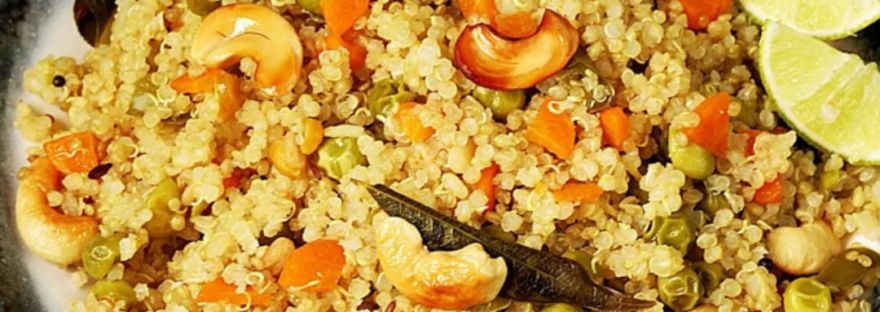
A vibrant bowl of Quinoa Upma with vegetables and cashews, garnished with lime and curry leaves.

Ingredients

1 cup quinoa – rinsed in cold water (removes bitterness).

2 cups water – for cooking (adjust if needed for fluffiness).

2 tablespoons oil (or ghee/coconut oil) – for tempering. Neutral oils like canola or sunflower also work well.

1 teaspoon mustard seeds – for traditional South Indian tempering.

1 teaspoon cumin seeds – adds aroma and flavor.

Pinch of asafoetida (hing) – optional (ensures gluten-free; gives umami).

4–5 curry leaves – fresh or frozen, for authentic flavor.

1 small onion, finely chopped – adds sweetness and texture.

1–2 green chilies, slit or chopped – or to taste (adds heat).

½ teaspoon grated ginger – optional (for warmth and digestion).

1 cup mixed vegetables, finely chopped – carrots, peas, bell peppers, green beans, corn, etc. (mix and match seasonal veggies).

Salt to taste.

Turmeric (optional) – a pinch for color and health benefits.

Handful of cashews or peanuts – optional (adds protein and crunch).

Fresh coriander (cilantro) – chopped, for garnish.

1–2 teaspoons lemon juice – optional, to brighten the flavor when serving.


Instructions

1. Rinse the quinoa: Place the quinoa in a fine-mesh strainer and rinse under cold running water until the water runs clear. This removes the natural saponin coating and any bitterness. Drain well.


2. Heat the tempering: In a deep skillet or saucepan, heat the oil over medium heat. When hot, add the mustard seeds and cumin seeds. Wait for the mustard to crackle and pop (about 30 seconds). Stir in the hing (if using), curry leaves, green chilies and grated ginger, and sauté for a few seconds until fragrant.


3. Sauté onions and vegetables: Add the chopped onion and a pinch of salt, and sauté 2–3 minutes until the onion turns translucent. Toss in the mixed vegetables and cashews (if using) and cook for another 3–4 minutes until the vegetables begin to soften.


4. Add quinoa and seasoning: Add the rinsed quinoa to the pan, stirring to coat it with the spices and oil. Season with salt and turmeric (if using). Stir everything together so the quinoa begins to toast lightly (1–2 minutes).


5. Cook the quinoa: Pour in the 2 cups of water and stir well. Increase heat to bring the mixture to a gentle boil. Then reduce to low heat, cover tightly, and let it simmer for 15–20 minutes (or until quinoa is tender and the water is absorbed). (If needed, check once or twice and add a splash more water to ensure the grains fully cook and stay fluffy.)


6. Steam and fluff: Once the quinoa grains look translucent and have little “tails,” remove the pan from heat. Keep it covered and let it rest for 5 minutes. Finally, uncover and fluff the quinoa upma gently with a fork. Stir in fresh lemon juice (if using) and garnish with chopped coriander. Serve hot.


Notes and Substitutions

Vegetables: Feel free to mix in any seasonal veggies you like. Common additions include shredded carrots, green peas, green beans, diced bell peppers, corn, broccoli or cabbage. For a simpler upma, use just onions, carrots and peas.

Spices: You can adjust the spice profile by adding chopped ginger, a pinch of turmeric, or even a few dried red chilies along with the mustard seeds. A dash of garam masala at the end adds warmth. For extra crunch, toss in roasted peanuts or fried cashews.

Tempering oils: A neutral vegetable oil works well. To deepen the South Indian flavor, you can use coconut oil or add a teaspoon of ghee at the end for aroma.

Grains alternative: While this recipe uses quinoa, you can also make a similar upma with oats, broken wheat (dalia), millets (like sorghum/jowar or foxtail millet), or even rava (semolina) if gluten is not a concern. Each substitute will change cooking time slightly.

Protein boost: Quinoa is already high in protein, but you can stir in tofu cubes or boiled chickpeas for an even heartier meal.

Make it vegan: This recipe is naturally vegan (no dairy). Just ensure your asafoetida is gluten-free if needed.


Tips for Fluffy Quinoa

Rinse well: Always rinse quinoa thoroughly in a fine-mesh strainer to remove the bitter-tasting saponin coating. This ensures a clean taste.

Water ratio: Use about 2 cups of water for every cup of uncooked quinoa. This 1:2 ratio (grain to liquid) reliably cooks quinoa through.

Cooking method: Keep the heat low once boiling and cook covered. Resist the urge to stir too often – just let the quinoa steam quietly. When the grains swell and “tails” appear, it’s done.

Rest before fluffing: After turning off the heat, leave the lid on and let the pan stand for 5 minutes. This steaming step lets any excess water absorb and yields plump, separate grains.

Fluff with fork: Use a fork to gently fluff the quinoa upma before serving, which helps separate any stuck grains. Avoid mashing – you want a light, fluffy texture.

Use hot water (optional): Some cooks use hot water or stock for the cooking liquid to speed up cooking. Just ensure it’s simmering before covering.

Batch cooking: You can prepare quinoa in advance (using the same 1:2 water ratio) and refrigerate it. For day-old quinoa, simply heat it in the pan with the spice tempering and skip the boiling step; cover for a few minutes to warm through.


Serving Suggestions

Quinoa Upma is best enjoyed hot, paired with classic South Indian accompaniments. Try serving it with coconut chutney or a tangy lemon pickle on the side. These condiments complement the upma’s savory, nutty flavors. Other great pairings include tomato-onion chutney, peanut (groundnut) chutney, or plain yogurt. For a complete breakfast spread, you might add a boiled egg or a side of sambar. In South India, a glass of fresh juice or filter coffee/masala chai also goes wonderfully with upma.

No matter how you serve it, this Quinoa Upma makes a warm, comforting, and nourishing start to the day – a modern, healthy twist on an Indian breakfast classic.

Breakfast

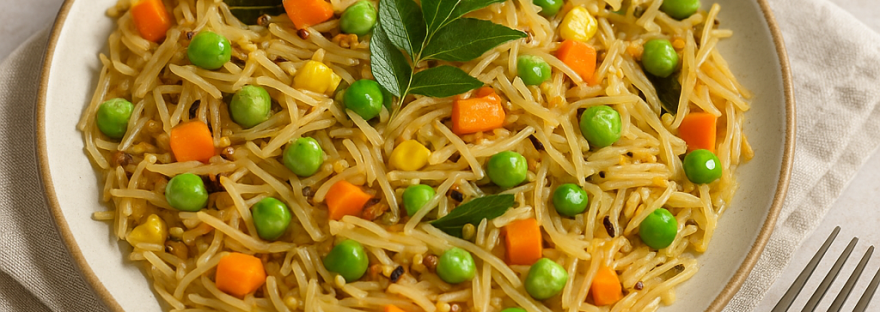
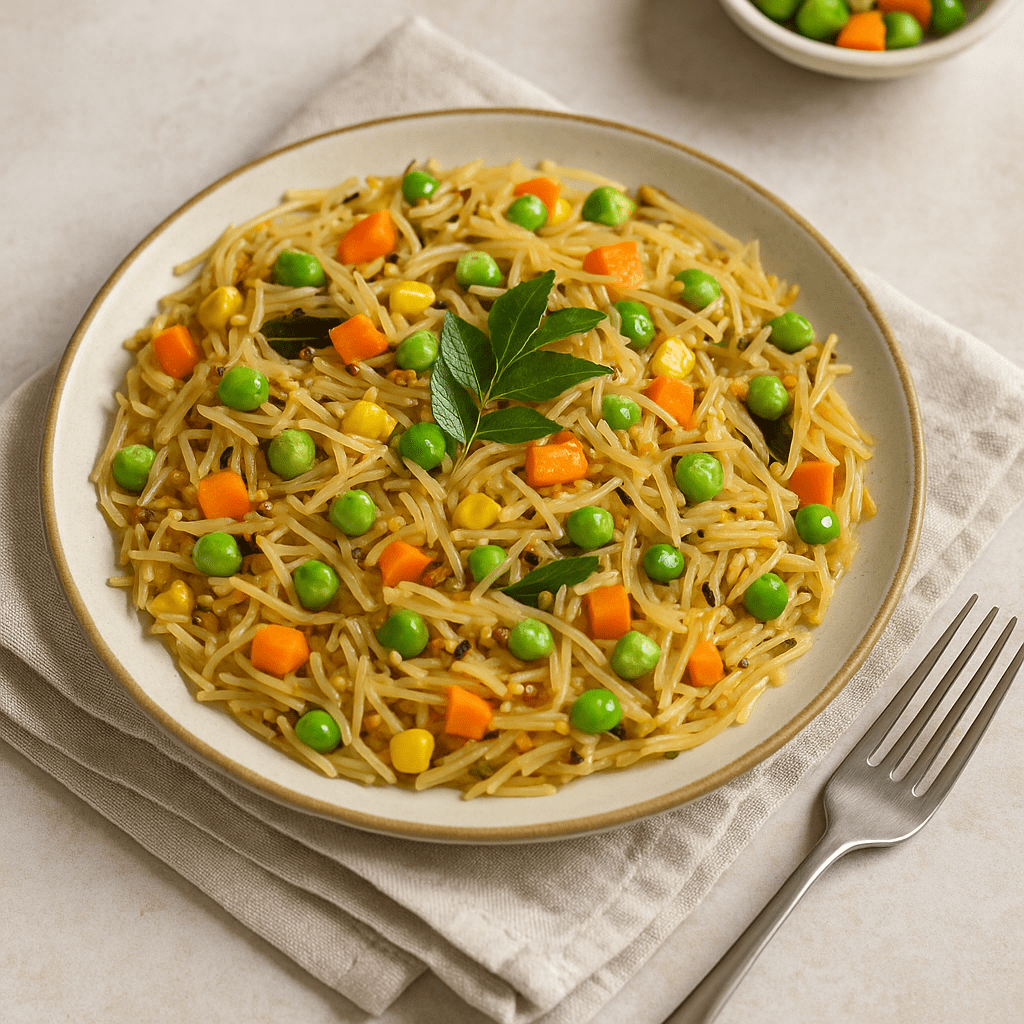
🥕 Vegetable Semiya Upma – A Simple Morning Bowl of Comfort

🌅 Morning Calm in a Bowl

Some mornings call for something warm, light, and fuss-free — and that’s when semiya upma comes to the rescue. I grew up watching my mother toss handfuls of roasted vermicelli into a kadhai while onions sizzled gently in ghee. She’d add whatever vegetables were at hand — carrots, peas, beans — and somehow, in under 15 minutes, breakfast was ready.

Unlike poha or idli, semiya upma felt luxurious because of its silky texture, soft yet not mushy. The toasted aroma of vermicelli and the light heat from green chilies made it our cozy family favorite. It was what we packed in lunchboxes, what we made for guests when dosa batter ran out, and what we often had with a cup of chai on a slow Sunday.


🧾 Ingredients (Serves 2–3)

1 cup roasted semiya (vermicelli)

2 tsp oil or ghee

½ tsp mustard seeds

½ tsp urad dal (optional)

1 green chili, chopped

1 tsp grated ginger

1 small onion, thinly sliced

1 small carrot, finely chopped

¼ cup green peas

5–6 beans, finely chopped

A few curry leaves

Salt, to taste

2 cups water

Fresh coriander leaves, for garnish

A squeeze of lemon (optional)


👩‍🍳 Method

1. Prep the vermicelli:
If using unroasted vermicelli, dry roast it in a pan over medium heat until golden brown. Keep aside.


2. Temper:
Heat oil or ghee in a kadai. Add mustard seeds and let them splutter. Add urad dal (if using), chopped green chili, ginger, and curry leaves.


3. Sauté aromatics:
Add sliced onions and sauté until translucent. Then add all the chopped vegetables and a pinch of salt. Cook for 2–3 minutes until slightly tender but still vibrant.


4. Add water & cook:
Pour in 2 cups of water and bring it to a gentle boil. Add salt to taste.


5. Add semiya:
Slowly add the roasted vermicelli, stirring continuously to avoid lumps. Reduce the flame to low, cover, and cook for 4–5 minutes until all water is absorbed and the semiya is soft and fluffy.


6. Finish & garnish:
Fluff the upma gently with a fork. Garnish with fresh coriander and a squeeze of lemon juice if you like it tangy.


🍽 Serving Tips

Best served hot with coconut chutney or plain curd.

Add cashews or peanuts in the tempering for extra crunch.

For a satvik version, skip onion and garlic — it still tastes amazing with just chilies, ginger, and veggies!


🪔 Why You’ll Love It

Quick to cook – Done in under 15 minutes

Customizable – Add your favorite veggies or even paneer cubes

Light yet filling – Perfect for breakfast, brunch, or a travel tiffin

Breakfast

Podi Dosa: A Cozy South Indian Breakfast

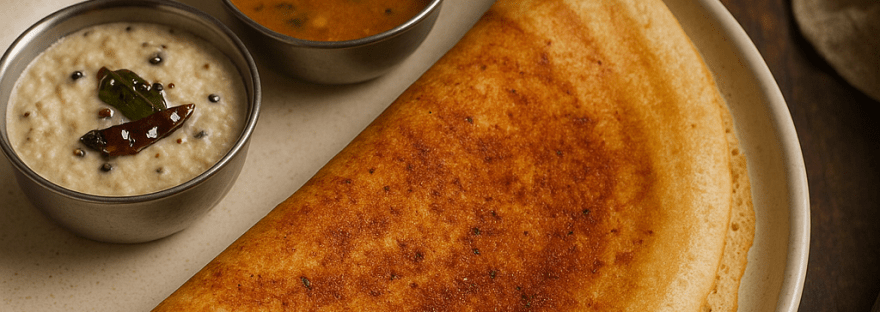
I still remember those mornings when the house filled with the gentle sizzle of a dosa on the griddle and the rich scent of ghee in the air. In my family’s kitchen, breakfast was a warm ritual. My grandmother would ladle fermented dosa batter onto a hot cast-iron tawa, spreading it thin and circular. As it cooked, she’d sprinkle spicy milagai podi (literally “chili powder”) over the pancake. The moment was magic – a golden triangle of crispy dosa, flecked with nutty-red podi and glistening with melted ghee, was placed before me.  I’d bite into its crisp edge, letting the fiery gunpowder blend with the savory dough, chased by sips of strong filter coffee. These simple flavors – the coconut-chutney dip, the tangy sambar – evoke the comfort of home and childhood.

In Tamil homes idli podi or milagai podi is a beloved staple.  It’s a coarse, earthy mix of roasted lentils (like chana dal and urad dal), dried red chilies, sesame seeds and spices.  South Indians call this mixture “gun powder” for the fiery kick it gives, and they sprinkle it not only on idlis but on dosas too. As one recipe notes, *“Idli Podi is also known as Milagai Podi… ‘Milagai’ means chilies and ‘Podi’ is powder.”*  In fact, podi is often described as a coarse breakfast condiment used alongside idli and dosa, made from roasted dals and spices. A pinch of this powder on a hot dosa, drizzled with fragrant ghee, turns each bite into a burst of homestyle flavor.

Crucial to the perfect podi dosa is the batter. Dosas start with a naturally fermented batter of rice and urad dal. After soaking and grinding, the mixture is left to ferment overnight until it doubles and becomes bubbly.  Swasthi’s Recipes explains: “After a good fermentation, the batter increases in volume, becomes light with plenty of small air pockets and develops a slight tangy flavor”. When you ladle this fermented batter onto a hot griddle and cook it with a little ghee or oil, it crisps up into a thin, golden crepe. (For extra crispiness, Serious Eats even suggests substituting some of the rice with parboiled rice.) The result is a lacy-edged dosa that’s perfect for holding a layer of spicy podi and glossy ghee.

Ingredients

For the Dosa batter: 2 cups raw rice (short-grain rice or sona masuri), ½ cup whole urad dal (skinned black gram), water for soaking/grinding, and salt to taste. (You may also add a tablespoon of poha or fenugreek seeds to the soak for a fluffier texture.)

For the Podi (gunpowder) mix: 2 tbsp white sesame (til) seeds, 1 tsp cooking oil, ¼ cup urad dal, ¼ cup chana dal, 6–8 dried red chilies (adjust for heat), a few fresh curry leaves, 2 tbsp dry coconut (copra), a small piece tamarind, ¼ tsp turmeric powder, a pinch of asafoetida (hing), and 1 tsp salt.

For cooking: Additional ghee (clarified butter) or oil for the griddle.

To serve: Coconut chutney, sambar, and strong South Indian filter coffee (optional) as accompaniments.


Method

1. Prepare and ferment the batter: Rinse the rice and urad dal separately and soak both in plenty of water for at least 4–6 hours (or overnight). Drain and grind them separately with just enough water to make a smooth paste. Combine the rice and dal batter, add salt, and stir well. Cover and ferment in a warm spot for 8–12 hours (or until doubled and bubbly). As noted by Swasthi, after fermenting *“the batter increases in volume, becomes light with plenty of small air pockets”*. This fermented batter will yield thin, crisp dosas when cooked.


2. Make the podi (spice mix): Dry-roast the ingredients slowly to bring out their aroma. In a large skillet on low heat, toast 2 tbsp sesame seeds until fragrant; transfer them to a plate. Add 1 tsp oil to the pan, then throw in ¼ cup urad dal, ¼ cup chana dal, 6 dried red chilies and a few curry leaves. Roast this mixture on low heat, stirring constantly, until the dals turn golden and the chilies darken (watch carefully so nothing burns). Now add the 2 tbsp dry coconut and continue to roast until the coconut is lightly browned. Let everything cool. Then transfer the roasted mix to a blender or spice grinder. Add the toasted sesame seeds, a small tamarind ball, ¼ tsp turmeric, a pinch of asafoetida, and 1 tsp salt. Grind to a coarse powder without adding water. You now have the spicy podi. (Tip: This coarse chili-lentil powder can be stored in an airtight jar for weeks.)


3. Cook the dosa: Heat a well-seasoned griddle or nonstick pan over medium-high heat. When the pan is hot, reduce heat to medium and pour a ladleful of the fermented batter onto the center. Quickly tilt and rotate the pan in a spiral motion to spread the batter thinly (you can also spread with the back of the ladle). Cover and cook for about 1 minute. The underside should be light golden and you will see small holes form on top as it cooks.


4. Add podi and ghee:  Remove the lid. Evenly sprinkle 1–2 teaspoons of the prepared podi all over the semi-cooked dosa (as shown by Hebbar’s Kitchen). Immediately drizzle or spread about 1 tsp ghee (or oil) on top. Spread it lightly with the back of the ladle so it coats the surface. Continue cooking uncovered for another 30 seconds or so until the dosa edges curl up and the entire crepe turns golden brown and crisp. Swasthi’s guide reminds us that dosas are cooked *“with a little oil, ghee or butter until crisp”*. Indeed, adding ghee not only crisps the dosa but adds a rich aroma – as one recipe notes, *“podi dosa tastes great when dosa is prepared with ghee.”*


5. Serve hot: Fold or roll the dosa onto a plate. Serve it immediately while sizzling. Traditionally, podi dosa is enjoyed with steaming coconut chutney and hot sambar. Pour a tumbler of South Indian filter coffee to sip alongside. Each bite of the crisp, golden dosa with its fiery podi and buttery ghee, paired with cool chutney and hot sambar, delivers a warm, comforting taste of home.

Snacks

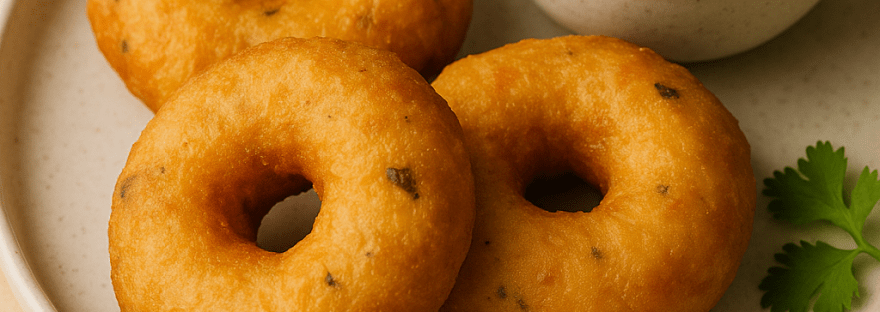
Medu Vada – South Indian Crispy Lentil Donuts

Intro: A Bite of Crisp Morning Joy

If mornings in South India had a smell, it would be the scent of hot oil, crisping vadas, and fresh coconut chutney.

Medu Vada is not just food — it’s a morning ritual.
When I visited Chennai, I remember standing outside a tiny tiffin stall, watching the cook expertly shape the vadas with wet fingers, drop them into sizzling oil, and serve them hot with a side of sambhar so good, you couldn’t stop dipping!

Golden brown outside, soft inside — one bite, and you feel both energy and happiness together!

Ingredients:

1 cup urad dal (skinned black gram)

1 green chili (finely chopped)

1 tsp grated ginger

1 small onion (optional, finely chopped)

1 tsp black peppercorns or crushed pepper (optional)

2 tbsp chopped curry leaves or coriander leaves

Salt to taste

Oil for deep frying

Water as needed (minimal)


Steps to Make Medu Vada:

1. Prepare the Batter

Wash and soak urad dal for 4–5 hours.

Grind to a thick, smooth batter using minimal water. (Batter should be fluffy, not runny.)

Add salt, ginger, green chili, chopped onion (optional), and curry leaves.


2. Shape the Vadas

Wet your palm. Take a small ball of batter, flatten slightly, and make a hole in the center.

(Or use a banana leaf or greased plastic sheet for shaping.)


3. Deep Fry

Heat oil.

Gently slide shaped vadas into medium-hot oil.

Fry until golden and crisp on both sides.


Serving Suggestions:

Serve hot with coconut chutney, sambhar, and tomato chutney

Pairs beautifully with a hot filter coffee for complete South Indian breakfast


Why I Love It

Because Medu Vada is pure joy — a little crispy miracle that makes even the sleepiest mornings feel like a celebration!

Breakfast

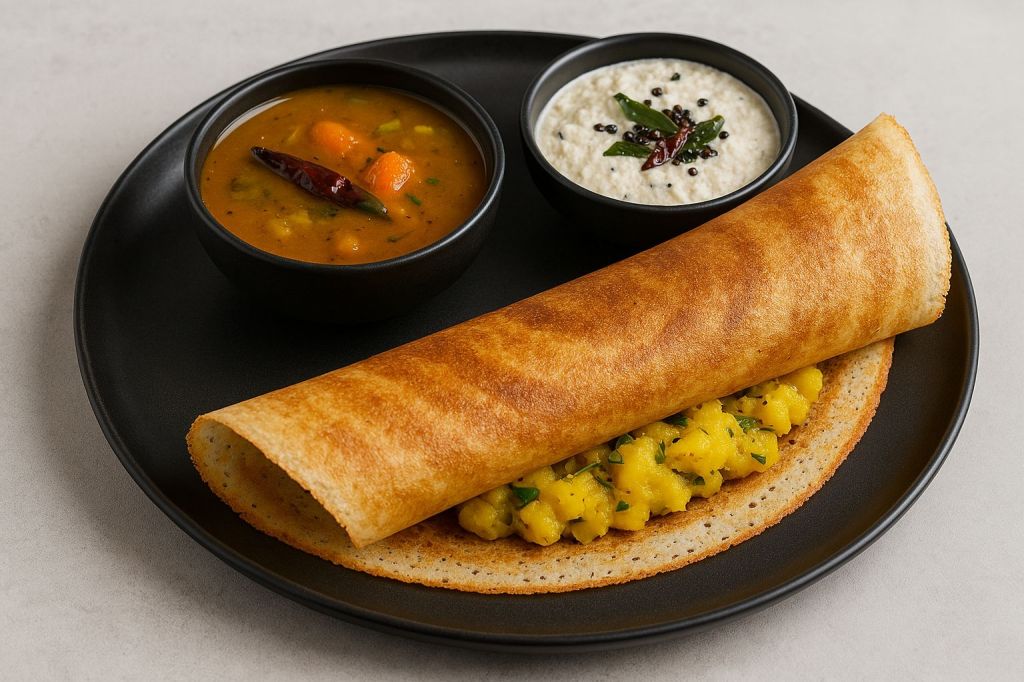
Masala Dosa – The Golden Crunch That Holds a Spiced Potato Heart


🥔 When Breakfast Feels Like a Celebration

You hear it before you see it —
That sizzle on the tawa.
The swipe of ghee.
The ladle swirl that turns batter into crisp, lacy gold.

Then comes the masala — warm, yellow aloo with mustard seeds and curry leaves.
Fold. Plate. And serve with a dollop of coconut chutney.

This is Masala Dosa.
Not just South Indian — it’s pan-Indian.
Not just breakfast — it’s bliss on a plate.


🛒 What You’ll Need:

For the Dosa Batter (makes ~8 dosas):

1 cup raw rice

¼ cup urad dal

2 tbsp poha (flattened rice)

¼ tsp fenugreek seeds

Salt, water as needed


For the Potato Masala Filling:

3 medium potatoes, boiled & mashed

1 medium onion, thinly sliced

1 tsp mustard seeds

1 tsp chana dal

A pinch of hing

1–2 green chilies, chopped

Few curry leaves

¼ tsp turmeric

Salt to taste

1 tbsp oil or ghee


🔥 How to Make It – From Batter to Bliss

1. Prep the Batter

Soak rice, dal, poha, and methi for 5–6 hrs.
Grind into a smooth batter. Ferment overnight. Add salt before cooking.

2. Make the Potato Masala

Heat oil. Add mustard, chana dal, hing, chilies, curry leaves.
Add onions, sauté till soft. Add turmeric, salt, mashed potato.
Mix and cook for 2–3 mins. Set aside.

3. Crisp the Dosa

Heat a cast iron or non-stick tawa. Pour a ladle of batter, spread into a circle.
Drizzle oil or ghee on edges. Let it crisp.
Place a spoonful of masala in the center, fold the dosa.

4. Serve Hot

With coconut chutney, sambhar, or even just a dab of ghee.


❤️ Why Masala Dosa Is More Than Just Breakfast

Because that crunch is unbeatable

Because that potato is perfectly spiced

Because it’s nostalgic, filling, and always welcome

Because one never feels like enough