Dessert

Pineapple Kesari – A Nostalgic South Indian Pineapple Dessert

Growing up, Pineapple Kesari was more than just a sweet dish – it was a symbol of celebration in our home. I remember my grandmother patiently stirring a pot of semolina on the stovetop, as the aroma of ghee and cardamom filled the kitchen. She’d make this golden, velvety kesari whenever there was “something to celebrate” – be it a festival morning or just a surprise visit from relatives. Each spoonful felt like a warm hug, instantly transporting us to simpler times filled with family gatherings and festive music.

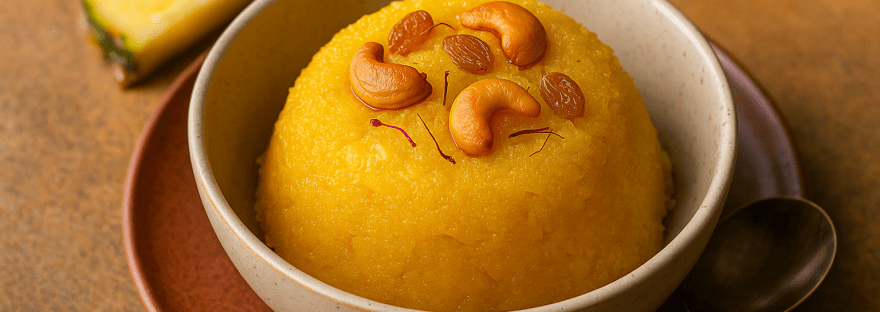
Pineapple Kesari is not just delicious but also visually inviting with its vibrant saffron hue. It’s often garnished with roasted cashews and raisins for extra texture, making it a feast for both the eyes and palate. This beloved South Indian dessert is commonly served during weddings and special functions, where its tropical pineapple flavor and rich aroma always stand out.

Pineapple Kesari (also known as pineapple sheera or kesari bath) is essentially a fruity twist on the traditional rava kesari. Kesari means saffron in many Indian languages, referring to the saffron strands that lend the dish its signature golden color and name. It’s a popular treat across South India – from Karnataka to Tamil Nadu – often prepared during festivals like Ugadi and other auspicious occasions. The addition of pineapple gives a delightful sweet-tart surprise in each bite, perfectly balancing the richness of ghee and the sweetness of sugar. No wonder it’s a favorite at many South Indian homes and celebrations!

Pineapple Kesari Recipe

Serves: 4
Prep Time: 10 minutes
Cook Time: 15 minutes

Ingredients: (for a small batch)

½ cup semolina (sooji/rava)

½ cup fresh pineapple, finely chopped (use ripe pineapple for best flavor)

¾ cup sugar (adjust to your sweetness preference)

¼ cup ghee (clarified butter), divided

8–10 cashew nuts

1 tbsp raisins (optional)

¼ tsp cardamom powder (Elaichi)

A pinch of saffron strands (kesar) – soak in 2 tbsp warm water or milk

1½ cups water

Pinch of salt (optional, to balance sweetness)


Instructions:

1. Prep the Pineapple & Nuts: Heat 1 tablespoon of ghee in a pan on low heat. Add cashew nuts and fry until golden. If using raisins, toss them in for a few seconds until they puff up. Remove the nuts and raisins, set aside for garnish. In the same ghee, sauté the chopped pineapple for 2–3 minutes until it softens slightly (this helps release its juices and enhance flavor). Remove the pineapple and set aside.


2. Roast the Semolina: In the same pan, add another 1–2 tablespoons of ghee. Add the semolina (sooji) and roast on low-medium heat. Stir continuously until the rava turns aromatic and light golden. This step is key for a fluffy kesari – roasting prevents it from turning lumpy or sticky later. Once roasted, turn off the heat and keep the semolina aside.


3. Boil the Liquid: In a separate pot, bring 1½ cups of water to a boil. Stir in the saffron along with its soaking liquid, so the water turns a lovely yellow. (If you want an extra bright hue, you can add a tiny pinch of yellow food color, but saffron usually does the job.) Add the sugar to the boiling water and let it dissolve. You can also toss in a pinch of salt to elevate the sweetness. Once the sugar-water is boiling and slightly syrupy, add the sautéed pineapple pieces into it. Allow the pineapple to cook in the syrup for a minute.


4. Cook the Kesari: Reduce the heat to low. Gradually add the roasted semolina into the boiling pineapple syrup, stirring continuously with a spatula. Be careful – the mixture will bubble and thicken quickly. Stirring constantly helps avoid any lumps. Cook for about 4–5 minutes, until the semolina absorbs the liquid and the mixture starts to thicken into a pudding-like consistency.


5. Finish with Flavor: Once the kesari is thick and the semolina is cooked (no longer grainy), add the remaining ghee and the cardamom powder. Stir well to combine. You’ll notice the dessert becoming glossy as the ghee gets absorbed. Toss in half of the fried cashews and raisins, mixing them in. Cook for another minute until the kesari starts to leave the sides of the pan (it will easily slide off the pan when stirred). Turn off the heat.


6. Garnish and Serve: Pineapple Kesari is ready when it’s thick but still spoonable. Serve it warm, garnished with the reserved cashews and raisins on top. You can enjoy it as is, or spread it in a greased plate and cut into squares or diamonds once it sets slightly. Savor the kesari warm for the best melt-in-mouth texture, or at room temperature as a delightful afternoon sweet.


Variations:

Mix-and-Match Fruits: While pineapple gives a unique tropical twist, you can replace it with other fruits to make different kesari varieties. Rava kesari is often made with banana, mango, or even jackfruit for regional variations. Simply swap the pineapple with an equal amount of your fruit of choice (cooking times may vary slightly with different fruits).

No Fresh Pineapple? If fresh pineapple is not available, you can use canned pineapple tidbits. Just be sure to drain the syrup and perhaps reduce the sugar in the recipe, since canned pineapple is pre-sweetened. Pat the pieces dry and proceed – it works in a pinch! (For an intense pineapple aroma, a drop or two of pineapple essence can be added at the end, but use sparingly to avoid overpowering the dessert.)

Natural vs. Color: Traditional kesari often gets its hallmark color from a tiny pinch of food coloring, but using saffron threads not only colors the sweet naturally but also adds a delicate fragrance. If you don’t have saffron, you may use a pinch of kesar food color for that classic bright look. The taste remains delicious either way.

Richness & Vegan swaps: For extra richness, some like to cook the semolina in half milk and half water. However, with pineapple’s acidity, it’s best to stick to water to avoid curdling. To make this dessert vegan, swap out ghee with a neutral vegetable oil or vegan butter – the texture will be slightly different, but it will still come out tasty.

Sweetness Adjustments: The traditional ratio for kesari is 1:2 for rava to sugar, which makes it quite sweet. Feel free to adjust the sugar to your taste. You can go down to 1:1 ratio (semolina:sugar) for a milder sweetness. Likewise, you can increase or decrease the ghee quantity – more ghee yields a smoother, silkier kesari.


Storage & Serving Tips:

Make-Ahead and Storage: Pineapple Kesari stays good for 1–2 days at room temperature, and up to about 3–5 days when refrigerated in an airtight container. (Since this recipe doesn’t include milk, it has a better shelf life.) If you plan to store it, spread the kesari in a shallow dish – this helps it cool and set evenly.

Reheating: This dessert tends to firm up as it cools (the semolina will set into a semi-solid pudding). Don’t worry – simply warm it gently on the stovetop or in the microwave before serving. Add a teaspoon of water or milk while reheating to loosen it up, and stir well. Warming restores the soft, glossy texture and revives the flavors (always serve kesari slightly warm for the best experience).

Serving Suggestions: Pineapple Kesari is delightful on its own, but you can get creative. Serve it warm with a scoop of vanilla ice cream for a fusion twist, or with a savory upma on the side for a traditional South Indian “sweet and savory” combo. It’s commonly part of festive menus, often enjoyed as a dessert or even a special breakfast treat paired with khara bath (spicy upma) in Karnataka’s famous chow chow bath duo.

Bonus Tip: If your pineapple is a bit too tart, try this trick from experienced home cooks – toss the chopped pineapple with 1–2 tablespoons of sugar and let it sit for a couple of hours before cooking. This draws out the fruit’s juices and mellows its acidity, ensuring your kesari has a pleasant sweet pineapple taste without any tangy surprises.


Closing Note: Pineapple Kesari is more than just a dessert – it’s a dose of nostalgia served on a plate. Every family has its own little twist to the recipe, but the love and warmth it embodies remain the secret ingredients. Whether you make it for a festival, a family get-together, or simply to relive old memories, this pineapple-infused semolina pudding is sure to fill your home with a heavenly aroma and your heart with sweet joy. Enjoy each spoonful of this South Indian delight, and happy cooking!

Breakfast

🔥 Masala Idli Fry – The Perfect Leftover Makeover

🌧️ A Story from My Kitchen

Rainy mornings in my hometown meant two things: wet slippers and warm breakfasts. And if there were leftover idlis from the previous night, Amma would grin mischievously and say, “Don’t open the tiffin today — I’ve packed something special.”

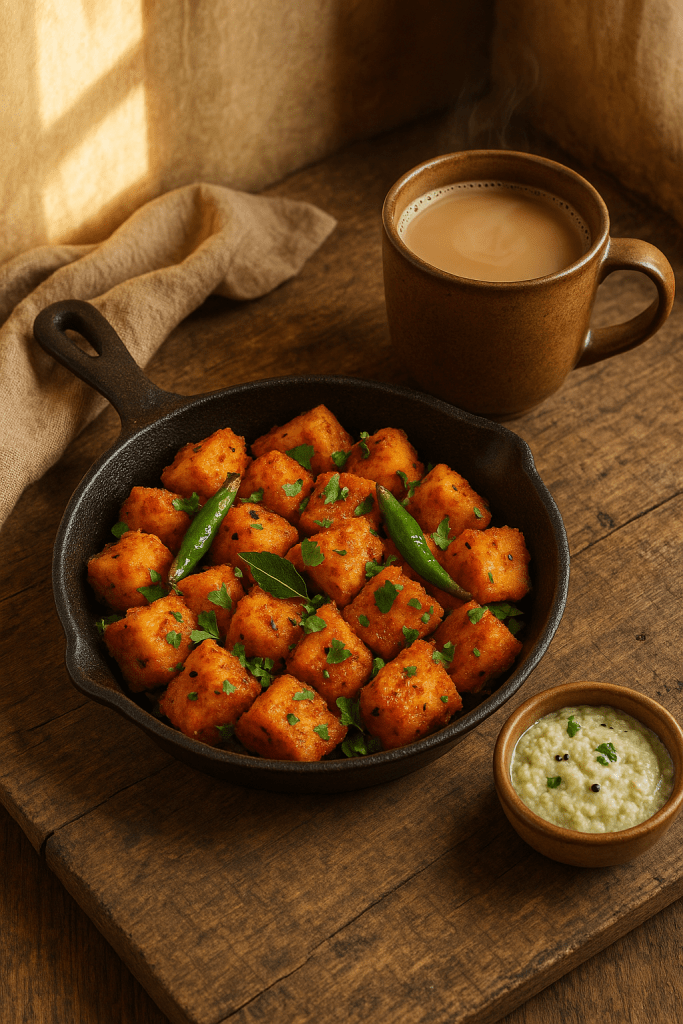
Instead of tossing those cold, plain idlis, she would slice them up, toss them with onions, curry leaves, and a fiery tomato masala, and turn them into something magical: Masala Idli Fry.

It wasn’t just a recipe; it was a reminder that no food should ever go to waste — not when a little tadka and love can turn it into a brand-new dish.

📝 Ingredients

Main:

6–8 Leftover idlis (chilled works best)

1 tbsp oil

1 tsp mustard seeds

½ tsp urad dal (optional, for crunch)

1 sprig curry leaves

1 medium onion, chopped

1–2 green chilies, slit

1 small tomato, finely chopped

¼ tsp turmeric powder

½ tsp red chili powder

½ tsp sambar powder (or pav bhaji masala)

Salt to taste

Fresh coriander leaves, chopped

Lemon juice (optional)


🔪 Method

1. Prep the Idlis

Cut idlis into bite-sized cubes.

If they’re soft or fresh, refrigerate for 20–30 minutes before frying. Chilled idlis hold their shape better.


2. Fry the Idli (Optional but yummy!)

In a pan, add 1 tsp oil and shallow fry the idli cubes until they’re golden on the edges. Set aside. This adds texture and prevents them from turning mushy later.


3. Make the Masala

In the same pan, heat the remaining oil. Add mustard seeds. Let them crackle.

Add urad dal and curry leaves. Sauté for 10 seconds.

Add chopped onions and green chilies. Sauté till golden brown.

Add tomatoes and cook until soft and pulpy.

Add turmeric, red chili powder, sambar or pav bhaji masala, and salt.

Mix well and let the masala cook for 1–2 minutes on medium flame.


4. Toss the Idlis

Add the fried (or plain) idli cubes into the masala.

Gently toss until each piece is coated in the spicy mix.

Cook for 2 more minutes on low flame so the idlis soak in the flavors.


5. Finish

Turn off the flame. Garnish with coriander leaves.

Squeeze a bit of lemon juice for that extra zing (optional).


🍽️ Serving Suggestions

Best served hot with a cup of ginger tea or filter coffee.

Makes a great after-school snack, evening tiffin, or even a quick lunchbox filler.

For variation, you can add capsicum, boiled corn, or paneer cubes.


💡 Tips & Tricks

Always use cold or day-old idlis — they hold shape better when tossed.

Want it crispier? Air-fry or deep-fry the idlis before mixing with masala.

No leftover idlis? Just steam a fresh batch and let them cool before using.


❤️ Why I Love This Recipe

This is not just a way to use leftovers — it’s a reminder that creativity in the kitchen often starts when we look at something ordinary and decide to treat it like gold.

Masala Idli Fry is humble, homey, and full of heart — just like the best kind of food always is.

Breakfast

South Indian Vegetable Uthappam – A Homestyle Breakfast Story & Recipe

Introduction – A South Indian Morning Memory

As a child in a South Indian household, I often woke up to the sizzling sound of batter being poured onto a hot iron tawa (griddle). The kitchen air would fill with the warm, tangy aroma of fermented dosa batter cooking on the stove – a sure sign that a delicious breakfast was underway. On special mornings, my mother wouldn’t make the usual thin dosas; instead, she prepared uthappam – small, thick pancakes generously topped with a rainbow of chopped vegetables. She would ladle out regular dosa batter (often the leftover batter from the previous day, slightly more fermented and sour) onto the pan, and immediately sprinkle a medley of onions, tomatoes, carrots, and capsicum over it. Each uthappam sizzled as its edges turned golden-brown and crispy, while the center stayed soft and fluffy, studded with the sweet bite of onions and the tang of tomatoes.

In our home, vegetable uthappam wasn’t just food; it was a morning ritual. We often made uthappams when there was extra batter from the prior day’s dosas – nothing went to waste. In fact, the very tradition of uthappam is rooted in using slightly sour leftover dosa or idli batter. The extra fermentation gives the uthappam a delightful light tang, which pairs perfectly with the savory toppings. My mother would mix the chopped veggies with a pinch of salt and sometimes a few curry leaves, then press them gently into the batter. The result? A vibrant mosaic of veggies on each pancake, cooking into the batter and filling the house with an irresistible smell.

Mornings in South India often revolve around simple pleasures like this. Picture a cozy kitchen at dawn: the soft sunlight slanting in, a radio playing a Tamil song or the news in the background, and the hiss of the skillet as breakfast is made. In many Tamil families, the day begins with steaming idlis or dosas, or the thicker uttapams, usually served with piping-hot sambar and freshly ground coconut chutney on the side. My family would sit around the table as my mother served the uthappams on fresh banana leaves placed over stainless steel plates. There’s something special about food on a banana leaf – it imparts a subtle aroma and makes the meal feel festive. We’d scoop up pieces of the hot uthappam, dip them in creamy coconut chutney and spicy sambar, and savor each bite. Those mornings are a cherished memory – the comfort of home, the flavors of a traditional South Indian breakfast, and the knowledge that a simple dish can bring everyone together.

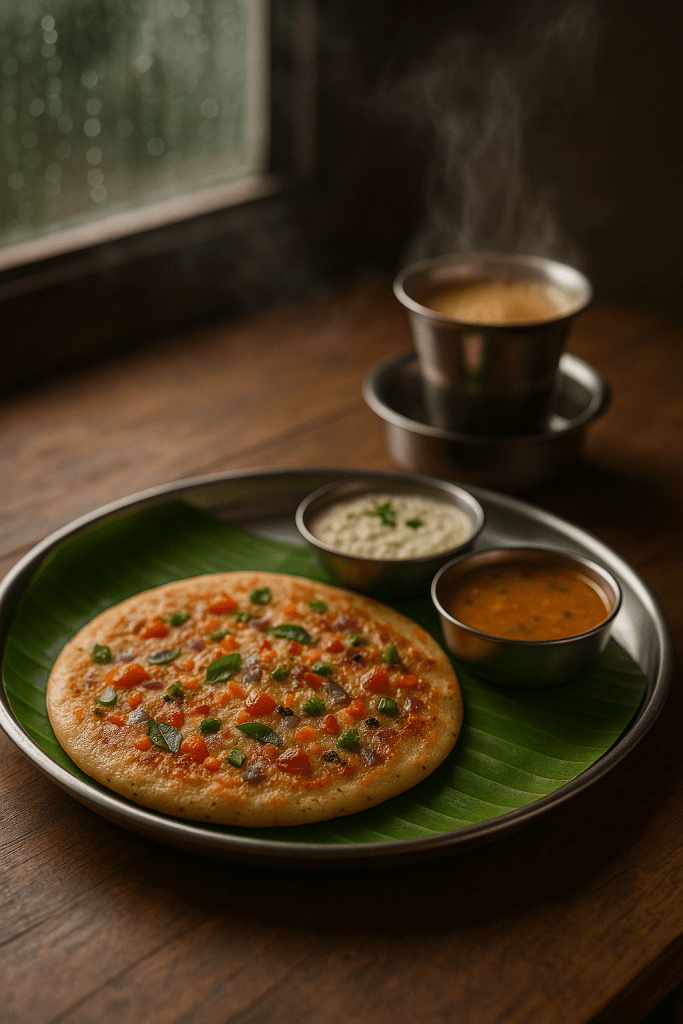
A hot, fluffy vegetable uthappam served on a banana leaf-lined steel plate, accompanied by coconut chutney and sambar. This traditional presentation adds to the authenticity of the South Indian breakfast experience.

In this post, I’ll show you how to make this Traditional Vegetable Uthappam step-by-step. Even if you’re using store-bought dosa batter or batter from your fridge, you can easily turn it into a hearty, wholesome breakfast. Let’s dive into the recipe, so you can recreate those homestyle South Indian morning vibes in your own kitchen!

Ingredients

For this Vegetable Uthappam recipe, you’ll need the following:

Dosa Batter – about 2 cups (fermented rice-and-lentil batter, the same used for idli/dosa; homemade or store-bought). If the batter is refrigerated, allow it to come to room temperature. A slightly sour, well-fermented batter works best for uthappam.

Onion – 1 medium, finely chopped

Tomato – 1 small, deseeded and finely chopped (removing seeds prevents the uthappam from getting too soggy)

Carrot – 1 small, peeled and grated (or very finely chopped)

Capsicum (Green Bell Pepper) – 1/2 medium, finely chopped

Green Chilies – 1–2, finely chopped (optional, for a spicy kick)

Ginger – 1 inch, finely minced (optional, adds zesty flavor)

Curry Leaves – 5–6 leaves, finely chopped (optional, for authentic aroma)

Fresh Coriander (Cilantro) – 2 tablespoons, chopped

Salt – to taste (a pinch to season the vegetable topping; remember the batter usually already has salt)

Oil or Ghee – as needed for cooking (about 1 teaspoon per uthappam)


Yield: This amount of batter and toppings makes about 4–5 medium uthappams (5-6 inches in diameter), enough to serve 2–3 people.

Instructions – How to Make Vegetable Uthappam

Follow these step-by-step instructions to prepare your South Indian Vegetable Uthappams:

1. Prep the Vegetables: In a mixing bowl, combine the chopped onion, tomato, carrot, capsicum, green chilies (if using), ginger, curry leaves, and fresh coriander. Add a pinch of salt and toss everything together. Mixing the veggies with salt helps bring out their flavor and ensures even distribution of seasoning on the uthappam.


2. Prepare the Batter: If your dosa batter is very thick (often the case with refrigerated or homemade batter), you can stir in a few tablespoons of water to loosen it slightly. The batter should be of pourable consistency but thicker than regular dosa batter – more like pancake batter. If the batter is too thin, the uthappam will spread out too much and won’t be fluffy. Stir the batter gently without knocking out all the air from fermentation.


3. Heat the Griddle: Place a flat dosa tawa or non-stick griddle on medium heat. Once hot, drizzle a few drops of oil or ghee and spread it using a paper towel or sliced onion (this greases the pan lightly and also seasons it).


4. Pour the Batter: Pour a ladleful of dosa batter onto the center of the tawa. Do not spread it as thin as a dosa. Instead, use the bottom of the ladle to gently swirl the batter in a small circle – aim for a thick pancake about 5–6 inches wide and roughly 1/4 inch thick. Uthappam is meant to be thicker and fluffier than a normal dosa.


5. Add the Toppings: Working quickly (so the batter doesn’t cook before the toppings stick), take a handful of the mixed vegetables and sprinkle it evenly over the top of the batter. You want a generous layer of onions, tomatoes, carrots, and capsicum covering the surface. Lightly press the veggies into the batter with a spatula or the back of the ladle. This helps the toppings adhere and cook into the uthappam.


6. Drizzle Oil and Cook: Drizzle about 1 teaspoon of oil or ghee around the edges of the uthappam and a few drops on top. The oil will seep under the uthappam and crisp up the edges. Let the uthappam cook on medium heat. You’ll notice the bottom turning golden-brown and the top of the batter starting to set. At this stage, you can also cover the pan with a lid for a minute to help the top cook faster (especially if your uthappam is on the thicker side).


7. Check for Doneness & Flip: After about 2–3 minutes, check the underside of the uthappam by gently lifting the edge with a spatula. It should be golden-brown and crisp. The top will still have some uncooked batter but will have started to firm up, and the exposed veggies will be partially cooked. Now, carefully slide the spatula under the uthappam and flip it over in one swift motion. (Tip: Use a broad spatula for easier flipping since uthappams are heavier than dosas due to the toppings.)


8. Cook the Other Side: Cook the uthappam for another 1–2 minutes on the second side. This allows the vegetables to slightly char and caramelize, enhancing their flavor, and ensures that the batter is fully cooked through. The onions and carrots may get golden edges, which is great for taste. Press down gently with the spatula to ensure even contact with the pan.


9. Remove and Serve: Once both sides are cooked (you can peek to see that the second side has some golden spots and the veggies look cooked), transfer the vegetable uthappam to a serving plate. If using a banana leaf on the plate, you can place it on that for an authentic touch. Repeat the process for the remaining batter and toppings, making uthappams one by one. Remember to stir the batter gently each time and add a few drops of oil to the tawa as needed.


10. Serve Hot: Uthappam is best enjoyed hot off the griddle. Serve immediately for the best texture – the edges are crisp when hot, and the center is perfectly moist and fluffy.


Enjoy the process! The sight of the vegetables cooking into the batter and the aroma that fills your kitchen is all part of the uthappam experience.

Serving Suggestions

Vegetable uthappam is typically served with a variety of flavorful South Indian condiments. Here are some classic serving suggestions:

Coconut Chutney: The quintessential side for uthappam. This cool, creamy chutney made from fresh coconut, roasted gram dal, green chilies, and tempered spices is a perfect dip. The mild sweetness of coconut chutney complements the spiced uthappam beautifully. Every bite of uthappam with a dollop of coconut chutney is pure bliss!

Sambar: A hot bowl of sambar (South Indian lentil and vegetable stew) is an excellent accompaniment. Dunk pieces of uthappam in the tangy, mildly spicy sambar. The lentils and veggies in the sambar add extra protein and nutrition to your breakfast.

Tomato or Onion Chutney: Apart from coconut chutney, you can serve tomato chutney (a tangy red chutney made from tomatoes and spices) or onion chutney for variety. These add a spicy kick and depth of flavor for those who like it hotter.

Idli Podi (Gunpowder) with Ghee: For a dry accompaniment, idli milagai podi (a spiced lentil powder often nicknamed “gunpowder”) is fantastic. Sprinkle some of this podi on the uthappam and drizzle with a little melted ghee or sesame oil. It gives a punch of flavor and crunch from the lentils.

Beverage: To complete the authentic experience, serve the meal with a cup of South Indian filter coffee or masala chai. The rich coffee, typically served in a steel tumbler and dabarah (cup), is the perfect finish to a satisfying breakfast.


Uthappam is quite filling on its own, so even just chutney and sambar make a wholesome meal. It’s traditionally eaten for breakfast, but you can enjoy it for lunch or dinner as well.

Tips and Variations

Batter Tips: For best results, use a well-fermented idli/dosa batter. If the batter is too fresh (not sour at all), the uthappam might taste bland. A slight sourness in the batter really enhances the flavor. Using batter that’s a day old (stored in the refrigerator) often works great as it tends to be a bit more tangy and thick. Always stir the batter gently. If it has become too thick after refrigeration, add a little water to achieve a thick but pourable consistency.

Even Cooking: Uthappam is thicker than a dosa, so cook it on medium or medium-low heat to ensure it cooks through without burning. If you keep the heat too high, the bottom might brown too fast while the inside remains uncooked. Using a lid to cover the pan for a minute can help cook the uthappam evenly by trapping steam.

No Flip vs. Flip: Some traditional cooks don’t flip the uthappam – they let it cook covered on one side until the top is steamed through. This yields an extra soft top. However, flipping helps to slightly caramelize the veggies on top and gives a bit of charred flavor. Try both methods to see which you prefer.

Topping Variations: The toppings used here (onion, tomato, carrot, capsicum, green chili, etc.) are classic and widely loved. You can get creative with others: thin slices of fresh coconut, grated beetroot for a burst of color, chopped spinach, or even little pieces of paneer (Indian cottage cheese) can be used. There’s also a popular cheese uthappam – sprinkle some grated cheese on top for kids or cheese lovers, once the uthappam is almost cooked (so the cheese melts over the veggies).

Mini Uthappams: You can make mini uthappams by pouring small pancake-sized batter portions (like 3–4 inch rounds). These are fun for kids or for serving as appetizers. They’re easier to flip and cook, too.

Leftover Uthappam: If you somehow have leftover uthappams (a rare occurrence because they usually get gobbled up!), you can reheat them on a pan or in a microwave. But note that they taste best when fresh, as reheating might make them a bit chewy.


Conclusion

There’s something heartwarming about starting your day with a traditional dish like Vegetable Uthappam. It brings together the comfort of home cooking and the rich culinary heritage of South India on your plate. With its fluffy interior, crispy edges, and flavorful veggie topping, each bite is a delightful mix of textures and tastes. Plus, it’s a great way to use up dosa batter and sneak in a variety of veggies in one go.

I hope this story-driven recipe inspires you to try making uthappam in your kitchen. Whether you have South Indian roots or you’re exploring this cuisine for the first time, the process of cooking and sharing an uthappam breakfast is truly special. So gather your ingredients, heat up that griddle, and fill your home with the enticing aroma of uthappam. Happy cooking and happy eating! May your mornings be as warm and colorful as this beautiful dish. 😊