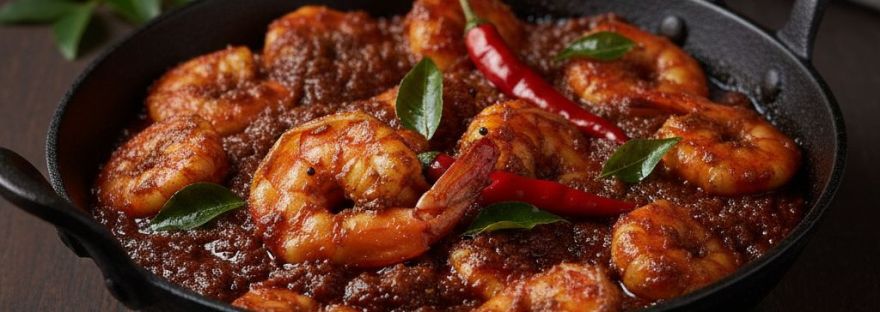
In our family, the arrival of fresh prawns wasn’t just a grocery delivery; it was a coastal ritual. I remember my mother heading to the Mumbai jetties as the trawlers docked, her eyes scanning for the translucent shimmer that signaled a “just-caught” catch. She didn’t just buy ingredients; she hand-selected them with the precision of a curator.
Cleaning the prawns was her meditation. She taught me that the effort you put into the prep is what earns the flavor of the dish. “A tired prawn cannot be hidden behind a loud spice,” she would say. My mother viewed her Kolambi Masala (Prawn Masala) as a “Parasocial Companion” on our Sunday table a dish that whispered stories of the red-soiled kitchens of the Konkan and the salty air of the Arabian Sea .
Today, at The Pinch of Masala, we are documenting her method of “Minimalist Precision.” We are moving away from oily restaurant versions and returning to the “Quiet Luxury” of a thick, spice-coated dry-fry that lets the sweetness of the prawns take the lead.
The secret to prawns that are succulent and tender rather than tough and rubbery lies in my mother’s two non-negotiable rules:
The “Opacity” Rule: The biggest mistake in home cooking is over-boiling. Prawns cook in minutes. My mother would add them only at the final stage, simmering them for just 2–3 minutes until they turned opaque. The residual heat of the thick masala is enough to finish them.
The Shallot Foundation: While most recipes use large red onions, my mother insisted on a handful of shallots (chote pyaaz). When ground into a coarse paste with ginger and garlic, they provide a deep, jammy sweetness that offsets the sharp heat of the chili.
Prep time: 20 mins | Cook time: 20 mins | Servings: 4
Diet: Pescatarian, Gluten-Free | Cuisine: Konkani Heritage
Ingredients:
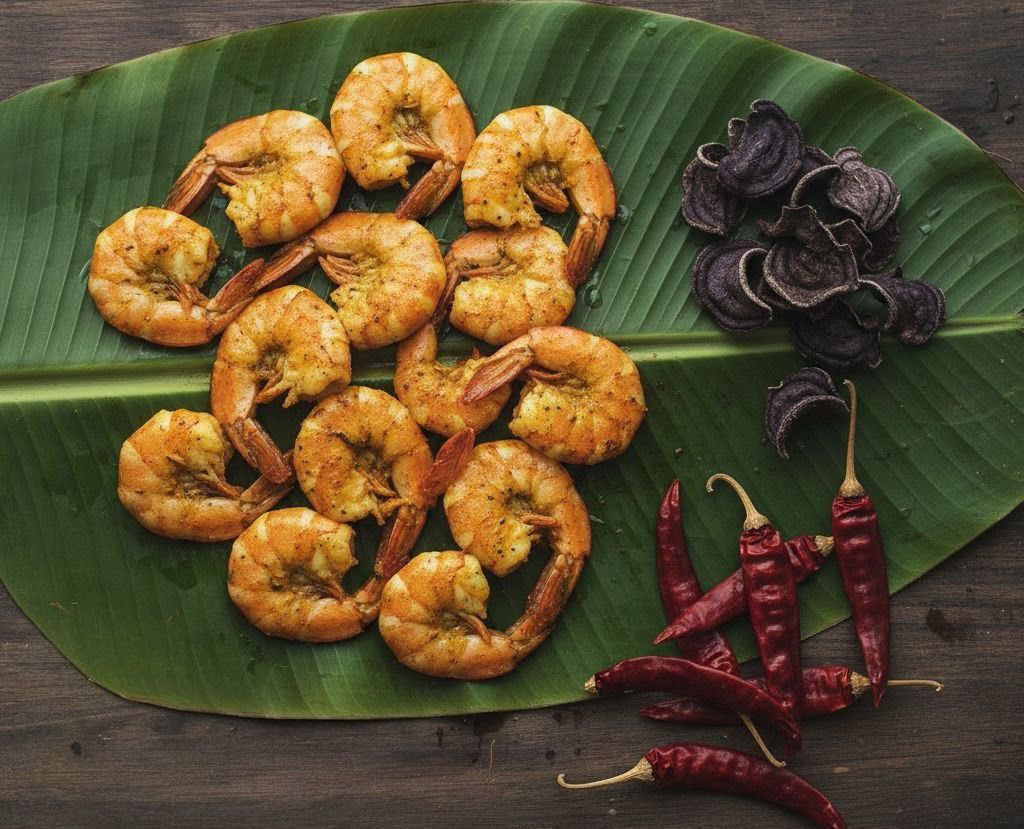
500g Fresh Prawns: Cleaned and deveined. (Leave the tails on for that authentic “Digital Anthropologist” look).
The Masala Base: 1 cup shallots (finely chopped), 1.5 cups tomatoes (finely chopped), 1 tbsp ginger-garlic paste.
The Spice Trinity: 1.5 tbsp Kashmiri red chili powder (for color), ½ tsp turmeric, 1 tsp garam masala.
The Sour Agent: 2 slices of Kokum (or 1 tbsp tamarind extract).
Fat: 2 tbsp Coconut oil (essential for coastal authenticity).
The Finish: 10–12 Fresh curry leaves and a handful of chopped coriander.
Instructions:
The Marinate: Toss the prawns with turmeric and a pinch of salt. Set aside for 15 minutes.
The Tempering: Heat coconut oil in a wide-bottomed pan. Add cumin seeds and let the curry leaves splutter.
The Sauté: Add the shallots and onions. Sauté patiently until they turn deep golden brown. This caramelization is the base of your flavor.
The Bhuna: Add the ginger-garlic paste and tomatoes. Cook until the tomatoes melt and the oil begins to separate from the sides.
The Spice Bloom: Stir in the red chili powder and garam masala. Add a splash of water to prevent the spices from burning. Add the kokum slices.
The Prawn Union: Slide in the marinated prawns. Toss them well to ensure they are fully coated in the thick masala.
The Simmer: Cover and cook for 3–5 minutes max. As soon as the prawns curl into a ‘C’ shape and turn opaque, turn off the heat.
Serve: Garnish with fresh coriander and serve hot with Bhakri or steamed rice.
The Shell Stock: In the 2026 “Use-Up” economy, we value every scrap. Do not discard the prawn shells! Wash them and boil them with ginger scraps and coriander stems for 15 minutes. Strain this liquid and use it as a “Seafood Stock” for your next Veg Pulao. It adds a concentrated oceanic umami that plain water cannot match.
 The Pinch of Masala