Lunch & Dinner

Kalonji Baingan (Stuffed Baby Brinjal) Recipe

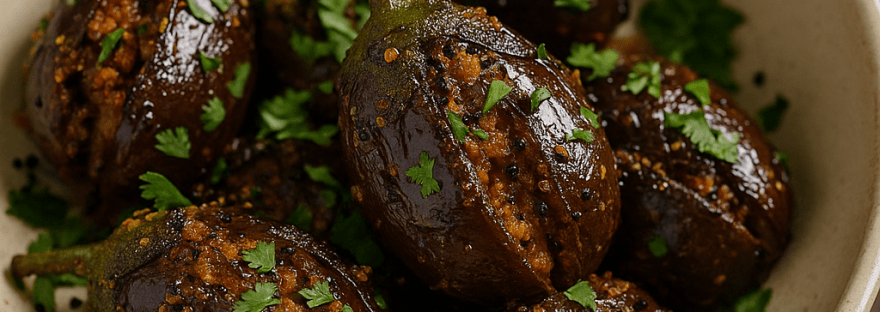
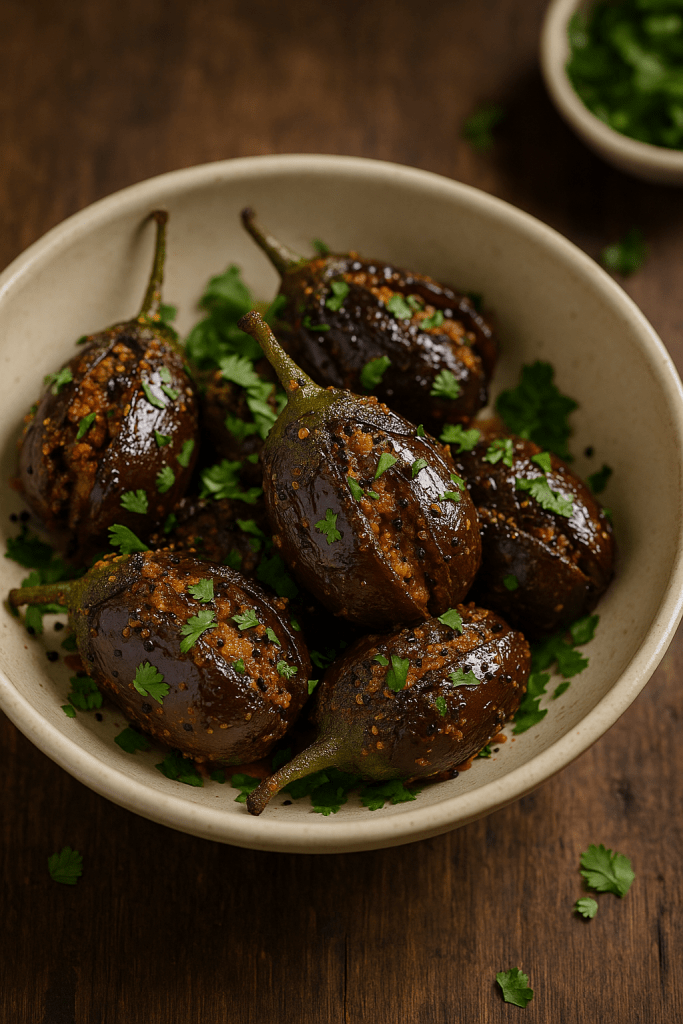
This classic Banarasi dish, Kalonji Baingan, evokes warm memories of family meals in the narrow lanes of Varanasi. My mother‑in‑law, a native of Banaras, calls it “baingan ka achar” (brinjal pickle) for its tangy, spiced flavor.  The tiny aubergines are slit and stuffed with a coarse mix of roasted coriander, cumin, nigella (kalonji), fennel and other pickling spices, then sautéed in mustard oil until tender. Each bite bursts with the earthy aroma of nigella and the sharp tang of amchur (dried mango) powder. Served hot with fresh chapatis or rice, this dry curry is a beloved North Indian side that brings the taste of traditional Banaras to any meal.
Ingredients

500 g baby brinjals (baby eggplants), washed and dried

3 tbsp mustard oil (or vegetable oil)

½ tsp panch phoron (Bengal five‑spice mix)

For the spice stuffing:

2 dried red chilies

1½ tbsp coriander seeds

1 tsp mustard seeds

1 tsp cumin seeds

1½ tsp nigella (kalonji) seeds

1 tsp fennel (saunf) seeds

½ tsp fenugreek (methi) seeds

¼ tsp ajwain (carom) seeds

½ tsp turmeric powder

1½ tsp amchur (dry mango) powder or 1 tbsp lemon juice

1 tsp Kashmiri red chili powder

½ tsp sugar

Salt, to taste

2 tbsp chopped fresh coriander leaves


Instructions

1. Roast the whole spices: Heat a dry skillet over medium heat. Add the dried red chilies, coriander seeds, mustard seeds, cumin seeds, nigella, fenugreek, ajwain and fennel seeds. Roast, stirring constantly, until the spices are golden and fragrant (about 2–3 minutes). Be careful not to burn them. Transfer to a bowl and let cool.


2. Grind and season the masala: Grind the cooled spices in a blender or mortar into a coarse powder. Mix in turmeric, amchur (or lemon juice), chili powder, sugar and salt. Set aside 1 tablespoon of this spice mix for later. Add 1–2 tbsp water to the remaining spice powder and stir into a thick paste that will bind well.


3. Stuff the brinjals: Slit each brinjal from top to bottom in a crisscross pattern, keeping the stem intact so it holds together. Gently open the slits and spoon the spiced paste into each eggplant, pressing it in firmly on all sides. Leave any extra paste for the end.


4. Temper the oil: In a wide, heavy-bottomed pan or kadai, heat the mustard oil until it just starts to smoke. Turn off the heat briefly, then reduce to medium-low and add the panch phoron (cumin, fennel, mustard, nigella, fenugreek seed mix). Let it splutter for a few seconds to release its aroma.


5. Pan-fry the stuffed brinjals: Carefully arrange the stuffed brinjals in the pan. Cover with a tight lid and cook on low flame for about 10–12 minutes. Turn the brinjals gently every few minutes so they brown evenly and don’t break apart. The covering steam‑cooks them through. (If the pan gets too dry, splash a little water under the lid to prevent burning.)


6. Finish with the masala: Once the brinjals are nearly tender, sprinkle the reserved 1 tablespoon of spice mix and a little extra salt over them. Gently toss or stir to coat, then cover again and cook 2–3 more minutes. Add the chopped coriander, mix lightly, and remove from heat.


7. Garnish and serve: Transfer the Kalonji Baingan to a serving dish. Garnish with a little more fresh cilantro if you like. This dish is best enjoyed hot, served with steamed rice or warm rotis.


Tips and Serving Suggestions

Choose tender brinjals: Small, firm baby eggplants work best. Slitting them without cutting through the stems ensures they hold the stuffing well. If large brinjals are used, you can score the sides more deeply to help the spices seep in.

Oil and spice: Mustard oil gives an authentic sharp flavor, but any neutral oil will do in a pinch. If you skip panch phoron, add a pinch more ajwain and nigella for complexity. Always cook on medium-low heat and keep the lid on so the brinjals steam and soften evenly.

Don’t crowd the pan: Give each stuffed brinjal space to fry slightly before covering. Overcrowding can make them mushy. A heavy pan distributes heat well and prevents burning.

Serving: Kalonji Baingan shines as part of a North Indian meal. It pairs beautifully with simple dal and warm flatbreads or rice. The tangy, pickle-like spices also go well with plain yogurt or a raita on the side. Leftovers store well; the flavors deepen if you reheat it gently the next day.


This Kalonji Baingan recipe brings a touch of Banaras home, weaving tradition into a humble vegetable. With every tangy, spiced bite of these stuffed baby brinjals, you taste the legacy of a family recipe that’s been lovingly passed down. Enjoy this warm, aromatic dish as part of your everyday feast – it’s sure to become a favorite in your kitchen too.

Lunch & Dinner

Bhindi Do Pyaza

Nostalgic Beginnings

In our home, monsoon mornings were always special for Bhindi Do Pyaza. I can still see my mother at the stove, frying sweet onions until golden and adding tender chopped okra. Soon, the kitchen would fill with the cozy aroma of garlic, ginger, and warming spices. The dish’s name literally means *“okra with double onions”*, a nod to adding onions twice in the recipe. Do-pyaza was originally a Mughal-style curry, but in North Indian kitchens it became a beloved vegetarian favorite.

Ingredients

300 grams okra (bhindi), washed and thoroughly dried

3 large onions (about 300 grams total), thinly sliced (half reserved for garnish)

2 medium tomatoes, finely chopped or pureed

1-2 green chilies, slit (optional, for heat)

½ inch ginger, julienned or minced

3 cloves garlic, minced (or 1 teaspoon garlic paste)

1 teaspoon cumin seeds

½ teaspoon carom seeds (ajwain) (optional)

½ teaspoon turmeric powder

1 teaspoon coriander powder

½–1 teaspoon red chili powder (adjust to taste)

½ teaspoon garam masala (for finishing)

1 teaspoon dried mango powder (amchur) or a squeeze of lemon (for tang)

1 teaspoon kasuri methi (dried fenugreek leaves, optional)

2 tablespoons cooking oil (mustard oil or vegetable oil)

Salt, to taste


Preparation

1. Prep the okra: Rinse the okra pods and pat them completely dry with a towel. Trim off the stem end and slice each pod into ¾–1 inch (2–3 cm) pieces. Keeping them dry and spaced prevents sliminess.


2. Slice the onions: Thinly slice all the onions. Set aside half of the sliced onions to fry separately as a garnish in the end.


3. Other prep: Chop or puree the tomatoes. Peel and mince the ginger and garlic. If using whole spices like cumin and carom, measure them out now. Crumble the kasuri methi leaves between your palms if using.


Cooking Instructions

1. Fry the onions (Stage 1): Heat 1 tablespoon of oil in a pan over medium heat. Add half of the sliced onions and sauté, stirring often, until soft and golden brown. Remove these caramelized onions and set them aside.


2. Spice tempering: In the same pan, add the remaining oil and reduce heat to low. Add cumin and carom seeds, frying until they sizzle and crackle. Then stir in the ginger and garlic, cooking briefly until fragrant.


3. Cook the masala: Increase the heat to medium and add the chopped tomatoes. Cook until they soften and begin to release oil at the edges. Sprinkle in turmeric, coriander powder, and chili powder; stir well and cook for another minute to roast the spices.


4. Add the okra: Raise the heat to high and add the chopped okra to the pan. Mix gently to coat the okra in the onion-tomato-spice mixture. Add about 2 tablespoons of water to help it cook, then season with salt. Cook uncovered, stirring occasionally, for 5–7 minutes until the okra is tender (avoid covering the pan, as trapped steam can make okra slimy).


5. Finish the dish: Once the okra is cooked through, sprinkle garam masala, amchur (or a squeeze of lemon juice), and crushed kasuri methi on top. Stir to combine and adjust salt if needed.


6. Fry the onions (Stage 2): Quickly heat a little more oil in a small pan on high heat. Add the reserved onion slices (and green chilies, if using) and fry for about 1 minute until crispy at the edges. Immediately pour this sizzling onion tempering over the bhindi do pyaza and give it a gentle mix. Turn off the heat and cover the pan briefly to let the flavors meld.


Tips for Perfect Bhindi Do Pyaza

Always start with dry okra: Any moisture will release slime. Pat the washed okra completely dry before cutting or cooking.

High heat stir-fry: Cook the okra on a relatively high flame with constant stirring. This keeps the okra pieces crisp and prevents them from turning mushy.

Add an acidic ingredient: Once the okra is in the pan, add a splash of lemon juice or a pinch of amchur powder after a few minutes. The acid helps neutralize the okra’s mucilage, keeping it firm.

Salt at the end: Salt draws out moisture, so season the dish only towards the end of cooking. This ensures the okra doesn’t release excess water mid-cook.

Avoid covering: Do not cover the pan tightly while cooking okra. Steam makes okra slimy, so cook uncovered so excess moisture can evaporate.

Generous oil: Use enough oil when sautéing. A slick of oil around each okra piece helps it fry rather than stew, resulting in a dry, non-sticky texture.


Serving Suggestions

Bhindi Do Pyaza is a classic North Indian sabzi that shines as part of a comforting homestyle meal. Serve it hot with soft rotis or parathas, using the bread to scoop up the tangy okra and onions. A simple dal (like yellow moong dal or dal tadka) alongside completes the meal. It also pairs wonderfully with plain or jeera-flavored basmati rice. As noted by Swasthi’s recipe, it “goes well…with rice, roti, paratha, naan”, making it perfect for a nostalgic lunch thali alongside dal, raita, and pickles.