Dessert

Authentic Homemade Strawberry Cake: Fresh Berry Recipe

In our family, the first basket of spring strawberries wasn’t just a treat; it was a deadline. I remember my mother standing at the counter, her fingers stained a soft rose as she hulled the berries with surgical precision. While my grandmother belonged to the era of strawberry gelatin and box mixes, it was my mother who pioneered the “Real Fruit” revolution in our kitchen.
“A cake should taste like the field it came from,” she would say. She didn’t believe in artificial colors or synthetic syrups. She taught me that the secret to a royal Homemade Strawberry Cake lay in the “Quiet Luxury” of patience specifically the hour spent watching strawberry puree simmer into a thick, ruby-red concentrate. This cake became a “Parasocial Companion” in our home, the centerpiece of every birthday and a fragrant promise that winter had finally ended.
Today, at The Pinch of Masala, we are documenting her “Concentration Technique” for a 2026 audience that values “Ingredient Integrity” and the honest, unadulterated flavor of fresh fruit.

The greatest challenge in fresh fruit baking is the water content. Strawberries are mostly water, which can turn a delicate crumb into a soggy disaster. To master the “Intense Berry” profile, follow my mother’s three non-negotiable rules:
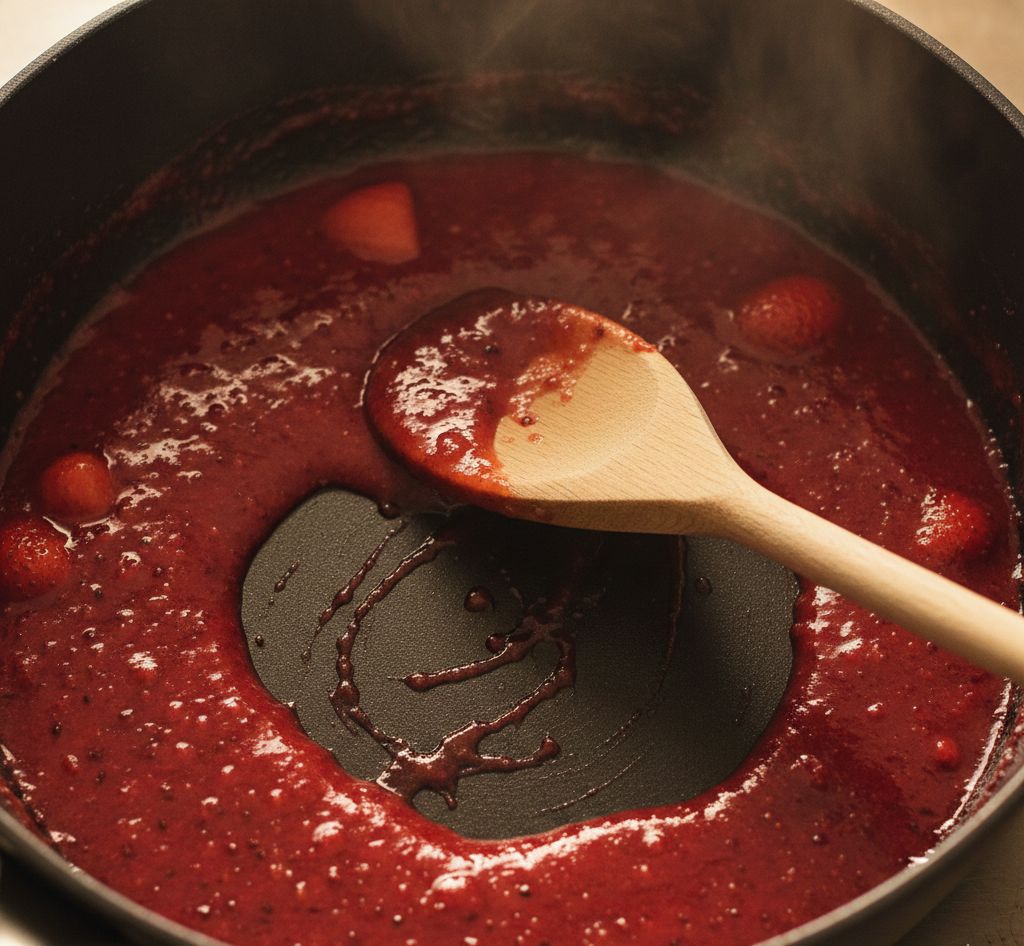
The “Reduction” Ritual: This is the ultimate “Digital Anthropologist” secret. You must never add raw strawberry puree directly to the batter. My mother would blend 1 cup of fresh berries and simmer them on low heat until they reduced to exactly 1/2 cup. This “reduction” evaporates the excess water, leaving behind a thick, jam-like concentrate that packs 10x the flavor without ruining the cake’s chemistry.
The Room Temperature Mandate: In 2026, we prioritize “Technical Excellence”. My mother insisted that every ingredient the butter, the eggs, and even the sour cream must be at room temperature before mixing. Cold ingredients prevent the fat from emulsifying, leading to a curdled batter and a flat, dense cake.
The “White” Egg Trick: For a light, airy, and fluffy crumb, my mother used only egg whites. This keeps the cake’s color a beautiful natural pink and ensures the texture remains “melt-in-the-mouth” soft, allowing the fruit’s aroma to be the hero.

Prep time: 30 mins | Reduction time: 30 mins | Cook time: 30 mins | Servings: 10-12
Diet: Vegetarian, Natural Fruit | Cuisine: Heritage Baking
Ingredients:
2.5 cups All-Purpose Flour: Sifted to ensure a tender crumb.
The Concentrate: 1/2 cup Reduced Strawberry Puree (from 1 cup fresh berries).
The Moisture Base: 1 cup Unsalted Butter (softened), 1/2 cup Sour Cream (or Greek yogurt), and 1/2 cup Whole Milk.
The Sweetener: 1.5 cups Granulated Sugar.
Leavening: 2.5 tsp Baking Powder and 1/2 tsp Baking Soda.
Aromatics: 2 tsp Pure Vanilla Extract and 4 Large Egg Whites (room temperature).
Frosting: 8 oz Cream Cheese, 1/2 cup Butter, and 1/2 cup Ground Freeze-Dried Strawberries (the 2026 “flavor-bomb” secret).
Instructions:
The Reduction: Blend fresh strawberries and simmer in a saucepan over medium-low heat until reduced by half. Let it cool completely.
The Sift: Whisk together the flour, baking powder, baking soda, and salt.
The Creaming: Beat the butter and sugar for 3-5 minutes until light and fluffy. Add egg whites one at a time, followed by vanilla.
The Union: Alternate adding the dry ingredients and the sour cream/milk mixture to the butter base. Fold in the cooled strawberry reduction last.
The Bake: Pour into two greased 9-inch pans. Bake at 350^{\circ}F (177^{\circ}C) for 25-30 minutes until a toothpick comes out clean.
The Frosting: Whip cream cheese and butter until smooth. Add powdered sugar and the ground freeze-dried strawberries for an intense, naturally pink finish.
Serve: Frost the cooled layers and top with fresh, sliced strawberries.

The Berry Glaze: In the 2026 “Use-Up” economy, we value every scrap. Do not throw away the strawberry hulls or the “ugly” overripe berries. Simmer them with a little sugar and lemon juice to create a simple “Heritage Glaze.” Brush this over your warm cake layers before frosting to lock in moisture and add an extra layer of “Ingredient Integrity”.
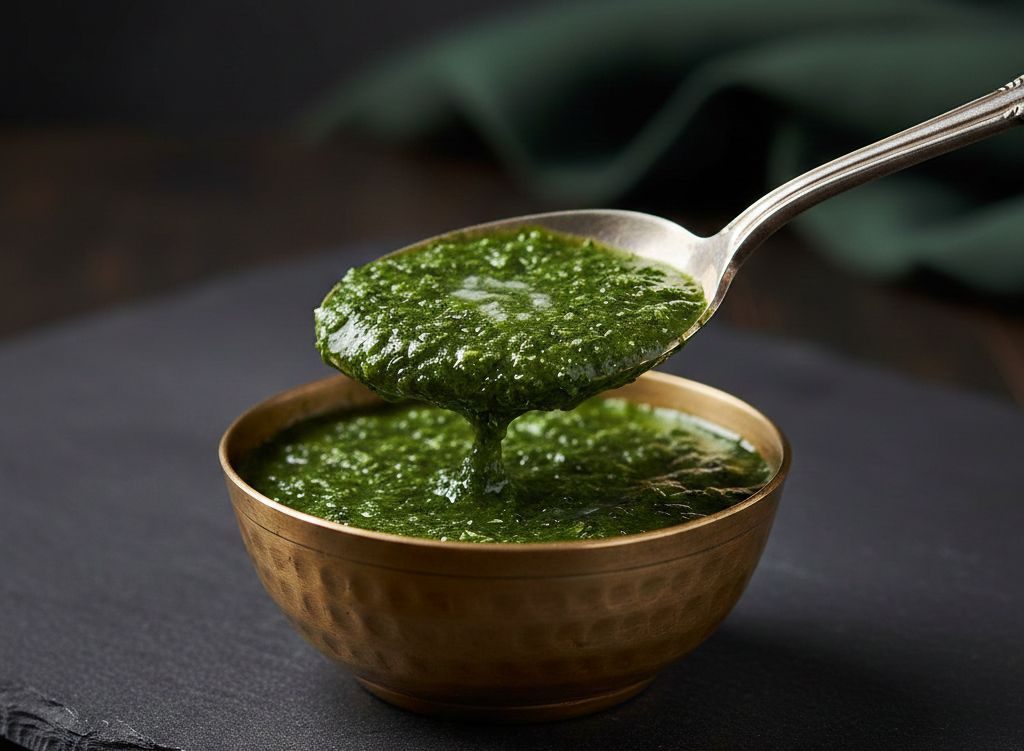
chutney

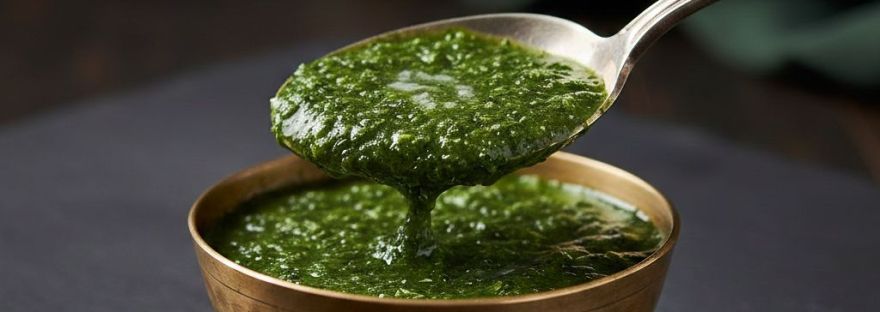
Authentic Mint and Coriander Chutney: Traditional Hari Chutney Recipe

The Green Ritual: My Mother’s Sil-Batta Secret
In our home, a meal was never truly finished until the Hari Chutney was placed on the table. I remember my mother standing in the kitchen, the air filling with the sharp, cooling scent of fresh mint. While many modern kitchens rely on high-speed blenders, she remained loyal to her stone Sil-Batta (grinding stone).

She believed that electric blades “burned” the delicate oils of the herbs, while the slow, shearing action of the stone preserved their soul and vibrant emerald hue. “A chutney should taste like the earth it came from,” she would say. She viewed this condiment as more than just a dip; it was a “Parasocial Companion” that bridged every flavor on the plate from spicy kebabs to buttery parathas.

Today, at The Pinch of Masala, we are documenting her method of “Minimalist Precision,” celebrating the “Quiet Luxury” of a condiment made with absolute “Ingredient Integrity”.

The “Digital Anthropologist” Technical Secrets

To ensure your chutney stays a brilliant, restaurant-style emerald green rather than turning a muddy brown, you must follow my mother’s two non-negotiable rules:

The “Citrus Guard” Rule: The biggest enemy of fresh greens is oxidation. My mother never added salt until the very end. Instead, she would grind the herbs with Lemon Juice or a small piece of Dry Mango (Amchur). The acid acts as a shield, protecting the chlorophyll from turning dark when exposed to air.

The Ice-Cube Friction: If you must use a blender, add one or two ice cubes instead of plain water. High-speed blades generate heat, which “cooks” the herbs and dulls their color. The ice keeps the temperature low, ensuring the chutney remains as vibrant as the day it was picked.

The Recipe Card
Prep time: 10 mins | Cook time: 0 mins | Servings: 1 small jar
Diet: Vegan, Gluten-Free, Keto-Friendly | Cuisine: Indian Heritage

Ingredients:

2 cups Fresh Coriander (Dhaniya): Including the tender stems for maximum fiber.

1 cup Fresh Mint (Pudina): Leaves only (stems can be bitter).

The Aromatics: 2 Green Chillies (slit), 1 inch Ginger, and 3 cloves of Garlic.
The Sour Agent: 1 tbsp Lemon Juice or a small marble-sized ball of Tamarind.

The Crunch: 1 tbsp Roasted Peanuts or Roasted Gram (Dalia)—this provides a “velvet” texture and prevents the water from separating.

Spices: 1 tsp Cumin seeds (Jeera), ½ tsp Black Salt (Kala Namak) for umami, and regular salt to taste.

Instructions:

The Cleanse: Wash the coriander and mint 3-4 times in cold water to remove all grit.

The Prep: Roughly chop the coriander, including those nutrient-dense stems.

The Blend: Add the peanuts, ginger, garlic, chillies, and cumin seeds to the blender first. Pulse into a coarse paste.
The Greens: Add the coriander and mint along with the lemon juice and one ice cube.

The Pulse: Use the Pulse mode in short bursts. Do not over-process into a thin liquid. We are looking for a slightly textured, artisanal consistency.[3]
Final Seasoning: Stir in the salt and black salt only after you have finished blending.

Serve: This chutney is the perfect accompaniment for Beetroot Parathas, Chicken Tikka, or even a simple Dal-Chawal.
The “Pinch of Thrift” Tip (Zero Waste)
The Stalk Power: In the 2026 “Use-Up” economy, we value every part of the plant.[1] Do not discard the thicker coriander stems! While they are too fibrous for a smooth chutney, they are packed with more flavor and nutrients than the leaves.[2] Finely chop them and add them to your Paratha dough or Vegetable Soup for a concentrated hit of herbal aroma and “Fibremaxxing” benefits.

Breakfast

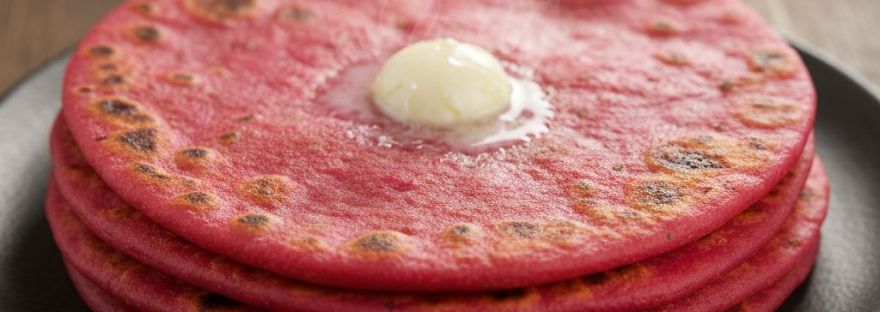
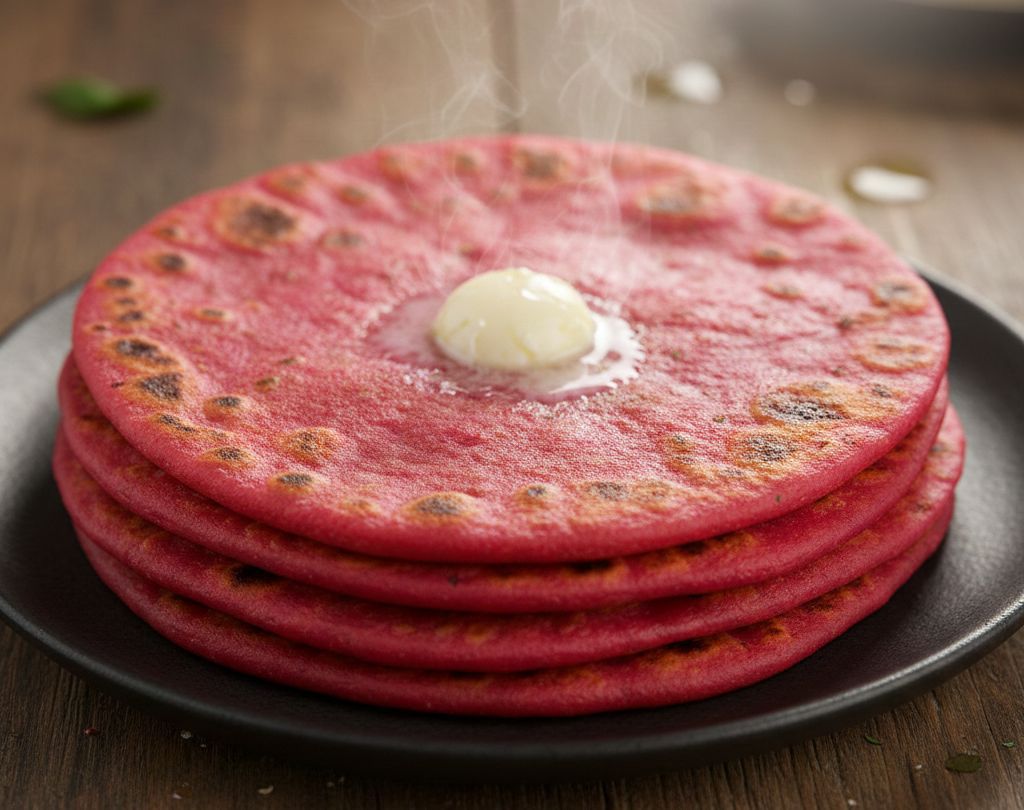
My Mother’s Pink Ritual: The Story of Our Favorite Winter Beetroot Paratha

In our home, the arrival of winter was announced by my mother’s pink-stained palms. I remember her sitting in the morning light, a bowl of deep-red beetroots before her. To her, Beetroot Paratha wasn’t just a “healthy alternative”; it was a visual celebration of the season.
She treated the beetroot with a level of precision that felt almost scientific. She believed that the vibrancy of the paratha was a direct reflection of the cook’s patience. “If the color fades, the spirit of the root is gone,” she would say. She taught me that the secret to a royal beetroot paratha lay in the “Quiet Luxury” of a dough that was as smooth as silk and as bright as a winter sunset.
Today, at The Pinch of Masala, we are documenting her technique for a 2026 audience that craves “Ingredient Integrity” and the “Fibremaxxing” power of whole-plant eating.

The primary struggle with beetroot paratha is managing the moisture and the “earthy” raw smell. To master the “Vibrant Pink,” follow my mother’s three non-negotiable rules:

The “Brief Blanch” Rule: To remove the raw, pungent flavor that often puts children off, you must cook the beetroot briefly. My mother would sauté or steam the grated beetroot for just 2 to 3 minutes. Be careful: if you cook it longer than 8–10 minutes, the vibrant red color begins to suffer.

The Mixed-Dough Mastery: While some prefer stuffing, my mother always used the Mixed Dough method, kneading the beetroot puree directly into the wheat flour. This ensures the color is perfectly even and makes it much easier for novice cooks to avoid the hassle of leaking stuffing.

The “Thick Roll” Secret: In 2026, we value “Technical Excellence”. My mother always rolled her parathas slightly thicker than a standard chapati. If you roll them too thin, the beetroot fibers lose their moisture on the tawa, and the paratha will turn hard instead of staying soft and pliable.

Prep time: 15 mins | Resting time: 30 mins | Cook time: 20 mins | Servings: 6 parathas
Diet: Vegan, High-Fiber | Cuisine: North Indian Heritage

Ingredients:

1.5 cups Whole Wheat Flour (Atta): Sifted for a smooth dough.

1 cup Beetroot Puree: Prepared from grated and lightly steamed beets.

The Aromatics: 1 tsp ginger paste, 1 finely chopped green chili.

Spices: 1 tsp Cumin seeds (Jeera), ½ tsp Ajwain (Carom seeds), ½ tsp Garam Masala, and ½ tsp Amchur (Dry Mango Powder).

Fat: Ghee or oil for roasting.

Instructions:

The Prep: Grate your fresh, juicy beetroot grating it first speeds up the cooking process significantly.

The Puree: Sauté or steam the grated beetroot with ginger and chili for just 2–3 minutes until tender. Cool and blend into a smooth paste without adding any extra water.

The Mix: In a large bowl, combine flour, spices, and the vibrant beetroot puree.
The Knead: Knead into a smooth, soft, non-sticky dough. If the dough feels too sticky, add a little extra flour.

The Rest: Cover with a damp cloth and let the dough rest for at least 15–30 minutes to allow the gluten to relax.

Rolling: Divide into balls. Dust with flour and roll into discs that are slightly thicker than a chapati.

The Roast: Place on a hot tawa. When bubbles appear, flip it. Apply ghee or oil and press gently with a spatula to help it puff.

Serve: Cook until golden-brown spots appear. Serve hot with fresh yogurt, raita, or a spicy pickle.

The Nitre-Boost: Beetroots are a superfood rich in nitrates, which research suggests can help regulate blood pressure and improve heart health. By using my mother’s “Brief Blanch” method, you preserve these heat-sensitive antioxidants while enjoying a delicious, fiber-rich meal.

Lunch & Dinner

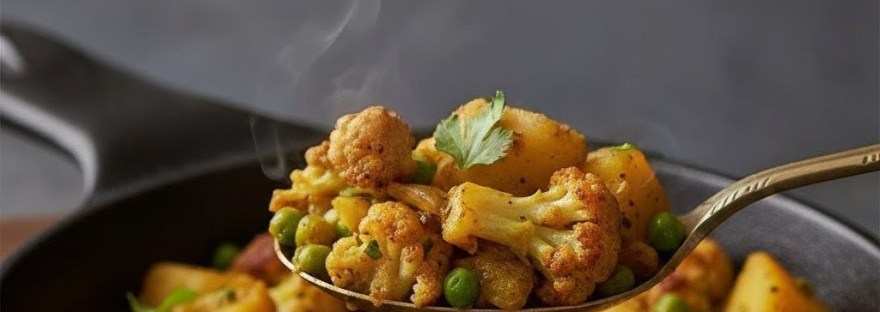
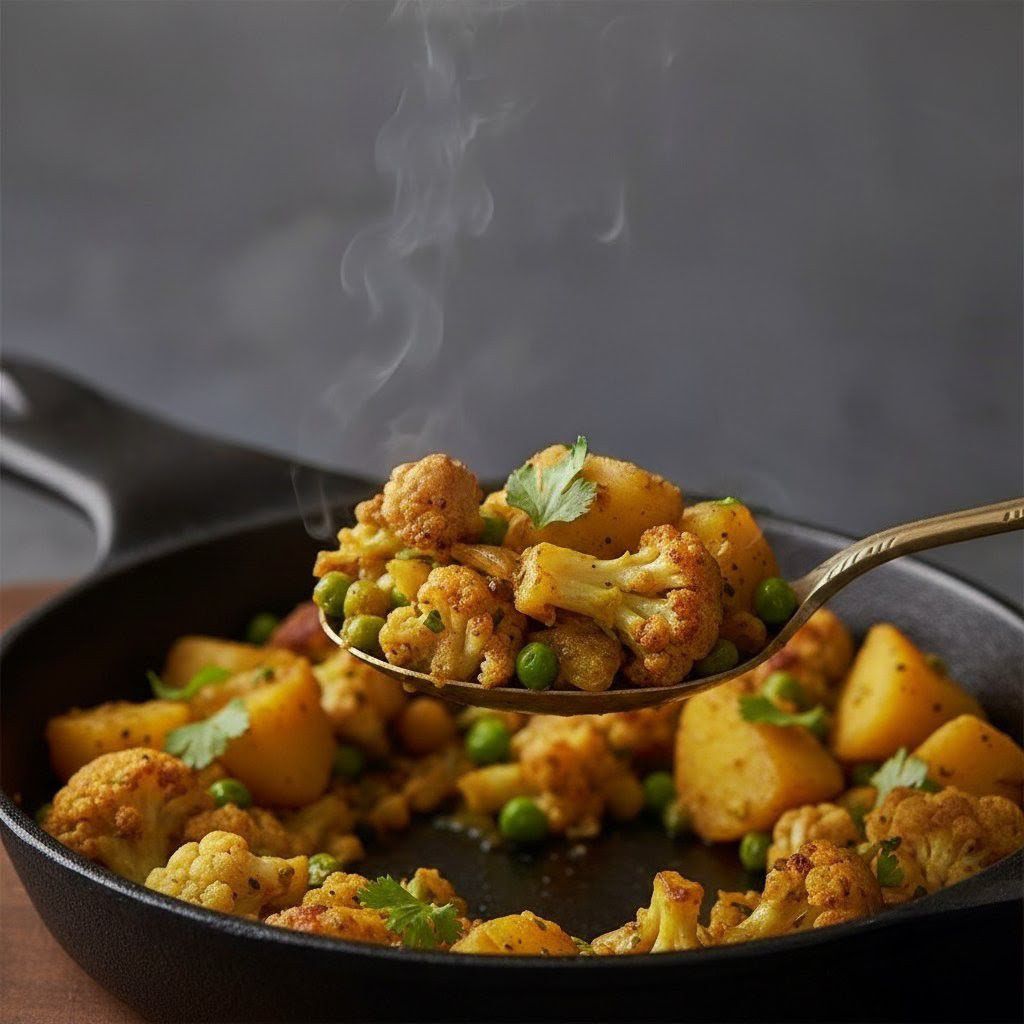
Authentic Punjabi Aloo Gobi: Traditional Dry Sabzi Recipe

In our house, the definitive sound of a winter Saturday was the crisp thwack of a knife hitting a fresh head of cauliflower. While the recipe for Aloo Gobi (Potato and Cauliflower) was an heirloom from my grandmother, it was my mother who turned it into a masterclass of texture. She believed that a mushy cauliflower was a sign of a cook who didn’t respect the vegetable’s “spirit”.
I remember her sitting in the kitchen as the morning mist cleared, meticulously separating the cauliflower into even-sized florets. She never used a food processor; she believed your hands needed to feel the firmness of the vegetable to know how it would react to the fire. My mother viewed this dish as a “Parasocial Companion” a sturdy, dependable meal that had the power to make a simple Roti feel like a royal feast.
Today, at The Pinch of Masala, we are reclaiming the art of the “Dry Sauté.” We are moving away from the watery, grey mashes of the past and returning to the “Quiet Luxury” of a vibrant, charred-gold sabzi that honors every grain of spice.

The barrier to a perfect Aloo Gobi is the moisture. Cauliflower is approximately 92% water, which can easily turn your stir-fry into a mushy paste. To master the “Eternal Crunch,” follow my mother’s three non-negotiable rules:
The “Headstart” Rule: Potatoes and cauliflower cook at different speeds. My mother always sautéed the potato cubes in oil first for 5 minutes to give them a “seal” and a headstart before the delicate cauliflower florets entered the pan.
The “No-Water” Mandate: This is the ultimate “Digital Anthropologist” secret. Most people add a splash of water to cook the veggies, but my mother believed the steam trapped under a tight lid was all the moisture needed. Adding liquid water ruins the “Bhuna” (roasting) effect and makes the florets soggy.
The “Batch Sear”: To prevent overcrowding which leads to steaming instead of frying she would often fry the cauliflower florets separately until they were golden-spotted before mixing them with the masala base.

Prep time: 15 mins | Cook time: 25 mins | Servings: 4
Diet: Vegan, Gluten-Free | Cuisine: North Indian Heritage

Ingredients:

1 Medium Head Cauliflower (Gobi): Cut into medium-large florets.

2 Medium Potatoes (Aloo): Peeled and chopped into even cubes.

The Aromatics: 1 Large Onion (finely chopped), 1.5 tsp Ginger-Garlic paste, and 2 Green Chillies (slit).

The Base: 1 Ripe Tomato (finely chopped).

Fat: 3 tbsp Oil or Ghee.

The Spice Bloom: 1 tsp Cumin seeds (Jeera), 1 tsp Kasuri Methi (the secret to that restaurant aroma).

Powder Spices: 1 tsp Red Chili powder, ½ tsp Turmeric, 1 tsp Coriander powder, and 1 tsp Aamchur (Dry Mango Powder) for the essential tang.

The Finish: ½ tsp Garam Masala and a handful of fresh Coriander leaves.

Instructions:

The Prep: Rinse cauliflower in warm salted water to remove any impurities. Drain and pat dry completely.

The Golden Fry: Heat 2 tbsp oil in a heavy pan. Sauté cauliflower florets until golden brown edges appear. Remove and set aside. In the same pan, sauté potato cubes until they are 80% cooked and golden. Remove and set aside.

The Bloom: Add the remaining oil. Sizzle cumin seeds and kasuri methi until aromatic. Add onions and sauté until translucent.

The Masala Base: Add ginger-garlic paste and chillies. Sauté for a minute, then add the tomato and dry spices. Cook until the oil separates from the sides.

The Union: Carefully add the fried aloo and gobi back into the pan. Mix gently with a flat spatula to avoid breaking the florets.

The Slow Cook: Lower the heat to its absolute minimum. Cover with a tight-fitting lid and let the vegetables cook in their own steam for 8-10 minutes.

The Reveal: Check if the potatoes are fork-tender. Sprinkle garam masala and toss one last time on high heat for 60 seconds to “sear” the flavors in.

Serve: Garnish with fresh coriander. Serve hot with buttery Phulkas or as a side to Dal-Chawal.


The Stalk Stir-fry: In the 2026 “Use-Up” economy, we value every part of the plant. Do not throw away the thick cauliflower stalks! Peel the tough outer layer, dice the tender inner core, and sauté them with mustard seeds and turmeric for a crunchy, high-fiber side dish the next day.

Lunch & Dinner

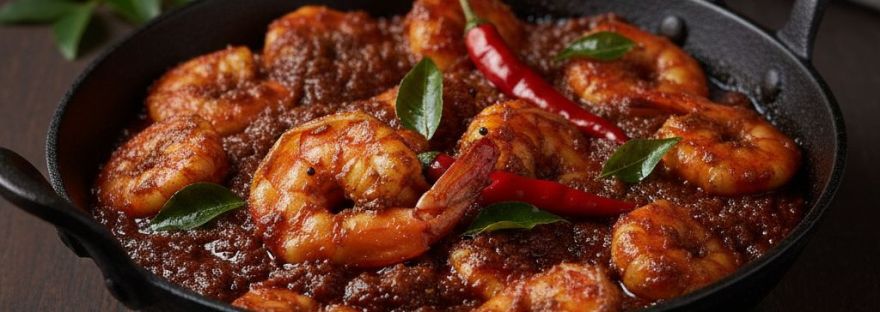
Authentic Konkani Prawn Masala: Traditional Kolambi Recipe

In our family, the arrival of fresh prawns wasn’t just a grocery delivery; it was a coastal ritual. I remember my mother heading to the Mumbai jetties as the trawlers docked, her eyes scanning for the translucent shimmer that signaled a “just-caught” catch. She didn’t just buy ingredients; she hand-selected them with the precision of a curator.
Cleaning the prawns was her meditation. She taught me that the effort you put into the prep is what earns the flavor of the dish. “A tired prawn cannot be hidden behind a loud spice,” she would say. My mother viewed her Kolambi Masala (Prawn Masala) as a “Parasocial Companion” on our Sunday table a dish that whispered stories of the red-soiled kitchens of the Konkan and the salty air of the Arabian Sea .
Today, at The Pinch of Masala, we are documenting her method of “Minimalist Precision.” We are moving away from oily restaurant versions and returning to the “Quiet Luxury” of a thick, spice-coated dry-fry that lets the sweetness of the prawns take the lead.


The secret to prawns that are succulent and tender rather than tough and rubbery lies in my mother’s two non-negotiable rules:
The “Opacity” Rule: The biggest mistake in home cooking is over-boiling. Prawns cook in minutes. My mother would add them only at the final stage, simmering them for just 2–3 minutes until they turned opaque. The residual heat of the thick masala is enough to finish them.
The Shallot Foundation: While most recipes use large red onions, my mother insisted on a handful of shallots (chote pyaaz). When ground into a coarse paste with ginger and garlic, they provide a deep, jammy sweetness that offsets the sharp heat of the chili.

Prep time: 20 mins | Cook time: 20 mins | Servings: 4
Diet: Pescatarian, Gluten-Free | Cuisine: Konkani Heritage

Ingredients:

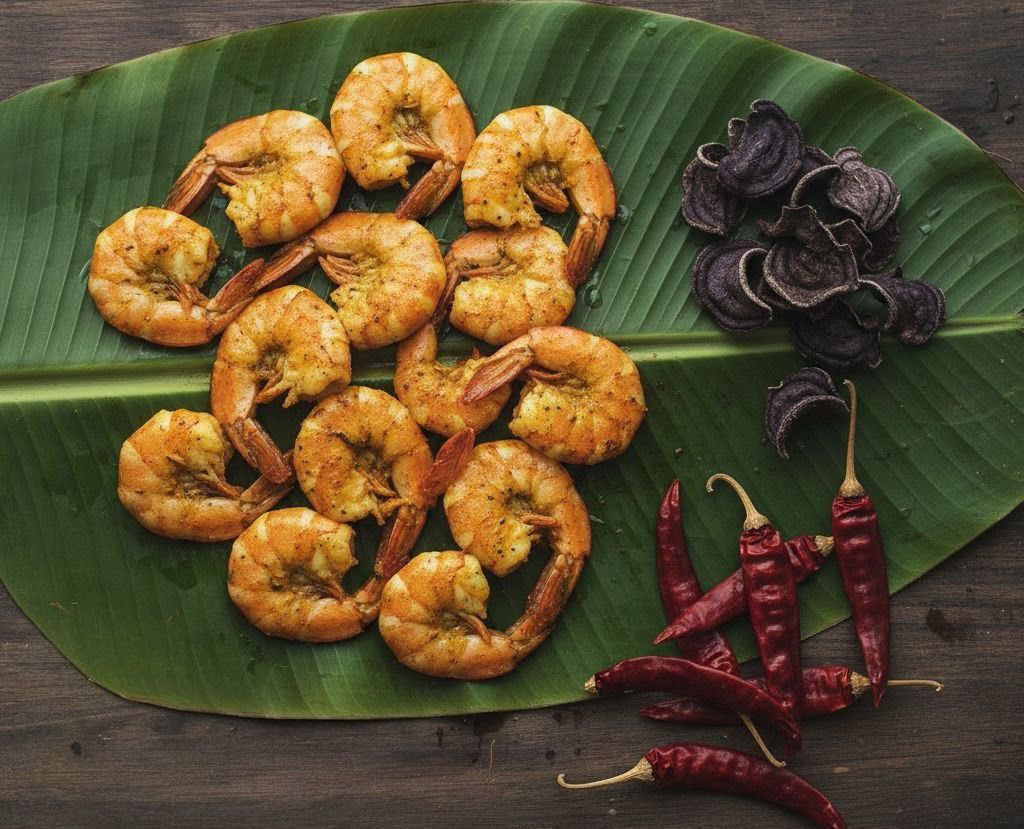
500g Fresh Prawns: Cleaned and deveined. (Leave the tails on for that authentic “Digital Anthropologist” look).

The Masala Base: 1 cup shallots (finely chopped), 1.5 cups tomatoes (finely chopped), 1 tbsp ginger-garlic paste.

The Spice Trinity: 1.5 tbsp Kashmiri red chili powder (for color), ½ tsp turmeric, 1 tsp garam masala.

The Sour Agent: 2 slices of Kokum (or 1 tbsp tamarind extract).

Fat: 2 tbsp Coconut oil (essential for coastal authenticity).

The Finish: 10–12 Fresh curry leaves and a handful of chopped coriander.

Instructions:
The Marinate: Toss the prawns with turmeric and a pinch of salt. Set aside for 15 minutes.

The Tempering: Heat coconut oil in a wide-bottomed pan. Add cumin seeds and let the curry leaves splutter.

The Sauté: Add the shallots and onions. Sauté patiently until they turn deep golden brown. This caramelization is the base of your flavor.

The Bhuna: Add the ginger-garlic paste and tomatoes. Cook until the tomatoes melt and the oil begins to separate from the sides.

The Spice Bloom: Stir in the red chili powder and garam masala. Add a splash of water to prevent the spices from burning. Add the kokum slices.

The Prawn Union: Slide in the marinated prawns. Toss them well to ensure they are fully coated in the thick masala.

The Simmer: Cover and cook for 3–5 minutes max. As soon as the prawns curl into a ‘C’ shape and turn opaque, turn off the heat.

Serve: Garnish with fresh coriander and serve hot with Bhakri or steamed rice.


The Shell Stock: In the 2026 “Use-Up” economy, we value every scrap. Do not discard the prawn shells! Wash them and boil them with ginger scraps and coriander stems for 15 minutes. Strain this liquid and use it as a “Seafood Stock” for your next Veg Pulao. It adds a concentrated oceanic umami that plain water cannot match.

Lunch & Dinner

Bhindi Bhaja: My Mother’s Ritual of the Eternal Crunch

In our family, the hierarchy of vegetables was clear: the Bhindi (Okra) was the temperamental queen of the kitchen. While the recipe was passed down through generations, it was my mother who mastered the chemistry of it. To her, a slimy bhindi was a sign of a distracted mind.
I remember her sitting in the winter sun, inspecting each green “ladyfinger” with the focus of a jeweler. “If it doesn’t snap at the tip, it’s too old for the pan,” she would say. She taught me that the secret to a royal Bhindi Bhaja wasn’t in the number of spices, but in the silence of the preparation. You had to respect the okra’s hatred of moisture and its need for space. This dish is a “Parasocial Companion” on our table a crisp, reliable comfort that has defined our family lunches for decades.
Today, at The Pinch of Masala, we are moving away from oily, heavy-handed stir-frys and returning to the “Quiet Luxury” of my mother’s “Bone-Dry” technique a method designed for a world that values technical excellence and ingredient integrity.

The most common grievance with Bhindi is the “slime” a natural mucilage that intensifies when it touches water. To achieve my mother’s “Eternal Crunch,” you must win the Moisture War:
The “Bone-Dry” Rule: Never cut okra while it is wet. My mother would wash the whole pods the night before and leave them on a clean cloth to air-dry overnight. If you are in a hurry, you must wipe each individual pod with a paper towel until it is completely dry before your knife touches it.
The “Last Grain” Salting: In 2026, we value “Technical Simplicity”. Salt draws out moisture instantly. My mother never added salt until the bhindi was 90% cooked and crisp. Adding it earlier creates a “steam bath” inside the pan, turning your fry into a soggy mash.

Prep time: 15 mins | Cook time: 15 mins | Servings: 3–4
Diet: Vegan, Gluten-Free | Cuisine: Indian Heritage

Ingredients:
500g Fresh Okra (Bhindi): Tender, thin, and blemish-free.
The Aromatics: 1 Medium Onion (sliced thin), 2 Green Chillies (slit), and 3 Garlic cloves (crushed).
The Sour Agent: 1 tsp Amchur (Dry Mango Powder) or a squeeze of Lemon   this chemically cuts any remaining sliminess.
Fat: 3 tbsp Mustard Oil (for that authentic “Heritage” pungent kick).
Spices: 1 tsp Cumin seeds (Jeera), ½ tsp Turmeric, and ½ tsp Red Chili powder.
The Secret Texture: 1 tbsp Roasted Peanut Powder (optional, for a Maharashtrian twist).
Instructions:
The Preparation: Wash, dry, and slice the bhindi into ¼-inch rounds. Ensure your chopping board and knife are also bone-dry.
The Tempering: Heat oil in a wide, heavy pan (not a deep kadhai) until it smokes. Add cumin seeds and let them sizzle.
The Sauté: Add the sliced onions and chillies. Sauté until they are translucent but not brown.
The Open Sear: Add the okra. Crank the heat to high for 2 minutes to “sear” the exterior. Do not cover the pan. Covering traps steam, which creates slime.
The Slow Crisp: Lower the heat to medium. Stir only 2 or 3 times total. Over-stirring breaks the pods and releases more mucilage.
The Seasoning: Once the okra is dark green and the edges look slightly charred/crisp, add the turmeric, chili powder, and the souring agent (Amchur).
The Final Grain: Add salt in the last 60 seconds of cooking. Toss one last time and turn off the heat.
Serve: Serve immediately with hot Phulkas or Dal-Rice.

The Pakora Choora: In the 2026 “Use-Up” economy, we value concentrated flavor scraps. My mother never threw away the tiny, crunchy, spice-laden bits of onion and okra that settled at the bottom of the pan. Save this “choora” in a small jar; it makes a fantastic, zero-waste topping for Poha or Khichdi the next morning.

Lunch & Dinner

Dhaba-Style Egg Masala: My Mother’s Golden Spice Ritual

In our family, the humblest of ingredients often received the most royal treatment. I remember my mother standing by the stove on Sunday nights, transforming simple boiled eggs into a “Dhaba-style” masterpiece. She called it her “Anda Masala ritual,” and she believed that an egg was only as good as the texture of its skin.
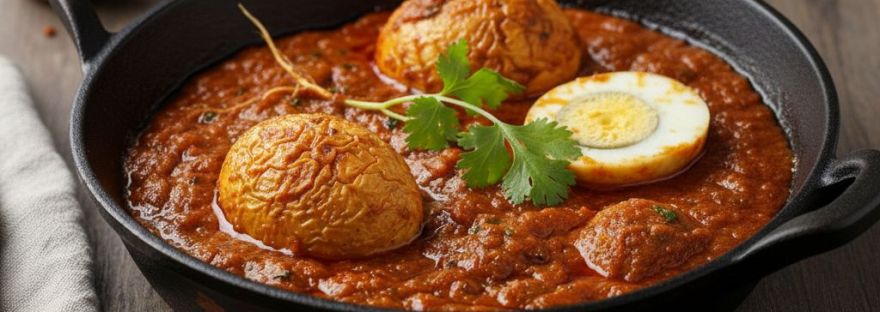
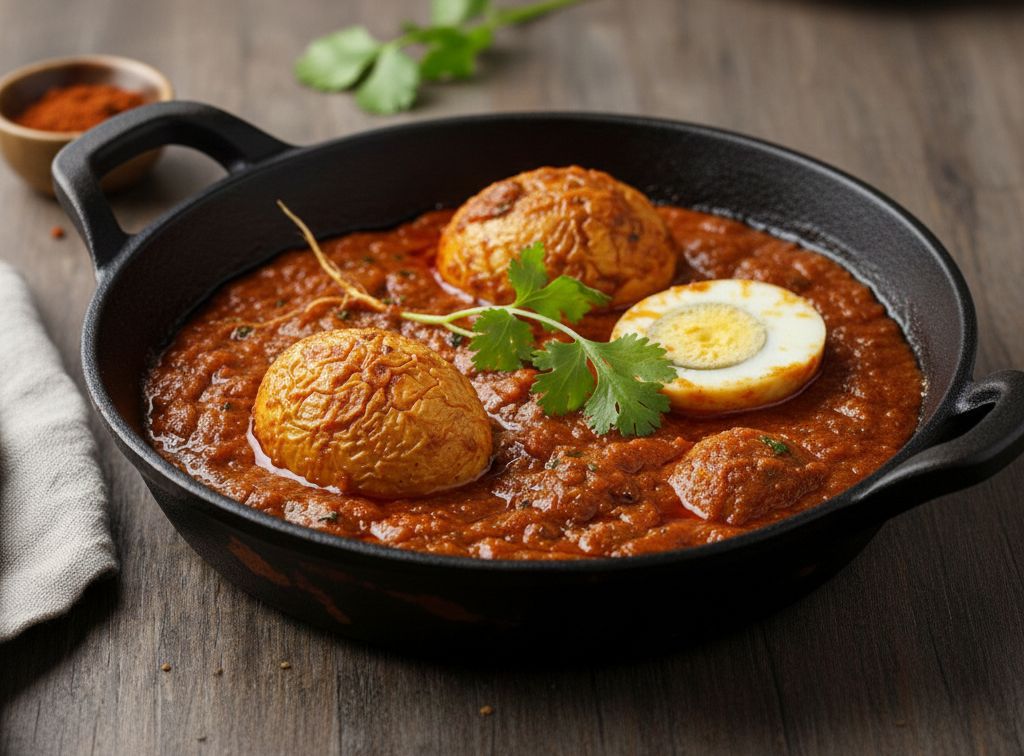
She never simply dropped a boiled egg into a gravy. To her, that was unfinished work. “The egg must earn its place in the masala,” she would say, as she carefully fried them until they developed a crinkly, golden-blistered exterior. My mother viewed this dish as a “Parasocial Companion” a sturdy, dependable meal that bridged the gap between rustic street food and the warmth of a home kitchen.
Today, at The Pinch of Masala, we are reclaiming the patience of the “Slow Bhuna.” We are moving away from watery, pale curries and returning to the “Quiet Luxury” of a thick, caramelized onion-tomato base that hugs the eggs like a velvet cloak.

The secret to an egg masala that tastes like it came from a highway Dhaba, yet feels refined, lies in my mother’s two non-negotiable rules:
The “Blister and Prick” Rule: Before frying, you must prick the boiled eggs with a fork or make tiny slits with a knife. This is the ultimate “Digital Anthropologist” secret. It serves two purposes: it prevents the eggs from bursting in the hot oil and, more importantly, it allows the spicy gravy to penetrate deep into the yolk, ensuring every bite is seasoned.
The “Slow Bhuna” Foundation: In 2026, we value “Ingredient Integrity”. My mother never rushed the onions. She would sauté them on a low flame for at least 8 to 10 minutes until they reached a deep, jammy translucent pink. This caramelization provides the natural sweetness that balances the sharp heat of the ginger and garlic.
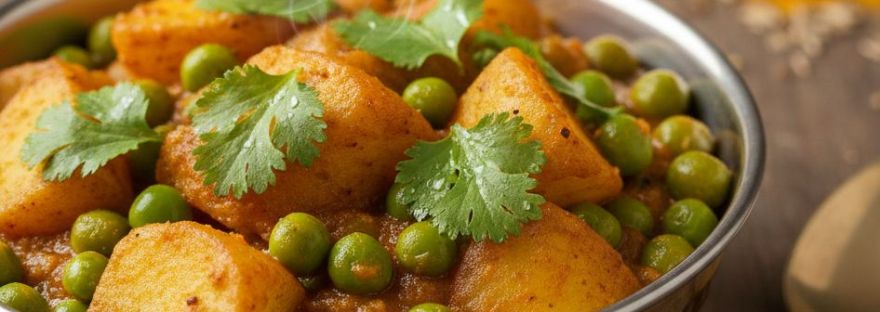
Prep time: 15 mins | Cook time: 30 mins | Servings: 4
Diet: Vegetarian-Friendly (Egg-based), Gluten-Free | Cuisine: North Indian Dhaba

Ingredients:
6 Large Eggs: Hard-boiled and shelled.
The Aromatics: 2 Large Onions (finely chopped), 1 inch Ginger (crushed), 4 Garlic cloves (crushed), and 2 Green Chillies (slit).
The Base: 1 cup Tomato Puree (freshly blended).
Fat: 2 tbsp Ghee or Oil (Mustard oil adds an authentic pungent kick).
Whole Spices (The Bloom): 1 tsp Cumin seeds, 1 Bay leaf, 2 Green Cardamoms, and 1 stick Cinnamon.
Powder Spices: 1 tsp Kashmiri Red Chili powder (for that vibrant Dhaba red), ½ tsp Turmeric, 1 tsp Coriander powder, and ½ tsp Garam Masala.
The Finish: 1 tsp Kasuri Methi (crushed between palms) and a handful of fresh Coriander leaves.
Instructions:
The Prep: Prick the boiled eggs multiple times with a fork.
The Blister: Heat 1 tbsp oil in a pan. Add a pinch of turmeric and chili powder. Sauté the eggs until they are golden-brown and the skin looks slightly blistered. Remove and set aside.
The Bloom: In the same pan, add the remaining oil/ghee. Add the whole spices and let them sizzle until fragrant.
The Onions: Add the onions and sauté patiently on medium-low heat until they turn a deep golden brown. Add the ginger, garlic, and green chillies; sauté for another 2 minutes until the “raw” smell disappears.
The Bhuna: Pour in the tomato puree and salt. Add the turmeric, red chili, and coriander powders. Cook uncovered until the oil begins to separate from the sides of the masala.
The Union: Add 1 cup of warm water to adjust the gravy consistency. Bring to a boil, then slide in the blistered eggs.
The Simmer: Cover and simmer on low heat for 5 minutes to let the flavors meld.
Final Touch: Sprinkle garam masala, Kasuri Methi, and fresh coriander. Stir gently so as not to break the eggs. Serve hot with buttery Naan or Jeera Rice.

Leftover Masala Stir-Fry: In the 2026 “Use-Up” economy, we value concentrated flavor bases. If you have extra gravy left after the eggs are gone, do not discard it! Toss in some boiled potato cubes or chickpeas the next day. The matured flavors of the egg-infused masala will create an instant “Zero-Waste” side dish that tastes even better than the original meal.

Lunch & Dinner

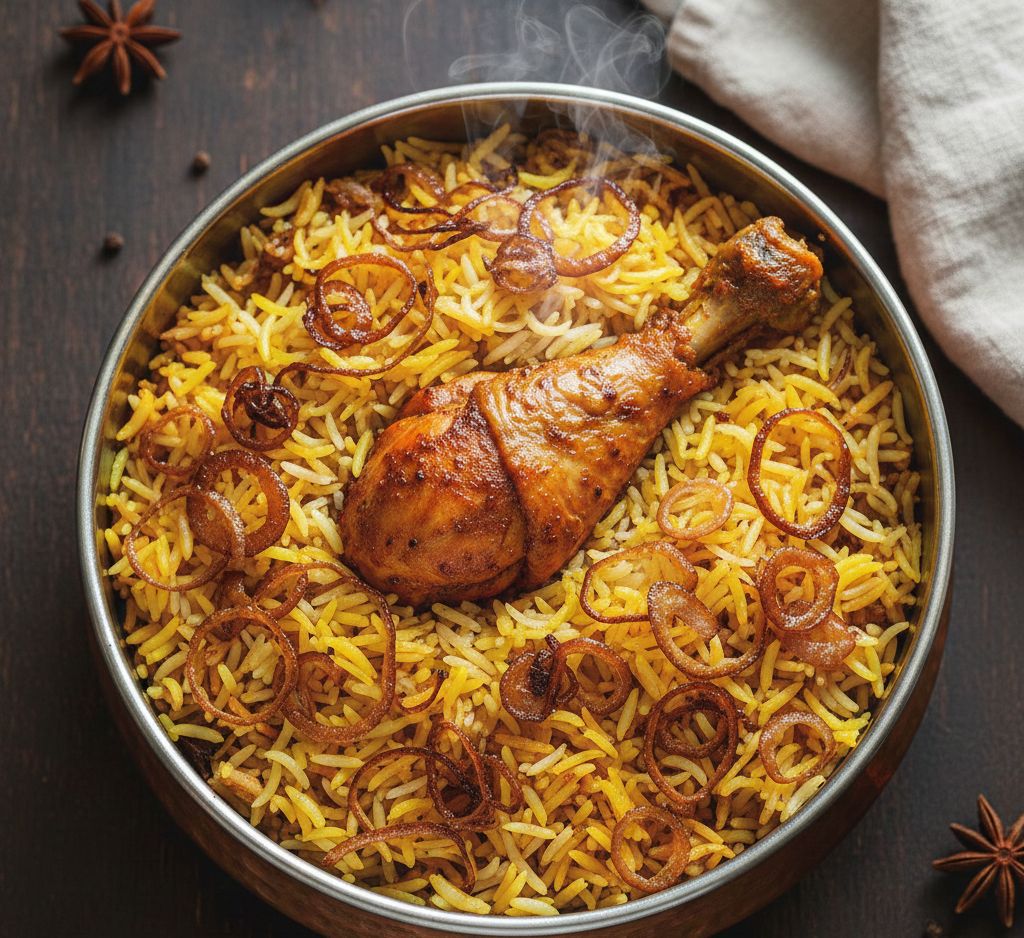
The Sunday Dum Ritual: My Mother’s Signature Chicken Biryani

In our family, Sunday mornings had a specific scent: a heady mix of warming cloves, charred onions, and the earthy perfume of aged Basmati rice. While the recipe traces back to the royal Mughlai kitchens, it was my mother who turned the Chicken Biryani into a weekly ceremony of precision. She didn’t just cook; she performed an act of “Dum” the art of trapping steam and soul inside a single pot.
I remember her standing by the sink, rinsing the rice with a gentleness reserved for something fragile. “Treat the rice like pearls,” she would say. “If you break the grain now, you break the heart of the dish”. My mother believed that a biryani was a “Parasocial Companion” on the table a dish that communicated love through the layers of spice and the tenderness of the meat.
Today, at The Pinch of Masala, we are moving away from the “instant pressure cooker” versions that turn rice into mash. We are returning to the “Quiet Luxury” of slow-reduced masalas and “Ingredient Integrity,” using the technical methods my mother perfected for a world that craves authenticity.

The secret to a biryani where the rice stands long and distinct, and the chicken is “melt-in-the-mouth” soft, lies in my mother’s two non-negotiable rules:
The “90% Rice” Rule: Most home cooks over-boil their rice. My mother insisted that the rice must be parboiled in water flavored with whole spices until it is exactly 90% cooked it should still have a “bite” when pressed between your fingers. The remaining 10% happens during the “Dum” phase, where the rice absorbs the steam from the chicken gravy below.
The “Waterless” Gravy: This is the ultimate “Digital Anthropologist” secret. My mother never added extra water to the chicken marinade. She relied on the natural juices released by the chicken and the yogurt to create a thick, concentrated masala. This prevents the biryani from becoming watery and ensures every grain of rice is coated in pure flavor.

Prep time: 30 mins | Cook time: 60 mins | Servings: 6
Diet: Halal, Gluten-Free | Cuisine: Mughlai Heritage

Ingredients:
The Rice: 2½ cups Aged Extra Long Grain Basmati Rice (soaked for 30 mins).
The Chicken: 1 kg Bone-in chicken pieces (thighs and drumsticks are best for juiciness).
The Marinade: 1 cup fresh Yogurt (Dahi), 1 tbsp Ginger-Garlic paste, 1 tbsp Kashmiri Red Chili powder, ½ tsp Turmeric, 1 tsp Biryani Masala, and a handful of fresh Mint and Cilantro.
The Aromatics: 2 large Onions (sliced and fried into golden Birista), 4 Green cardamoms, 6 Cloves, 1 stick Cinnamon, and 1 Star anise.
The Finish: 2 tbsp Ghee, a pinch of Saffron soaked in ¼ cup warm milk, and 2 boiled eggs (optional).
Instructions:
Marinate: Combine the chicken with all marinade ingredients. Let it rest in the fridge for at least 1 hour (ideally overnight) to ensure the spices penetrate the bone.
The Whole Spices: In a large pot, boil water with whole spices and salt. Add the soaked rice and cook until 90% done. Drain and set aside.
The Base: In a heavy-bottomed pot, heat ghee. Add the marinated chicken and half of the fried onions. Sauté on medium heat for 8-10 minutes until the chicken is firm.
The Layering: Spread the parboiled rice evenly over the chicken. Top with the remaining fried onions, saffron-infused milk, fresh mint, and a drizzle of ghee.
The Dum: Seal the pot tightly with aluminum foil or a dough rim and place the lid on top. Cook on the lowest heat possible for 20-25 minutes.
The Silence: Turn off the heat and let the pot sit undisturbed for 10 minutes. This allows the juices to settle and the rice to firm up.
Serve: Fluff the rice gently from the sides using a flat spoon and serve with a side of cold Raita.

The Bone Stock: In the 2026 “Use-Up” economy, we value every scrap. If you are using boneless chicken for your biryani, do not throw away the bones! Boil them with coriander stems and ginger scraps to create a quick stock. Use this stock instead of plain water when boiling your rice to infuse it with a 10x deeper savory flavor.

starters

Mixed Vegetable Soup: My Mother’s Winter Medicine

In the winter months, our kitchen didn’t just smell like food; it smelled like protection. While the tradition of a warm bowl began with my grandmother, it was my mother who turned the Mixed Vegetable Soup into a ritual of healing. To her, a soup wasn’t just a liquid meal; it was a way to “document the season” in a single pot.
I remember her standing at the wooden counter, her knife-work precise and rhythmic. She believed that the way you chopped a vegetable determined its soul in the broth. “If the carrots are bigger than the beans,” she would say, “the soup has no harmony.” My mother viewed her soup as a “Parasocial Companion” a warm, reliable presence that comforted us during winter colds and rainy nights .
Today, at The Pinch of Masala, we are stepping away from the “novel-length menus” of the modern era and returning to the “Quiet Luxury” of simple, technical, and honest cooking . This is my mother’s medicine, refined for a world that needs intention and longevity .

The most common mistake in home-style soups is a flat, watery flavor. To achieve a “Restaurant Style” depth at home, you must follow my mother’s two non-negotiable rules:
The High-Heat Bloom: Most people boil their vegetables in water immediately. My mother insisted on sautéing the aromatics ginger, garlic, and spring onion whites and then the chopped veggies on a high flame for 2–3 minutes. This “sear” brings out the natural sugars and creates a smoky aroma that serves as the flavor base.
The Starch Integrity: In 2026, we are seeing a move toward “real food sources” rather than “powders and potions” . Instead of using cornstarch or artificial thickeners, my mother would often blend a single boiled potato into a smooth paste and stir it back into the pot. This creates a silky, hearty consistency while remaining 100% natural.

Prep time: 15 mins | Cook time: 25 mins | Servings: 4
Diet: Vegan, Gluten-Free | Cuisine: Indian Homestyle

Ingredients:
The Medley (1.5 to 2 cups): Finely chopped carrots, french beans, cabbage, and sweet corn.
The Aromatics: 1 tbsp garlic (minced), ½ tbsp ginger (minced), and 2 sprigs of spring onion whites.
The Liquid: 3 cups of Scrap Stock (see below) or water.
The Seasoning: ½ tsp black pepper powder, salt to taste, and a pinch of sugar (to balance the acidity).
The Finish: 1 tsp vinegar or lemon juice and a handful of fresh coriander.
Instructions:
The Chop: Rinse all vegetables under running water and chop them into uniform, small pieces. Uniformity ensures even cooking and prevents some veggies from turning mushy while others remain raw.
The Wok Sear: Heat 1 tbsp oil or butter in a heavy pot. Sauté the ginger, garlic, and spring onion whites for 1 minute until fragrant but not browned.
The Flavor Bloom: Add the rest of the chopped vegetables. Crank the heat to high and fry for 2–3 minutes. This brings out the deep, earthy aroma.
The Simmer: Pour in the stock or water. Bring to a rolling boil, then lower the flame. Cover and cook for 10–12 minutes until the veggies are tender but still have a slight “bite”.
The Natural Bind: If you prefer a thicker soup, stir in your blended potato paste (or a cornstarch slurry) and cook until it turns glossy and thick.
The Polish: Add salt, sugar, and crushed black pepper. Turn off the heat and stir in the vinegar or lemon juice.
Serve: Ladle into warm bowls and garnish with coriander. Serve bubbling hot, perhaps with a side of toasted croutons.

The Scrap Stock: In the 2026 “Use-Up” economy, we never cook with plain water. Collect your onion skins, carrot ends, and celery stalks throughout the week. Boil them in water for 20 minutes with a bay leaf to create a homemade vegetable stock. This “zero-cost” liquid adds an enzymatic complexity that transforms a simple soup into a gourmet experience.

Lunch & Dinner

Aloo Matar: My Mother’s Winter Afternoon in a Bowl

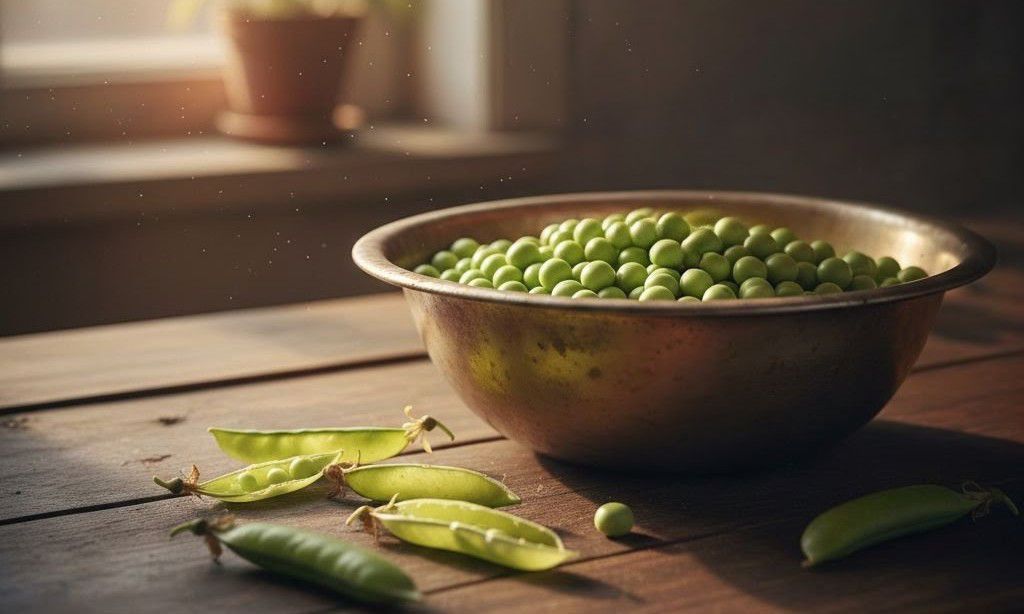
In our house, the definitive sound of winter wasn’t the whistling wind; it was the steady pop-pop-tinkle of fresh green peas hitting a steel bowl. I remember my mother sitting on a low stool in the afternoon sun, a mountain of pea pods in her lap. She never rushed the task. To her, shelling peas was a visual meditation a way to ensure that only the sweetest, most “intentional” grains made it into the pot.
“A potato is just earth,” she would say, “but the pea is the spirit.” She taught me that the secret to a royal Aloo Matar wasn’t in the spices, but in the hierarchy of the cook. You had to respect the potato’s need for a headstart and the pea’s delicate desire to remain vibrant. This dish is a “Parasocial Companion” on our lunch table a warm, reliable hug that has survived generations of winter Sundays .
Today, at The Pinch of Masala, we are moving away from the “frozen-bag” culture and returning to the “Quiet Luxury” of hand-shelled winter bounty and my mother’s “Golden Sear” technique.

The most common mistake in Aloo Matar is ending up with a mushy, greyish mash. To keep your sabji looking “emerald and gold,” you must follow my mother’s two technical rules:
The “Golden Sear” Rule: Never boil the potatoes in the gravy from the start. You must sauté the potato cubes in oil or ghee until they develop a thin, golden crust. This “sealing” prevents the starch from leaking into the gravy, keeping it clean and allowing the potatoes to retain their shape.
The “Steam Trap” Finish: In 2026, we prioritize “Simplicity with Purpose”. My mother would never add excess water. She would cover the pan with a tight-fitting lid and cook the vegetables in their own juices. This “Steam Trap” method concentrates the natural sugars of the winter peas, making them taste like candy rather than water.

Prep time: 20 mins | Cook time: 20 mins | Servings: 4
Diet: Vegan, Gluten-Free | Cuisine: North Indian Heritage

Ingredients:
2 cups Fresh Green Peas: Hand-shelled winter peas are best.
3 Medium Potatoes: Peeled and diced into ¾-inch cubes.
The Aromatics: 1 Large Onion (finely chopped), 1 inch Ginger (grated), 3 Garlic cloves (crushed).
The Base: 2 Ripe Tomatoes (pureed).
Fat: 2 tbsp Mustard Oil or Ghee.
Spices: 1 tsp Cumin seeds (Jeera), ½ tsp Turmeric (Haldi), 1 tsp Coriander powder, ½ tsp Red Chili powder, and ½ tsp Garam Masala.
The Finish: A handful of fresh Coriander leaves and a squeeze of Lemon juice.
Instructions:
The Sear: Heat oil in a heavy pan. Add the potatoes and a pinch of salt. Sauté on medium-high for 5–7 minutes until the edges are golden brown. Remove and set aside.
The Bloom: In the same oil, add cumin seeds. Once they sizzle, add the onions. Sauté until they are a deep translucent pink.
The Masala Base: Add the ginger and garlic. Sauté for 30 seconds, then pour in the tomato puree and dry spices. Cook until the oil begins to separate from the sides.
The Union: Add the seared potatoes and the fresh peas. Toss well to coat every piece in the masala.
The Steam Trap: Add only ¼ cup of water (or our Pod Stock, see below). Cover tightly and cook on low heat for 10–12 minutes.
The Reveal: Check if the potatoes are fork-tender. If the gravy is too thin, cook open for 2 minutes to thicken.
Final Touch: Stir in the garam masala and coriander. Squeeze lemon juice just before serving to “brighten” the earthy potatoes.

The Pod Stock: In the 2026 “Use-Up” economy, we value “Ingredient Integrity” . Do not throw away those fresh, green pea pods! Wash them thoroughly and boil them in water with a pinch of salt for 15 minutes. Strain this liquid and use it as the “Pod Stock” for your gravy. It adds a concentrated green sweetness and extra fiber, aligning with the current “Fibremaxxing” movement.