In our family, the first scent of a monsoon rain didn’t come from the earth; it came from the kitchen. I remember my mother reaching for a large bunch of fresh palak the moment the clouds turned charcoal. To her, Palak Pakora wasn’t just a snack; it was a sensory response to the weather. She believed that spinach had a “memory” of the rain, and frying it was the only way to lock that freshness in. I can still see her standing by the stove, her bangles clinking as she hand-tossed the leaves in a golden mantle of chickpea flour. “Never use a spoon to mix,” she would tell me. “Your fingers need to feel if the leaves are happy.” She taught me that the secret to a perfect pakora lay in the “Quiet Luxury” of a batter that whispered rather than screamed thin enough to see the green, but thick enough to crunch. Today, at The Pinch of Masala, we are honoring her ritual by avoiding the heavy, doughy fritters of street stalls. We are returning to the “Whole Leaf” heritage style that celebrates the “Ingredient Integrity” of the spinach itself.
The most common grievance with Palak Pakora is that they turn soft and soggy within minutes. To achieve my mother’s “Eternal Crunch,” you must master the Moisture War: The “No-Water” Rule: This is the ultimate “Digital Anthropologist” secret. Do not add water to your batter. My mother would salt the shredded spinach and let it sit for 5 minutes. The salt creates a hypertonic environment, drawing out the natural juices of the leaves. You then add the besan (gram flour) directly to these juices. This ensures the batter is made of 100% spinach essence, making it impossible for the pakoras to turn soggy. The Rice Flour Catalyst: In 2026, we value “Technical Excellence”. Adding exactly two tablespoons of rice flour acts as a moisture-wicking agent, creating a glass-like crunch on the exterior that protects the tender “Fibremaxxing” leaves inside.
Prep time: 10 mins | Cook time: 15 mins | Servings: 4 Diet: Vegan, Gluten-Free | Cuisine: North Indian Street Food
Ingredients: 250g Fresh Palak (Spinach): Roughly chopped into wide ribbons. 1 cup Besan (Gram Flour): Sifted for a smooth texture. 2 tbsp Rice Flour: For the signature “Heritage Crunch.” The Aromatics: 1 Large Onion (thinly sliced), 1 inch Ginger (grated), 2 Green Chillies (chopped). Spices: 1 tsp Cumin seeds (Jeera), ½ tsp Turmeric, 1 tsp Carom seeds (Ajwain essential for digestion), and Salt to taste. Fat: Oil for deep frying (Cold-pressed Peanut or Mustard oil is preferred for authenticity). Instructions: The Salt Ritual: Place the spinach and sliced onions in a large bowl. Sprinkle with salt and ajwain. Massage the leaves gently with your fingers and let them rest for 5–8 minutes until they look “sweaty.” The Dry Mix: Add the ginger, chillies, and dry spices. The Coating: Sift in the besan and rice flour. Mix with your hands. The moisture from the spinach will begin to form a thick, sticky paste that coats the leaves. Do not add water. The Temperature Test: Heat oil in a heavy-bottomed kadhai. Drop a tiny bit of batter; if it rises immediately with a sizzle, the oil is ready. The Drop: Take a small, irregular clump of the mixture and drop it into the oil. Do not shape them into perfect balls; the craggy edges are where the crunch lives! The Gold Standard: Fry on medium heat for 3–4 minutes, turning once, until they are a deep, sun-kissed golden brown. Serve: Drain on a paper towel and serve immediately with tangy Tamarind Chutney or a steaming glass of Masala Chai.
The “Pakora Choora” (Leftover Crumbs): In the 2026 “Use-Up” economy, nothing is wasted. My mother never threw away the tiny crispy bits of batter left at the bottom of the pan (the choora). Save these in an airtight jar. They make the perfect “zero-waste” topping for your morning Poha or a bowl of Dal, adding a concentrated hit of spice and texture.
Introduction If you grew up in India, you know that “Chinese food” is an emotion, not just a cuisine. It has little to do with authentic flavors from Beijing and everything to do with Kolkata street carts, high flames, and that distinct aroma of soy sauce hitting a hot wok. Chicken Manchow Soup is the undisputed king of this genre. It is spicy, tangy, loaded with shredded chicken, and most importantly topped with those addictive crunchy fried noodles that get soggy in the best way possible. But here is a fun fact for the “Digital Anthropologist” in you: Manchow Soup is not from Manchuria. It is an entirely Indian invention, likely originating in Meghalaya or the tangled bylanes of Kolkata. It was created to suit the Indian palate we wanted the heat of green chilies, the zing of ginger, and the comfort of a thick soup all in one bowl. Today, we are recreating that exact “Restaurant Style” taste at home. No packets, no msg-laden shortcuts. Just fresh ingredients and a lot of vigorous chopping. The “Desi Chinese” Secret Why does restaurant soup taste different from homemade? The secret lies in the Aromatics Trinity: Ginger, Garlic, and Green Chilies. In this recipe, we use more ginger and garlic than you think is necessary. When sautéed on high heat, they create that smoky base flavor that defines Indo-Chinese cooking. The Recipe Card Prep time: 20 minutes | Cook time: 20 minutes | Servings: 4
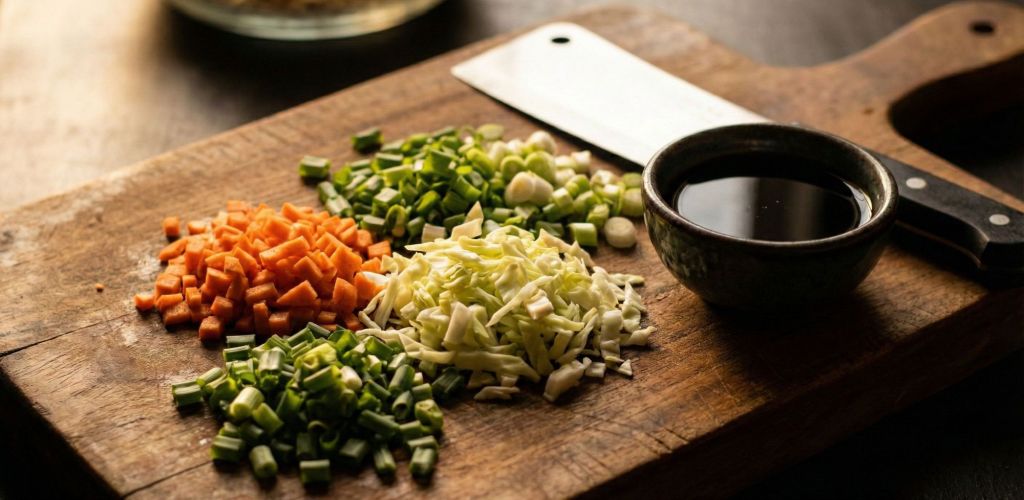
Ingredients: 1 Cup Chicken: Boiled and shredded (Use chicken thighs for better flavor). The Aromatics: 2 tbsp Finely Chopped Ginger, 2 tbsp Finely Chopped Garlic, 3-4 Green Chilies (finely chopped). The Veggies: ½ cup Cabbage (finely chopped), ½ cup Carrot (finely chopped), ½ cup Capsicum (finely chopped), ¼ cup Mushrooms (sliced). The Liquids: 4 cups Chicken Stock (or water), 2 tbsp Dark Soy Sauce, 1 tbsp Red Chili Sauce, 1 tbsp Vinegar. Thickener: 3 tbsp Cornflour mixed with ¼ cup water (slurry). The Secret: 1 Egg (beaten) – Optional, but highly recommended for that silky texture. Topping: Fried Noodles and fresh Coriander leaves. Seasoning: Salt, ½ tsp Black Pepper, ½ tsp Sugar (to balance the vinegar). Instructions: The Wok Sear: Heat 1 tbsp oil in a large pot or wok on high heat. Add the ginger, garlic, and green chilies. Sauté for 30 seconds until fragrant. Do not burn them, but let them get golden. Veggie Crunch: Add the cabbage, carrot, capsicum, and mushrooms. Stir-fry on high heat for just 2 minutes. Note: We want the veggies to stay crunchy, not turn into mush. The Base: Add the shredded chicken, soy sauce, red chili sauce, black pepper, and sugar. Mix well. The Simmer: Pour in the chicken stock (or water). Bring it to a rolling boil. Let it bubble for 3-4 minutes so the flavors meld. The Thickening: Lower the heat. Slowly pour in the cornflour slurry while stirring continuously to prevent lumps. The soup will turn glossy and thick. The Egg Drop (Restaurant Style): This step is optional but magical. While the soup is simmering gently, slowly pour the beaten egg in a thin stream while swirling the soup with a fork. This creates beautiful, silky ribbons of egg. The Finish: Turn off the heat. Stir in the vinegar now (adding it at the end keeps the sour kick fresh). Serve: Ladle into bowls. Top generously with fried noodles and fresh coriander. The “Pinch of Thrift” Tip (Zero Waste) Broth from Scraps: Since this recipe requires boiling chicken, do not throw away the water! Boil the chicken bones with the vegetable peels (carrot ends, cabbage cores, ginger skin) to make a nutrient-dense stock. Use this stock as the base for the soup instead of plain water. It deepens the flavor by 10x.
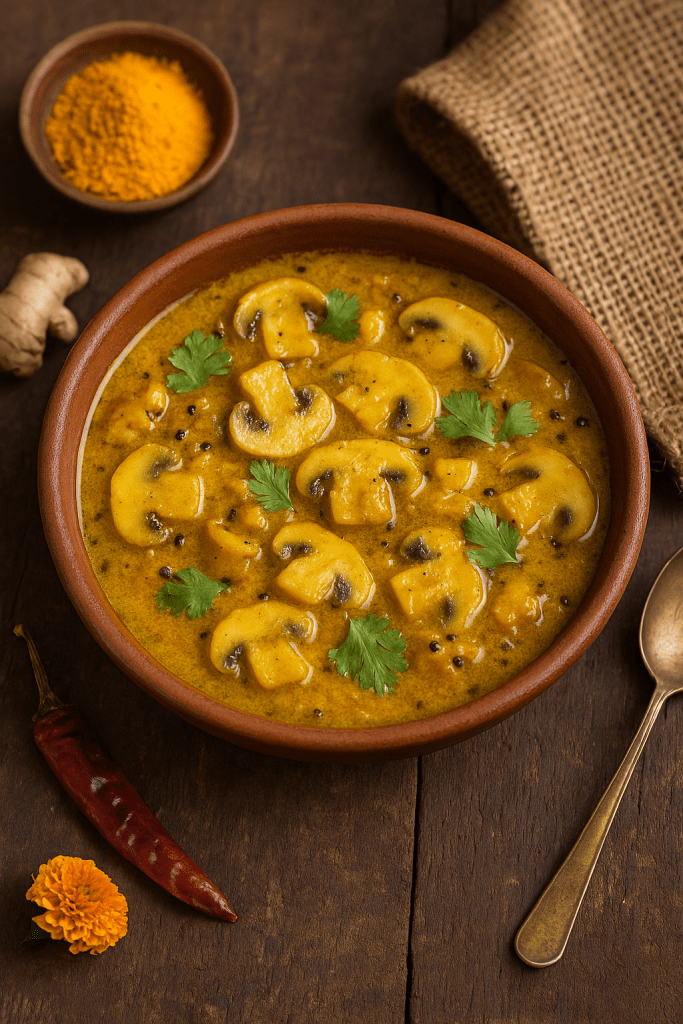
In Odisha’s kitchens, the pungency of sorisa (mustard) paste is a staple of the cuisine and soul food. Besara (literally “mustard-bathed”) is a classic Odia curry style built around a ground mustard sauce. In my home state, Chhatu Besara – mushrooms (“chhatu” in Odia) cooked in mustard gravy – is a beloved monsoon comfort. Fresh wild mushrooms from the forests are gently simmered with potato (for heft and sweetness) in a minimal spice blend of garlic, turmeric and green chilies, all brought together by a hot mustard paste. Odisha’s cooks revere this sorisa-bata (mustard paste) – it is the cornerstone of many dishes. As one Odia food writer notes, these forests yield the wild mushrooms known as chhatu, “cooked alongside potatoes and simmered in a thick mustard paste infused with garlic and turmeric”, making a “pungent, creamy and aromatic” curry that evokes Odisha’s jungle and temple heritage.
In fact, mustard is woven through Odisha’s food culture. Every summer and monsoon, long before the rains arrive, tiny wild mushrooms start sprouting in the damp fields and forests. The humid, moderate monsoon climate is perfect for these fungi, and Odias celebrate the season with Chhatu Besara and other sorisa-rich dishes. This curry is so traditional that the mixed vegetable Besar (Odia spelling) cooked in sorisa-bata is one of the 56 bhoga offerings (Mahaprasad) to Lord Jagannath at the Puri Temple. Even if you’re cooking at home, spooning hot rice over a bowl of mustardy mushrooms can feel like a devotional ritual – each bite connecting us to the earth and our ancestors’ kitchens.
Throughout the recipe, be prepared to work with a sharp mustard sauce (Odia curries often skip many spices). As Sasmita Sahoo notes in her Odia food blog, the mustard paste is traditionally ground on a silbata with garlic, chilies and cumin, but nowadays a blender works just fine. Do use mustard oil if you can – it lends that classic Odia aroma and fragrance that no other oil can match. (If needed, you can substitute a mild oil, but it won’t be as authentic.) With just a handful of ingredients, this dish comes together quickly – it’s a “specialty of Odisha” that uses minimal spices to create deep flavor.
Ingredients
Mushrooms (Chhatu) – 400 g (about 14 oz) fresh button or oyster mushrooms, cleaned and halved.
Potato – 1 medium, peeled and cut into 1-inch chunks (optional, for a heartier curry).
Raw banana (kacha kela) – 1 small (around 100 g), peeled and cut into chunks (optional variation).
Mustard paste: 2 tbsp mustard seeds (sorisa), 1 tsp cumin seeds, 4–5 cloves garlic, 2–3 dried red chilies – ground together with very little water.
1. Prepare the Mustard Paste: In a small bowl or mortar, soak 2 tablespoons mustard seeds with the cumin seeds, garlic cloves, and dried red chilies in a splash of warm water for 10–15 minutes. Then grind them to a coarse paste with as little water as possible (this keeps the paste thick). Alternatively, use a spice grinder or blender. The goal is a very pungent, thick mustard-garlic paste – this is the flavor base of the curry.
2. Prep Vegetables: Clean and halve the mushrooms. Keep them whole or large, as they will shrink when cooked. If using potato and/or raw banana, peel and cut them into bite-sized pieces and set them in water to prevent browning. Chop the onion and tomato if using.
3. Heat Mustard Oil: In a deep pan or kadhai, add 3 tablespoons mustard oil and heat on medium. When the oil is hot but not smoking, add a pinch of fenugreek seeds (optional) and let it crackle. Lower the flame and add the chopped onion and green chilies. Sauté until the onion is translucent and slightly golden. (Tip: For an extra Odia touch, you can add a pinch of panch phoron (five-spice mix) with the oil – cumin, fennel, mustard, nigella, fenugreek – but this curry tastes great with just mustard and cumin alone.)
4. Cook Potatoes/Banana: Add the drained potato and raw banana pieces. Sprinkle a pinch of salt and turmeric. Sauté on medium-high heat, stirring occasionally, until the edges begin to brown. This browning adds a nice sweet caramelized flavor to the vegetables. Remove and set aside for a moment.
5. Sauté Mushrooms: In the same pan, add the mushrooms. You may add a bit more oil if the pan is dry. Sauté the mushrooms on high heat until they start to release moisture and then that water evaporates. This helps concentrate their flavor. Stir frequently so they brown slightly on the edges.
6. Spice it Up: Return the browned potatoes/banana to the pan. Add the chopped tomato (if using), remaining turmeric, red chili powder, and salt. Mix well and cook for another 2–3 minutes until the tomatoes soften.
7. Add Mustard Paste: Now, stir in the prepared mustard paste. Mix quickly so it coats all the veggies. You should smell a very strong, sharp aroma now – that’s the sorisa getting awakened. Cook the paste for 1–2 minutes on low heat, being careful not to let it burn.
8. Simmer: Pour in about ¼ to ½ cup water (depending on how thick you like the gravy) and stir everything together. Cover the pan and simmer for 5–7 minutes on low heat, or until the potatoes (and banana, if used) are tender. The sauce will thicken slightly as it cooks. Check seasoning and add more salt if needed.
9. Finishing Touch: For tang and authenticity, add a souring agent now. If you have ambula (sun-dried green mango slices), soak 1–2 pieces in 2 tablespoons warm water and stir them into the gravy. (The ambula will infuse a subtle sour note.) If you don’t have ambula, a splash of tamarind water or even a squeeze of lemon can brighten the curry. Cook another minute, then turn off the heat. Finally, drizzle a teaspoon of raw mustard oil on top, and garnish with chopped cilantro.
10. Serve Hot: Transfer the Chhatu Besara to a serving bowl. Enjoy it piping hot as part of a rustic Odia meal.
Tips & Variations
Mustard Paste: Always grind the mustard seeds with minimal water. A bit of soaking makes grinding easier, but the paste should be very thick and pungent (it will mellow when cooked). For safety, taste a dab of raw mustard paste mixed with a drop of oil first – it will be VERY hot!
Make it Traditional: In temple-style Odia besara, no onion or garlic are used – only sorisa with spices like cumin, pepper and ginger, plus coconut or jaggery for balance. Our home version uses garlic and onion for extra body, but you can skip them if desired.
Souring Agents: Dried mango (ambula) is prized in Odisha for its unique tang. If unavailable, use tamarind, raw mango, or even yogurt at the end. Tomatoes alone will add some tartness too.
Veggie Variations: This curry is very forgiving – you can add other veggies like potatoes, jackfruit seed, or even bottle gourd in place of (or along with) mushrooms. Kacha Kela (raw green banana) and aloo (potato) are very common. Make “Aloo Besara” or “Kela Besara” by using them as the main stars, with the same mustard base.
Use Fresh Ingredients: In Odisha, Chhatu Besara is simplest when made with just-grown mushrooms and home-pressed mustard oil. The aroma of fresh mustard oil is key. If you don’t have it, heat vegetable oil until very hot and let it cool slightly before adding to mimic the sharp flavor.
Quick Prep: You can prepare the mustard paste ahead of time and refrigerate it (it stays pungent in an airtight jar). On cooking day, stir-fry the veggies and simply add the paste from the fridge.
Serving & Seasonal Context
Chhatu Besara is most often enjoyed with steaming rice (basmati or short-grain) and a simple dal. In Odisha, it would join other dishes like dalma (lentils with veggies), plain yogurt or raita, and a vegetable bhaja or bharta. It also pairs beautifully with soft flatbreads (roti or paratha), which soak up the mustard gravy. A bowl of hot pakhala (fermented rice water) on the side can cool the palate if the curry is extra fiery. Pickles and papad (crispy lentils wafers) add nice contrasts.
Because mushrooms flourish in the rains, Chhatu Besara is often celebrated as a monsoon specialty. In Odisha’s villages, mothers and grandmothers eagerly collect fresh chhatu after the first rains, then prepare this dish with devotion. Each spoonful is earthy and nourishing, a reminder of the seasons and the land. Whether you’re serving it at a family dinner or as a festive ritual offering, this humble curry carries with it the soul of Odisha – simple, rustic, and deeply rooted in devotion to the earth’s bounty.
Enjoy this soulful Odia classic with the warmth of home and the devotion of tradition.



 The Pinch of Masala