Introduction
Growing up in Madhya Pradesh, the first crack of thunder during monsoons meant one thing in our household: it was time for Bhutte ka Kees. This traditional grated corn dish is Indore’s pride and joy, found bubbling away in street-side pans all over the city. My earliest memory of it is from a rainy evening at Indore’s Sarafa Bazaar, where the aroma of spiced corn drew me to a busy stall. The vendor handed me a dona (leaf bowl) brimming with golden Bhutte ka Kees, topped with coconut and a squeeze of lime. One warm spoonful and I was hooked – it was creamy, mildly sweet, and tingling with spices, the perfect comfort on a wet day.
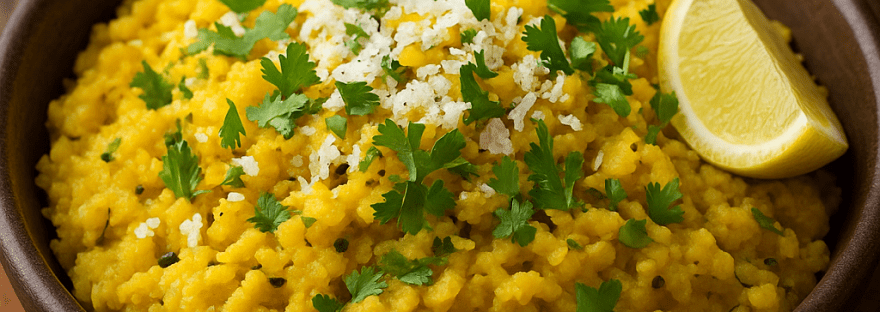
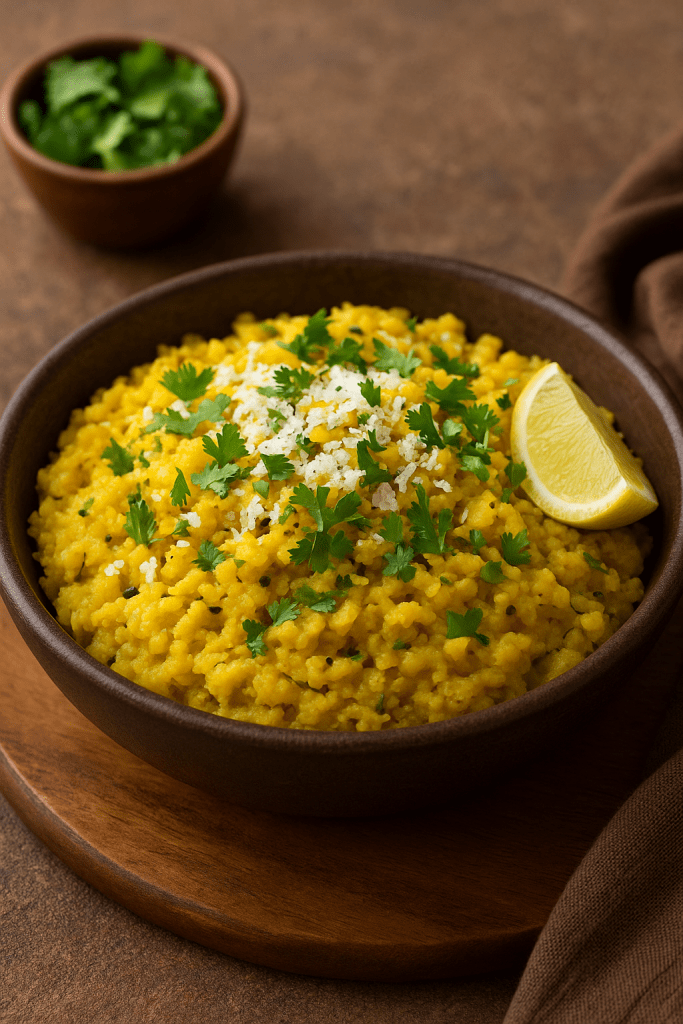
Bhutte ka Kees served in traditional leaf bowls, garnished with fresh coconut, cilantro, and a lemon wedge.
For the uninitiated, Bhutte ka Kees gets its name from the Hindi word bhutta (corn) and Marathi kees (grated). As the name suggests, juicy corn kernels are grated and slow-cooked with milk and a medley of spices until they form a rich, savory mash. The dish strikes a beautiful balance of flavors – naturally sweet corn, the kick of green chilies, warmth of turmeric, and tang from lemon. In fact, with every mouthful you get a bit of sweet, salty, sour, and spicy all at once. No wonder Bhutte ka Kees has remained an immensely popular street food in Indore for generations. It’s a staple at family get-togethers during the rainy season and a must-have for visitors exploring Indore’s vibrant food scene.
When you make Bhutte ka Kees at home, you’re not just cooking a snack – you’re recreating a piece of Indore’s culinary heritage. It’s comfort food with a cultural story, best enjoyed piping hot on a cozy evening. Now, let’s dive into the recipe so you can bring this Indori delight to your kitchen!
Ingredients
3 medium fresh corn cobs, shucked (or ~2 cups coarsely grated corn kernels)
2 tablespoons ghee (traditional) or cooking oil
½ teaspoon mustard seeds (rai)
½ teaspoon cumin seeds (jeera)
1 pinch asafoetida (hing)
2 small green chilies, finely chopped (adjust to taste)
1 teaspoon ginger, grated
¼ teaspoon turmeric powder (haldi)
½ cup milk (preferably whole milk)
1 teaspoon sugar (optional, see tips)
Salt to taste
1 tablespoon lemon juice (or 1 lemon cut into wedges, for serving)
3 tablespoons fresh grated coconut, for garnish
2 tablespoons fresh cilantro (coriander leaves), chopped, for garnish
Jeeravan masala, a pinch for garnish (optional – Indori spice mix, see tips)
Instructions
1. Prepare the corn: If using fresh corn, hold each cob upright in a large plate and grate the kernels off using a box grater (use medium holes). Grate only the tender kernels, not the hard cob center. You will get a juicy grated corn mash. Alternatively, you can slice off the kernels with a knife and pulse them in a blender without water to get a coarse paste. (Do not grind too fine; a bit of texture is ideal.)
2. Heat the fat and temper: In a deep pan or kadhai, heat the ghee (or oil) on medium flame. Add the mustard seeds; when they begin to splutter, add the cumin seeds and let them crackle. Next, reduce heat to low and add a pinch of asafoetida. Immediately toss in the chopped green chilies and grated ginger. Sauté for a minute until the raw aroma of ginger fades. Stir in the turmeric powder (and a pinch of red chili powder for extra heat, if desired) and cook for a few seconds, being careful not to burn the spices.
3. Add and sauté corn: Tip in the grated corn (along with any “corn milk” juice from it) into the pan. Mix well so the spiced tempering coats all the corn. Sauté the corn mixture on low to medium heat for about 5–8 minutes, stirring frequently. The corn will begin to cook and its color may brighten; this step helps develop flavor.
4. Cook with milk: Pour in the ½ cup of milk and stir. The milk adds creaminess and helps cook the corn into a porridge-like consistency. If your corn was very dry or starchy, you can add a splash of extra milk or water as needed to cover the corn. Add the sugar now (if using, see Tips below about when to add sugar). Season with salt to taste and mix well.
5. Simmer until done: Cover the pan with a lid and let the Bhutte ka Kees simmer on low heat for about 8–10 minutes. Every few minutes, stir the mixture to prevent sticking at the bottom. Cook until the corn is soft and the mixture has thickened. You’re aiming for a texture similar to a soft upma or thick porridge – it should not be runny, but there should be some moisture (it will thicken further upon cooling). If it looks too dry, you can add a few more spoonfuls of hot milk or water and mix in. Once the corn is fully cooked and the consistency is to your liking, turn off the heat.
6. Finish with lemon and serve: Finally, stir in the lemon juice (½ to 1 tablespoon, or to taste) and give a good mix. Lemon brightens up the flavors at the end. Ladle the hot Bhutte ka Kees into serving bowls. Garnish generously with the fresh grated coconut and chopped cilantro. If you have Indori jeeravan masala, sprinkle a pinch on top for an authentic touch. Serve immediately, with extra lemon wedges on the side for squeezing. Enjoy this snack hot for the best taste and texture – Bhutte ka Kees is meant to be savored warm, when its sweet and spicy flavors are most vibrant.
Tips & Suggestions
Choosing Fresh Corn: Always use the freshest, juiciest corn you can find for Bhutte ka Kees. Tender desi corn (local Indian white corn) is ideal, but sweet corn works well too. To check freshness, peel back the husk and press a kernel with your nail – it should release milky juice, a sign of a juicy corn cob. The more “milk” in the kernels, the better the flavor and creaminess of your Bhutte ka Kees. If the corn is too mature or dry, the dish may turn out less creamy.
Grating vs. Blending: Traditionally, corn is hand-grated to extract all its juices. This yields a coarse mixture of kernels and corn milk that defines the dish’s texture. If grating is hard, you can pulse the kernels in a mixer – but do it carefully. Pulse without adding water and stop while the corn is still coarse (you don’t want a fine puree). Avoid using a high-speed blender continuously, as it can liquefy the corn or make it too fine. Some texture is desirable in Bhutte ka Kees, so that you get tiny pops of corn and a nice mouthfeel.
Balancing Sweet and Spice: One of Bhutte ka Kees’ secrets is its balanced flavor profile – every spoonful gives you sweet, spicy, and tangy notes. If you’re using sweet corn (the yellow variety), it’s naturally quite sweet, so you might skip or use very little added sugar. However, if you have local white corn (which is less sweet), add about ½–1 teaspoon of sugar while cooking to enhance the sweetness. The heat comes from green chilies – feel free to adjust the quantity of chilies to your spice tolerance (Indore locals do enjoy a bit of kick!). Don’t skimp on the lemon juice at the end; that tangy squeeze elevates the dish and balances the sweetness and richness. Always taste and adjust salt, sugar, and lemon to get that perfect sweet-salty-tangy balance that makes this snack so crave-worthy.
Serving Suggestions: Bhutte ka Kees is best enjoyed hot off the stove. Serve it in small bowls or the traditional leaf dona bowls if you have them, for an authentic touch. It’s quite filling despite being light on the stomach, so a small or medium bowl per person is usually sufficient. Before serving, don’t forget to heap on the garnishes – fresh grated coconut adds lovely texture and subtle sweetness, and chopped cilantro lends a burst of freshness. A sprinkle of red chili powder or a dash of chaat masala on top can be added if someone likes extra zing. This snack is often enjoyed on its own in the evenings, but you can pair it with a cup of hot masala chai, especially on a rainy day, for the ultimate monsoon experience!
Authentic Indore Touch – Jeeravan Masala: If you want to go the extra mile and enjoy Bhutte ka Kees just like in Indore, try to get hold of Jeeravan masala. This special spice mix (famous in Indore for sprinkling on everything from poha to salads) typically contains roasted cumin, black salt, pepper, cloves, ajwain, etc., and adds a boost of flavor. Street vendors in Indore often dust a pinch of jeeravan on top of Bhutte ka Kees before serving. If you can’t find jeeravan masala, a little chaat masala mixed with a pinch of roasted cumin powder and red chili can mimic it. It’s an optional step, but it truly gives an authentic Indori kick to the dish.
Enjoy making Bhutte ka Kees at home! With its warm spices and creamy corn goodness, this dish brings a slice of Indore’s street food magic right to your kitchen. Happy cooking and happy eating! 😋
 The Pinch of Masala