
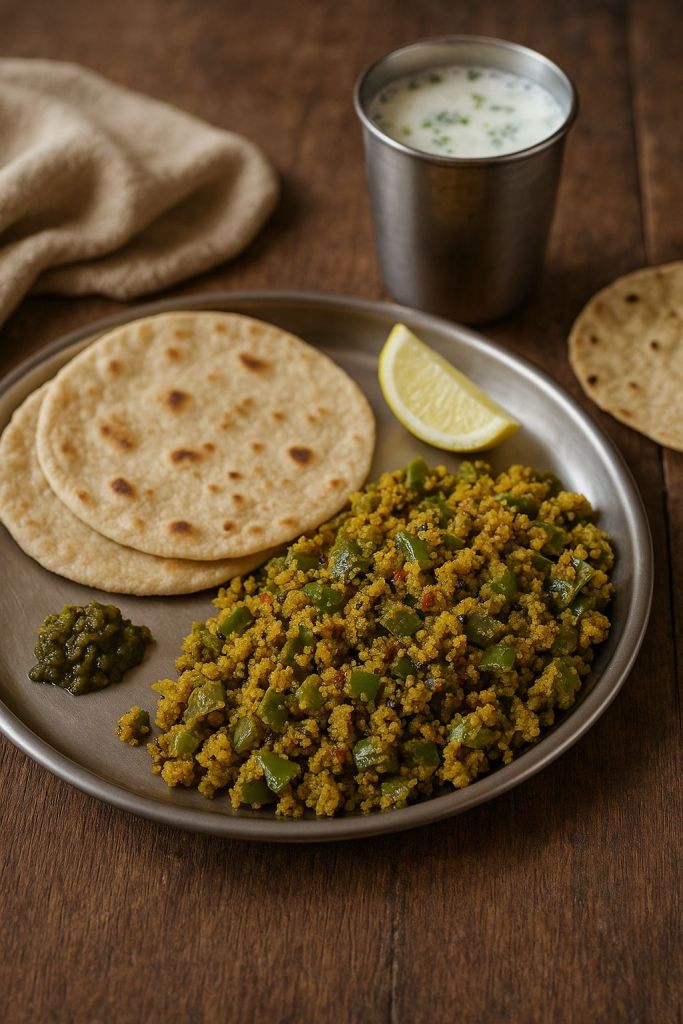
In the heart of a rural kitchen, a simple steel thali tells a story of comfort. Golden rotis lie alongside a heap of dry, crumbly capsicum besan sabzi, a lemon slice, crisp papad and a glass of spiced buttermilk. This Maharashtrian Zunka (झुणका) dish of bell peppers and gram flour is all about earthy, homey flavors and pleasing textures. As one home-cook blogger notes, after cooking the peppers, “the besan absorbs the moisture… and forms coarse crumble”. In other words, the batter-coated peppers turn into a delicious crumble of spiced besan and veggies – hearty, a little nutty, and just dry enough to scoop up with hot chapatis. The result is a rustic sabzi whose comforting simplicity feels like lunch at grandma’s table.
In our small-town memories, summer heat pushes us indoors by noon, and the kitchen fills with the smell of curry leaves and turmeric. Over a newspaper on the kitchen floor, our family would sit cross-legged around the lunch. There’s a special pride in this humble dish: it’s quick to make yet full of flavor. As food writer Denise D’Silva Sankhé observes, Capsicum Zunka is packed into many Maharashtrian lunchboxes – an easy mid-morning fix – and even each family guards its own secret spice mix for it. It’s this sense of tradition that makes each bite feel homely. Every spoonful of the sabzi, with its bright green pepper bits and golden specks of besan, reminds us of the care of generations before.
Ingredients
4 medium green capsicums (bell peppers), diced
1 cup gram flour (besan) – roasted until fragrant, then set aside
2 tablespoons oil (vegetable or peanut)
1 teaspoon mustard seeds
10–12 fresh curry leaves
1/4 teaspoon asafoetida (hing)
1/2 teaspoon turmeric powder
1–2 teaspoons red chili powder (adjust to taste)
1 teaspoon coriander powder (optional)
1 large onion, finely chopped (optional, for extra flavor)
2 cloves garlic and 1-inch ginger, minced (optional)
Salt to taste
Fresh cilantro leaves for garnish (optional)
Instructions
1. Roast the gram flour: In a dry pan, toast the besan over medium heat, stirring constantly, until it turns light golden and smells nutty. Remove to a plate and let it cool. (Roasting ensures the flour won’t taste raw.)
2. Temper the spices: Heat the oil in a heavy-bottomed skillet over medium heat. When hot, add the mustard seeds. When they begin to pop, add the curry leaves and a pinch of hing. (The leaves will sizzle.) Stir briefly.
3. Sauté aromatics: Add the chopped onion, ginger and garlic (if using). Sauté for 1–2 minutes until the onion is soft. Sprinkle in the turmeric and red chili powder and stir well.
4. Cook the capsicum: Add the diced green peppers and a little salt. Stir to coat them in the spices. Sauté uncovered for 3–4 minutes, just until the peppers begin to soften but still hold a bit of crunch. (If the pan looks very dry, splash in a tablespoon of water to help them cook.)
5. Add the besan: Reduce heat to low. Slowly sprinkle the roasted gram flour over the peppers, a little at a time, mixing thoroughly after each addition so there are no lumps. The besan will absorb the moisture from the peppers and begin to thicken.
6. Simmer and steam: Cover the pan and cook on low for about 3–4 minutes, stirring once or twice. This gentle steaming helps the flavors meld. The sabzi should end up fairly dry and crumbly in texture.
7. Final seasoning: Taste and adjust salt or chili if needed. Remove from heat and let the sabzi sit, covered, for another 2 minutes (off the heat) – this lets any remaining steam finish the cooking.
8. Garnish and serve: Sprinkle with chopped cilantro if desired and give it a final mix. Serve the Capsicum Besan Zunka hot.
Serving Suggestions
Traditionally, this dry sabzi is enjoyed right off the tawa with simple accompaniments. Pile it onto a steel thali or banana leaf and pair it with warm phulkas or jowar/bajra bhakris. Don’t forget a spoonful of green chili thecha (garlic-pepper chutney) or a bite of tangy mango pickle on the side for extra punch. A small bowl of sliced onions with lemon and a chilled steel tumbler of salted buttermilk (chaas) complete the rustic meal. This hearty platescape – crisp flatbreads, coarse sabzi, fiery chutney and cooling buttermilk – is the essence of homestyle Maharashtrian comfort.


 The Pinch of Masala