Introduction
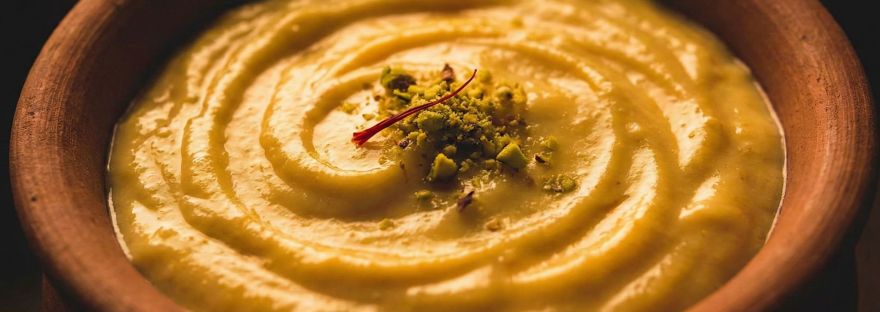
In a world obsessed with complicated patisserie and 20-ingredient cakes, Shrikhand stands as a testament to the power of minimalism. It is, in essence, just two things: Yogurt and Sugar. But to say that is like saying the Taj Mahal is just marble.
Growing up, Shrikhand wasn’t just a dessert; it was a ritual of patience. I remember the muslin cloth hanging from a hook in the kitchen for hours, slowly dripping whey into a brass bowl below. My grandmother would say that the cloth was doing the cooking, not the stove.
Today, we are documenting the traditional method. While you can use store-bought Greek Yogurt, true Shrikhand the kind that melts on your tongue like flavored clouds comes from the art of making Chakka (hung curd) at home.
The Mythology: A Dessert Created in Exile
Did you know this humble dessert might have roots in the Mahabharata?
According to legend, when the Pandavas were in exile, Bhima the strongest brother worked as a cook in the kingdom of Virata. He is said to have invented a dish called Shikharini by straining curd and mixing it with sugar and saffron to create a rich, energy-dense food.
Over centuries, Shikharini evolved into Shrikhand (derived from the Sanskrit Ksheer for milk and Persian Qand for sweet). When you eat this, you aren’t just having a sweet treat; you are tasting a piece of Indian history that has survived empires.
The Secret Technique: “Chakka”
The heart of this recipe is Chakka yogurt that has been drained of all its water (whey) until it becomes as thick as cream cheese.
The Texture Rule: If you rush the draining, your Shrikhand will be runny. If you drain it too long, it becomes chalky. The sweet spot is usually 4 to 6 hours of hanging.
The Sieve: My grandmother insisted on pushing the chakka through a fine mesh sieve (or a Puran Yantra) to break down any lumps. This is the secret to that glossy, restaurant-style finish.
The Recipe Card
Prep time: 15 minutes | Passive time: 6 hours (for hanging) | Servings: 4
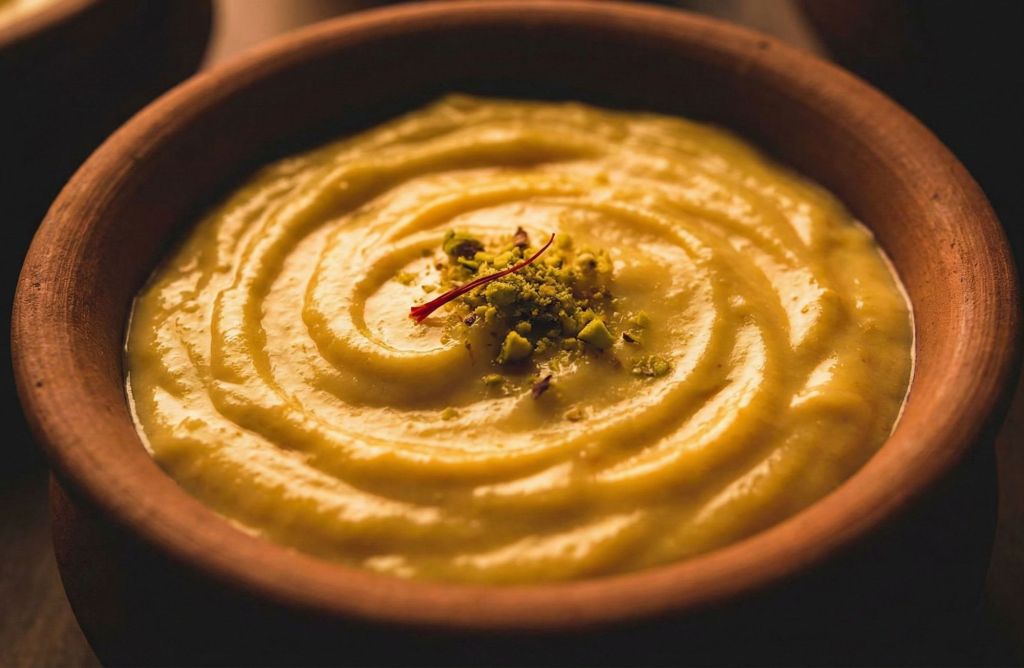
Ingredients:
1 kg Fresh Curd (Dahi): Use full-fat milk curd. It should be fresh and not too sour.
¾ Cup Powdered Sugar: Adjust to taste. Note: Do not use granulated sugar; it will make the mixture watery.
A generous pinch of Saffron (Kesar): Soaked in 1 tbsp warm milk.
½ tsp Cardamom Powder (Elaichi): Freshly pounded is non-negotiable.
A pinch of Nutmeg (Jaiphal): The secret ingredient in traditional Maharashtrian Shrikhand.
Nuts for Garnish: Charoli (Chironji) is traditional, but pistachios work beautifully too.
Instructions:
The Hanging Ritual: Line a strainer with a clean muslin cloth (or a men’s cotton handkerchief, as is tradition in many homes!). Pour the fresh curd into it. Tie the edges tightly and hang it over a bowl in a cool place (or in the fridge if it’s a hot day) for 5-6 hours.
The Transformation: Untie the cloth. What you have inside is a solid ball of creamy yogurt solids. This is the Chakka.
The Smooth-Out: Transfer the Chakka to a bowl. Optional but recommended: Press it through a sieve to ensure it’s silky smooth.
Flavoring: Add the powdered sugar, saffron milk, cardamom, and nutmeg.
The Whisk: Whisk vigorously. You want to incorporate air into the mixture to make it light and fluffy.
Chill: Shrikhand tastes best when chilled for at least 2 hours before serving. This allows the saffron to release its golden color fully.
The “Pinch of Thrift” Tip (Zero Waste)
Liquid Gold (Whey): The greenish water collected in the bowl below your hanging curd is called Whey. Do not pour it down the sink! It is packed with protein and probiotics.
How to use it: Use it to knead the dough for your Rotis or Parathas. It makes the rotis incredibly soft and adds a subtle tang. You can also add it to curries (like Kadhi) instead of water.
 The Pinch of Masala