Odia Recipe

Machha Besara: The Pungent, Tangy Soul of an Odia Winter Lunch

Introduction
In Odisha, the kitchen is more than a place to cook; it is a time machine. One whiff of mustard oil heating to its smoking point and I am transported back to the sprawling courtyards of central Odisha. I remember my grandmother (Aai) overseeing the summer ritual of making Ambula raw mangoes combined with rock salt and chili flakes, left to mature under the sun for a week until they turned dark and intensely sour.
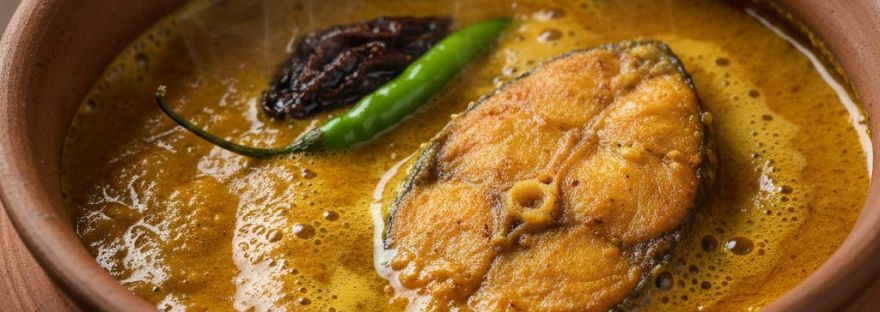
Machha Besara (Fish in Mustard Gravy) is the dish that honors that effort. It is bold, tangy, and unapologetic. Unlike Bengali fish curries which are often sweeter, the Odia Besara is defined by its sharp, pungent kick and the earthy depth that only stone-ground mustard can provide.
Today, we are documenting this heirloom technique. We are stepping away from the mild and returning to the “Quiet Luxury” of a perfectly balanced, sharp mustard broth.[1]
The “Digital Anthropologist” Technical Secret: The Bitterness Rule
The most common mistake when making Besara is a bitter gravy. To ensure your curry is aromatic and not acrid, you must respect the mustard:
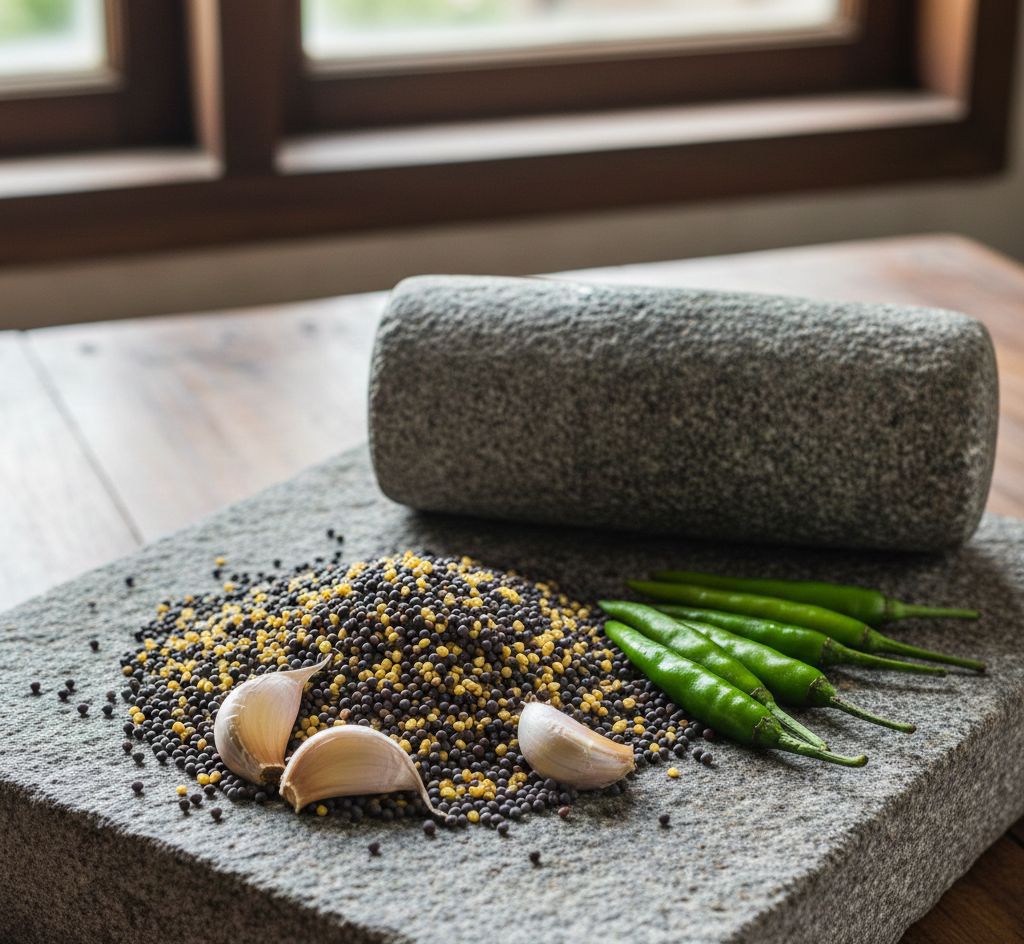
The Blend: Always grind mustard seeds with green chilies and a bit of salt. The chili prevents the mustard from oxidizing and turning bitter.
The Pulse: Use short pulses with minimal water until you get a coarse paste. Over-grinding in a high-speed blender generates heat, which releases the bitter enzymes. 
The Mellowing: Once the paste is added to the water, it must be cooked on low heat for at least 15 minutes to allow the sharp, raw smell to mellow into a savory aroma. 
The Recipe Card
Prep time: 20 mins | Cook time: 30 mins | Servings: 4
Cuisine: Odia Heritage | Key Tool: Heavy-bottomed Kadhai
Ingredients:
500g Rohu or Catla Fish: Fresh-cut steaks, washed and patted dry. 
The Mustard Paste (Grind together):
2 tbsp Black Mustard seeds (soaked for 15 mins).
1 tbsp Yellow Mustard seeds (for a milder balance).
5-6 cloves of Garlic.
2-3 Green Chillies.
The Aromatics: 1 tsp Pancha Phutana (Odia 5-spice mix), 1 medium Tomato (chopped), 2 Green Chillies (slit).
The Soul: 2 pieces of Ambula (dried salted mango). Substitute: 1 tsp Amchur or a small ball of Tamarind.
Spices & Fat: 4 tbsp Mustard Oil (essential!), ½ tsp Turmeric, ½ tsp Red Chili Powder, Salt to taste.
Instructions:
Marinate & Fry: Rub the fish with salt and turmeric. Heat mustard oil in a pan until it reaches the smoking point, then cool it slightly. Fry the fish pieces until they are a deep golden color on both sides. Set aside.
The Tempering: In the same oil, add the Pancha Phutana. Once it splutters, add the chopped tomatoes and green chilies. Sauté until the tomatoes turn mushy.
The Gravy Base: Add the prepared mustard paste, turmeric, and chili powder. Add 1.5 cups of water immediately. Do not fry the mustard paste directly in oil, as this will make it bitter.
The Simmer: Cover and cook the gravy on low heat for 15 minutes. This is the most important step for the flavor to develop.
The Finish: Add the fried fish and the Ambula. Simmer on low for another 10 minutes so the fish absorbs the tang of the mango.
Serve: Garnish with fresh coriander. Serve hot with plain steamed rice the only proper accompaniment for Besara.


The “Pinch of Thrift” Tip (Zero Waste)
Repurposed Paste: If you find you have ground more mustard paste than needed, do not discard it. In the 2026 “Use-Up” economy, we value concentrated flavor bases.[2] Use the leftover paste to make “Besara Aloo Stir-fry” the next day. Simply toss boiled potato cubes in the paste with a splash of mustard oil for a quick, pungent side dish.
Dessert

Heritage Rice Kheer: The 2,500-Year-Old “Sweetness of Prosperity”

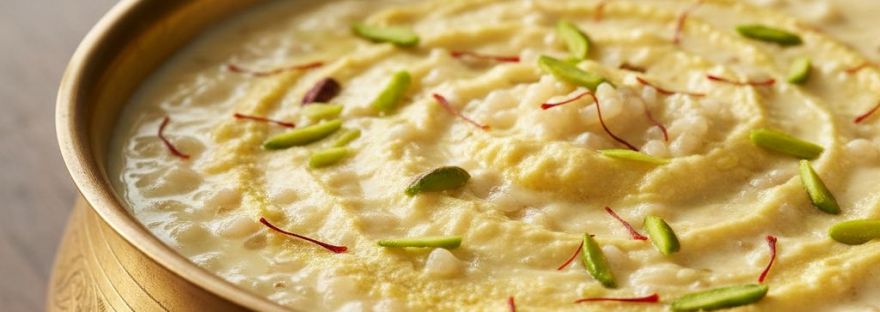
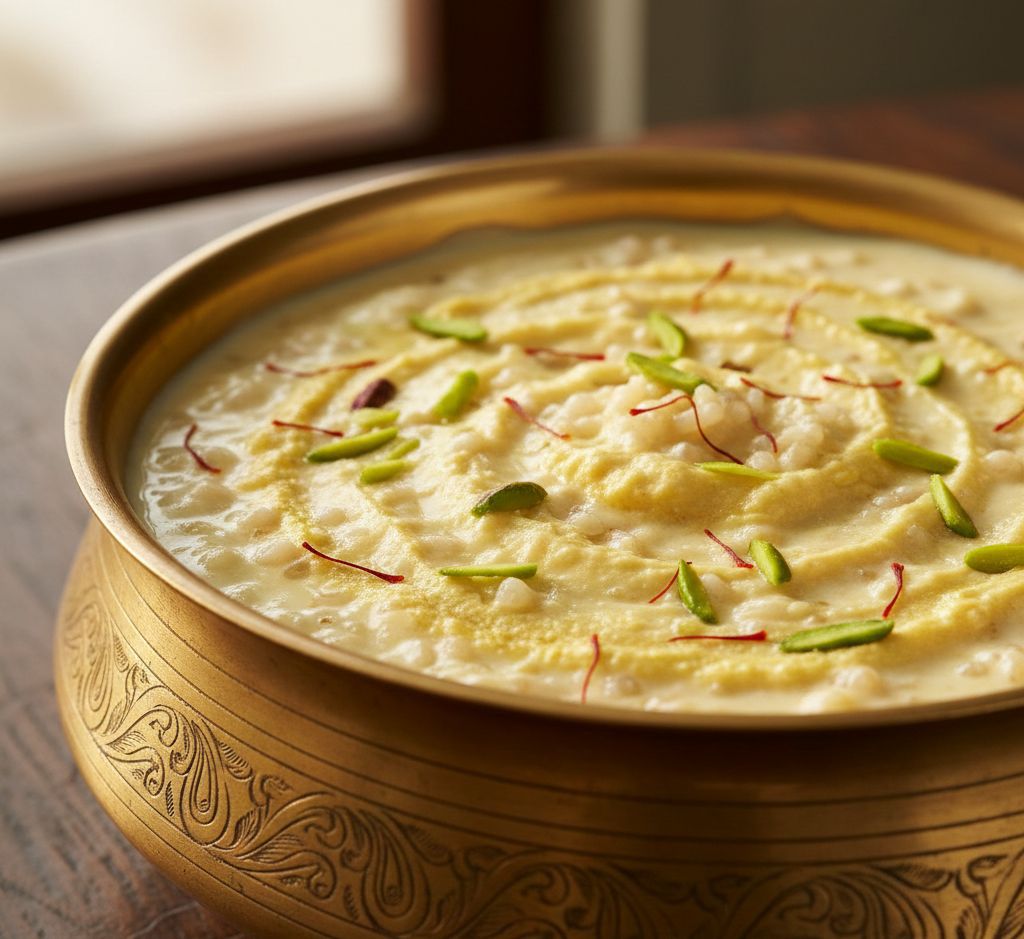
In our home, the smell of Rice Kheer slow-bubbling on the stove was the true soundtrack of a celebration. My grandmother (Nani) didn’t just see it as a dessert; she saw it as a blessing. She often reminded us that in the ancient texts of Ayurveda, this sweetened milk preparation then called Rasala was considered medicine for the soul.
I remember her standing by the heavy brass uruli, her wooden ladle moving in slow, meditative circles. She never rushed the milk. “Kheer is not a dish of ingredients,” she would say, “it is a dish of patience.” Whether it was for a child’s first solid food ceremony (Annaprashana) or the peak of Diwali, the Kheer was the anchor.
Today, at The Pinch of Masala, we are documenting the authentic, slow-cooked method. We are moving away from the “instant” condensed-milk hacks of the last few years and returning to the “Quiet Luxury” of milk reduced by time, heat, and devotion.
The “Digital Anthropologist” Technical Secret: The Starch Secret
To achieve a kheer that is “creamy like a cloud” rather than a watery mess, you must choose the right rice. While many use long-grain Basmati, Nani preferred medium-grain white rice or broken Basmati (Tukda).
Why? Long grains are designed to stay separate. For Kheer, we want the rice to “bleed” its starch into the milk, naturally thickening the pudding without the need for artificial thickeners.
The Ghee Toasted Start: Before adding the rice to the milk, lightly fry it in a teaspoon of ghee until the grains turn translucent. This adds a nutty depth that defines heritage Kheer.
****
Prep Time: 15 mins | Cook Time: 45 mins | Servings: 4-6
Diet: Vegetarian, Gluten-Free | Cuisine: North Indian Heritage

Ingredients:
1 Liter Full-Fat Milk: Organic cow or buffalo milk is preferred for the richest “malai” texture.
¼ Cup Short-to-Medium Grain Rice: (e.g., Gobindobhog or Sona Masoori) washed and soaked for 20 minutes.
1 tsp Ghee: For roasting the rice.
½ Cup Sugar: Adjust to taste. Raw sugar or jaggery powder works too (add jaggery only after the kheer cools slightly to avoid curdling).
4-5 Green Cardamom Pods: Freshly crushed.
10-12 Saffron Strands: Soaked in 2 tbsp warm milk.
¼ Cup Sliced Nuts: Almonds, pistachios, and cashews.
Instructions:
The Nutty Base: Heat ghee in a heavy-bottomed pot. Add the soaked and drained rice. Sauté for 3 minutes until the rice smells toasted and looks translucent.
The Simmer: Pour the milk into the pot. Bring to a rolling boil, then immediately turn the heat to its lowest setting.
The Slow Reduction: Let the milk simmer for 30-40 minutes. Stir every 4-5 minutes to prevent the rice from sticking to the bottom.
The “Malai” Scraping: As the milk boils, a layer of cream will form on the sides of the pot. Use your spatula to scrape this back into the milk. This is the secret to a thick, “Rabri-like” consistency.
Flavoring: Once the rice is so soft it mashes easily between your fingers and the milk has reduced significantly, add the sugar, saffron milk, and crushed cardamom.
The Finish: Simmer for another 5-8 minutes until the sugar dissolves and the kheer reaches your desired thickness. Remember, Kheer thickens further as it cools.
The Crunch: In a tiny pan, fry your nuts in a drop of ghee until golden and pour them over the Kheer before serving.


The “Pinch of Thrift” Tip (Zero Waste)
Liquid Gold Garnish: If you have the creamy residue that has slightly “burnt” or caramelized at the very bottom of the pot (known as khurchan), do not discard it! Scrape it out carefully and serve it right on top of a single bowl. In 2026’s “Use-Up” economy, these caramelized bits are considered the “truffles” of the Indian kitchen pure, concentrated flavor.