Breakfast, Uncategorized

Quinoa Upma: A Protein-Rich Twist on Traditional South Indian Breakfast

Quinoa Upma blends ancient South Indian culinary traditions with modern superfood nutrition. Upma – a savory porridge typically made from roasted semolina (sooji) – has been a staple breakfast (and anytime meal) across India for centuries. Over time, cooks across regions adapted this simple dish, adding local grains, spices, and vegetables. Today’s health-conscious twist replaces semolina with protein-packed quinoa, a gluten-free “pseudocereal” seed rich in fiber, vitamins and minerals. Quinoa provides about 8 g protein and 5 g fiber per cup of cooked grains, and it contains all nine essential amino acids. By using quinoa, this upma becomes a one-pot vegan, gluten-free breakfast that still carries the familiar fragrance of mustard seeds, curry leaves and spices. In effect, Quinoa Upma honors the comforting spice-tempered flavors of traditional upma while boosting nutrition.

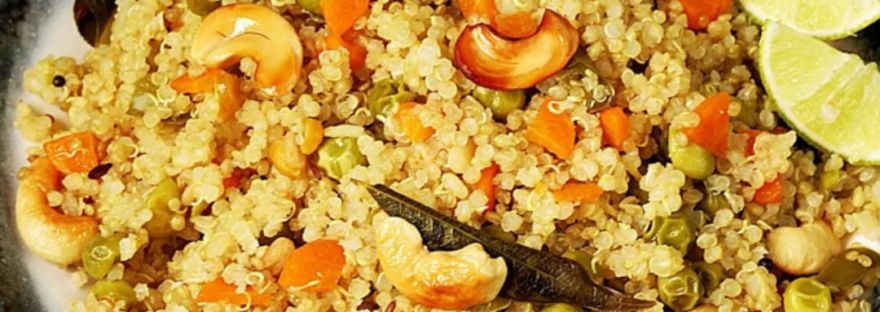
A vibrant bowl of Quinoa Upma with vegetables and cashews, garnished with lime and curry leaves.

Ingredients

1 cup quinoa – rinsed in cold water (removes bitterness).

2 cups water – for cooking (adjust if needed for fluffiness).

2 tablespoons oil (or ghee/coconut oil) – for tempering. Neutral oils like canola or sunflower also work well.

1 teaspoon mustard seeds – for traditional South Indian tempering.

1 teaspoon cumin seeds – adds aroma and flavor.

Pinch of asafoetida (hing) – optional (ensures gluten-free; gives umami).

4–5 curry leaves – fresh or frozen, for authentic flavor.

1 small onion, finely chopped – adds sweetness and texture.

1–2 green chilies, slit or chopped – or to taste (adds heat).

½ teaspoon grated ginger – optional (for warmth and digestion).

1 cup mixed vegetables, finely chopped – carrots, peas, bell peppers, green beans, corn, etc. (mix and match seasonal veggies).

Salt to taste.

Turmeric (optional) – a pinch for color and health benefits.

Handful of cashews or peanuts – optional (adds protein and crunch).

Fresh coriander (cilantro) – chopped, for garnish.

1–2 teaspoons lemon juice – optional, to brighten the flavor when serving.


Instructions

1. Rinse the quinoa: Place the quinoa in a fine-mesh strainer and rinse under cold running water until the water runs clear. This removes the natural saponin coating and any bitterness. Drain well.


2. Heat the tempering: In a deep skillet or saucepan, heat the oil over medium heat. When hot, add the mustard seeds and cumin seeds. Wait for the mustard to crackle and pop (about 30 seconds). Stir in the hing (if using), curry leaves, green chilies and grated ginger, and sauté for a few seconds until fragrant.


3. Sauté onions and vegetables: Add the chopped onion and a pinch of salt, and sauté 2–3 minutes until the onion turns translucent. Toss in the mixed vegetables and cashews (if using) and cook for another 3–4 minutes until the vegetables begin to soften.


4. Add quinoa and seasoning: Add the rinsed quinoa to the pan, stirring to coat it with the spices and oil. Season with salt and turmeric (if using). Stir everything together so the quinoa begins to toast lightly (1–2 minutes).


5. Cook the quinoa: Pour in the 2 cups of water and stir well. Increase heat to bring the mixture to a gentle boil. Then reduce to low heat, cover tightly, and let it simmer for 15–20 minutes (or until quinoa is tender and the water is absorbed). (If needed, check once or twice and add a splash more water to ensure the grains fully cook and stay fluffy.)


6. Steam and fluff: Once the quinoa grains look translucent and have little “tails,” remove the pan from heat. Keep it covered and let it rest for 5 minutes. Finally, uncover and fluff the quinoa upma gently with a fork. Stir in fresh lemon juice (if using) and garnish with chopped coriander. Serve hot.


Notes and Substitutions

Vegetables: Feel free to mix in any seasonal veggies you like. Common additions include shredded carrots, green peas, green beans, diced bell peppers, corn, broccoli or cabbage. For a simpler upma, use just onions, carrots and peas.

Spices: You can adjust the spice profile by adding chopped ginger, a pinch of turmeric, or even a few dried red chilies along with the mustard seeds. A dash of garam masala at the end adds warmth. For extra crunch, toss in roasted peanuts or fried cashews.

Tempering oils: A neutral vegetable oil works well. To deepen the South Indian flavor, you can use coconut oil or add a teaspoon of ghee at the end for aroma.

Grains alternative: While this recipe uses quinoa, you can also make a similar upma with oats, broken wheat (dalia), millets (like sorghum/jowar or foxtail millet), or even rava (semolina) if gluten is not a concern. Each substitute will change cooking time slightly.

Protein boost: Quinoa is already high in protein, but you can stir in tofu cubes or boiled chickpeas for an even heartier meal.

Make it vegan: This recipe is naturally vegan (no dairy). Just ensure your asafoetida is gluten-free if needed.


Tips for Fluffy Quinoa

Rinse well: Always rinse quinoa thoroughly in a fine-mesh strainer to remove the bitter-tasting saponin coating. This ensures a clean taste.

Water ratio: Use about 2 cups of water for every cup of uncooked quinoa. This 1:2 ratio (grain to liquid) reliably cooks quinoa through.

Cooking method: Keep the heat low once boiling and cook covered. Resist the urge to stir too often – just let the quinoa steam quietly. When the grains swell and “tails” appear, it’s done.

Rest before fluffing: After turning off the heat, leave the lid on and let the pan stand for 5 minutes. This steaming step lets any excess water absorb and yields plump, separate grains.

Fluff with fork: Use a fork to gently fluff the quinoa upma before serving, which helps separate any stuck grains. Avoid mashing – you want a light, fluffy texture.

Use hot water (optional): Some cooks use hot water or stock for the cooking liquid to speed up cooking. Just ensure it’s simmering before covering.

Batch cooking: You can prepare quinoa in advance (using the same 1:2 water ratio) and refrigerate it. For day-old quinoa, simply heat it in the pan with the spice tempering and skip the boiling step; cover for a few minutes to warm through.


Serving Suggestions

Quinoa Upma is best enjoyed hot, paired with classic South Indian accompaniments. Try serving it with coconut chutney or a tangy lemon pickle on the side. These condiments complement the upma’s savory, nutty flavors. Other great pairings include tomato-onion chutney, peanut (groundnut) chutney, or plain yogurt. For a complete breakfast spread, you might add a boiled egg or a side of sambar. In South India, a glass of fresh juice or filter coffee/masala chai also goes wonderfully with upma.

No matter how you serve it, this Quinoa Upma makes a warm, comforting, and nourishing start to the day – a modern, healthy twist on an Indian breakfast classic.
Breakfast, Snacks

Ragi Pancakes: Wholesome Finger Millet Breakfast

Why Ragi (Finger Millet)?

Ragi (finger millet) is an ancient whole grain prized for its nutritional value. Like other millets, it’s rich in protein, fiber, and antioxidants, yet naturally gluten-free. Finger millet stands out for its exceptionally high calcium content – higher than any other common cereal – making it a boon for bone and muscle health. Its low glycemic index and abundant fiber also help support steady blood sugar levels. With an earthy, nutty flavor and hearty texture, ragi is a versatile base for both sweet and savory Indian dishes. It’s long been used in South India for porridge, rotis and dosas, and now makes a deliciously nutritious pancake too.

Sweet Ragi Pancakes (Banana & Jaggery)

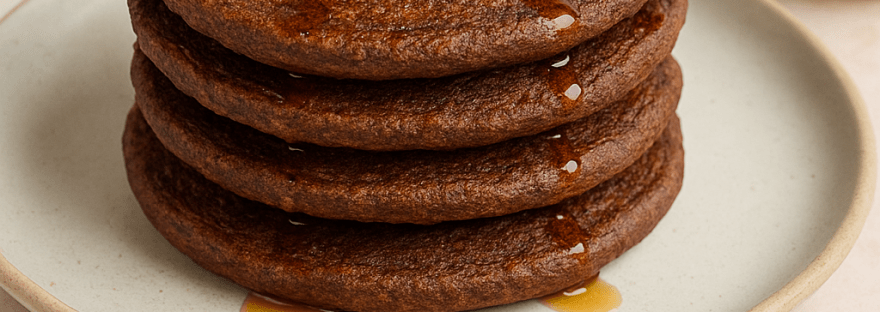
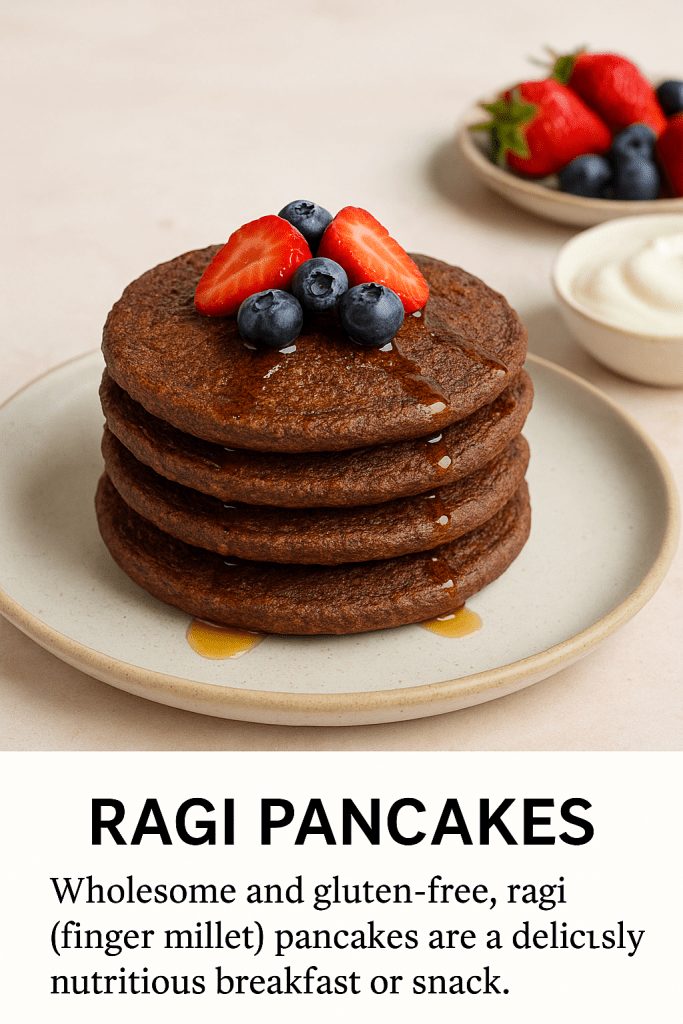
These sweet ragi pancakes combine mashed banana and jaggery for natural sweetness and moisture. The result is a fluffy, caramel-scented pancake with a hint of nutty whole-grain flavor. They make an indulgently healthy breakfast or snack, especially paired with fresh berries, yogurt, or a drizzle of honey.

Ingredients (Sweet Version)

1 cup ragi flour (finger millet flour)

½ cup whole wheat flour (or oat flour for a gluten-free option)

2 tablespoons jaggery powder (or brown sugar)

2 ripe bananas, mashed

½ teaspoon baking powder

Pinch of salt

1 teaspoon ground cardamom (optional, for warm flavor)

¾–1 cup milk (dairy or plant-based, as needed for batter consistency)

1 teaspoon oil or melted butter (to add to batter)

Additional oil or butter for cooking


Instructions (Sweet Version)

1. Mix wet ingredients: In a bowl, mash the bananas thoroughly. Stir in the jaggery powder until well combined. Pour in the milk and add the oil, whisking until smooth. (Warming the milk slightly can help dissolve the jaggery.)


2. Combine dry ingredients: In a separate bowl, whisk together the ragi flour, whole wheat flour, baking powder, salt, and cardamom. Gradually add the dry mix to the banana-milk mixture, stirring continuously. Mix until you have a thick, pourable batter. If it seems too stiff, add a splash more milk to adjust.


3. Rest the batter: Let the batter rest for 5–10 minutes. Ragi absorbs liquid, so resting helps hydrate the flour and makes the pancakes fluffier.


4. Cook the pancakes: Heat a non-stick skillet or griddle over medium heat and lightly grease it. Pour about 1/4 cup of batter per pancake onto the skillet. Cook for 2–3 minutes, until bubbles form on the surface and the edges look set. Flip carefully and cook the other side for another 1–2 minutes, until golden brown. Repeat with the remaining batter, adding a little oil to the pan as needed.


5. Keep warm: Stack the cooked pancakes on a plate and keep them warm (cover loosely with foil) while you cook the rest.


These sweet ragi pancakes are naturally eggless and use the banana as a binder. You can top them with yogurt, fresh fruit, maple syrup or a smear of peanut or almond butter for extra flavor and protein.

Savory Ragi Pancakes (Veggie & Spice)

Enjoy a savory twist on pancakes by mixing ragi flour with spices and vegetables. This batter is flavored with turmeric, cumin, and ginger, and studded with veggies like carrots and onions for extra color and nutrients. These hearty pancakes are satisfying on their own, or serve them with chutney or yogurt for a wholesome meal.

Ingredients (Savory Version)

1 cup ragi flour

¼ cup semolina (sooji) or rice flour (for a slightly crisp texture)

½ teaspoon salt

½ teaspoon ground cumin

¼ teaspoon turmeric powder

¼ teaspoon red chili powder (optional, for heat)

1 tablespoon ginger-garlic paste (or finely grated ginger and minced garlic)

3/4 cup plain yogurt (curd) (dairy or plant-based; thinned with water if needed)

Water as needed (about ½ cup) to make a thick batter

¼ cup finely chopped onion

¼ cup grated carrot

¼ cup chopped spinach or other greens

2 tablespoons chopped fresh cilantro (optional)

Oil or ghee for cooking


Instructions (Savory Version)

1. Prepare the batter: In a bowl, whisk together the ragi flour, semolina, salt, cumin, turmeric, and chili powder. Stir in the ginger-garlic paste. Add the yogurt and about ½ cup of water, mixing until a thick, smooth batter forms. Add a bit more water if necessary to achieve a pourable consistency (similar to pancake batter).


2. Add vegetables: Fold the chopped onion, grated carrot, spinach, and cilantro into the batter. Stir well to distribute the vegetables evenly. (For extra tenderness, you can let the batter rest 5–10 minutes to soften the veggies.)


3. Cook the pancakes: Heat a lightly oiled skillet over medium heat. Pour a ladleful of batter onto the skillet and gently spread into a small circle (about 4–5 inches across). Cover with a lid and cook for 2–3 minutes, or until the edges start to brown and the top is mostly set. Drizzle a little oil or ghee around the edges. Flip the pancake and cook the other side for another 2 minutes, until golden and cooked through.


4. Repeat: Continue with the remaining batter, adding more oil between pancakes as needed. Serve each pancake hot off the skillet.


These savory ragi pancakes have a light crisp edge and soft interior. They can be made vegetarian and dairy-free by using plant-based yogurt.

Optional Add-ins & Swaps

Eggless: Both versions above are naturally egg-free. The mashed banana (in the sweet pancakes) and yogurt (in the savory pancakes) help bind the batter. You can also stir in 1 tablespoon of ground flaxseed or chia seeds mixed with 3 tablespoons water (let sit 5 min) as an “egg” substitute if you like.

Vegan: Make it fully vegan by using plant-based milk (almond, soy, oat) and replacing butter/ghee with coconut oil or vegetable oil. For the sweet pancakes, maple syrup or extra mashed banana can sweeten in place of honey or dairy honey. For the savory version, use a dairy-free yogurt or thin the batter with water instead of yogurt.

Flour alternatives: Feel free to substitute some or all of the whole wheat flour with almond flour, oat flour, or extra ragi flour (though 100% ragi can be dense, so a mix is usually best). You can also use buckwheat or millet flours in place of wheat for a gluten-free mix.

Extra add-ins: Customize your batter by stirring in extras. In the sweet batter, try adding chopped nuts (almonds, walnuts), seeds (sunflower, chia) or dried fruits (raisins, chopped dates). In the savory batter, add finely diced bell pepper, peas, grated zucchini, or chopped scallions. A sprinkle of sesame seeds or nigella seeds on top while cooking can add texture and flavor.


Serving Suggestions

Sweet pancakes: These taste great with a drizzle of honey or maple syrup, or a dollop of yogurt or nut butter. Top them with fresh fruits like berries or banana slices for a beautiful breakfast stack. A spoonful of jam or fruit compote is also delicious.

Savory pancakes: Serve hot with Indian-style condiments. Coconut-cilantro chutney or spicy tomato chutney make perfect accompaniments. Plain yogurt (or raita) and pickles (achar) also complement the nutty pancakes nicely. A squeeze of fresh lemon juice over the savory pancakes brightens the flavors.


Whether you choose the sweet banana version or the spiced vegetable version, these Ragi Pancakes are a warm, wholesome way to start the day. Packed with whole-grain goodness and flavor, they’re sure to become a favorite healthy breakfast or snack in your home. Enjoy!

Sources: Ragi (finger millet) nutrition facts and health benefits are supported by nutrition research. For example, finger millet has an exceptionally high calcium content and millets are rich in fiber, protein, and antioxidants. These qualities make ragi a nutritious choice for gluten-free diets and blood sugar management. Techniques for vegan substitutions are adapted from expert recipes.

Breakfast

Oats Chilla with Mint Chutney: Quick, Healthy Weekday Breakfast

Breakfast is often called the most important meal of the day, yet busy schedules mean many of us skip it or grab unhealthy snacks. In those hectic mornings, I find comfort in a warm, homemade oats chilla – a quick, savory pancake loaded with vegetables and fiber. Oats chillas can be made in just a few minutes, providing a nutritious start to the day. They taste fluffy and slightly crispy, much like an Indian-style pancake, and they’re packed with nutrients: oats are a gluten-free whole grain rich in soluble fiber and high-quality protein. This makes the chilla filling and blood-sugar friendly, perfect to keep you energized through a busy morning.

In my kitchen, I often double the recipe because leftovers can be stored or sent in lunchboxes. Kids especially love these chillas when the spice is toned down – one recipe suggests skipping chilies for small children, and even packing the chillas in their tiffin box. In fact, leftover chillas can be enjoyed later or paired with toast.

For the perfect accompaniment, a fresh mint-coriander chutney adds a tangy kick. This vibrant green chutney is made by blending fresh mint leaves, cilantro (coriander), green chilies and lemon juice into a smooth paste. It takes literally 2 minutes to make, and its spicy, citrusy flavor complements the oats chilla beautifully.

Wholesome Oats Chilla Recipe

Ingredients:

1 cup rolled oats (ground into a coarse flour) and ¼ cup gram flour (besan)

½ cup grated carrot and 2 tablespoons finely chopped onion

1–2 green chilies (finely chopped), ½ tsp grated ginger, and a handful of finely chopped spinach or fresh coriander leaves (optional)

½ teaspoon cumin seeds, a pinch of turmeric, and salt to taste

~1¼ cups water (adjust to achieve a pourable batter)

Oil or ghee for cooking


Directions:

1. Prepare the batter: Grind the oats into a coarse flour in a blender or coffee grinder (or use ready-made oat flour). In a mixing bowl, combine the oat flour and besan with cumin, turmeric, and salt. Stir in the grated carrot, onion, green chilies, ginger, and coriander (or spinach).


2. Mix to a batter: Add about 1 cup water to the bowl and whisk until smooth, then add more water as needed to form a thick but pourable batter. Let the batter rest briefly (it will thicken as it sits).


3. Cook the chillas: Heat a non-stick or cast-iron pan over medium heat. Lightly grease it with oil. Pour about ¼ cup of batter onto the hot pan and gently spread it into a ~6-inch circle. Drizzle a little oil around the edges. Cook until the bottom is set and brown spots appear on the surface, then flip and cook the other side until golden brown.


4. Repeat: Stir the batter before each chilla (it may thicken; add a splash of water if needed) and cook the remaining chillas similarly. Each pancake should turn golden-brown on both sides.


5. Serve hot: Serve the warm oats chillas immediately with mint chutney on the side. (They taste best fresh and crisp; if saving for later, keep them warm in an insulated container.)


Refreshing Mint-Coriander Chutney Recipe

Ingredients:

1 cup fresh mint leaves (stems removed)

1 cup fresh coriander (cilantro) leaves

1–2 green chilies, or to taste

1 small onion or a clove of garlic (optional)

Juice of 1 lemon (or 1 tablespoon tamarind paste)

Salt and ½ tsp roasted cumin powder, to taste

A little water for blending


Directions:

1. Combine ingredients: In a blender or food processor, add the mint leaves, cilantro, green chilies, and onion (if using). Squeeze in the lemon juice and add salt and cumin.


2. Blend to a paste: Pour in a splash of water and blitz until smooth, stopping to scrape down the sides as needed. The chutney should be a vibrant green, with a thick but pourable consistency. It literally takes a couple of minutes to make!


3. Adjust seasoning: Taste and adjust with more salt or lemon juice if desired. The chutney should be tangy and slightly spicy.


4. Serve: Transfer to a bowl and chill briefly to let flavors meld. Serve alongside the hot oats chillas.


Serving Suggestion:

Serve each golden oats chilla with a spoonful of mint-coriander chutney on the side. The spicy, tangy chutney perfectly balances the savory pancake.

Tip: Oats chillas are best eaten fresh off the pan. You can make the batter ahead and refrigerate it, then cook chillas on demand. Any leftover chillas can be kept warm in a roti box or insulated container until serving.

Breakfast

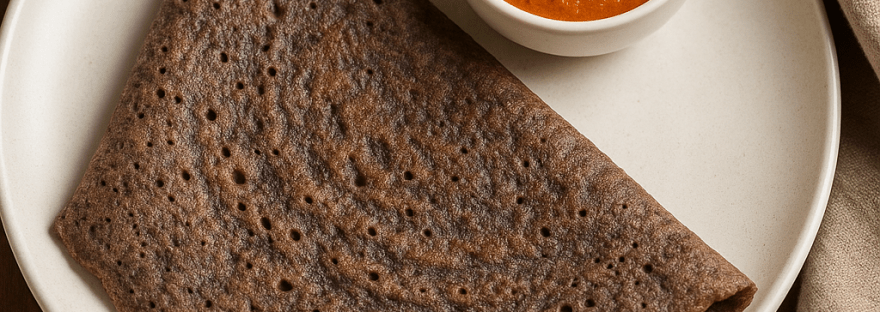
Instant Ragi Dosa with Spicy Tomato Chutney – Quick & Healthy Breakfast

Starting your day with a nutritious meal has never been easier. Ragi (finger millet) is an ancient grain packed with dietary fiber, protein, calcium and iron. It even contains essential amino acids not commonly found in cereals. All these nutrients mean a small serving keeps you full longer and fuels your body for a busy morning. Unlike heavier options, ragi is naturally gluten-free and light on the stomach, making it an ideal choice when time is short.

Even better, we can prepare ragi dosas in a flash. This instant dosa mixes ragi flour with rice flour and a bit of yogurt (curd) into a thin batter – no overnight fermentation needed. The yogurt gives the batter a hint of sourness and helps keep the dosas tender. Simply ladle the batter onto a hot griddle, drizzle with ghee or oil, and cook until golden and crisp. In under 30 minutes you’ll have a stack of healthy, protein-rich dosas ready to go – perfect for any rushed weekday morning.

Instant Ragi Dosa Recipe

Ingredients

1 cup ragi flour (finger millet flour)

½ cup rice flour (for extra crispiness)

¼ cup plain yogurt (curd)

½–1 cup water (to make a thin, pourable batter)

Salt to taste

½ teaspoon cumin seeds (or a pinch of black pepper)

Optional: finely chopped green chili, ginger, onion or cilantro for extra flavor

Oil or ghee (for cooking)


Method

1. In a bowl, whisk together the ragi flour, rice flour, salt and cumin seeds. Stir in the yogurt.


2. Gradually add water, whisking to make a smooth, lump-free batter (consistency like heavy cream). Let it rest for 5–10 minutes to allow the flours to hydrate.


3. Heat a nonstick or cast-iron skillet over medium-high heat. Once hot, stir the batter again and pour a ladleful onto the pan, spreading it thin in a circular motion.


4. Drizzle a little oil or ghee around the edges and on top of the dosa. Cook for 2–3 minutes until the edges lift easily and the underside is golden and crisp.


5. Flip the dosa and cook the other side for another 1–2 minutes, until lightly browned. Transfer to a plate.


6. Repeat with the remaining batter. Serve the hot crispy ragi dosas immediately with the tomato chutney below (and optionally coconut chutney or a side of buttermilk).


Spicy Tomato Chutney Recipe

This tangy, vibrant chutney pairs perfectly with mild dosas.

Ingredients

3–4 ripe tomatoes, chopped (about 250g)

3–4 garlic cloves, roughly chopped

2–3 dried red chilies (adjust to your spice level)

1 tablespoon oil

½ teaspoon mustard seeds

A few curry leaves

Salt to taste

Optional: a pinch of turmeric or a small piece of ginger


Method

1. Heat the oil in a pan. Add a pinch of cumin seeds (optional) and the dried red chilies; fry briefly until the chilies darken and crisp.


2. Add the chopped garlic (and ginger if using) and sauté until fragrant.


3. Stir in the tomatoes and salt. Cook on medium heat, stirring occasionally, until the tomatoes soften and most of the liquid evaporates.


4. Turn off the heat and let the mixture cool slightly. Transfer to a blender and grind into a smooth (or slightly coarse) chutney without adding any water.


5. For the tempering (tadka), heat a teaspoon of oil in the same pan. Add the mustard seeds and let them sputter. Quickly add the curry leaves and an extra dried chili; fry for a few seconds.


6. Pour this hot tempering over the tomato chutney and stir well. The chutney is now ready to serve alongside your dosas. (Tempering the chutney with mustard and curry leaves “takes it to a new level and adds aroma”.)


Serving Tips

Pair these nutty, wholesome dosas with the spicy tomato chutney and a cooling side. A steel tumbler of buttermilk or a cup of masala chai completes the comforting breakfast tableau. This dish is not only quick and easy but also nourishing – a smart way to enjoy a wholesome Indian breakfast on a busy morning.