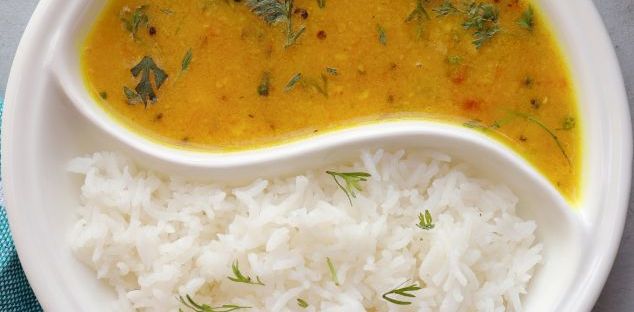
There’s something sacredly simple about a steaming plate of Varan Bhaat. For Maharashtrian families, this humble dal‑rice combo is more than just food – it’s comfort, home, and even devotion. As one food writer notes, the rice+dal pairing “holds a special place” in Indian hearts: “It is much more than food. It is an emotion. Literally sacred and revered”. In my childhood too, the aroma of turmeric‑tinged dal cooking in ghee always signaled warmth and togetherness. Varan Bhaat is a daily staple and a festive favorite – famously offered as naivedhya (prasād) to Lord Ganesha during Ganesh Chaturthi. Even on ordinary days it anchors the meal, and on auspicious days it sits beside modaks and puran poli as a symbol of simple, pure nourishment.
What Is Varan Bhaat?
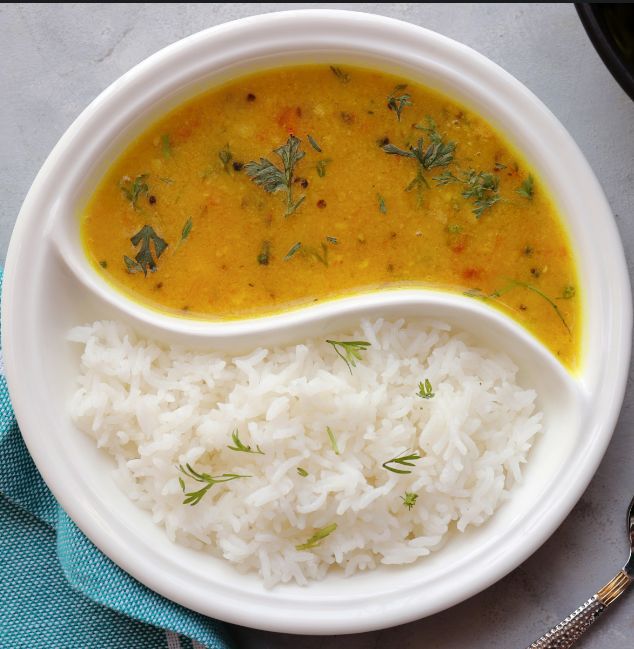
“Varan” (वरण) is Marathi for lentil curry, and “bhaat” (भात) means rice. In practice, varan bhaat is simply a bowl of steaming toor dal (split pigeon pea lentils) tempered and poured over hot steamed rice. What makes it special is the minimal, heartfelt seasoning – a little turmeric and salt in the dal itself, plus a comforting tadka (tempering) of cumin and ghee on top. Maharashtrian home cooks typically prepare toor dal with water, turmeric and salt, pressure‑cooking it until very soft. The cooked dal is then mashed smooth and simmered to just the right consistency (neither too thick nor too thin). A simple tempering – or tadka – of ghee, cumin seeds and a pinch of asafoetida (hing) is poured into the hot dal for flavor. This daal is ladled over rice and often finished with a drizzle of warm toop (clarified butter); in Marathi, toop means ghee, and it truly makes the dish melt-in-your-mouth.
Ingredients
The beauty of varan bhaat is its simplicity. You’ll need:
1 cup toor dal (split yellow pigeon pea lentils), rinsed
3 cups water
½ tsp turmeric powder
Salt, to taste
1 tbsp ghee (clarified butter)
½ tsp cumin seeds
Pinch of asafoetida (hing)
(Optional for non-satvik version) 1 minced garlic clove and/or 1 slit green chili
Steamed rice (to serve the dal over)
Accompaniments: Lemon pickle (limbu loncha), papad, or a simple potato sabzi (batata bhaji)
These humble ingredients – dal, turmeric, ghee, cumin – are all you need for an authentic varan bhaat. Shweta Arora notes that this “nutritious and comforting meal is a staple in Marathi homes” and is often served with tup (ghee), lemon pickle, papad, and potato curry. (In fact, as one blogger remarks, a meal of varan bhaat with ghee, lonache and batata bhaji was her “favorite growing up”.)
How to Make Varan Bhaat
The cooking method is straightforward.
1. Cook the Dal: Rinse the toor dal and put it in a pressure cooker with 3 cups water, ½ tsp turmeric and salt. Pressure-cook for about 4–5 whistles (until the dal is very soft). If you don’t have a cooker, simmer the dal in a pot for 20–25 minutes until mushy.
2. Mash and Adjust: When done, open the cooker and mash the dal thoroughly with a whisk or spoon until smooth. If the dal is too thick, add a little hot water and simmer gently until it reaches a medium consistency – creamy and pourable, “neither thick nor thin”.
3. Temper (Tadka): Heat 1 tbsp ghee in a small pan. Add ½ tsp cumin seeds; when they crackle, sprinkle in a pinch of asafoetida. (Non-satvik version: this is the time to add minced garlic and green chili if you like.) Fry briefly until fragrant (just seconds), then immediately pour this hot seasoning into the dal and stir. Cover and simmer the dal for a minute or two so the flavors blend.
4. Cook the Rice: Meanwhile, rinse 1 cup rice and drain. In a pot, boil about 2 cups water with a little salt, add the rice, reduce heat, and cook covered until all water is absorbed and the grains are fluffy.
5. Plate and Serve: Scoop a mound of hot rice onto each plate. Ladle the steaming dal over the rice. If you like, drizzle a little extra ghee on top (toop). Garnish with chopped fresh coriander or a squeeze of lemon juice for brightness. Traditionally, varan bhaat is enjoyed with tangy sides: a pickle (especially limbu loncha), crispy papad or wadis, and sometimes a simple potato curry.
Satvik (Temple-Style) Variation
For a satvik (pure) version suitable as temple prasād, simply skip any onion or garlic. The Maharashtrian varan bhaat recipe is already very mild, so omitting garlic yields a perfectly plain dish. In fact, many sources emphasize making varan bhaat without onion/garlic during Ganesh Chaturthi. Dassana Amit notes: “When making it for the Ganesha festival, skip onion and garlic. If preparing on regular days, you can add garlic and onion”. Shweta Arora also points out that this lentil stew is offered on auspicious occasions “since it contains no onion nor garlic”. The cooking method is the same otherwise – pressure-cook and mash the dal, then temper with hing, cumin and ghee. The resulting satvik dal is then offered to the deity and later eaten by the family, symbolizing simplicity and purity.
Tips for the Perfect Varan Bhaat
Consistency: The dal should be smooth and slightly soupy. Mash it well, then simmer with added water until it coats the back of a spoon. Aim for “neither thick nor thin” – too thick and it clumps, too thin and it won’t cling to rice.
Use Ghee (Toop): A generous splash of ghee is the secret to authentic flavor. Whether in the tempering or drizzled on the finished plate, warm toop adds richness. As one recipe notes, a drizzle of hot toop over rice and dal is “truly satisfying”.
Accompaniments: The mellow dal goes beautifully with a tangy bite. Serve varan bhaat with lime or lemon pickle (limbu loncha), crisp papad or kothimbir vadi, and perhaps a simple potato bhaji. These salty/spicy sides cut through the creaminess and complete the meal.
Bright Flavors: A final squeeze of fresh lemon juice or chopped coriander can brighten the dish just before eating. Even a grind of black pepper adds warmth.
Serve Hot: Varan bhaat is best enjoyed piping hot. If it cools or if you’re reheating leftovers, stir in a splash of water before gently heating so the dal loosens up again.
Varan Bhaat in Festivals and Fasting
The simple purity of varan bhaat gives it a special place in Maharashtrian rituals. During Ganesh Chaturthi, it is traditional to offer varan bhaat to Lord Ganesha as part of the bhog. GKToday explains that “Varan Bhaat is a traditional Marathi … dish offered as naivedhya to Lord Ganapati during Ganesh Chaturthi, symbolizing simplicity and purity”. In practice, a temple spread might include varan bhaat alongside modaks, puran poli, shrikhand and other favorites. (Remarkably, varan bhaat itself is listed among Ganesha’s prasād dishes in some recipes.)
Varan bhaat also plays a role in breaking fasts. After evening aarti on a fasting day, Maharashtrians traditionally eat simple sattvic foods – steamed rice and dal among them. In other words, when the fast is over, the first meal often resembles varan bhaat. As one guide notes, “the fast is broken by eating regular but sattvik food like rice, dal, chapatis and subzis”. A warm bowl of dal-rice is therefore an ideal post-vrat comfort.
Whether it’s a humble family dinner or a festive offering, varan bhaat embodies home and devotion. Every spoonful of this ghee-topped lentil curry speaks of Maharashtra’s culinary soul – simple, nurturing, and deeply satisfying. In the end, varan bhaat is more than a recipe; it’s a culinary hug from tradition, reminding us of the warmth and purity at the heart of Marathi food.
 The Pinch of Masala