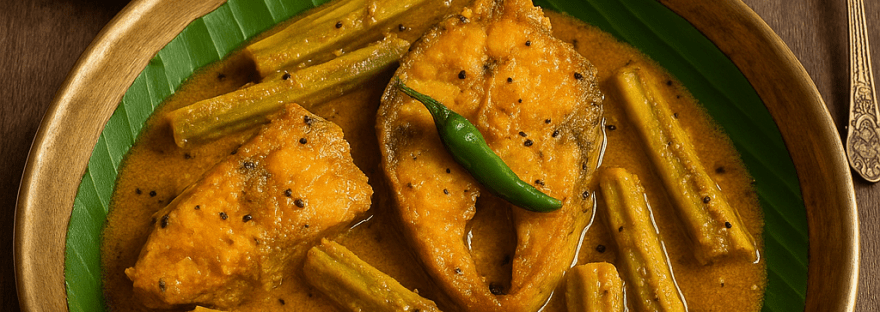
Every Odia kitchen has its treasure trove of memories, and Sajana Macha (drumstick fish curry) is one of them. In late winter – when the air turns a little crisp and the sunlight softens – roadside sajana trees bear young pods. I remember my grandmother returning from the market with a bundle of fresh drumsticks, their green skins still dewy. In those days, we knew spring was coming when those slender pods piled up in the kitchen. For Odisha’s coastal families, this dish is woven into our identity. As one Odia writer notes of the classic Macha Besara (mustard fish curry), *“it is not just a curry, it is a memory, a ritual, a symbol of home”*. For us, adding drumsticks makes it even more special.
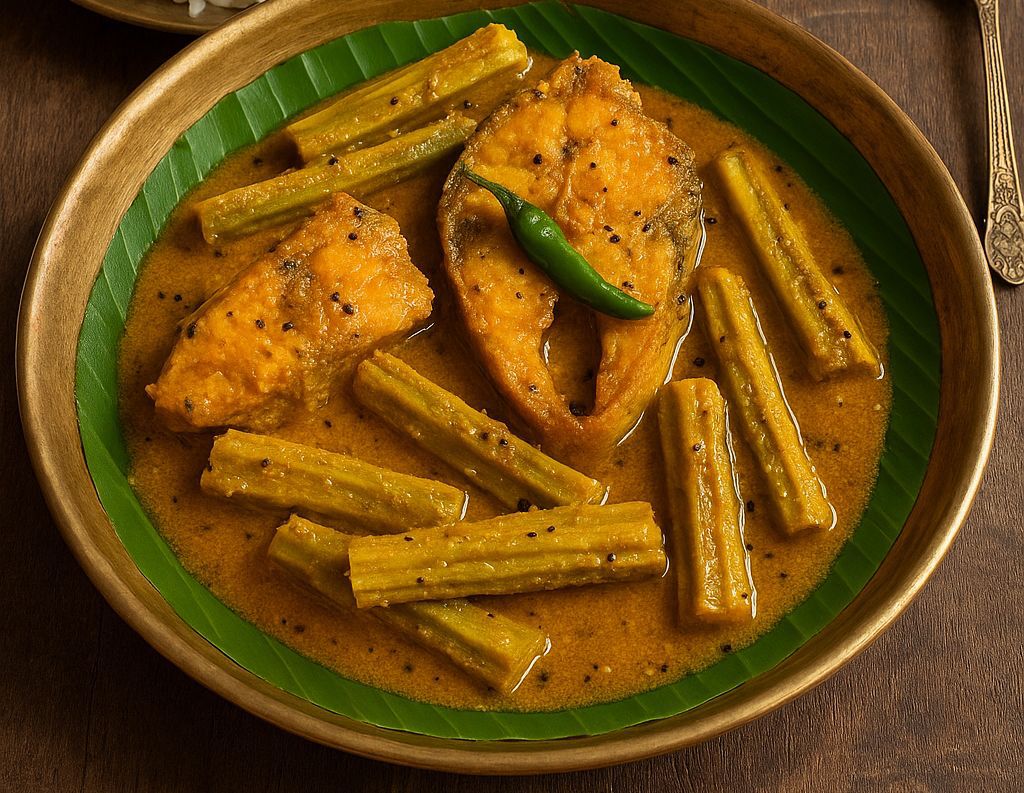
Sajana Macha is simple and pure. There’s no onion-tomato base here – just clean, bold flavors of mustard oil, turmeric, chilies and the freshness of river fish (typically rohu or catla). I still see my elders in my mind, grinding yellow mustard on a silbatta (grinding stone) while the raw scent of those seeds fills the kitchen. That pungent aroma was the promise of something hearty to come. In fact, *“Sorisa bata (mustard paste)…[is] the soul of Odisha”*, and it forms the heart of this curry. We marinate the fish just with salt, turmeric and a dash of mustard oil, then fold in a fresh paste of soaked mustard, cumin, garlic and green chilies. The drumstick pieces (cut 3–4 inches long) simmer slowly in this golden gravy, yielding their sweet, earthy taste to the fish. A final drizzle of raw mustard oil and a slit green chili on top brings back that heady homemade fragrance, taking us right back to that grandmother’s kitchen.
Ingredients
For the Fish Marinade: 6–8 pieces rohu or catla (cleaned fish), 1 tsp turmeric, 1 tsp salt, 1 tbsp mustard oil.
For the Mustard Paste (Sorisa Bata): 3–4 tbsp mustard seeds (yellow or black; yellow is milder), 1 tsp cumin seeds, 4–6 garlic cloves, 2–3 green chilies, a pinch of salt, water (just enough to grind into a paste).
For the Curry: 8–10 drumstick pods (sliced), 1–2 green chilies (slit), ½ tsp turmeric, salt to taste, 2–3 tbsp mustard oil, warm water as needed. (Optional: 1 raw banana cut into chunks, 1–2 dried ambula (sun-dried mango) pieces or a pinch of tamarind for tang).
For Tempering: ½ tsp mustard seeds, ½ tsp cumin seeds, 1–2 dried red chilies.
These ingredients are the rustic staples of an Odia kitchen. Notice there are no garam masalas or heavy spice powders – just turmeric, chilies, and the bold flavors of mustard and mustard oil. This simplicity is by design, reflecting the temple-influenced, satvik spirit of coastal Odisha.
Step-by-Step Recipe
1. Marinate the Fish. In a bowl, rub the fish pieces with turmeric, salt, and a spoon of mustard oil. Set aside for 10–15 minutes. This not only seasons the fish, it also tightens the flesh and removes any raw smell.
2. Prepare the Mustard Paste (Sorisa Bata). Soak the mustard and cumin seeds in a little water for about 10 minutes (this tames their bitterness). Drain, then grind them with garlic, green chilies, and a pinch of salt. Add just enough water to make a thick, smooth paste. (Tip: The paste should be thick – too much water will dilute its punch. If it tastes overly sharp, blend in a teaspoon of yogurt or jaggery to mellow it.)
3. Lightly Fry the Fish. Heat 2 tbsp mustard oil in a heavy pan until it’s shimmering. Lower the heat and add the marinated fish. Fry on each side just until the fish is pale-golden (do not brown it hard or it will overcook later). Remove and set the fish aside on a plate.
4. Temper and Sauté Drumsticks. In the same pan with the remaining oil, add the mustard and cumin seeds along with the dried red chilies. Let them sizzle. Then add the drumstick pieces, the slit green chilies, turmeric and salt. Stir to coat the drumsticks in oil and spices. Pour in about 1 to 1½ cups warm water, cover, and let it cook for 5–7 minutes until the drumsticks are about 70% tender.
5. Finish with Mustard Paste. Lower the flame completely. Add the mustard-garlic-chili paste to the drumsticks and gently mix. Add more warm water if needed to get a gravy of pourable consistency. Let everything simmer gently for 2–3 minutes (avoid boiling vigorously, or the mustard can turn bitter).
6. (Optional) Add Sambal or Tamarind. If using ambula (sun-dried mango) or tamarind water for tanginess, add 1–2 pieces of ambula (or 1 tsp tamarind paste) now. Cover and cook for a few more minutes until the drumsticks are fully tender.
7. Add the Fish and Finish. Gently nestle the fried fish pieces into the gravy. Simmer for 3–4 minutes just until the fish is cooked through and the flavors meld. Taste and adjust salt. Turn off the heat and drizzle 1 teaspoon of raw mustard oil on top (this final step wakes up the aroma). You may garnish with a slit green chili or a sprig of coriander (coriander is optional – many traditional cooks actually skip it to keep the curry “pure”).
Now the Sajana Macha is done – a steamy pot of yellow mustard gravy studded with tender fish and drumstick, flavored only with earthy spices and oil. The gravy should be thick enough to coat the ingredients, spicy from the chilies but balanced by the sweet notes of drumstick and a hint of sour if you used ambula.
Cooking Tips
Use fresh drumsticks. Older drumsticks become fibrous and lose fragrance. Choose young pods (3–4″ long) and cut them into chunks at an angle so they cook more evenly. Do not overcook them; drumsticks are done when the flesh inside yields and the pods start to split.
Soak and grind mustard properly. Soaking the seeds softens their mustard-oil yield and prevents bitterness. Always grind the paste with very little water – it should remain thick. If it comes out too pungent, a spoon of yogurt or jaggery can smooth it out.
Heat the oil well. Mustard oil should be hot but not smoking. Lower the flame when adding fish or spices, to avoid burning. Only mustard oil should be used – it gives the curry its signature flavor.
Simmer gently. After adding the mustard paste, keep the flame very low. A gentle simmer allows the flavors to marry without turning the mustard grainy.
Finish with raw oil and chili. A final drizzle of raw mustard oil (and a fresh green chili) just before serving releases that household aroma you remember from childhood. This simple touch makes the curry taste truly Odia.
Variations
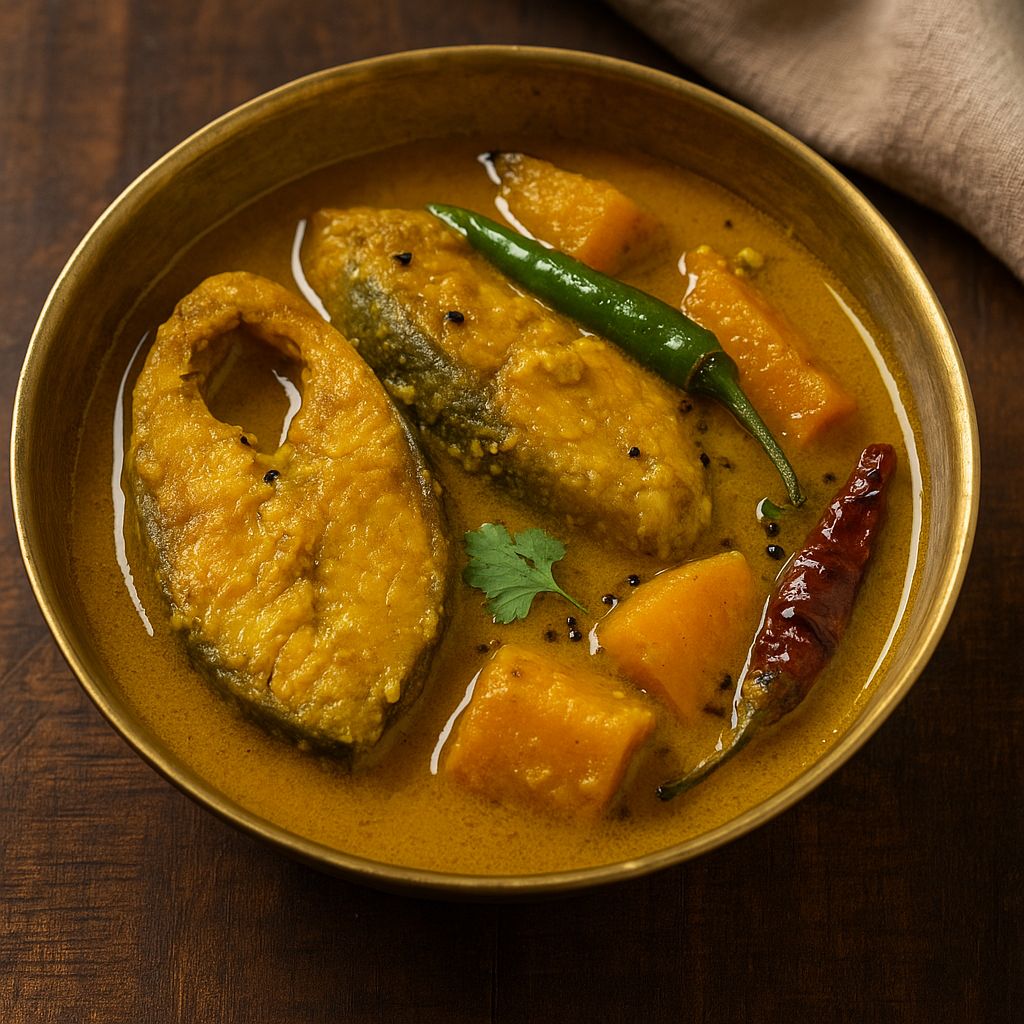
Though the basic method stays the same, Odia cooks personalize this curry in many ways. A couple of peeled raw bananas or chunks of tender pumpkin can be added along with the drumsticks to bulk up the curry, especially if serving a crowd. For tang, many include 1–2 dried ambula (sun-dried mango) pieces or a teaspoon of tamarind along with the mustard paste. Some even toss in a handful of chopped tomatoes or a potato. You can adjust green chilies to your heat preference: more chilies make it fiery, fewer make it milder. But the soul of Sajana Macha always remains the same – bold mustard flavors, just a bit of turmeric, and the unmistakable taste of drumstick and fresh fish.
Serving Suggestions
A traditional Odia meal with Sajana Macha (fish & drumstick curry) served on a banana leaf with rice and sides. Serve Sajana Macha hot, ladled generously over steamed rice. In a classic Odisha thali, this curry would be accompanied by a simple saga bhaja (sauteed greens such as spinach or pumpkin leaves) and badi chura – crushed, fried lentil dumplings mixed with onion, garlic, chili and mustard oil. (Badi chura is an Oriya staple: sun-dried black gram dumplings crumbled with aromatics.) A dollop of cool yogurt or a side of alu bhaja (spiced potato) also go well. In short, make it a complete Odia spread: rice, Sajana Macha, a leafy fry (saga bhaja), and crunchy badi chura on the side.
This humble yet hearty meal is more than just comfort food – it’s a taste of Odia heritage. Generations of village families have relished Sajana Macha with their hands, praising its blend of earthy spices and tender fish. As one food writer beautifully put it about our beloved mustard fish curry, *“it is heritage. It is home. It is Odisha.”* In every spoonful of Sajana Macha, we celebrate that tradition.
 The Pinch of Masala