Dessert

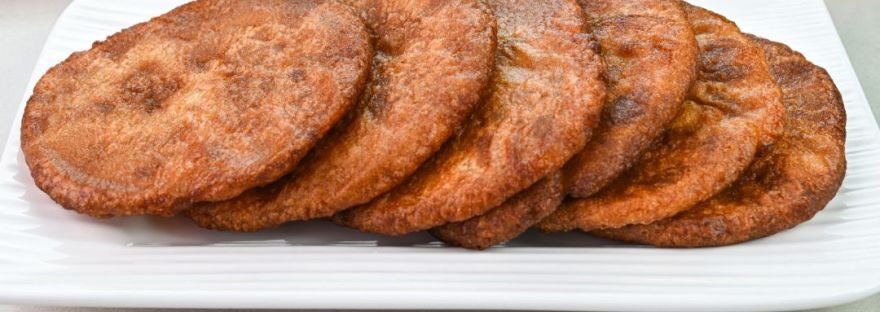
Adhirasam – The Heritage Sweet of Diwali

A Sweet That Smells Like Diwali Mornings

When I was little, Diwali mornings in our home began long before sunrise. The smell of incense and fried ghee sweets filled the air before the first diya was even lit. Among all the festive treats, one sweet stood apart the deep, caramel aroma of Adhirasam sizzling in ghee.

My grandmother would prepare the jaggery syrup the day before, stirring it patiently until it reached that magical soft ball consistency. She’d say, “You can’t rush Adhirasam it needs your time, your warmth, and your love.”
She would knead the rice flour and syrup into a glossy dough and let it rest overnight, covered with a clean white cloth. That resting period, she said, was what gave the sweet its softness and soul.

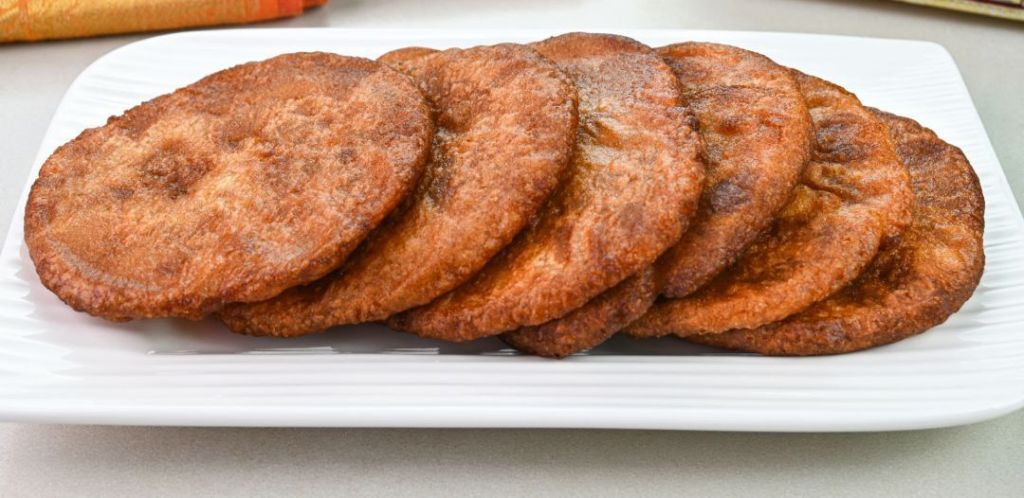
The next morning, as ghee heated in her heavy brass kadai, she’d shape the dough into flat discs, press a small hole in the center, and fry them until golden. The moment one came out of the ghee, we’d all wait because she’d always give the first piece to the house temple, and the second to whoever helped grind the rice!

Even today, when I make Adhirasam, that memory comes alive the warm kitchen, the glow of diyas, and the sweet comfort of a recipe that’s older than memory itself.

About This Recipe

Adhirasam is a heritage sweet from Tamil Nadu and Karnataka, traditionally made during Diwali, Karthigai Deepam, and temple festivals.
It’s made with homemade rice flour, jaggery syrup, and ghee, then deep-fried until golden brown.

The beauty of Adhirasam lies in its texture — crispy on the outside, soft and chewy inside, with a rich flavor of jaggery and cardamom.

It’s said that Adhirasam was offered to Lord Ganesha and Goddess Lakshmi during the Chola period, making it one of South India’s most sacred and ancient sweets.

Recipe Details

Servings: 12–15 pieces
Prep Time: 30 minutes (plus resting time)
Cook Time: 30 minutes
Resting Time: 12–24 hours
Ingredients

1 cup raw rice (preferably sona masoori or similar short grain)

¾ cup jaggery (grated or powdered)

¼ cup water (for syrup)

½ teaspoon cardamom powder

1 tablespoon ghee (for dough)

Oil or ghee (for deep frying)


Optional: A pinch of dry ginger powder (saunth) for aroma, or sesame seeds for texture.


Step-by-Step Instructions

1. Prepare Rice Flour

Wash and soak the rice for 1–2 hours.

Drain and spread it on a clean cloth for about 30 minutes until slightly damp not fully dry.

Grind it to a fine powder in a mixer while still moist.

Sieve the flour and set aside. (This freshly ground flour gives the signature texture.)


2. Make the Jaggery Syrup

In a heavy-bottomed pan, add jaggery and ¼ cup of water.

Heat until the jaggery melts completely.

Strain to remove impurities and pour it back into the pan.

Boil again until it reaches a soft ball consistency when a drop in cold water forms a soft, pliable ball between your fingers.

Turn off the heat.


3. Form the Dough

Immediately add the cardamom powder and 1 tablespoon ghee to the jaggery syrup.

Slowly add the rice flour, stirring continuously with a wooden ladle.

Mix until it forms a thick, sticky dough (like halwa).

Cover it with a cloth and let it rest overnight or at least 8 hours.
(Resting develops the right texture soft inside, crisp outside.)


4. Shape the Adhirasams

After resting, knead the dough gently with greased hands.

Pinch small balls (lemon-sized) and flatten them into discs (about 2–3 inches wide).

Make a small hole in the center with your thumb  this helps them cook evenly.


5. Fry the Adhirasams

Heat oil or ghee in a deep pan over medium flame.

Once hot (not smoking), gently slide one Adhirasam at a time.

Fry until golden brown on both sides.

Remove and press between two slotted ladles to remove excess oil.

Cool slightly before serving.


Expert Tips for Authentic Texture

Rice Flour Freshness: Always use freshly ground, slightly moist rice flour store-bought flour won’t give the same chewy texture.

Syrup Consistency: The soft ball stage is key. If overcooked, the dough turns hard; if undercooked, it won’t bind.

Resting Time: Minimum 8 hours, preferably overnight this step transforms the texture.

Oil Temperature: Keep the flame medium-low; frying too hot will burn the outside before the inside cooks.

Pressing Method: Always press fried Adhirasam gently between ladles — this removes excess oil without losing shape.

Storage: Stays fresh for up to a week in an airtight container. The flavor deepens over time.


Serving Ideas

Serve Adhirasam warm, with a drizzle of ghee for a divine festive treat.

Pair with Coconut Burfi and Boondi Laddoo on your Diwali sweet platter.

Offer as prasadam during Lakshmi Pooja or Navratri it’s considered auspicious.


Closing Note

Every time I make Adhirasam, I’m reminded that some recipes aren’t written in books they’re whispered through generations.

It’s not just about rice and jaggery; it’s about patience, devotion, and the love that binds families across time. When the dough rests overnight, it’s as though the sweetness deepens, just like old memories mellowing with warmth.

So this Diwali, try this heirloom recipe in your kitchen. Feel the rhythm of stirring syrup, shaping dough, and watching golden discs puff up in ghee.
Because Adhirasam isn’t just made for festivals it is the festival.
Dessert

Boondi Laddoo – A Sweet Circle of Celebration and Nostalgia

Sweet Memories of Diwali Evenings

If there’s one sweet that embodies the joy, chaos, and warmth of Indian festivals, it’s the Boondi Laddoo.
For me, its story begins in the heart of our family kitchen where laughter mingled with the sound of bubbling sugar syrup and the rhythmic tap-tap of the ladle as tiny golden boondis rained into hot ghee.

Every Diwali, my grandmother would take charge of the sweet-making marathon. The house turned into a miniature sweet factory trays lined with ladoos, besan aroma floating through the air, and me stealing half-made boondis when she wasn’t looking.
When she finally rolled the warm boondis into perfect spheres, her hands worked like art precise, practiced, full of love.

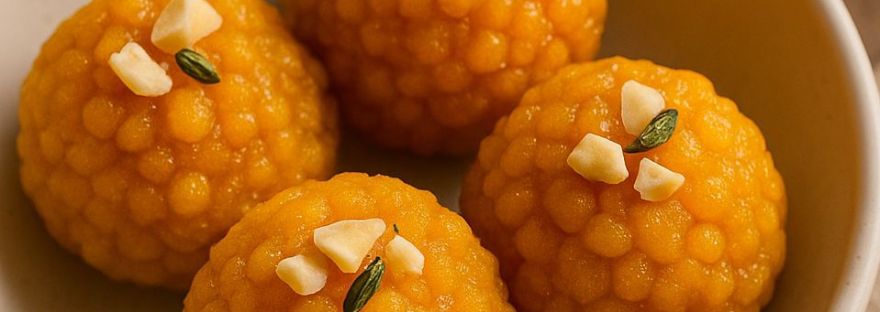
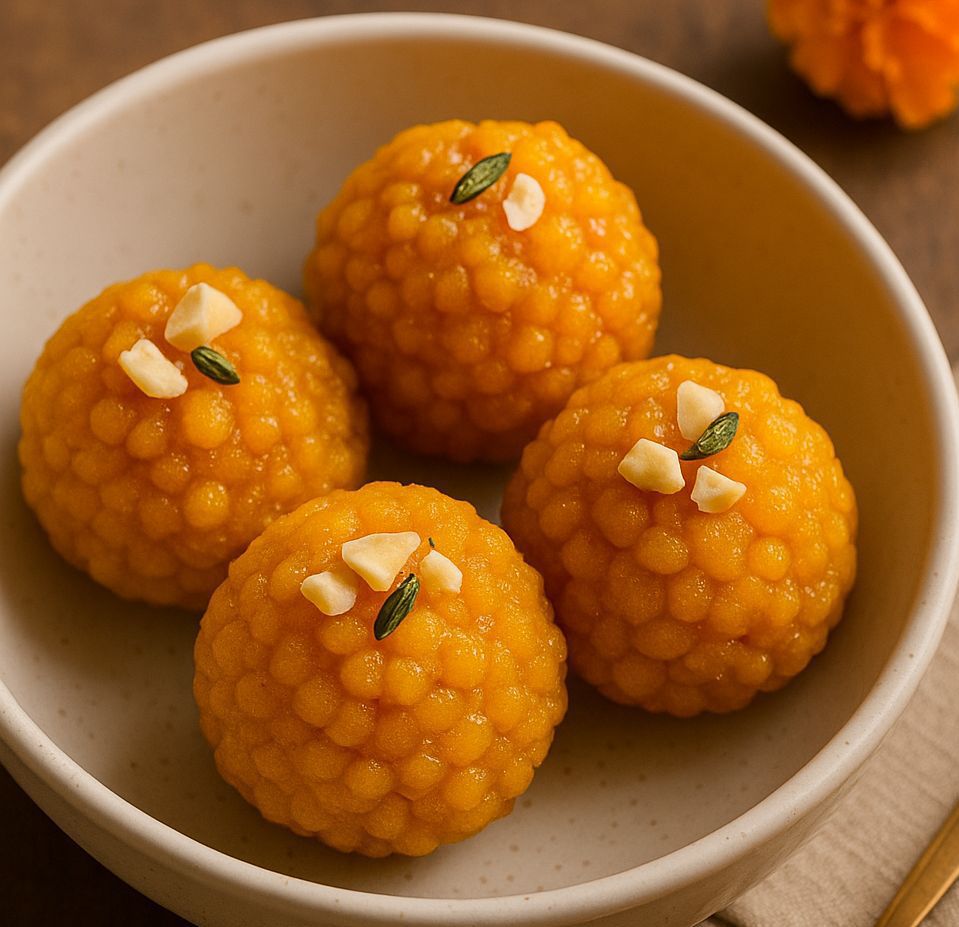
The laddoos glistened like marigold orbs, fragrant with cardamom and saffron, and no store-bought sweet could ever match their warmth. For us, Boondi Laddoo wasn’t just dessert; it was the taste of family, devotion, and celebration.

About This Recipe

Boondi Laddoo (also called Motichoor Ladoo when made with finer boondi) is one of India’s most loved festive sweets.
It’s made by frying tiny gram flour pearls (boondis), soaking them in aromatic sugar syrup, and shaping them into soft, golden laddoos.

Every region adds its twist from the coarse-textured Temple-style Laddoo of South India to the delicate Motichoor version of North India — but the essence remains the same: warmth, sweetness, and tradition in every bite.

Recipe Details

Servings: 12–15 laddoos
Prep Time: 15 minutes
Cook Time: 30 minutes
Setting Time: 20 minutes

Ingredients

For the Boondi

1 cup gram flour (besan), sifted

½ cup water (approx., to make smooth batter)

A pinch of baking soda (optional, for puffier boondi)

Ghee or oil, for deep frying


For the Sugar Syrup

1 cup sugar

½ cup water

3–4 cardamom pods, crushed

5–6 saffron strands (optional, for festive aroma and color)

1 teaspoon lemon juice (to prevent crystallization)


For Flavor and Garnish

1 tablespoon ghee

2 tablespoons chopped cashews and raisins (lightly fried in ghee)

1–2 drops orange or yellow food color (optional, for festive hue)

Step-by-Step Instructions

1. Prepare the Batter

In a large bowl, sift gram flour and add water gradually.
Whisk until you get a smooth, lump-free batter with a flowing consistency neither too thick nor runny.
Add a pinch of baking soda and whisk once more.
(Tip: The consistency should be similar to pancake batter it should fall in droplets when poured through a slotted spoon.)

2. Fry the Boondi

Heat ghee or oil in a deep frying pan over medium heat.
Hold a perforated ladle (boondi jhara) over the pan.
Pour a ladleful of batter over it and gently tap the edge so small droplets fall evenly into the oil.

Fry the boondis for 30–40 seconds, until they puff up slightly but remain soft not crisp.
Remove with another slotted spoon and drain on paper towels.
Repeat for remaining batter.
(Tip: Do not over-fry we need soft boondis so they can absorb the syrup later.)

3. Prepare the Sugar Syrup

In another pan, combine sugar and water.
Boil until you reach a one-thread consistency when a drop pressed between your fingers forms a thin thread.
Add cardamom, saffron, and lemon juice.
Turn off the heat once syrup slightly thickens.

4. Combine Boondi and Syrup

Add the fried boondi directly into the warm syrup.
Mix gently until all boondis are well coated.
Add fried cashews and raisins.
Cover and let the mixture rest for 10–15 minutes so the boondis absorb the syrup.


5. Shape the Laddoos

Once the mixture cools slightly (it should be warm, not hot), grease your palms with ghee.
Take a handful of mixture and gently press it into a round ball.
If the mixture feels too loose, cook it for 2–3 more minutes to thicken before shaping.

Place the laddoos on a plate and allow them to set completely.

Expert Tips for Perfect Laddoos

Consistency of batter: The key to perfect boondi lies in the batter smooth, free-flowing, and lump-free.

Temperature of oil: Medium heat works best. Too hot, and the boondis will become hard; too cold, and they’ll absorb oil.

Syrup stage: One-thread consistency is ideal. Over-thick syrup will make the boondis dry; too thin will make laddoos sticky.

Softness factor: Don’t fry boondis too long soft, porous ones make melt-in-mouth laddoos.

Flavor magic: A pinch of cardamom, ghee-fried cashews, and a few saffron strands bring divine aroma especially when offered as prasad.

Storage: Store laddoos in an airtight box at room temperature for up to a week.

Serving Suggestions

Offer warm Boondi Laddoos as prasad during Diwali, Ganesh Chaturthi, or weddings.

Pair with Coconut Burfi or Rava Ladoo for a perfect festive sweet platter.

Wrap them in decorative foil or paper cups for gifting.

Closing Note

The process of making Boondi Laddoo is like crafting joy slow, rhythmic, and full of meaning.
Each tiny boondi represents a drop of sweetness, and when bound together, they form something whole much like family during festivals.

When I make laddoos now, I remember my grandmother’s voice  “Keep your patience, beta. Syrup listens to love, not hurry.”
And truly, when stirred with love, these humble gram flour pearls turn into golden spheres of happiness.

So this Diwali, light your diyas, let the aroma of cardamom fill your kitchen, and roll a few laddoos with your own hands.
Because some sweetness is best when made  and shared from the heart. ✨