
I can still remember the gentle clink of the pot as my mother stirred a simmering makhana kheer on a Navratri evening. The kitchen would fill with the sweet aroma of milk thickening with roasted foxnuts, sugar, and a pinch of saffron. As a child, waiting all day during the fast, that first creamy spoonful of kheer at sunset felt nothing short of divine. Even now, the moment I begin to roast makhanas in ghee, I am transported back to those festive nights – the idols adorned in bright clothes, the air filled with prayers, and our family gathered eagerly for the sacred treat after a long day of fasting.
For those unfamiliar, makhana kheer is essentially a traditional Indian pudding made by slow-cooking puffed lotus seeds (also known as makhana or foxnuts) in milk, and sweetening it with sugar. My mother always adds a touch of cardamom and a few strands of saffron, which turn the kheer a beautiful golden hue and infuse it with a delicate aroma. We garnish it generously with nuts – golden almonds and cashews – and plump raisins, which not only elevate the flavor but also add a celebratory crunch and chew in each bite. This creamy dessert isn’t just delicious; it’s a bowl of memories and comfort. Traditionally prepared during Hindu fasting days and festivals, especially Navratri, makhana kheer has a special place in our home rituals. It’s both nourishing and auspicious, a dish that links generations and marks the sweet end of a day of devotion.
When I make makhana kheer now, I do it just like my mother and grandmother did. I roast the foxnuts in a spoonful of ghee until they’re crisp, let them luxuriate in simmering milk until soft, and sweeten the pudding to taste. The process is soothing in itself – the slow stirring, the fragrant steam, the anticipation of a treat. By the time it’s ready, the kheer is rich and velvety, the makhanas have absorbed the sweet milk, and the kitchen feels cozy and filled with love. If you’re looking for a dessert that’s easy to make yet deeply soulful, this Navratri-special makhana kheer might just become a beloved tradition in your family too.
Ingredients
2 tablespoons ghee (clarified butter)
2 cups makhana (foxnuts / popped lotus seeds)
4 cups whole milk (full-fat for best results)
1/4 cup sugar (adjust to taste)
1/2 teaspoon ground cardamom (or 4 green cardamom pods, crushed)
A pinch of saffron strands (about 8–10 strands)
2 tablespoons almonds, slivered (plus extra for garnish)
2 tablespoons cashews, halved (optional, or use instead of almonds)
2 tablespoons raisins (golden raisins preferred)
Instructions
1. Roast the Makhana: In a heavy-bottomed pan, heat the ghee on low flame. Add the makhanas (foxnuts) and roast them in the ghee, stirring continuously. Sauté for about 3–5 minutes until the makhanas turn light golden and crispy. (You’ll hear a slight crunch when you bite one.) Remove the roasted makhanas from the pan and set aside.
2. Toast Nuts & Raisins: In the same pan with remaining ghee, add the slivered almonds and cashews. Roast for 1–2 minutes until they turn golden brown. Add the raisins last and stir for just a few seconds – they will plump up quickly (be careful not to burn them). Remove the toasted nuts and raisins and keep them aside for later.
3. Boil the Milk: In a deep saucepan (or you can use the same pan if large enough), pour in the milk and bring it to a gentle boil over medium heat. Stir occasionally to prevent the milk from scorching at the bottom. Add the saffron strands to the milk as it heats, allowing their color and flavor to steep into the milk.
4. Combine Milk and Makhana: Once the milk comes to a boil, reduce the heat to low. Add the roasted makhanas to the milk. (For a creamier kheer, you can roughly crush or grind half of the roasted makhanas before adding, while keeping the rest whole – this helps thicken the pudding.) Stir everything together.
5. Simmer to Thicken: Let the makhanas simmer in the milk on low heat for about 10–15 minutes. Stir frequently, scraping the sides and bottom of the pan to mix in any thickened milk solids (this makes the kheer richer). The milk will reduce and thicken slightly, and the makhanas will soften as they absorb the sweet saffron-infused milk.
6. Sweeten and Spice: Once the milk has reduced to a creamy consistency (roughly about 3/4 of the original volume), add the sugar. Stir well so it dissolves completely. Next, sprinkle in the ground cardamom. The kitchen should now be filled with the lovely aroma of cardamom and saffron! Let the kheer simmer for another 2–3 minutes after adding sugar and cardamom, so all the flavors meld.
7. Finish with Nuts & Raisins: Turn off the heat. Add most of the toasted almonds, cashews, and raisins into the kheer, saving a few for garnish. Give a final stir. The makhana kheer at this point should be creamy with a pudding-like consistency. (It will thicken further as it cools, which is normal.)
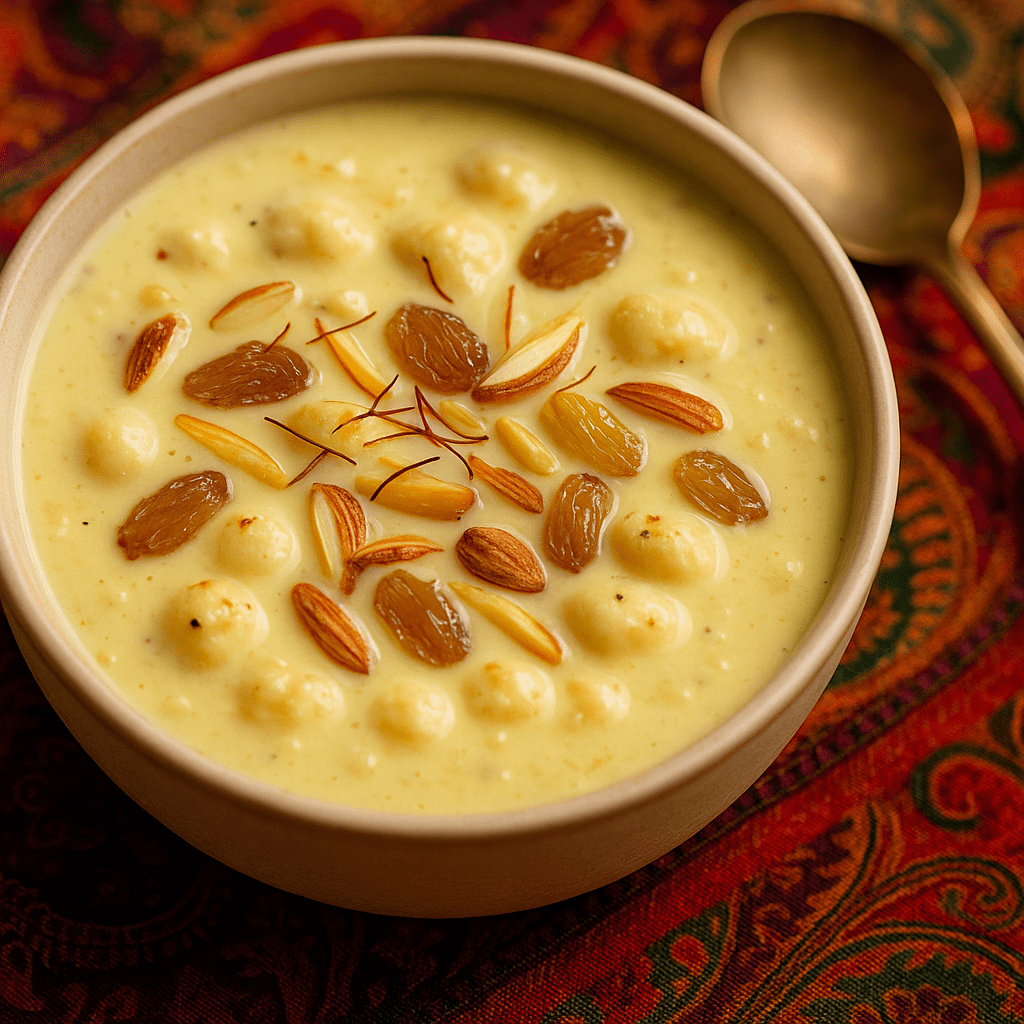
8. Serve: Pour the kheer into serving bowls. Garnish each bowl with the reserved toasted nuts and raisins. Don’t forget to add a couple of saffron strands on top of each as a final festive touch. You can serve makhana kheer warm, which is especially comforting after a fast, or chilled if you prefer it cold and thick. Enjoy the kheer as a rich prasad (offering) during Navratri, or as a dessert to celebrate any special occasion.
Tips
Roast Thoroughly: Always roast the makhanas in ghee until they are crunchy before adding to the milk. This step enhances their nutty flavor and ensures they don’t turn soggy too quickly. Properly roasted foxnuts will absorb the milk nicely while still retaining a good bite.
Grind for Thickness: For an extra creamy texture, grind or powder a portion of the roasted makhanas and then add it to the milk. This ground makhana acts as a natural thickener, giving the kheer a luxurious, rabri-like consistency. (Many families take this approach to make the kheer richer, while still leaving some makhanas whole for texture.)
Stir and Scrape: While simmering the kheer, stir it often and scrape the sides of the pan. This helps reincorporate the thickened milk solids (malai) back into the pudding, making it richer. It also prevents the milk at the bottom from scorching – a little patience here goes a long way in achieving that perfect creamy texture.
Adjust Sweetness and Flavor: Sweeten the kheer to your taste. Sugar can be increased or reduced as per preference. You can even use jaggery for a deeper flavor – just remember to add it after turning off the heat to prevent curdling. Likewise, adjust spices to your liking: a pinch of nutmeg or a few drops of rose water can be added for variation, but cardamom and saffron are the classic choices that give makhana kheer its signature festive aroma.
Serving and Storage: Makhana kheer will thicken as it cools. If it becomes too thick, you can stir in a few tablespoons of warm milk to loosen it to desired consistency before serving. This dessert tastes wonderful warm (when it’s smooth and creamy) and equally delightful chilled (when it sets into a thicker pudding). If you chill it, the makhanas will continue to soften; some people love that custard-like result! Keep any leftovers refrigerated, and finish within 1-2 days for best taste.
Fasting-Friendly Variations: This recipe is naturally gluten-free and perfect for Navratri fasts. For a vegan version, swap the dairy milk with almond milk or coconut milk and use coconut oil instead of ghee – the kheer will still be deliciously creamy (though the flavor will differ slightly). You can also experiment with sweeteners like dates or honey if you avoid refined sugar during fasts.
*(Warm kitchen lights cast a soft glow on a bowl of creamy makhana kheer, garnished with saffron strands, almonds, and raisins, resting atop a colorful festive cloth – a picture of comfort and celebration.)*
As I scoop into my own bowl of makhana kheer now, I’m filled with the same warmth and contentment that I felt years ago during those Navratri nights. This Navratri-special dessert is more than just a recipe – it’s a thread connecting me to my heritage, my family, and countless celebrations where this kheer made the moment sweeter. I hope you’ll invite this traditional foxnut pudding into your home and create beautiful memories around it. May each creamy, blissful bite remind you of the joy of tradition and the love that goes into our food. Happy Navratri and happy cooking! 🌼✨
 The Pinch of Masala