Dessert

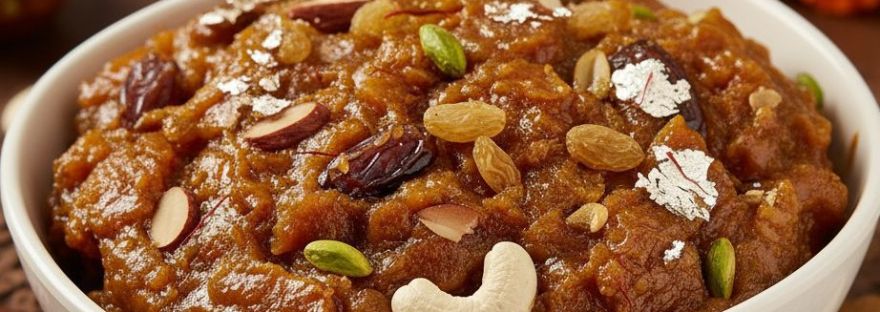
Dry Fruit Halwa – The Royal Sweet of Diwali

A Bite of Luxury and Love

When I think of Diwali sweets, I think of color  golden diyas, crimson rangoli, and the deep amber shine of Dry Fruit Halwa.

In my childhood home, this halwa was a once-a-year indulgence. My mother would prepare it in her heavy brass kadai on the day before Diwali, while the kitchen glistened with ghee and the air carried the fragrance of roasted cashews. I remember her saying, “Halwa is like gold  it shines only when stirred with patience.”

We’d all wait by the stove, watching the mixture turn from milky white to a translucent golden sheet. When it was finally spread on a greased tray and sprinkled with pistachios, it looked like a pane of edible glass. The first bite was always chewy, nutty, and sweet with just a touch of ghee a flavor so rich, it felt like Diwali itself.

Even now, when I make it, that memory comes alive  my mother’s bangles jingling as she stirred, my father sneaking a warm piece from the tray, and the sound of laughter echoing through our glowing home.

About This Recipe

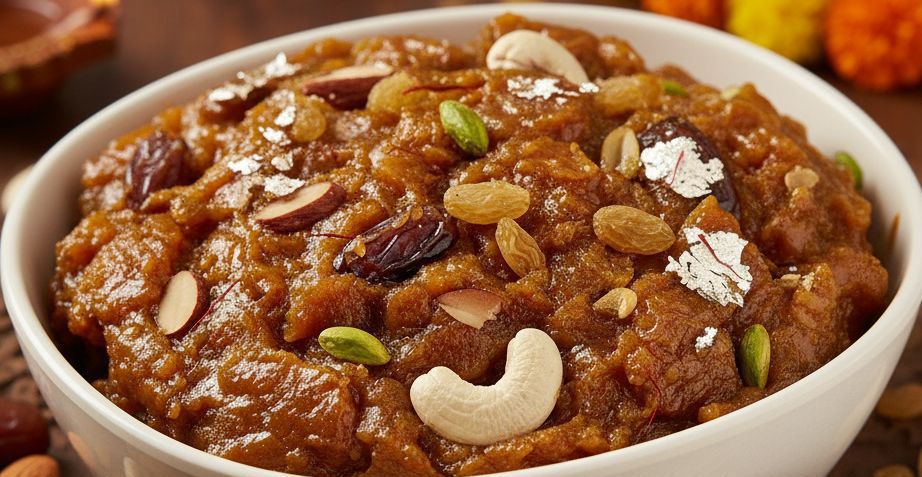
Dry Fruit Halwa, also known as Karachi Halwa or Bombay Halwa, is a traditional Indian sweet famous for its chewy, translucent texture and nutty richness. It’s made from cornflour (or arrowroot), ghee, sugar, and dry fruits, resulting in a glossy halwa that looks as stunning as it tastes.

Unlike milk-based sweets, this halwa stays fresh longer, making it ideal for festive gifting and travel-friendly treats.

Recipe Details

Servings: 10–12 pieces
Prep Time: 10 minutes
Cook Time: 25 minutes
Setting Time: 2 hours
Ingredients

For the Halwa

½ cup cornflour (cornstarch)

2 cups water (for slurry)

1½ cups sugar

¾ cup water (for syrup)

¼ cup ghee (use more as needed)

¼ teaspoon cardamom powder

1 pinch saffron strands (optional, soaked in 1 tbsp warm water)

2–3 drops natural food color (orange or red, optional)


For the Dry Fruits

2 tablespoons cashews, chopped

2 tablespoons almonds, slivered

2 tablespoons pistachios, chopped
(You can also add melon seeds or raisins for variation.)

Step-by-Step Instructions

1. Prepare the Cornflour Slurry

In a bowl, mix cornflour with 2 cups of water until smooth and lump-free. Set aside.
(Tip: Stir just before using as the mixture tends to settle at the bottom.)


2. Make the Sugar Syrup

In a heavy-bottomed kadai, add sugar and ¾ cup water.
Stir over medium heat until the sugar dissolves completely and forms a clear syrup.
Add the saffron water and a few drops of food color, if desired.


3. Cook the Halwa Mixture

Lower the heat and gradually pour in the cornflour slurry, stirring continuously to prevent lumps.
As the mixture begins to thicken, add 1 tablespoon of ghee at a time.
Keep stirring patiently the mixture will turn glossy and start to leave the sides of the pan.
This process takes around 15–20 minutes.

(Tip: The halwa should look shiny, translucent, and stretchy that’s when you know it’s ready!)


4. Add Nuts and Flavoring

Mix in the chopped cashews, almonds, and pistachios along with cardamom powder.
Stir well and cook for another 2–3 minutes until everything is combined evenly.


5. Set and Cool

Grease a steel or glass tray with ghee.
Pour the halwa mixture into it and spread evenly with a spatula.
Smooth the top, sprinkle extra nuts, and let it rest for 2–3 hours at room temperature to set.

Once firm, cut into neat squares or diamond shapes with a sharp, greased knife.

Expert Tips for Perfect Halwa

Stir Constantly: Halwa thickens quickly — keep stirring to avoid lumps and ensure even cooking.

Ghee Gradually: Add ghee in intervals; this helps the halwa achieve its glossy finish and prevents sticking.

Texture Check: When the halwa turns transparent and pulls away from the sides, it’s perfectly cooked.

Nuts Variation: You can use roasted cashews, walnuts, or dried figs for a richer version.

Flavor Twist: Try adding rose water or a drop of kewra essence for a royal aroma.

Storage: Stays fresh for up to 10 days at room temperature, or longer when refrigerated.

Serving & Gifting Ideas

Pack square pieces of Dry Fruit Halwa in small butter-paper wrappers or festive boxes for gifting.

Serve it alongside Boondi Laddoo and Coconut Burfi for a complete Diwali dessert platter.

Warm slightly before serving to enjoy its soft, melt-in-mouth texture.

Closing Note

Making Dry Fruit Halwa is like watching alchemy in your kitchen a simple mixture of cornflour, sugar, and ghee transforms into a jewel-toned delicacy.
Each glossy piece holds the sweetness of memories, the crunch of celebration, and the shimmer of Diwali lights.

Every time I prepare it, I’m reminded of my mother’s patience, of the golden glow of diyas, and of how festival sweets are more than recipes  they’re traditions passed down through love and time.

So this Diwali, take an hour to make this royal treat yourself.
As you stir, breathe in the aroma, feel the ghee coat your spoon, and remember — the real sweetness of a festival lies not in the sugar, but in the hands that make it. ✨

Dessert

Coconut Burfi – A Festive Sweet Full of Simplicity and Soul

Memories of Sweet Aroma and Shimmering Festivals

As a child, I always knew Diwali was near when the kitchen began to smell of roasted coconut and ghee.
Those evenings were magical diyas flickered in every corner, and the air was filled with the warm sweetness of Coconut Burfi cooking on the stove.

I’d sit beside my mother as she grated coconut with her old metal scraper, tiny curls of white piling up like snowflakes. She would roast it slowly in a heavy-bottomed kadai, the fragrance blending with the sound of bubbling sugar syrup. When the mixture turned glossy and thick, she’d spread it onto a greased plate, press it smooth, and let it cool.
The best part came next  she’d cut it into perfect diamonds with a buttered knife, and the first piece was always mine.

Even today, I make Coconut Burfi the same way she did  simple ingredients, patient stirring, and lots of love. It’s not just a sweet; it’s a tradition. Every bite takes me back to those golden Diwali evenings when family, laughter, and the aroma of coconut filled our home.

About This Recipe

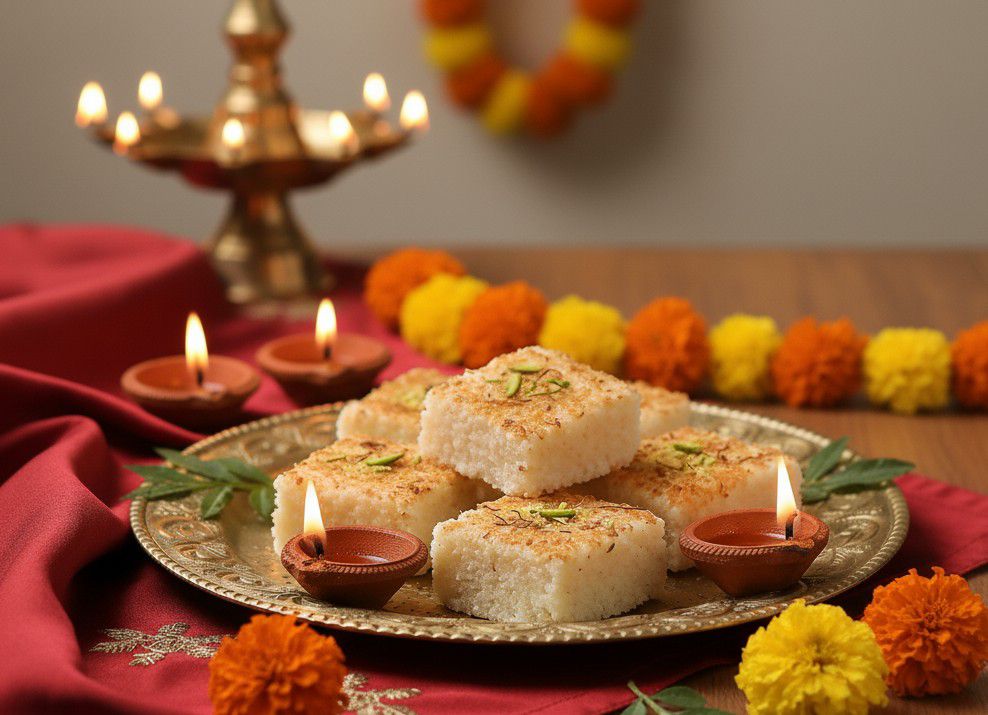
Coconut Burfi (also called Nariyal Barfi in Hindi or Kobbari Mithai in Kannada) is a traditional Indian sweet made with freshly grated coconut, milk, sugar, and cardamom. Some variations use jaggery for an earthy sweetness, while others add a touch of ghee or khoya for richness.

It’s one of those sweets that’s easy to make, quick to set, and always satisfying perfect for festive offerings, gifting, or temple prasad.

Recipe Details

Servings: 10–12 pieces
Prep Time: 10 minutes
Cook Time: 25 minutes
Total Time: 35 minutes

Ingredients

2 cups freshly grated coconut (preferably from medium-aged coconut — not too tender or too dry)

1 cup milk (or ½ cup condensed milk for richer flavor)

1 cup sugar (or adjust to taste; substitute with ¾ cup jaggery for a traditional version)

1 tablespoon ghee

½ teaspoon cardamom powder

5–6 chopped cashews or almonds (optional, for garnish)


Instructions

1. Prepare the Coconut

Grate the coconut using a fine grater only the white portion (avoid the brown shell layer).
Measure 2 cups of grated coconut and keep aside.
(Tip: For extra softness, pulse the grated coconut once in a mixer without adding water.)


2. Start the Base

In a heavy-bottomed kadai or non-stick pan, heat ghee and add the grated coconut.
Roast gently on low flame for 3–4 minutes — just enough to release aroma, without browning.


3. Add Milk and Sugar

Pour in the milk and stir. When it comes to a gentle boil, add sugar (or grated jaggery if using).
Stir continuously until the sugar dissolves completely.
Cook this mixture on medium flame, stirring often, until it thickens and begins to leave the sides of the pan.


4. Flavor It

Add cardamom powder and mix well.
If using condensed milk, you can skip part of the sugar — the mixture will thicken faster.
Continue to stir until it reaches a soft, fudge-like consistency.

(To test: Drop a small portion on a plate it should firm up slightly when cooled, not sticky.)


5. Set the Burfi

Grease a steel or glass plate with ghee.
Pour the thickened mixture and spread evenly using a spatula.
Smooth the surface and sprinkle nuts if desired.
Let it rest for 10–15 minutes, then mark pieces with a greased knife.
Once fully cooled, cut into squares or diamonds and gently lift them out.

Expert Tips

Fresh Coconut Works Best: Always use freshly grated coconut for authentic taste. Frozen coconut works in a pinch just thaw it and squeeze out excess moisture before use.

Texture Control: Roast lightly for soft burfi or a bit longer for a chewy, halwa-like texture.

Jaggery vs Sugar: Jaggery gives a deep, earthy sweetness and slightly darker color, while sugar makes the burfi pure white and clean-flavored.

Avoid Overcooking: Once the mixture starts leaving the sides of the pan, remove immediately  overcooking makes the burfi dry and crumbly.

Shelf Life: Stays fresh for 3–4 days at room temperature, and up to a week refrigerated in an airtight container.

Serving Ideas

Serve Coconut Burfi as part of your Diwali thali with Besan Ladoo, Mysore Pak, and Chiroti.

Wrap individual pieces in butter paper for festive gifting.

Add a thin edible silver leaf (vark) for a traditional festive touch.

Serve warm with a drizzle of ghee for temple-style prasadam vibes.

Closing Note

Every Diwali, when I prepare Coconut Burfi, I still hear my mother’s words echoing  “Stir it patiently, and don’t rush the sweetness.”

It’s a humble sweet, but it carries generations of love in every bite  the laughter of cousins sneaking warm pieces from the tray, the sparkle of diyas, and the gentle glow of home.

So this festive season, skip the store-bought sweets and try this simple, soulful Coconut Burfi.
It takes just 30 minutes, yet the memory of its sweetness will last long after the lights of Diwali fade. 🌙✨