
Imagine strolling through the bustling lanes of Old Delhi on a chilly winter evening, your hands wrapped around a small dona (leaf bowl) brimming with piping hot Ram Ladoo. The aroma of fried lentil fritters wafts through the foggy air as you watch the street vendor deftly drizzle vibrant green chutney over the golden bites and top them with a snowy heap of grated radish. During Delhi’s severe winters (and even its monsoons), snacks like Ram Ladoo are in high demand – kiosks selling jalebi, shakarkandi chaat, Ram Ladoo, aloo tikki and more are a common sight in every neighborhood. The experience is pure nostalgia: standing by the roadside with friends, huddling under umbrellas during a surprise drizzle, and relishing the chatpata (tangy-spicy) flavors that burst from these little fritters.
Ram Ladoo isn’t actually a ladoo (sweet) at all – it’s a savory fried pakoda (fritter) made from moong dal batter that’s turned into a chaat. The name might confuse first-timers, but one bite makes it clear why this is one of Delhi’s most beloved street foods. Traditionally, the crispy lentil balls are served as a chaat with all the fixings: fresh white radish (mooli) is the signature topping that defines Ram Ladoo, piled on along with zesty green chutney and a squeeze of lemon. This combination of hot fritter, cool crunchy radish, and spicy-tangy chutneys is absolutely addictive. No wonder Ram Ladoo is especially cherished during North Indian winters and monsoons, when that extra crunch of seasonal radish and the warmth of fried snacks feel most comforting.
Ingredients
For the Ram Ladoo Fritters: (Serves 4)
1 cup moong dal, split yellow lentils (dhuli moong) – rinsed
1 teaspoon grated ginger (or 1-inch piece, chopped)
1–2 green chilies, chopped (adjust to taste)
½ teaspoon cumin seeds
1 pinch asafoetida (hing) (optional, enhances flavor)
½ teaspoon salt, or to taste
Oil, for deep frying (enough to submerge fritters)
For Serving & Toppings:
1 cup white radish, peeled and grated (mooli)
2 tablespoons fresh coriander leaves, finely chopped
Green chutney – (Blend fresh coriander, mint, green chili, garlic, salt, and a dash of lemon into a smooth chutney. You can include a few radish leaves for authenticity.)
Tamarind chutney – sweet-sour imli chutney (optional, for drizzling)
1 teaspoon chaat masala
Lemon wedges, for squeezing on top
(Note: Some vendors also garnish with a few pomegranate seeds (anardana) for a pop of sweetness and color, though this is optional.)
Instructions
1. Soak the Dal: Rinse the moong dal a few times, then soak it in water for about 3–4 hours (or overnight). Proper soaking softens the lentils, ensuring a lighter, fluffier batter. If you plan to mix in a small portion of chana dal (optional for extra crispness), soak it together with the moong dal or separately as needed.
2. Grind into Batter: Drain the soaked dal and transfer it to a grinder or blender. Add the aromatics and spices – ginger, green chilies, cumin seeds, asafoetida, and salt – into the grinder. Grind everything to a coarse paste without adding water (or using only a few teaspoons if absolutely necessary). The batter should be thick; a slightly coarse texture (not completely smooth) is ideal so that the fritters have some bite. Tip: Scrape down the sides of the blender as you go, and avoid over-grinding into a fine paste.
3. Aerate the Batter: Pour the ground dal batter into a mixing bowl. Now, take a whisk (or even just use your hand or a spoon) and beat the batter vigorously for 2–5 minutes in one direction. This whipping incorporates air, making the batter light and fluffy. You will notice the batter increase a bit in volume and turn pale. This step is key to yielding soft, pillowy interiors and helps the fritters puff up nicely when fried.
4. Deep Fry the Fritters: Heat oil in a deep kadai (wok) or heavy pan over medium heat. Once the oil is hot (test by dropping a tiny bit of batter – it should sizzle and rise to the top), carefully drop spoonfuls of the batter into the oil. You can use a wet spoon or your fingers to pinch out small rounds (about 1 to 1½ inches in diameter). Do not overcrowd the pan; fry in small batches so the temperature of the oil stays consistent and the fritters cook evenly. Fry the Ram Ladoo on a medium flame, flipping occasionally, until they turn golden and crisp on the outside. This usually takes about 4–6 minutes per batch. Resist the urge to fry on very high heat – medium heat ensures the insides cook through without the outside browning too fast. When one side is golden, flip the fritters with a slotted spoon and continue frying till all sides are golden and the fritters are crunchy.
5. Drain and Keep Warm: Use a slotted spoon to remove the fried fritters from the oil. Drain them on a plate lined with paper towels to blot excess oil. The Ram Ladoos should be beautifully crisp and golden (avoid frying till dark brown, as that can make them too hard). If not serving immediately, you can keep them warm in an oven at low heat (around 100°C/212°F) so they remain crunchy.
Serving and Presentation
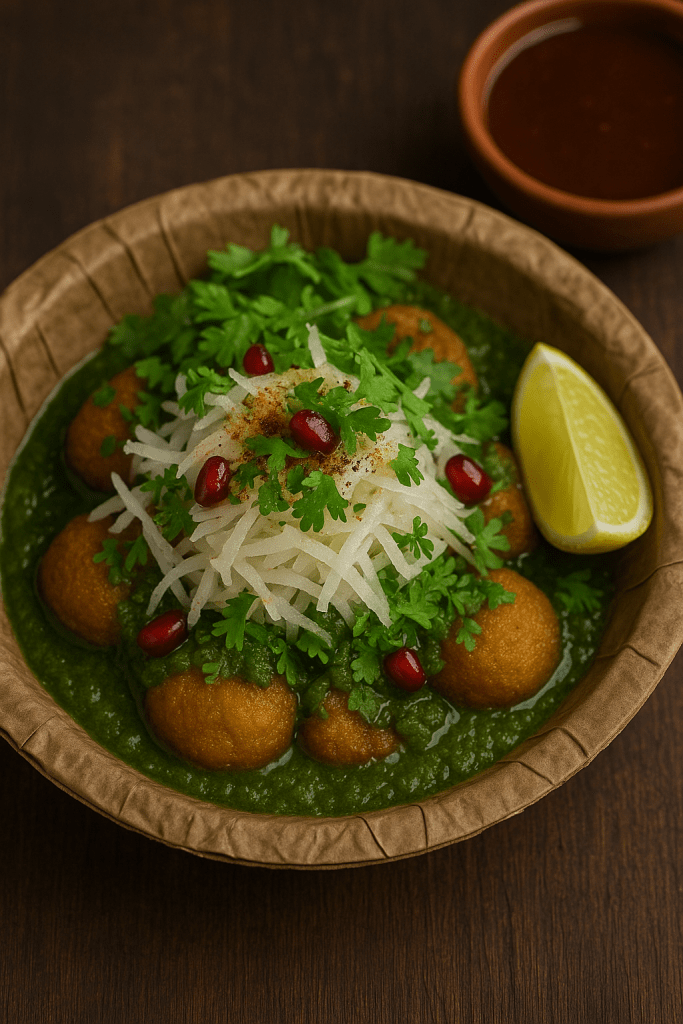
Serving the Chaat: In Delhi, Ram Ladoo is often handed to you in a small steel plate or a disposable leaf bowl (dona), truly embracing its street-food charm. To assemble your Ram Ladoo chaat, arrange 4–5 of the hot moong dal fritters in a small bowl or plate. Then liberally spoon the green chutney over them, completely dousing the fritters in that spicy herby goodness. If you have tamarind chutney, drizzle a couple of teaspoons of the sweet-tangy sauce as well for a nice flavor contrast. Next, pile on a generous amount of grated radish on top of the fritters – don’t be shy, the crunchy mild radish is what makes this chaat unique. Sprinkle a pinch of chaat masala all over, and garnish with the chopped fresh coriander. You can also add a few of the radish leaves themselves as garnish if they’re fresh and tender. Finally, tuck a lemon wedge on the side of the plate for squeezing. The final creation should look irresistible: golden fried balls almost hidden under a mountain of green chutney and white radish, with specks of coriander (and maybe ruby pomegranate arils) on top, just like the street vendors serve it.
When you take a bite, you get everything at once – the crisp exterior of the fritter giving way to a soft, savory center, the zing of green chutney and chaat masala, and the refreshing crunch of radish with a burst of lemon. This medley of textures and flavors is what makes Ram Ladoo such a beloved street snack. Traditionally, the fritters must be enjoyed fresh and hot, smothered in chutneys and topped with radish – that’s the classic way to relish this dish. Some vendors also sprinkle a little black salt or sendha namak on top for extra punch. Serve your Ram Ladoo immediately once assembled, because that’s when they taste best – before they lose heat and crunch.
Tips for the Perfect Ram Ladoo
Soak Well: Plan ahead and soak the moong dal for at least a few hours. Well-soaked lentils grind more easily and yield a smoother, lighter batter. If using a bit of chana dal (e.g. a 3:1 ratio of moong to chana), soak it too – chana dal helps make the fritters even more crisp and fluffy (though you can skip it if you want to keep things simple).
Minimal Water for Grinding: Drain the lentils thoroughly before grinding. Avoid adding water when blending – excess water can make the batter runny, and the fritters won’t hold their shape. Grind in pulses until you get a coarse, thick paste. If absolutely needed, add a teaspoon or two of water, but keep the batter stiff. A thick batter results in round, fluffy fritters, whereas a thin batter would yield flat or greasy ones.
Whip the Batter: Don’t forget to whisk or beat the batter well. This step incorporates air, making the fritters light. A well-aerated batter gives soft interiors and helps the Ram Ladoos puff up nicely. If you skip this, your fritters might turn out dense. So roll up your sleeves and beat the batter for a few minutes until it feels lighter and pale.
Frying Technique: Always fry on medium heat. If the oil is too hot, the fritters will brown too quickly on the outside but remain uncooked inside; too low and they’ll absorb oil and turn soggy. Medium flame ensures they cook through evenly. Also, fry in batches – adding too many spoonfuls of batter at once can crowd the pan and drop the oil temperature, resulting in oily fritters. Fry until the ladoos are just golden (not deep brown) for the best texture. Golden color means they’re perfectly crisp but still tender inside.
Toppings are Key (Don’t Skip the Radish!): The magic of Ram Ladoo lies in its toppings. Fresh grated radish is not just a garnish but a core component – it adds a refreshing crunch and peppery bite that elevates the dish. In fact, the radish is so essential that skipping it is not advisable. Similarly, the green chutney provides spice and moisture, and a dash of tamarind chutney brings a welcome sweetness that balances the flavors. Sprinkle a pinch of chaat masala on top for that final tangy kick. These extras turn simple fritters into an authentic chaat.
Serve Hot: Ram Ladoo is a snack best enjoyed straight out of the oil. Serve them immediately after frying and assembling, while they’re still hot and crunchy. The fritters tend to soften as they cool, especially under the moisture of chutneys. If you need to fry them a little in advance, you can keep the fried balls in a preheated oven (around 90–100°C) or in an airtight container to maintain crispiness. Then quickly assemble with toppings right before eating. But avoid long delays – even the street vendors will assemble a plate and hand it to you to eat right there and then.
Secret Street Vendor Trick: For an extra layer of authentic flavor, try incorporating radish leaves into your preparation. Many Delhi vendors blend a handful of the mooli ke patte (radish greens) into the green chutney, or even finely chop and whisk a spoonful into the batter itself. The radish greens have a sharp, mustardy flavor that can give your Ram Ladoo a distinctive edge. Even if you don’t have the leaves, using radish generously as a topping will do the job – it’s the defining element of this chaat.
With these tips in mind, you’re ready to recreate the Delhi-style Ram Ladoo at home. Each bite will transport you to the lively streets of Delhi, especially on a cold evening or a rainy day, enjoying this warm, crispy, spicy delight. Serve it up in true street-style fashion – in a little leaf bowl or steel saucer – and watch how quickly these moong dal pakodi chaats disappear. Happy cooking and happy snacking!


 The Pinch of Masala