Odia Recipe

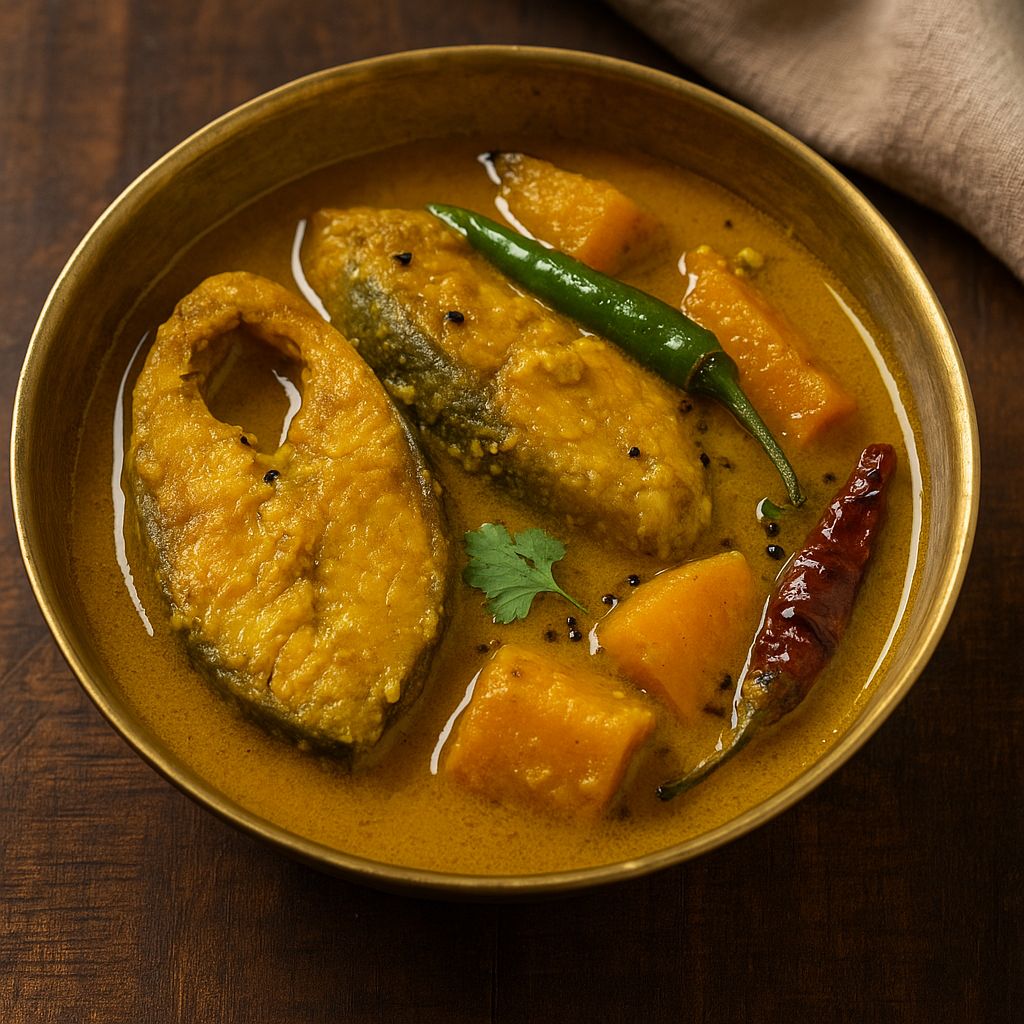
Macha Besara – Odisha’s Traditional Fish in Mustard Gravy (The Soulful Taste of Coastal Kitchens)

There are some dishes in Odisha that do not just belong to our cuisine  they belong to our identity.
For every Odia raised near the sea, the riverbanks, the shimmering ponds of the village, or even the bustling fish markets of Cuttack, Macha Besara is not just a curry it is a memory, a ritual, a symbol of home.

I grew up watching elders grind mustard seeds on the silbatta, the aroma filling the kitchen long before the first piece of fish touched the pan. In coastal Odisha, especially in districts like Kendrapara, Jagatsinghpur, Puri, Jajpur, Bhadrak, and Balasore, Besara is as essential as Dalma. It carries the sharp fragrance of mustard, the earthiness of haldi, the heat of green chilies, and the comfort of fish simmered slowly until tender.

Every Odia household prepares Besara slightly differently some make it fiery hot, some make it tangy with ambula (dried mango), some add vegetables like pumpkin, raw banana, or drumstick, and some keep it minimal and pure. But the heart of Besara is always the same:

Sorisa bata (mustard paste).
The soul of Odisha.

This is not a dish from restaurants, hotels, or dhabas.
This is a dish from homes.
From mothers’ hands.
From grandmothers’ rituals.
From mustard-oil-soaked memories.

Today, let’s bring that exact authenticity to your kitchen just the way it is cooked traditionally in Odia homes.

What Is Macha Besara?

Macha = Fish
Besara = Mustard gravy

So Macha Besara is fish cooked in a fragrant mustard sauce along with turmeric, garlic, chilies, and sometimes vegetables.

No garam masala.
No onion-tomato base.
No heavy spices.

Just clean, bold, mustard-forward Odia flavors.

This dish represents:

The agriculture of Odisha (mustard, turmeric, vegetables)

The coastline and rivers (fresh fish)

The temple influence (minimal ingredients, no onion/garlic in some regions)

The satvik spirit of Odia cuisine

The flavor of mustard oil, which no Odia kitchen can live without


Besara has been part of Odia cooking for centuries, and even Lord Jagannath’s Mahaprasad uses versions of Besara for vegetables. The fish version, however, is purely a household delicacy — a warm weekend lunch with steaming rice, a relaxed afternoon, and the fragrance of mustard lingering in the air.
Ingredients Needed for Authentic Odia Macha Besara

For the Fish Marinade

6–8 pieces Rohu / Catla / any freshwater river fish

1 tsp turmeric

Salt

1 tbsp mustard oil


For the Mustard Paste (Sorisa Bata)

2 tbsp mustard seeds (yellow or black; yellow is milder, black is more pungent)

1 tsp cumin seeds

6–7 garlic cloves

2–3 green chilies

A pinch of salt

Water (just enough to grind, very minimal)


For the Curry

1 medium potato (optional), cut into wedges

4–5 pieces raw banana (optional)

4–6 pieces pumpkin (very traditional in vegetable besara)

1–2 pieces ambula (dried mango) or ½ tsp mustard paste–soaked tamarind water

3–4 green chilies, slit

½ tsp turmeric

Salt to taste

2–3 tbsp mustard oil

Warm water as needed


For Tempering

½ tsp mustard seeds

½ tsp cumin seeds

1–2 dried red chilies

How to Make Macha Besara (Step-By-Step, Traditional Odia Method)

1️⃣ Marinate the Fish

Wash fish pieces thoroughly. Add:

Turmeric

Salt

A spoon of mustard oil


Mix and keep aside for 15 minutes. This step removes raw smell and tightens the flesh slightly, helping the fish fry better.

2️⃣ Prepare the Mustard Paste (Sorisa Bata)

This is the heart of Besara.

Soak mustard seeds and cumin for 10 minutes to avoid bitterness. Then grind with:

Garlic

Green chilies

A pinch of salt


Add very little water. The paste must be THICK.

Traditional trick:
If the mustard paste tastes bitter, add 1 tsp curd while grinding. It balances the flavor beautifully.

3️⃣ Lightly Fry the Fish

In a kadhai:

Heat mustard oil to smoking point

Lower flame

Add fish pieces and fry lightly (not deep brown; just sealed)


Remove and keep aside.

4️⃣ Cook the Vegetables

In the remaining oil:

Add mustard seeds + cumin + dried red chilies

Let them crackle

Add the vegetables (potato, raw banana, pumpkin, etc.)

Sprinkle turmeric + salt

Sauté for 3–4 minutes

Add warm water

Cover and cook until vegetables are 70% done


5️⃣ Add Mustard Paste and Cook Slowly

Lower the flame completely.

Add the mustard paste to the vegetables and mix carefully.

Add a little warm water to adjust consistency.
Add green chilies and let everything simmer (not boil vigorously — mustard can split).

6️⃣ Add Ambula

Ambula (sun-dried mango) is EXCLUSIVE to Odisha.
It gives Besara its characteristic soft tang.

Add:

1–2 pieces ambula
OR

1 tsp tamarind water


Cover and cook for 5–7 minutes.

7️⃣ Add Fried Fish and Finish

Add the lightly fried fish pieces gently.

Let them simmer for 5–8 minutes so the mustard gravy coats them fully.

Finish with:

1 tsp raw mustard oil drizzled on top

Green chili slit

Optional coriander (though many homes skip this for purity)

How To Serve Macha Besara (Odia Style)

Serve only with steaming hot rice.

Besara is not eaten with roti or anything else.

A perfect Odia Besara lunch includes:

✔ Steamed rice
✔ Macha Besara
✔ Saga Bhaja (spinach or amaranth stir fry)
✔ Badi Chura
✔ Dahi
✔ Aloo Bharta
✔ Fried Dry Chilies

A true feast of Odisha.

Variations of Macha Besara Across Odisha

1. Coastal Besara (Puri, Kendrapara, Jagatsinghpur)

Very pungent mustard

More green chilies

Thin gravy

Often includes pumpkin or raw banana


2. Cuttack Style

Uses ambula generously

Slightly thicker mustard gravy

Often cooked with rohu only


3. Mayurbhanj / Tribal Style

Uses forest mushrooms + fish together

No garlic

Often wood-smoked


4. Brahmin / Temple-Inspired Version

No onion or garlic

Minimal spices

Pure mustard-cumin flavor

Tips for the Best Besara

Use mustard oil only no substitutes.

Do not over-boil mustard paste; it turns bitter.

Always soak mustard before grinding.

Add curd if mustard becomes too pungent.

Use thick, fresh rohu/catla for best texture.

Let the gravy rest 30 minutes before serving — flavors deepen.

A Memory from Home

I remember summer afternoons when fresh river rohu arrived wrapped in banana leaves.
My grandmother would immediately prepare:

a silbatta

a handful of wet mustard seeds

garlic

green chilies


The rhythmic grinding sound meant only one thing Macha Besara was coming.

Even today, when I drizzle that final spoon of raw mustard oil on my pot of Besara, the same aroma fills my kitchen, taking me back to that verandah, that silbatta, and that peaceful slow cooking that defines Odia food.

Besara is not just mustard and fish.

It is heritage.
It is home.
It is Odisha.
Lunch & Dinner

Chhatu Besara – Odisha’s Earthy Mustard Mushroom Curry

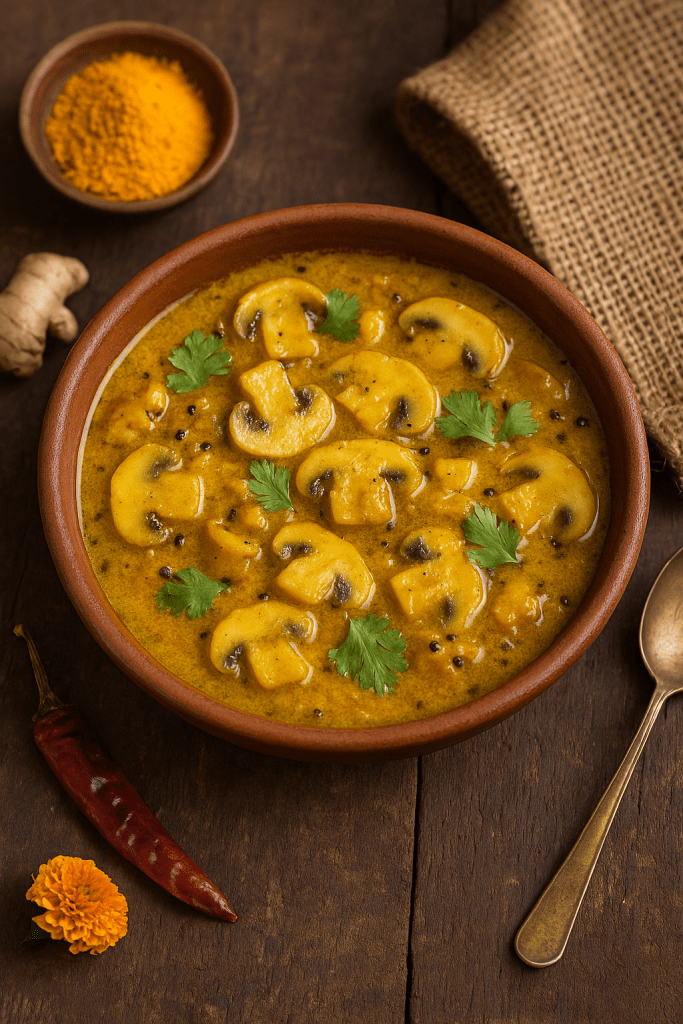
In Odisha’s kitchens, the pungency of sorisa (mustard) paste is a staple of the cuisine and soul food.  Besara (literally “mustard-bathed”) is a classic Odia curry style built around a ground mustard sauce.  In my home state, Chhatu Besara – mushrooms (“chhatu” in Odia) cooked in mustard gravy – is a beloved monsoon comfort. Fresh wild mushrooms from the forests are gently simmered with potato (for heft and sweetness) in a minimal spice blend of garlic, turmeric and green chilies, all brought together by a hot mustard paste. Odisha’s cooks revere this sorisa-bata (mustard paste) – it is the cornerstone of many dishes. As one Odia food writer notes, these forests yield the wild mushrooms known as chhatu, “cooked alongside potatoes and simmered in a thick mustard paste infused with garlic and turmeric”, making a “pungent, creamy and aromatic” curry that evokes Odisha’s jungle and temple heritage.

In fact, mustard is woven through Odisha’s food culture.  Every summer and monsoon, long before the rains arrive, tiny wild mushrooms start sprouting in the damp fields and forests.  The humid, moderate monsoon climate is perfect for these fungi, and Odias celebrate the season with Chhatu Besara and other sorisa-rich dishes.  This curry is so traditional that the mixed vegetable Besar (Odia spelling) cooked in sorisa-bata is one of the 56 bhoga offerings (Mahaprasad) to Lord Jagannath at the Puri Temple. Even if you’re cooking at home, spooning hot rice over a bowl of mustardy mushrooms can feel like a devotional ritual – each bite connecting us to the earth and our ancestors’ kitchens.

Throughout the recipe, be prepared to work with a sharp mustard sauce (Odia curries often skip many spices). As Sasmita Sahoo notes in her Odia food blog, the mustard paste is traditionally ground on a silbata with garlic, chilies and cumin, but nowadays a blender works just fine.  Do use mustard oil if you can – it lends that classic Odia aroma and fragrance that no other oil can match. (If needed, you can substitute a mild oil, but it won’t be as authentic.)  With just a handful of ingredients, this dish comes together quickly – it’s a “specialty of Odisha” that uses minimal spices to create deep flavor.

Ingredients

Mushrooms (Chhatu) – 400 g (about 14 oz) fresh button or oyster mushrooms, cleaned and halved.

Potato – 1 medium, peeled and cut into 1-inch chunks (optional, for a heartier curry).

Raw banana (kacha kela) – 1 small (around 100 g), peeled and cut into chunks (optional variation).

Mustard paste: 2 tbsp mustard seeds (sorisa), 1 tsp cumin seeds, 4–5 cloves garlic, 2–3 dried red chilies – ground together with very little water.

Turmeric powder – ½ teaspoon.

Salt – to taste (about ½ to 1 tsp).

Green chilies – 2 fresh, slit (adjust to taste).

Tomato – 1 small, chopped (adds tang; optional).

Onion – 1 small, chopped (optional; traditional temple-style besara omits onion).

Mustard oil – 3 tablespoons (or neutral oil if unavailable, though mustard oil is traditional).

Water – ¼ to ½ cup (as needed for gravy).

Garnish: Fresh cilantro (coriander leaves), chopped.


Method

1. Prepare the Mustard Paste:  In a small bowl or mortar, soak 2 tablespoons mustard seeds with the cumin seeds, garlic cloves, and dried red chilies in a splash of warm water for 10–15 minutes. Then grind them to a coarse paste with as little water as possible (this keeps the paste thick). Alternatively, use a spice grinder or blender. The goal is a very pungent, thick mustard-garlic paste – this is the flavor base of the curry.


2. Prep Vegetables: Clean and halve the mushrooms. Keep them whole or large, as they will shrink when cooked. If using potato and/or raw banana, peel and cut them into bite-sized pieces and set them in water to prevent browning. Chop the onion and tomato if using.


3. Heat Mustard Oil: In a deep pan or kadhai, add 3 tablespoons mustard oil and heat on medium. When the oil is hot but not smoking, add a pinch of fenugreek seeds (optional) and let it crackle. Lower the flame and add the chopped onion and green chilies. Sauté until the onion is translucent and slightly golden. (Tip: For an extra Odia touch, you can add a pinch of panch phoron (five-spice mix) with the oil – cumin, fennel, mustard, nigella, fenugreek – but this curry tastes great with just mustard and cumin alone.)


4. Cook Potatoes/Banana: Add the drained potato and raw banana pieces. Sprinkle a pinch of salt and turmeric. Sauté on medium-high heat, stirring occasionally, until the edges begin to brown. This browning adds a nice sweet caramelized flavor to the vegetables. Remove and set aside for a moment.


5. Sauté Mushrooms: In the same pan, add the mushrooms. You may add a bit more oil if the pan is dry. Sauté the mushrooms on high heat until they start to release moisture and then that water evaporates. This helps concentrate their flavor. Stir frequently so they brown slightly on the edges.


6. Spice it Up: Return the browned potatoes/banana to the pan. Add the chopped tomato (if using), remaining turmeric, red chili powder, and salt. Mix well and cook for another 2–3 minutes until the tomatoes soften.


7. Add Mustard Paste: Now, stir in the prepared mustard paste. Mix quickly so it coats all the veggies. You should smell a very strong, sharp aroma now – that’s the sorisa getting awakened. Cook the paste for 1–2 minutes on low heat, being careful not to let it burn.


8. Simmer: Pour in about ¼ to ½ cup water (depending on how thick you like the gravy) and stir everything together. Cover the pan and simmer for 5–7 minutes on low heat, or until the potatoes (and banana, if used) are tender. The sauce will thicken slightly as it cooks. Check seasoning and add more salt if needed.


9. Finishing Touch: For tang and authenticity, add a souring agent now. If you have ambula (sun-dried green mango slices), soak 1–2 pieces in 2 tablespoons warm water and stir them into the gravy. (The ambula will infuse a subtle sour note.) If you don’t have ambula, a splash of tamarind water or even a squeeze of lemon can brighten the curry. Cook another minute, then turn off the heat. Finally, drizzle a teaspoon of raw mustard oil on top, and garnish with chopped cilantro.


10. Serve Hot: Transfer the Chhatu Besara to a serving bowl. Enjoy it piping hot as part of a rustic Odia meal.


Tips & Variations

Mustard Paste: Always grind the mustard seeds with minimal water. A bit of soaking makes grinding easier, but the paste should be very thick and pungent (it will mellow when cooked). For safety, taste a dab of raw mustard paste mixed with a drop of oil first – it will be VERY hot!

Make it Traditional: In temple-style Odia besara, no onion or garlic are used – only sorisa with spices like cumin, pepper and ginger, plus coconut or jaggery for balance. Our home version uses garlic and onion for extra body, but you can skip them if desired.

Souring Agents: Dried mango (ambula) is prized in Odisha for its unique tang. If unavailable, use tamarind, raw mango, or even yogurt at the end. Tomatoes alone will add some tartness too.

Veggie Variations: This curry is very forgiving – you can add other veggies like potatoes, jackfruit seed, or even bottle gourd in place of (or along with) mushrooms. Kacha Kela (raw green banana) and aloo (potato) are very common. Make “Aloo Besara” or “Kela Besara” by using them as the main stars, with the same mustard base.

Use Fresh Ingredients: In Odisha, Chhatu Besara is simplest when made with just-grown mushrooms and home-pressed mustard oil. The aroma of fresh mustard oil is key. If you don’t have it, heat vegetable oil until very hot and let it cool slightly before adding to mimic the sharp flavor.

Quick Prep: You can prepare the mustard paste ahead of time and refrigerate it (it stays pungent in an airtight jar). On cooking day, stir-fry the veggies and simply add the paste from the fridge.


Serving & Seasonal Context

Chhatu Besara is most often enjoyed with steaming rice (basmati or short-grain) and a simple dal. In Odisha, it would join other dishes like dalma (lentils with veggies), plain yogurt or raita, and a vegetable bhaja or bharta. It also pairs beautifully with soft flatbreads (roti or paratha), which soak up the mustard gravy. A bowl of hot pakhala (fermented rice water) on the side can cool the palate if the curry is extra fiery. Pickles and papad (crispy lentils wafers) add nice contrasts.

Because mushrooms flourish in the rains, Chhatu Besara is often celebrated as a monsoon specialty. In Odisha’s villages, mothers and grandmothers eagerly collect fresh chhatu after the first rains, then prepare this dish with devotion. Each spoonful is earthy and nourishing, a reminder of the seasons and the land. Whether you’re serving it at a family dinner or as a festive ritual offering, this humble curry carries with it the soul of Odisha – simple, rustic, and deeply rooted in devotion to the earth’s bounty.

Enjoy this soulful Odia classic with the warmth of home and the devotion of tradition.