
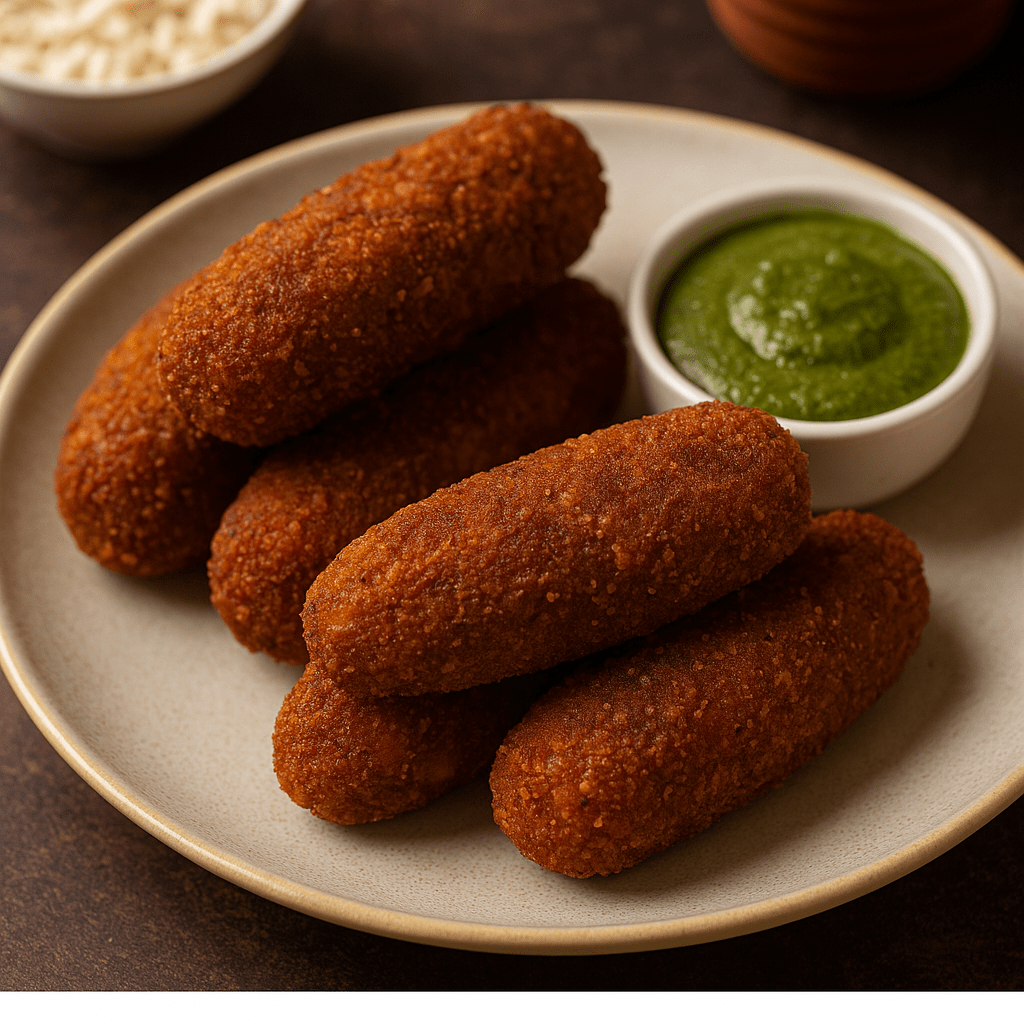
Banana Flower Cutlets (Mochar Chop) served with puffed rice and tea – a beloved Bengali snack. Banana Flower Cutlet, or Mochar Chop, is a beloved Bengali snack featuring banana blossom (mocha) combined with mashed potatoes and aromatic spices, coated in breadcrumbs and fried to golden perfection. It’s a popular street food in Bengal and a staple at Bengali eateries. Preparing the banana flower is a labor of love – cleaning and separating each floret is tedious, but the end result is well worth the effort. Each bite of Mochar Chop is filled with rich traditional flavors and a touch of nostalgia.
Growing up in a Bengali household, this delicacy often made appearances during family gatherings and festivals. I fondly recall Durga Puja evenings with food stalls serving hot mochar chops to eager visitors, wrapped in paper and topped with a dab of mustard sauce. On rainy afternoons, nothing beat enjoying these cutlets with a steaming cup of chai (tea), often accompanied by muri (puffed rice) for an authentic touch.
Traditionally, Mochar Chop is prepared niramish (without onion or garlic), making it suitable for vegetarian diets and auspicious days. Instead, ginger and a special roasted spice blend known as bhaja masala provide a depth of flavor. The banana blossom itself lends a unique earthy taste, balanced by the sweetness of raisins and the crunch of peanuts inside the cutlet. All of these are encased in a crisp breadcrumb coating that shatters deliciously with each bite. It’s a harmony of soft and crunchy, spicy and sweet – truly a classic Bengali treat.
Preparing the Banana Flower (Mocha)
Cleaning the banana flower is the first and most important step. Here are some tips to prep the banana blossom before cooking:
Grease Your Hands: Banana flower sap can stain hands and surfaces. Rub a little oil on your palms and cutting board to prevent staining while cleaning the flower.
Remove Outer Bracts: Peel off the tough purple outer petals (bracts) to reveal the yellowish-white florets underneath. As you remove each bract, pluck out the cluster of florets attached inside and collect them in a bowl. (You can reserve the large bracts – they are sometimes used as natural serving plates for the chops!)
Discard Inedible Parts: For each floret, remove two parts – the papery outer cover (tepal) and the long thin strand with a bulbous tip (the stigma/style). These parts are not digestible and can make the dish bitter, so discard them. Cleaning each little floret takes time, but it’s necessary for a tasty result.
Soak in Acidic Water: Keep a bowl of water mixed with a few tablespoons of yogurt or lemon juice (or buttermilk) nearby. As you clean and chop the banana florets, immerse them in this acidic water to prevent discoloration (the blossoms oxidize and turn dark quickly in air). A pinch of turmeric can also be added to the water.
Chop and Prepare: Once all florets (and the tender inner heart) are cleaned, chop them finely. Continue to keep the chopped banana flower submerged in the acidic water until you’re ready to cook. If not cooking immediately, you can refrigerate the soaked banana flower – it will stay good for a day or two without turning black.
Ingredients
(Makes about 8–10 cutlets)
Banana flower (mocha) – 1 medium, inner florets cleaned and finely chopped (about 2 cups worth)
Potatoes – 2 large, boiled and mashed
Turmeric powder – ½ teaspoon (divided)
Ginger – 1 inch piece, grated (about 1 tablespoon)
Green chillies – 2 to 3, finely chopped (adjust to taste)
Peanuts – ¼ cup, roughly chopped or left whole (use roasted or fried)
Raisins (kishmish) – 2 tablespoons, optional (adds a touch of sweetness)
Coconut – 2 tablespoons, finely chopped or grated (optional; traditionally used fried)
Bhaja masala – 2 teaspoons (Bengali roasted spice mix of cumin, coriander, chili, fennel, clove, cinnamon, etc.)
Sugar – 1 teaspoon (or to taste, balances bitterness)
Salt – to taste
Mustard oil – 2 tablespoons (for sautéing; substitute any cooking oil if needed)
Oil for deep/shallow frying – as needed (mustard oil or vegetable oil)
For Coating:
All-purpose flour (maida) – ¼ cup, for dusting
Gram flour (besan) – ½ cup
Rice flour – 2 tablespoons
Baking soda – a pinch
Turmeric powder – ¼ teaspoon (for batter)
Red chili powder – ¼ teaspoon (for batter, optional)
Salt – a pinch (for batter)
Breadcrumbs – ~1 to 2 cups, or as needed for coating (preferably dried bread crumbs or panko)
> Note: If you don’t have bhaja masala ready, you can use a mix of ½ tsp cumin powder, ½ tsp coriander powder, and a pinch of garam masala as a substitute. Also, using mustard oil for cooking the filling gives an authentic flavor, but you can use any neutral oil if you prefer.
Instructions
1. Boil the Banana Flower: Drain the chopped banana flower from its soaking water. In a pressure cooker, add the banana flower along with 1½ cups of fresh water, a pinch of salt, and ¼ tsp turmeric. Cook for about 3–4 whistles until the florets are tender. (Alternatively, boil the banana flower in a pot of water until soft – this may take 15–20 minutes. Add a pinch of turmeric to the boiling water to reduce the flower’s bitterness.) Once cooked, drain the water completely. Allow the banana flower to cool and then squeeze or press out any excess moisture. Set aside.
2. Boil and Mash Potatoes: While the banana flower cooks, boil the potatoes separately until they are fork-tender. Peel them and mash thoroughly in a large mixing bowl. There should be no lumps. Keep aside.
3. Prepare the Cutlet Mixture: In a pan, heat 2 tablespoons of mustard oil on medium flame. Add the peanuts and fry for a minute until they turn lightly golden. Then add the raisins and stir for a few seconds until they puff up. Add the grated ginger and sauté for 5–10 seconds until its raw aroma disappears. Now add the boiled banana flower and the mashed potatoes to the pan. Sprinkle in the bhaja masala, ½ tsp salt (or to taste), and sugar, along with an extra ¼ tsp turmeric (from the remaining divided turmeric) and the chopped green chillies. Mix everything together. Cook this mixture, stirring continuously, until it becomes fairly dry and starts to clump together (about 5–8 minutes). The goal is to evaporate excess moisture so the cutlets hold shape. Once the mixture is well-combined and dry, turn off the heat. Check seasoning and adjust salt or sugar if needed. Spread the mixture on a plate and let it cool to room temperature.
4. Shape the Cutlets: When the banana flower-potato mixture has cooled, grease your palms with a bit of oil. Take a portion of the mixture (about the size of a small lemon or 2–3 tablespoons) and shape it into a cutlet. You can make them oval or cylindrical patties about ½-inch thick, as per your preference. (In many traditional homes, Mochar Chop is shaped like a cylinder or elongated oval). Place the shaped patty on a plate and repeat with the remaining mixture to form all the chops.
5. Prepare the Coating: In a small bowl, prepare the batter for coating. Combine the gram flour (besan), rice flour, baking soda, ¼ tsp turmeric, ¼ tsp red chili powder, and a pinch of salt. Add water a little at a time, whisking with a fork or whisk, to make a smooth, thick batter with no lumps. The batter should be of pouring consistency but not too thin – it should coat the back of a spoon. Spread the ¼ cup of all-purpose flour on a flat plate for dusting. Also spread the breadcrumbs on a separate plate.
6. Bread the Cutlets: Take each shaped chop and first roll it lightly in the dry all-purpose flour, dusting off any excess. Next, dip it into the besan batter, coating all sides. Lift it out and allow any excess batter to drip off, then place it onto the breadcrumbs. Roll and press the chop in the breadcrumbs so that it gets fully coated with a layer of crumbs. The cutlet should be entirely covered in breadcrumbs for a crunchy crust. Place the breaded cutlet on a tray. Repeat this process for all the cutlets. Tip: If a cutlet feels soft or starts to break while coating, you can dip it again in batter and add a second coating of breadcrumbs to reinforce it.
7. Rest (Chill) the Cutlets: For the best results, let the breaded cutlets rest before frying. You can cover the tray and refrigerate the chops for at least 30 minutes (or even 1–2 hours) so that the coating sets. This resting time helps the breading adhere firmly and prevents the cutlets from falling apart during frying. If you’re in a hurry, even a 15-minute rest in the fridge or a cool corner will help. (You can also prepare the cutlets in advance up to this stage – refrigerate overnight and fry them fresh when needed.)
8. Fry the Cutlets: Heat oil in a deep pan or kadai for frying. If deep-frying, you need enough oil to fully submerge the cutlets (2–3 inches of oil). If shallow frying, add oil to about half the height of the cutlets and remember to flip them midway. Heat the oil on medium-high until it’s hot but not smoking (you can test by dropping a small breadcrumb – it should sizzle and rise immediately). Gently slide in a few cutlets at a time; do not overcrowd the pan, as that will reduce the oil temperature. Fry in batches if necessary. Let the chops fry on one side for about 2–3 minutes (until golden brown), then flip (if shallow frying) or gently stir if deep-frying, and cook the other side until equally golden-brown and crisp. Maintain a medium heat – too high and the outside may burn while inside remains cold, too low and the cutlets can turn soggy by absorbing oil. When the chops are evenly fried to a rich golden color, remove them with a slotted spoon. Drain excess oil by placing the fried cutlets on paper towels.
9. Serve: Your delicious Mochar Chop is ready to serve! (See Serving Suggestions below for ideas on how to enjoy these banana flower cutlets at their best.)
Frying Tips for a Perfectly Crispy Texture
To ensure your banana flower cutlets turn out crispy and not oily, keep these frying tips in mind:
Chill Before Frying: Always let the breaded chops rest (in the refrigerator or a cool place) for at least 30 minutes before frying. This helps the coating adhere better and form a firm crust, so it’s less likely to fall apart or absorb too much oil during frying.
Proper Oil Temperature: Fry at the right oil temperature (around 350°F or 175°C if you use a thermometer). If the oil is not hot enough, the cutlets will soak up oil and turn soggy; if too hot, the crumbs will burn quickly. A simple test is to drop a small piece of bread or batter into the oil – it should sizzle and rise to the top immediately. Maintain a steady medium heat while frying.
Do Not Overcrowd: Fry the chops in small batches. Adding too many at once will drop the oil temperature and lead to greasy, less crispy results. Give each cutlet enough space to fry evenly. Between batches, allow the oil to heat back up to the optimal temperature.
Golden Brown Perfection: Fry until the cutlets are a deep golden brown on all sides. They should feel crisp when tapped with a spoon. For shallow frying, gently flip each cutlet once to cook both sides evenly. For deep frying, occasional gentle stirring or flipping is enough to ensure uniform color.
Extra Crunch Option: If you want an even thicker, crunchier crust, you can double-coat your cutlets. After the first breadcrumb coating, dip them once more in the batter and coat again with breadcrumbs. This double coating will make the crust extra crunchy (just be sure the initial coating is firm so the chop doesn’t break). This is optional – a single coat is traditional and usually sufficient.
Draining: As soon as the chops are fried, remove them to a paper towel-lined plate or a wire rack to drain excess oil. Don’t stack them while hot, or they might steam and soften.
By following these tips – chilling the breaded chops, frying at proper heat, and not crowding the pan – you’ll get perfectly crisp mochar chops that stay crunchy even as they start to cool.
Serving Suggestions
Classic Bengali Style: Serve Banana Flower Cutlets hot with a side of kasundi, which is a pungent Bengali mustard sauce, for an authentic flavor. If kasundi isn’t available, serve with good old tomato ketchup. Traditionally, mochar chop is accompanied by a few slices of red onion or cucumber on the side as a refreshing bite. A sprinkle of chaat masala on top of the hot cutlets just before serving adds a lovely tangy kick.
With Chutney: You can also pair these cutlets with a green chutney, such as a coriander-mint chutney, or even a tangy tamarind-date chutney. The fresh herby taste of green chutney or the sweetness of tamarind chutney complements the savory chops nicely.
Evening Tea Snack: Mochar Chop is a favorite tea-time snack in Bengali homes. Enjoy them with a cup of hot chai (tea) in the late afternoon or evening. Bengalis often serve chops or cutlets with muri (lightly salted puffed rice) on the side – take a bite of chop, then pop some muri into your mouth for a delightful textural contrast. This combination, along with tea, brings on a wave of nostalgia and is especially comforting on a rainy day.
Party Appetizer: These cutlets make for an excellent vegetarian appetizer. You can make them slightly smaller in size and serve with toothpicks as party snacks. Garnish with sliced onions, a wedge of lemon, and fresh coriander leaves for presentation.
Serve the Banana Flower Cutlets immediately while they’re hot and crispy. Savor the medley of flavors – the subtle bitterness of the mocha balanced by aromatic spices, the crunch of the outer layer, and the surprise of peanuts and raisins in each bite. Whether you’re enjoying them on a festive evening or as a special family snack, Mochar Chop is sure to bring warmth and a taste of Bengal to your plate. Bon Appétit!

 The Pinch of Masala