Lunch & Dinner

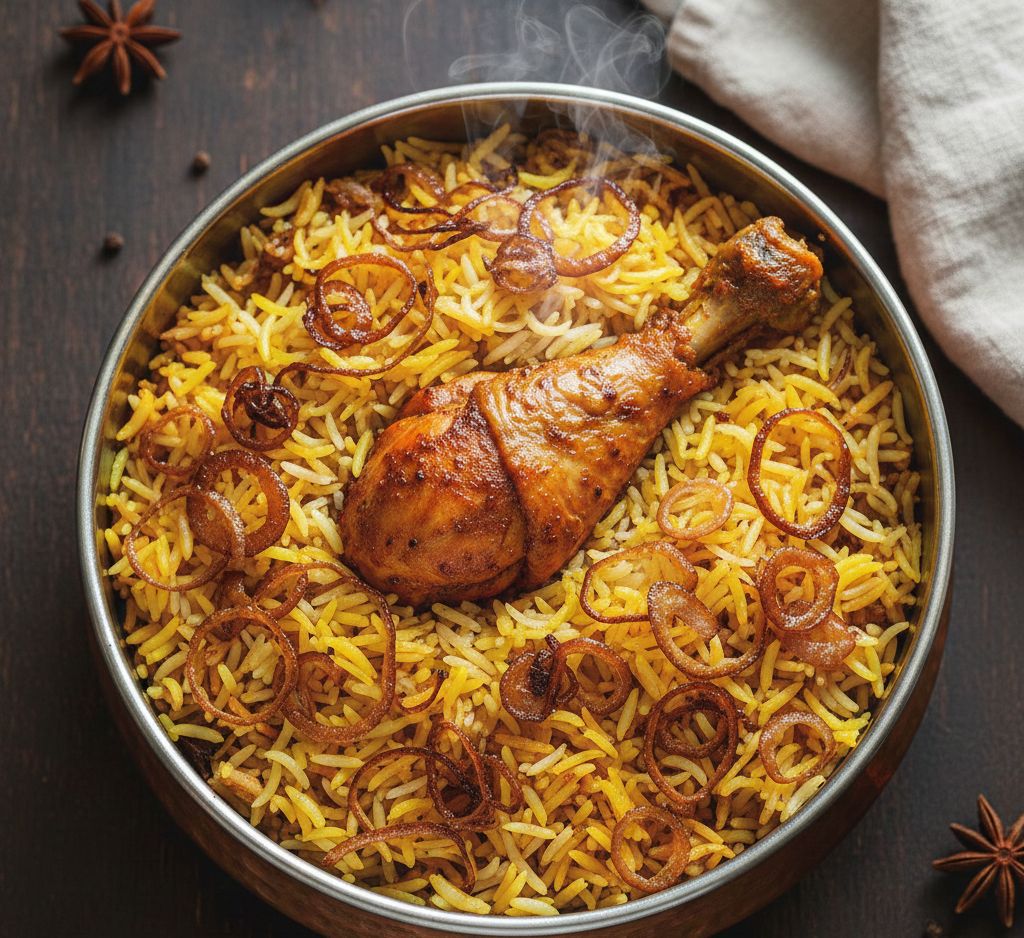
The Sunday Dum Ritual: My Mother’s Signature Chicken Biryani

In our family, Sunday mornings had a specific scent: a heady mix of warming cloves, charred onions, and the earthy perfume of aged Basmati rice. While the recipe traces back to the royal Mughlai kitchens, it was my mother who turned the Chicken Biryani into a weekly ceremony of precision. She didn’t just cook; she performed an act of “Dum” the art of trapping steam and soul inside a single pot.
I remember her standing by the sink, rinsing the rice with a gentleness reserved for something fragile. “Treat the rice like pearls,” she would say. “If you break the grain now, you break the heart of the dish”. My mother believed that a biryani was a “Parasocial Companion” on the table a dish that communicated love through the layers of spice and the tenderness of the meat.
Today, at The Pinch of Masala, we are moving away from the “instant pressure cooker” versions that turn rice into mash. We are returning to the “Quiet Luxury” of slow-reduced masalas and “Ingredient Integrity,” using the technical methods my mother perfected for a world that craves authenticity.

The secret to a biryani where the rice stands long and distinct, and the chicken is “melt-in-the-mouth” soft, lies in my mother’s two non-negotiable rules:
The “90% Rice” Rule: Most home cooks over-boil their rice. My mother insisted that the rice must be parboiled in water flavored with whole spices until it is exactly 90% cooked it should still have a “bite” when pressed between your fingers. The remaining 10% happens during the “Dum” phase, where the rice absorbs the steam from the chicken gravy below.
The “Waterless” Gravy: This is the ultimate “Digital Anthropologist” secret. My mother never added extra water to the chicken marinade. She relied on the natural juices released by the chicken and the yogurt to create a thick, concentrated masala. This prevents the biryani from becoming watery and ensures every grain of rice is coated in pure flavor.

Prep time: 30 mins | Cook time: 60 mins | Servings: 6
Diet: Halal, Gluten-Free | Cuisine: Mughlai Heritage
Ingredients:
The Rice: 2½ cups Aged Extra Long Grain Basmati Rice (soaked for 30 mins).
The Chicken: 1 kg Bone-in chicken pieces (thighs and drumsticks are best for juiciness).
The Marinade: 1 cup fresh Yogurt (Dahi), 1 tbsp Ginger-Garlic paste, 1 tbsp Kashmiri Red Chili powder, ½ tsp Turmeric, 1 tsp Biryani Masala, and a handful of fresh Mint and Cilantro.
The Aromatics: 2 large Onions (sliced and fried into golden Birista), 4 Green cardamoms, 6 Cloves, 1 stick Cinnamon, and 1 Star anise.
The Finish: 2 tbsp Ghee, a pinch of Saffron soaked in ¼ cup warm milk, and 2 boiled eggs (optional).
Instructions:
Marinate: Combine the chicken with all marinade ingredients. Let it rest in the fridge for at least 1 hour (ideally overnight) to ensure the spices penetrate the bone.
The Whole Spices: In a large pot, boil water with whole spices and salt. Add the soaked rice and cook until 90% done. Drain and set aside.
The Base: In a heavy-bottomed pot, heat ghee. Add the marinated chicken and half of the fried onions. Sauté on medium heat for 8-10 minutes until the chicken is firm.
The Layering: Spread the parboiled rice evenly over the chicken. Top with the remaining fried onions, saffron-infused milk, fresh mint, and a drizzle of ghee.
The Dum: Seal the pot tightly with aluminum foil or a dough rim and place the lid on top. Cook on the lowest heat possible for 20-25 minutes.
The Silence: Turn off the heat and let the pot sit undisturbed for 10 minutes. This allows the juices to settle and the rice to firm up.
Serve: Fluff the rice gently from the sides using a flat spoon and serve with a side of cold Raita.

The Bone Stock: In the 2026 “Use-Up” economy, we value every scrap. If you are using boneless chicken for your biryani, do not throw away the bones! Boil them with coriander stems and ginger scraps to create a quick stock. Use this stock instead of plain water when boiling your rice to infuse it with a 10x deeper savory flavor.


starters

Mixed Vegetable Soup: My Mother’s Winter Medicine

In the winter months, our kitchen didn’t just smell like food; it smelled like protection. While the tradition of a warm bowl began with my grandmother, it was my mother who turned the Mixed Vegetable Soup into a ritual of healing. To her, a soup wasn’t just a liquid meal; it was a way to “document the season” in a single pot.
I remember her standing at the wooden counter, her knife-work precise and rhythmic. She believed that the way you chopped a vegetable determined its soul in the broth. “If the carrots are bigger than the beans,” she would say, “the soup has no harmony.” My mother viewed her soup as a “Parasocial Companion” a warm, reliable presence that comforted us during winter colds and rainy nights .
Today, at The Pinch of Masala, we are stepping away from the “novel-length menus” of the modern era and returning to the “Quiet Luxury” of simple, technical, and honest cooking . This is my mother’s medicine, refined for a world that needs intention and longevity .

The most common mistake in home-style soups is a flat, watery flavor. To achieve a “Restaurant Style” depth at home, you must follow my mother’s two non-negotiable rules:
The High-Heat Bloom: Most people boil their vegetables in water immediately. My mother insisted on sautéing the aromatics ginger, garlic, and spring onion whites and then the chopped veggies on a high flame for 2–3 minutes. This “sear” brings out the natural sugars and creates a smoky aroma that serves as the flavor base.
The Starch Integrity: In 2026, we are seeing a move toward “real food sources” rather than “powders and potions” . Instead of using cornstarch or artificial thickeners, my mother would often blend a single boiled potato into a smooth paste and stir it back into the pot. This creates a silky, hearty consistency while remaining 100% natural.

Prep time: 15 mins | Cook time: 25 mins | Servings: 4
Diet: Vegan, Gluten-Free | Cuisine: Indian Homestyle

Ingredients:
The Medley (1.5 to 2 cups): Finely chopped carrots, french beans, cabbage, and sweet corn.
The Aromatics: 1 tbsp garlic (minced), ½ tbsp ginger (minced), and 2 sprigs of spring onion whites.
The Liquid: 3 cups of Scrap Stock (see below) or water.
The Seasoning: ½ tsp black pepper powder, salt to taste, and a pinch of sugar (to balance the acidity).
The Finish: 1 tsp vinegar or lemon juice and a handful of fresh coriander.
Instructions:
The Chop: Rinse all vegetables under running water and chop them into uniform, small pieces. Uniformity ensures even cooking and prevents some veggies from turning mushy while others remain raw.
The Wok Sear: Heat 1 tbsp oil or butter in a heavy pot. Sauté the ginger, garlic, and spring onion whites for 1 minute until fragrant but not browned.
The Flavor Bloom: Add the rest of the chopped vegetables. Crank the heat to high and fry for 2–3 minutes. This brings out the deep, earthy aroma.
The Simmer: Pour in the stock or water. Bring to a rolling boil, then lower the flame. Cover and cook for 10–12 minutes until the veggies are tender but still have a slight “bite”.
The Natural Bind: If you prefer a thicker soup, stir in your blended potato paste (or a cornstarch slurry) and cook until it turns glossy and thick.
The Polish: Add salt, sugar, and crushed black pepper. Turn off the heat and stir in the vinegar or lemon juice.
Serve: Ladle into warm bowls and garnish with coriander. Serve bubbling hot, perhaps with a side of toasted croutons.

The Scrap Stock: In the 2026 “Use-Up” economy, we never cook with plain water. Collect your onion skins, carrot ends, and celery stalks throughout the week. Boil them in water for 20 minutes with a bay leaf to create a homemade vegetable stock. This “zero-cost” liquid adds an enzymatic complexity that transforms a simple soup into a gourmet experience.

Snacks

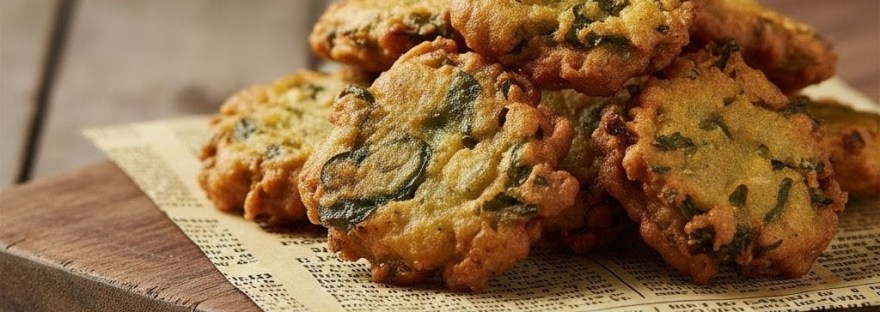
Heritage Palak Pakora: My Mother’s Rainy Afternoon Ritual

In our family, the first scent of a monsoon rain didn’t come from the earth; it came from the kitchen. I remember my mother reaching for a large bunch of fresh palak the moment the clouds turned charcoal. To her, Palak Pakora wasn’t just a snack; it was a sensory response to the weather.
She believed that spinach had a “memory” of the rain, and frying it was the only way to lock that freshness in. I can still see her standing by the stove, her bangles clinking as she hand-tossed the leaves in a golden mantle of chickpea flour. “Never use a spoon to mix,” she would tell me. “Your fingers need to feel if the leaves are happy.” She taught me that the secret to a perfect pakora lay in the “Quiet Luxury” of a batter that whispered rather than screamed thin enough to see the green, but thick enough to crunch.
Today, at The Pinch of Masala, we are honoring her ritual by avoiding the heavy, doughy fritters of street stalls. We are returning to the “Whole Leaf” heritage style that celebrates the “Ingredient Integrity” of the spinach itself.

The most common grievance with Palak Pakora is that they turn soft and soggy within minutes. To achieve my mother’s “Eternal Crunch,” you must master the Moisture War:
The “No-Water” Rule: This is the ultimate “Digital Anthropologist” secret. Do not add water to your batter. My mother would salt the shredded spinach and let it sit for 5 minutes. The salt creates a hypertonic environment, drawing out the natural juices of the leaves. You then add the besan (gram flour) directly to these juices. This ensures the batter is made of 100% spinach essence, making it impossible for the pakoras to turn soggy.
The Rice Flour Catalyst: In 2026, we value “Technical Excellence”. Adding exactly two tablespoons of rice flour acts as a moisture-wicking agent, creating a glass-like crunch on the exterior that protects the tender “Fibremaxxing” leaves inside.

Prep time: 10 mins | Cook time: 15 mins | Servings: 4
Diet: Vegan, Gluten-Free | Cuisine: North Indian Street Food

Ingredients:
250g Fresh Palak (Spinach): Roughly chopped into wide ribbons.
1 cup Besan (Gram Flour): Sifted for a smooth texture.
2 tbsp Rice Flour: For the signature “Heritage Crunch.”
The Aromatics: 1 Large Onion (thinly sliced), 1 inch Ginger (grated), 2 Green Chillies (chopped).
Spices: 1 tsp Cumin seeds (Jeera), ½ tsp Turmeric, 1 tsp Carom seeds (Ajwain essential for digestion), and Salt to taste.
Fat: Oil for deep frying (Cold-pressed Peanut or Mustard oil is preferred for authenticity).
Instructions:
The Salt Ritual: Place the spinach and sliced onions in a large bowl. Sprinkle with salt and ajwain. Massage the leaves gently with your fingers and let them rest for 5–8 minutes until they look “sweaty.”
The Dry Mix: Add the ginger, chillies, and dry spices.
The Coating: Sift in the besan and rice flour. Mix with your hands. The moisture from the spinach will begin to form a thick, sticky paste that coats the leaves. Do not add water.
The Temperature Test: Heat oil in a heavy-bottomed kadhai. Drop a tiny bit of batter; if it rises immediately with a sizzle, the oil is ready.
The Drop: Take a small, irregular clump of the mixture and drop it into the oil. Do not shape them into perfect balls; the craggy edges are where the crunch lives!
The Gold Standard: Fry on medium heat for 3–4 minutes, turning once, until they are a deep, sun-kissed golden brown.
Serve: Drain on a paper towel and serve immediately with tangy Tamarind Chutney or a steaming glass of Masala Chai.

The “Pakora Choora” (Leftover Crumbs): In the 2026 “Use-Up” economy, nothing is wasted. My mother never threw away the tiny crispy bits of batter left at the bottom of the pan (the choora). Save these in an airtight jar. They make the perfect “zero-waste” topping for your morning Poha or a bowl of Dal, adding a concentrated hit of spice and texture.

Lunch & Dinner

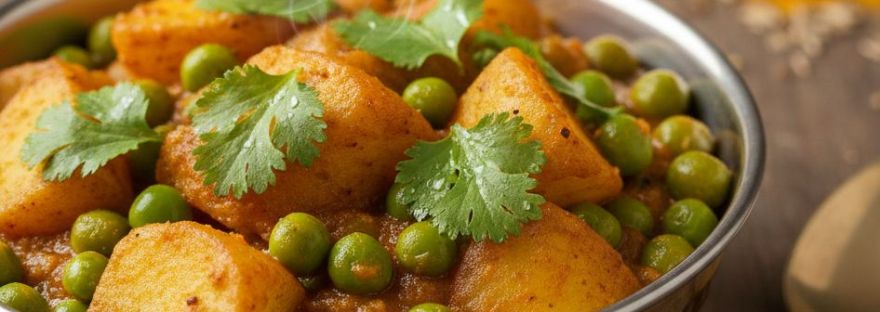
Aloo Matar: My Mother’s Winter Afternoon in a Bowl

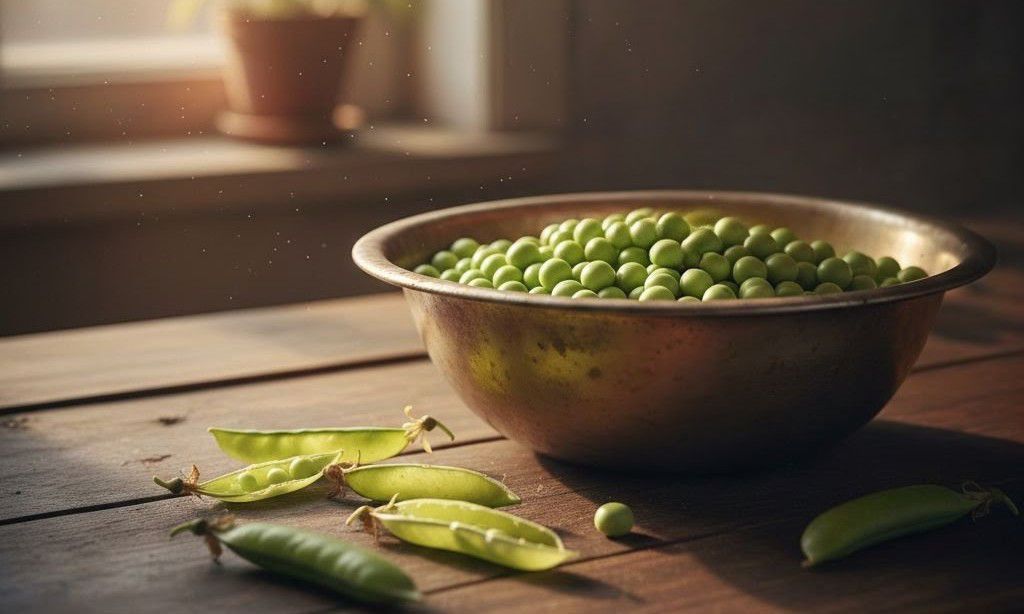
In our house, the definitive sound of winter wasn’t the whistling wind; it was the steady pop-pop-tinkle of fresh green peas hitting a steel bowl. I remember my mother sitting on a low stool in the afternoon sun, a mountain of pea pods in her lap. She never rushed the task. To her, shelling peas was a visual meditation a way to ensure that only the sweetest, most “intentional” grains made it into the pot.
“A potato is just earth,” she would say, “but the pea is the spirit.” She taught me that the secret to a royal Aloo Matar wasn’t in the spices, but in the hierarchy of the cook. You had to respect the potato’s need for a headstart and the pea’s delicate desire to remain vibrant. This dish is a “Parasocial Companion” on our lunch table a warm, reliable hug that has survived generations of winter Sundays .
Today, at The Pinch of Masala, we are moving away from the “frozen-bag” culture and returning to the “Quiet Luxury” of hand-shelled winter bounty and my mother’s “Golden Sear” technique.

The most common mistake in Aloo Matar is ending up with a mushy, greyish mash. To keep your sabji looking “emerald and gold,” you must follow my mother’s two technical rules:
The “Golden Sear” Rule: Never boil the potatoes in the gravy from the start. You must sauté the potato cubes in oil or ghee until they develop a thin, golden crust. This “sealing” prevents the starch from leaking into the gravy, keeping it clean and allowing the potatoes to retain their shape.
The “Steam Trap” Finish: In 2026, we prioritize “Simplicity with Purpose”. My mother would never add excess water. She would cover the pan with a tight-fitting lid and cook the vegetables in their own juices. This “Steam Trap” method concentrates the natural sugars of the winter peas, making them taste like candy rather than water.

Prep time: 20 mins | Cook time: 20 mins | Servings: 4
Diet: Vegan, Gluten-Free | Cuisine: North Indian Heritage

Ingredients:
2 cups Fresh Green Peas: Hand-shelled winter peas are best.
3 Medium Potatoes: Peeled and diced into ¾-inch cubes.
The Aromatics: 1 Large Onion (finely chopped), 1 inch Ginger (grated), 3 Garlic cloves (crushed).
The Base: 2 Ripe Tomatoes (pureed).
Fat: 2 tbsp Mustard Oil or Ghee.
Spices: 1 tsp Cumin seeds (Jeera), ½ tsp Turmeric (Haldi), 1 tsp Coriander powder, ½ tsp Red Chili powder, and ½ tsp Garam Masala.
The Finish: A handful of fresh Coriander leaves and a squeeze of Lemon juice.
Instructions:
The Sear: Heat oil in a heavy pan. Add the potatoes and a pinch of salt. Sauté on medium-high for 5–7 minutes until the edges are golden brown. Remove and set aside.
The Bloom: In the same oil, add cumin seeds. Once they sizzle, add the onions. Sauté until they are a deep translucent pink.
The Masala Base: Add the ginger and garlic. Sauté for 30 seconds, then pour in the tomato puree and dry spices. Cook until the oil begins to separate from the sides.
The Union: Add the seared potatoes and the fresh peas. Toss well to coat every piece in the masala.
The Steam Trap: Add only ¼ cup of water (or our Pod Stock, see below). Cover tightly and cook on low heat for 10–12 minutes.
The Reveal: Check if the potatoes are fork-tender. If the gravy is too thin, cook open for 2 minutes to thicken.
Final Touch: Stir in the garam masala and coriander. Squeeze lemon juice just before serving to “brighten” the earthy potatoes.

The Pod Stock: In the 2026 “Use-Up” economy, we value “Ingredient Integrity” . Do not throw away those fresh, green pea pods! Wash them thoroughly and boil them in water with a pinch of salt for 15 minutes. Strain this liquid and use it as the “Pod Stock” for your gravy. It adds a concentrated green sweetness and extra fiber, aligning with the current “Fibremaxxing” movement.

Lunch & Dinner

The Gemstone Pulao: A Mother’s Sunday Ritual of Patient Grains

In our house, Sunday wasn’t Sunday without the scent of cloves and cardamom drifting from the kitchen. While the recipe originally belonged to my grandmother, it was my mother who turned the Veg Pulao into a weekly masterclass of patience. She called it the “Garland of the Garden.” To her, a pulao wasn’t just a side dish; it was a sign of respect for the grain.
I remember her standing over the sink, rinsing the Basmati with a level of focus usually reserved for prayer. “If you don’t wash the starch away,” she’d say, “you’re just making khichdi.” My mother believed that every grain should be a separate pearl a “Parasocial Companion” on the plate that respected its neighbors. She taught me that the secret to a royal pulao wasn’t in the number of vegetables, but in how you treated the rice.
Today, at The Pinch of Masala, we are reclaiming the art of the non-mushy pulao. This is a return to “Quiet Luxury” using aged rice, hand-bloomed spices, and the slow-cook method my mother perfected.

The primary reason home pulao turns into a soggy mash is that the rice is often boiled rather than “toasted.” My mother insisted on two non-negotiable technical steps:
The Sauté Rule: After soaking and draining, you must sauté the raw grains in ghee for 1 to 2 minutes. This coats each grain in fat, creating a moisture barrier that ensures they stay separate and fluffy after cooking.
The Resting Period: 2026 food media emphasizes the “Resting Period” as a hallmark of quality. Once the heat is off, do not touch the rice for at least 10 to 15 minutes. This allows the steam to redistribute, naturally firming up the grains so they don’t break when fluffed.

Prep time: 20 mins | Cook time: 20 mins | Servings: 4
Diet: Vegan-Optional, Gluten-Free | Cuisine: North Indian Heritage
Ingredients:
1.5 Cups Aged Basmati Rice: Grains should be at least 2 years old for maximum length.
2.5 Cups Liquid: Use our Scrap Stock (see below) for a 10x deeper flavor.
The Medley: ½ cup carrots (diced), ½ cup green peas, ½ cup beans, and 1 medium potato (cubed).
The Whole Bloom: 2 Bay leaves, 1-inch Cinnamon stick, 4 Cloves, 3 Green cardamoms, and 1 tsp Cumin seeds (Jeera).
The Green Aroma: A handful of fresh Mint (Pudina) and Coriander.
Fat: 2 tbsp Ghee (Clarified Butter) or oil.
Acid: 1 tsp Lemon juice (helps keep grains bright white and fluffy).
Instructions:
The Purge: Rinse the rice 3-4 times until the water runs completely clear to remove excess starch. Soak for 20-30 minutes.
The Bloom: Heat ghee in a heavy pot. Add the whole spices and allow them to sizzle and release their oils.
The Base: Sauté sliced onions until golden brown. Add 1.5 tsp ginger-garlic paste and cook until the raw aroma disappears.
The Gemstones: Add the veggies and mint. Sauté for 3 minutes to coat them in the flavored fat.
The Rice Toast: Add the drained rice. Stir gently for 2 minutes, ensuring every grain is glistening with ghee.
The Simmer: Pour in the stock (or water), salt, and lemon juice. Bring to a boil, then turn the heat to the lowest setting. Cover with a tight-fitting lid.
The Silence: Cook for 8-10 minutes until water is absorbed. Turn off the heat. Do not open the lid.
The Reveal: Let it rest for 10-15 minutes. Fluff gently with a fork and serve.

The Scrap Stock: Never cook rice in plain water again. In the 2026 “Use-Up” economy, we value onion skins, carrot ends, and coriander stems. Boil these scraps in water for 20 minutes with a pinch of salt to create a savory vegetable stock. This adds a deep umami that plain water simply cannot match.

Odia Recipe

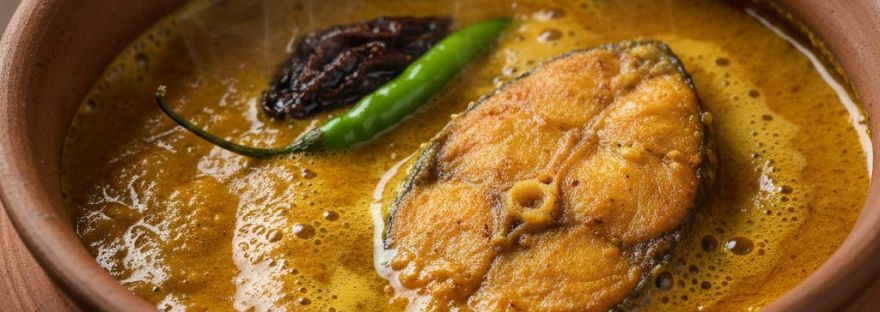
Machha Besara: The Pungent, Tangy Soul of an Odia Winter Lunch

Introduction
In Odisha, the kitchen is more than a place to cook; it is a time machine. One whiff of mustard oil heating to its smoking point and I am transported back to the sprawling courtyards of central Odisha. I remember my grandmother (Aai) overseeing the summer ritual of making Ambula raw mangoes combined with rock salt and chili flakes, left to mature under the sun for a week until they turned dark and intensely sour.
Machha Besara (Fish in Mustard Gravy) is the dish that honors that effort. It is bold, tangy, and unapologetic. Unlike Bengali fish curries which are often sweeter, the Odia Besara is defined by its sharp, pungent kick and the earthy depth that only stone-ground mustard can provide.
Today, we are documenting this heirloom technique. We are stepping away from the mild and returning to the “Quiet Luxury” of a perfectly balanced, sharp mustard broth.[1]
The “Digital Anthropologist” Technical Secret: The Bitterness Rule
The most common mistake when making Besara is a bitter gravy. To ensure your curry is aromatic and not acrid, you must respect the mustard:
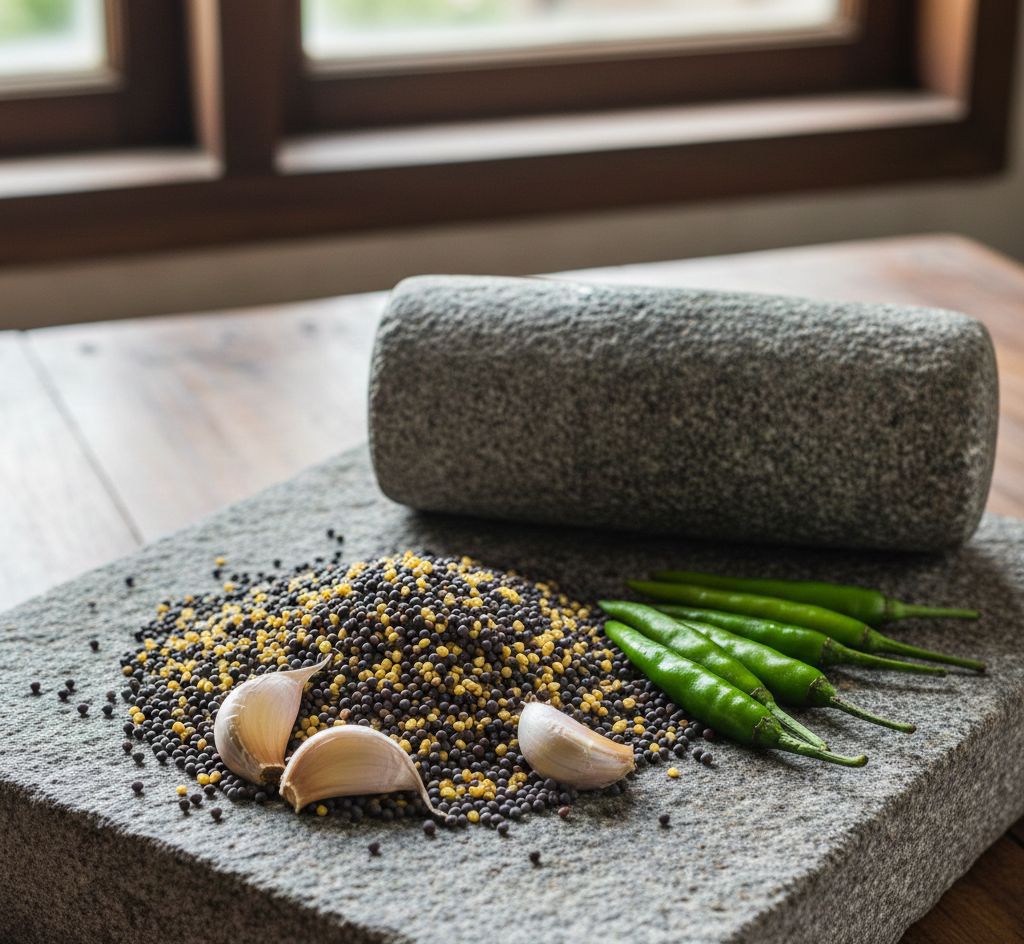
The Blend: Always grind mustard seeds with green chilies and a bit of salt. The chili prevents the mustard from oxidizing and turning bitter.
The Pulse: Use short pulses with minimal water until you get a coarse paste. Over-grinding in a high-speed blender generates heat, which releases the bitter enzymes. 
The Mellowing: Once the paste is added to the water, it must be cooked on low heat for at least 15 minutes to allow the sharp, raw smell to mellow into a savory aroma. 
The Recipe Card
Prep time: 20 mins | Cook time: 30 mins | Servings: 4
Cuisine: Odia Heritage | Key Tool: Heavy-bottomed Kadhai

Ingredients:
500g Rohu or Catla Fish: Fresh-cut steaks, washed and patted dry. 
The Mustard Paste (Grind together):
2 tbsp Black Mustard seeds (soaked for 15 mins).
1 tbsp Yellow Mustard seeds (for a milder balance).
5-6 cloves of Garlic.
2-3 Green Chillies.
The Aromatics: 1 tsp Pancha Phutana (Odia 5-spice mix), 1 medium Tomato (chopped), 2 Green Chillies (slit).
The Soul: 2 pieces of Ambula (dried salted mango). Substitute: 1 tsp Amchur or a small ball of Tamarind.
Spices & Fat: 4 tbsp Mustard Oil (essential!), ½ tsp Turmeric, ½ tsp Red Chili Powder, Salt to taste.
Instructions:
Marinate & Fry: Rub the fish with salt and turmeric. Heat mustard oil in a pan until it reaches the smoking point, then cool it slightly. Fry the fish pieces until they are a deep golden color on both sides. Set aside.
The Tempering: In the same oil, add the Pancha Phutana. Once it splutters, add the chopped tomatoes and green chilies. Sauté until the tomatoes turn mushy.
The Gravy Base: Add the prepared mustard paste, turmeric, and chili powder. Add 1.5 cups of water immediately. Do not fry the mustard paste directly in oil, as this will make it bitter.
The Simmer: Cover and cook the gravy on low heat for 15 minutes. This is the most important step for the flavor to develop.
The Finish: Add the fried fish and the Ambula. Simmer on low for another 10 minutes so the fish absorbs the tang of the mango.
Serve: Garnish with fresh coriander. Serve hot with plain steamed rice the only proper accompaniment for Besara.


The “Pinch of Thrift” Tip (Zero Waste)
Repurposed Paste: If you find you have ground more mustard paste than needed, do not discard it. In the 2026 “Use-Up” economy, we value concentrated flavor bases.[2] Use the leftover paste to make “Besara Aloo Stir-fry” the next day. Simply toss boiled potato cubes in the paste with a splash of mustard oil for a quick, pungent side dish.

Dessert

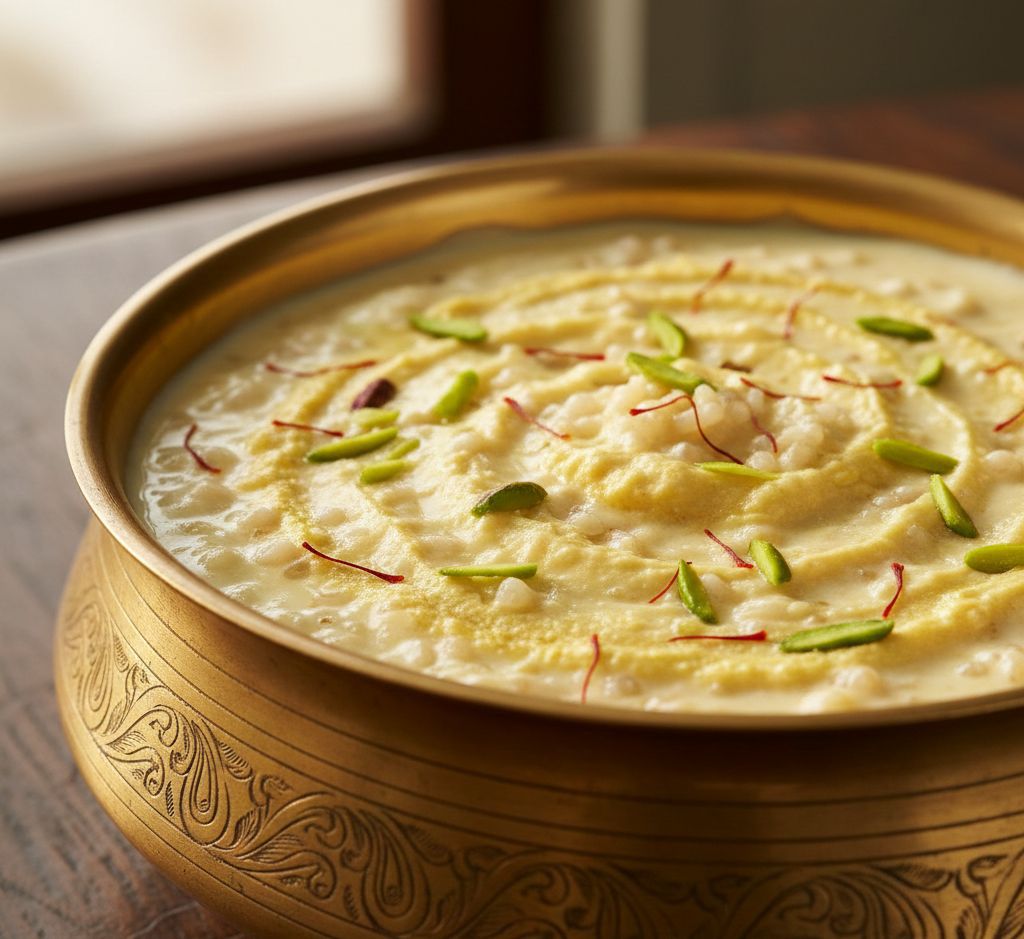
Heritage Rice Kheer: The 2,500-Year-Old “Sweetness of Prosperity”

In our home, the smell of Rice Kheer slow-bubbling on the stove was the true soundtrack of a celebration. My grandmother (Nani) didn’t just see it as a dessert; she saw it as a blessing. She often reminded us that in the ancient texts of Ayurveda, this sweetened milk preparation then called Rasala was considered medicine for the soul.
I remember her standing by the heavy brass uruli, her wooden ladle moving in slow, meditative circles. She never rushed the milk. “Kheer is not a dish of ingredients,” she would say, “it is a dish of patience.” Whether it was for a child’s first solid food ceremony (Annaprashana) or the peak of Diwali, the Kheer was the anchor.
Today, at The Pinch of Masala, we are documenting the authentic, slow-cooked method. We are moving away from the “instant” condensed-milk hacks of the last few years and returning to the “Quiet Luxury” of milk reduced by time, heat, and devotion.
The “Digital Anthropologist” Technical Secret: The Starch Secret
To achieve a kheer that is “creamy like a cloud” rather than a watery mess, you must choose the right rice. While many use long-grain Basmati, Nani preferred medium-grain white rice or broken Basmati (Tukda).
Why? Long grains are designed to stay separate. For Kheer, we want the rice to “bleed” its starch into the milk, naturally thickening the pudding without the need for artificial thickeners.
The Ghee Toasted Start: Before adding the rice to the milk, lightly fry it in a teaspoon of ghee until the grains turn translucent. This adds a nutty depth that defines heritage Kheer.
****
Prep Time: 15 mins | Cook Time: 45 mins | Servings: 4-6
Diet: Vegetarian, Gluten-Free | Cuisine: North Indian Heritage

Ingredients:
1 Liter Full-Fat Milk: Organic cow or buffalo milk is preferred for the richest “malai” texture.
¼ Cup Short-to-Medium Grain Rice: (e.g., Gobindobhog or Sona Masoori) washed and soaked for 20 minutes.
1 tsp Ghee: For roasting the rice.
½ Cup Sugar: Adjust to taste. Raw sugar or jaggery powder works too (add jaggery only after the kheer cools slightly to avoid curdling).
4-5 Green Cardamom Pods: Freshly crushed.
10-12 Saffron Strands: Soaked in 2 tbsp warm milk.
¼ Cup Sliced Nuts: Almonds, pistachios, and cashews.
Instructions:
The Nutty Base: Heat ghee in a heavy-bottomed pot. Add the soaked and drained rice. Sauté for 3 minutes until the rice smells toasted and looks translucent.
The Simmer: Pour the milk into the pot. Bring to a rolling boil, then immediately turn the heat to its lowest setting.
The Slow Reduction: Let the milk simmer for 30-40 minutes. Stir every 4-5 minutes to prevent the rice from sticking to the bottom.
The “Malai” Scraping: As the milk boils, a layer of cream will form on the sides of the pot. Use your spatula to scrape this back into the milk. This is the secret to a thick, “Rabri-like” consistency.
Flavoring: Once the rice is so soft it mashes easily between your fingers and the milk has reduced significantly, add the sugar, saffron milk, and crushed cardamom.
The Finish: Simmer for another 5-8 minutes until the sugar dissolves and the kheer reaches your desired thickness. Remember, Kheer thickens further as it cools.
The Crunch: In a tiny pan, fry your nuts in a drop of ghee until golden and pour them over the Kheer before serving.


The “Pinch of Thrift” Tip (Zero Waste)
Liquid Gold Garnish: If you have the creamy residue that has slightly “burnt” or caramelized at the very bottom of the pot (known as khurchan), do not discard it! Scrape it out carefully and serve it right on top of a single bowl. In 2026’s “Use-Up” economy, these caramelized bits are considered the “truffles” of the Indian kitchen pure, concentrated flavor.

Breakfast

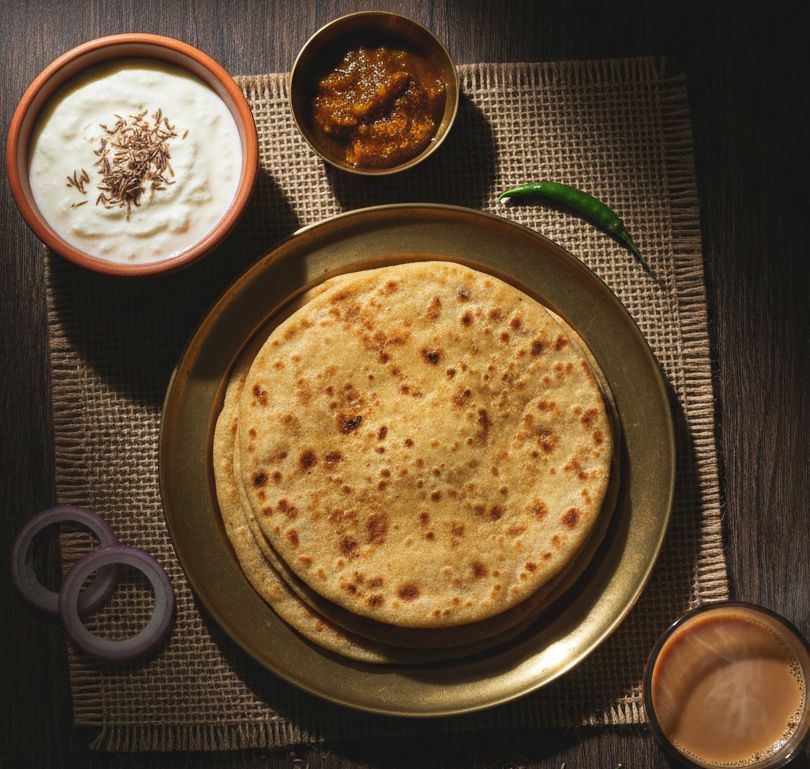
Gobi Paratha: The Art of the Non-Soggy Punjabi Winter Breakfast

In a Punjabi household, the sound of winter isn’t the wind it’s the rhythmic skritch-skritch of a grater against a fresh head of cauliflower.
Winter gobi is different. As the season shifts, the cauliflower sweetens, becoming tender and fragrant in a way that summer gobi never quite manages. I remember my grandmother (Nani) sitting in the kitchen as the morning fog lifted, her hands white with flour. She didn’t just make recipes; she performed rituals. One bite of her Gobi Paratha with its crisp, ghee-brushed edges and a soft, spiced center was proof that love really could be kneaded into dough.
But she was also a scientist of the kitchen. She knew that cauliflower is 92% water. If you don’t respect that moisture, your paratha will tear, your tawa will smoke, and your breakfast will be a mess. Today, I’m sharing her three-step secret to the perfect, dry, flavor-packed stuffing that never leaks.

To master the Gobi Paratha, you must win the war against moisture. Here are Nani’s golden rules:
The Room Temp Rule: Never grate cold cauliflower straight from the fridge. It releases more juice. Let it come to room temperature first.
The Salting Ritual: After grating, add a pinch of salt and wait 15 minutes. The salt draws the water out. Then, place the gratings in a muslin cloth and squeeze with all your might. That “cauliflower water” is liquid gold keep it for your dough!
The Ajwain Touch: Always add a pinch of Ajwain (carom seeds). Not only does it add a January-coded warmth, but it also helps digest the cauliflower.

Prep Time: 20 mins | Cook Time: 25 mins | Servings: 4

Ingredients:
For the Dough: 2 cups Whole Wheat Atta, a pinch of salt, 1 tsp ghee, and the reserved cauliflower water (or plain water).
For the Stuffing:
2 cups Cauliflower (grated and squeezed dry).
1 tsp Ajwain (carom seeds).
1 tbsp Ginger (finely chopped).
2 Green Chillies (chopped).
½ tsp Amchur (dry mango powder) for tang.
½ tsp Garam Masala.
A handful of Fresh Coriander (chopped).
For Roasting: Ghee or butter.
Instructions:
Knead: Mix flour, salt, and ghee. Gradually add water to form a soft, pliable dough. Let it rest for 15 minutes this “relaxes” the gluten so it stretches without tearing.
Prep Stuffing: Mix the dried cauliflower with spices and herbs just before you are ready to roll. If the mixture sits too long, it will start releasing water again.
Stuff: Take a lemon-sized ball of dough, flatten it, and place 2-3 tbsp of stuffing in the center. Pleat the edges together, pinch off the excess dough, and seal it tight.
Roll: Sprinkle some flour and roll gently. Use a “left-forward, right-backward” motion to spread the filling evenly to the edges.
Roast: Place on a medium-hot tawa. Once bubbles appear, flip it. Apply ghee to both sides and press down with a spatula until golden-brown spots appear and the edges are crisp.
Serve: Top with a blob of white butter. Serve with chilled dahi (yogurt) and tangy lemon pickle.

Stalk Sabzi: Don’t discard the thick cauliflower stalks! In the 2026 “Use-Up” economy, we value every part of the plant. Peel the tough outer layer of the stalks, dice the tender inner core, and sauté them with mustard seeds and turmeric for a crunchy side dish the next day.

Lunch & Dinner

Lehsuni Palak: The Emerald Ritual of my Grandmother’s Winter Kitchen

Introduction & Story
There is a specific kind of “Quiet Luxury” in a pile of fresh winter spinach.[1] In our home, it was never just a bag of leaves from a supermarket; it was a morning ritual. I remember my grandmother sitting in the winter sun, a colander between her knees, meticulously sorting through bunches of dark, earthy palak.
“The soil gives it soul,” she would say, explaining why we never threw away the tender stems. She believed that the stems held the “sweetness,” while the leaves held the “strength.”
Today’s recipe, Lehsuni Palak (Garlicky Spinach), is a tribute to that simplicity. It isn’t a heavy, cream-laden Palak Paneer. It is a rustic, gravy-based curry that allows the vibrant, slightly metallic taste of fresh spinach to take center stage, punctuated only by the aggressive, smoky aroma of roasted garlic. This is food that feels like an intentional hug nourishing, sustainable, and built to last.[2]
The “Digital Anthropologist” Technical Secret: Retaining the Emerald
In 2026, we value “Technical Excellence” in the kitchen.[3] The most common mistake in making spinach is overcooking it until it turns a dull, swampy brown. To keep your sabji a brilliant, “Insta-worthy” emerald green, you must master the Blanch and Shock technique:
Blanch: Submerge the leaves in boiling salted water for exactly 2 minutes. Adding a pinch of sugar or baking soda helps lock in the chlorophyll.
Shock: Immediately move the leaves to an ice-water bath. This “shocks” the cooking process to a halt, preserving the texture and the vibrant hue.
The Recipe Card
Prep time: 15 mins | Cook time: 15 mins | Servings: 4
Course: Side Dish | Cuisine: North Indian (Dhaba Style)

Ingredients:
1 Large Bunch Fresh Palak (Spinach): Cleaned and washed thoroughly.
The “Lehsun” (Garlic): 15-20 cloves total. (10 cloves ground into the paste, 5-10 sliced for the final tempering).
The Base Paste: 2 Tomatoes, 2 tbsp Roasted Peanuts, 1 inch Ginger, and 2 Green Chillies.
Thickener: 2 tbsp Besan (Gram Flour)  this provides a rustic “Dhaba” heartiness without the need for cream.
Fat: 2 tbsp Ghee (Clarified Butter) for the richest aroma.
Spices: ½ tsp Cumin seeds (Jeera), a pinch of Hing (Asafoetida), ½ tsp Turmeric, 1 tsp Coriander powder, and Salt to taste.
Instructions:
Prep the Green: Blanch and shock the spinach as described above. Grind half of the spinach into a smooth puree and roughly chop the other half to maintain texture.
The Base: Blend the tomatoes, peanuts, ginger, and 10 garlic cloves into a smooth “Red Puree”.
Sauté: Heat 1 tbsp oil in a kadai. Add cumin and hing. Once they splutter, add the Red Puree and cook until the oil starts to separate.
The Nutty Secret: Add the besan (gram flour) and sauté for 2 minutes until it smells aromatic and nutty.
Combine: Add the spinach puree, the chopped leaves, and the dry spices. Add ½ cup water to adjust the consistency. Cover and simmer for 3-5 minutes so the flavors meld.
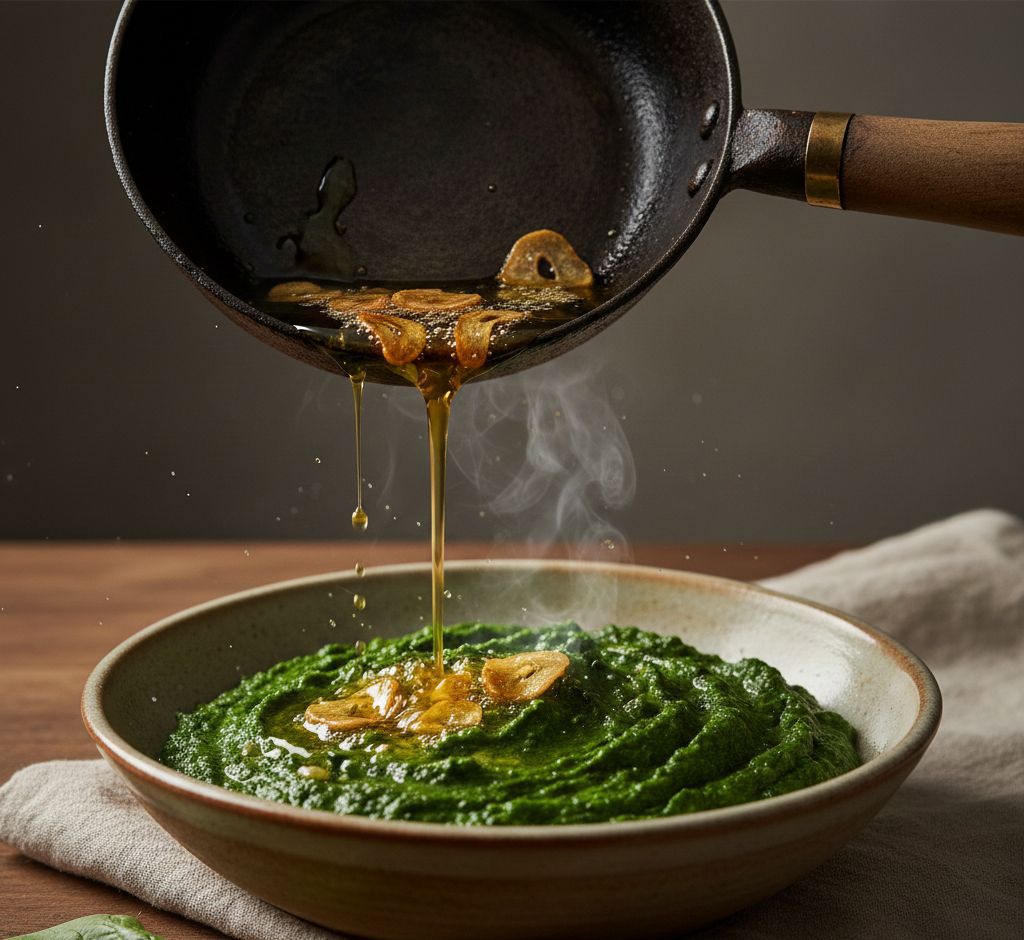
The Final “Lehsuni” Tadka: This is the soul of the dish. Heat ghee in a small pan. Add the sliced garlic and fry until it turns deep golden brown (not black). Add a broken dry red chili.
Serve: Pour this sizzling garlic ghee over the spinach and serve immediately with hot Rotis or Makki ki Roti.


The “Pinch of Thrift” Tip (Zero Waste)
The Stem Stock: Don’t discard the fibrous spinach stems! In 2026’s “Use-Up” economy, we value every scrap.[3] Finely chop the tender stems and sauté them along with your onions or tomatoes. They add a wonderful crunch and a concentrated dose of fiber fitting perfectly into the “Fiber Revolution” trend.

Snacks, starters

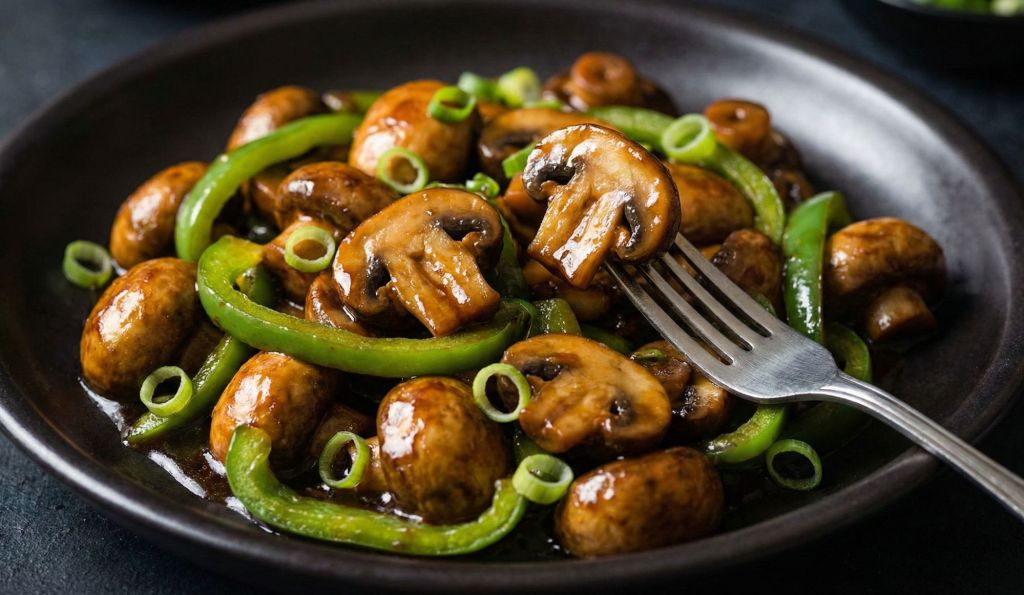
Restaurant-Style Chilli Mushroom: The Vegetarian Answer to “Chilli Chicken”

Introduction
If you walk into any classic Indo-Chinese restaurant in India, from the legendary spots in Kolkata’s Tangra to the busy streets of Mumbai, the aroma is unmistakable. It’s a mix of smoky soy sauce, sizzling garlic, and high-heat wok frying.
While Chilli Chicken gets all the glory, the Chilli Mushroom is the unsung hero of the “Desi Chinese” menu. When made correctly, button mushrooms mimic the texture of meat juicy on the inside, enclosed in a crispy, spicy batter that soaks up that glossy, umami-laden sauce.
But here is the problem: Homemade Chilli Mushroom often turns into a soggy mess. The mushrooms release water, the batter falls off, and the crunch disappears.
Today, I am sharing the Restaurant Secret to keeping them crispy. This recipe delivers that sticky, spicy, dry version that is perfect as a party starter.
The “Crispy” Secret (The Double Coat)
Mushrooms are 90% water. To get that restaurant crunch, you need to follow two rules:
Do Not Wash (Wipe Instead): If you wash mushrooms under a tap, they act like sponges. Wipe them clean with a damp cloth instead.
The Flour Ratio: We use a mix of Cornflour (Corn Starch) for crunch and Maida (All-Purpose Flour) for binding. If you use only cornflour, it gets too hard; only maida, and it gets soft. The balance is key.
The Recipe Card
Prep time: 15 mins | Cook time: 15 mins | Servings: 2-3

Ingredients:
The Crispy Mushrooms:
200g Button Mushrooms: Cleaned and cut into quarters (keep small ones whole).
3 tbsp Cornflour: The crisping agent.
2 tbsp Maida (All-Purpose Flour): The binding agent.
½ tsp Black Pepper Powder: Freshly crushed.
½ tsp Ginger-Garlic Paste: For flavor inside the batter.
Salt: To taste.
Oil: For deep frying.
The “Tangra” Sauce:
1 tbsp Garlic: Finely chopped (use lots of garlic!).
1 inch Ginger: Finely chopped.
2-3 Green Chilies: Slit lengthwise.
1 Medium Onion: Cut into square petals (bulbs).
1 Medium Capsicum (Green Bell Pepper): Cut into squares.
The Sauce Mix: 1 tbsp Dark Soy Sauce, 1 tbsp Red Chilli Sauce, 1 tsp Vinegar, 1 tsp Tomato Ketchup (to balance the heat).
Spring Onion Greens: Finely chopped for garnish.
Instructions:
The Batter: In a bowl, mix the mushrooms, ginger-garlic paste, salt, and pepper. Let it sit for 2 minutes. The mushrooms will release a tiny bit of moisture. Now, sprinkle the cornflour and maida dry over the mushrooms. Toss them well. Sprinkle a few drops of water only if needed to coat the flour. Tip: We want a thin, sticky coating, not a thick pakoda-like batter.
The Fry: Heat oil in a deep pan. When the oil is hot, drop the mushrooms in one by one (don’t clump them). Fry on medium-high heat until they are golden and sound hollow when tapped. Drain and keep aside.
The Wok Sear: In a separate wok or wide pan, heat 1 tbsp oil on High Heat. Add the chopped ginger, garlic, and green chilies. Sauté for 30 seconds until the garlic turns golden.
The Crunch Veggies: Add the onion petals and capsicum. Toss on high flame for just 1 minute. They must remain crunchy.
The Sauces: Lower the heat slightly. Add the soy sauce, chili sauce, vinegar, and ketchup. Add a pinch of salt (be careful, soy is salty) and black pepper. Mix well.
The Toss: Add the fried mushrooms to the pan. Increase the heat to high. Toss quickly for 30 seconds so the sauce coats the mushrooms evenly. Do not cook for too long, or they will soften.
Finish: Turn off the heat. Stir in the spring onion greens. Serve immediately.


The “Pinch of Thrift” Tip (Zero Waste)
Flavored Oil: After deep-frying the mushrooms, do not discard the oil! Filter it through a sieve. This oil now has the aroma of mushrooms and ginger-garlic.
How to use: Use this oil to make Fried Rice or Stir-fry Noodles the next day. It adds that authentic “restaurant flavor” base that fresh oil lacks.