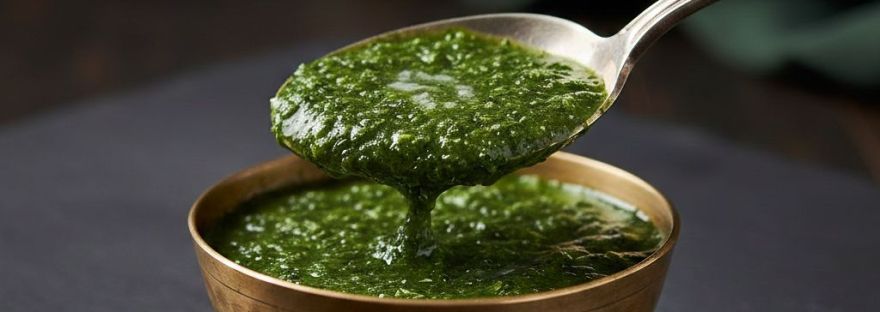
The Green Ritual: My Mother’s Sil-Batta Secret
In our home, a meal was never truly finished until the Hari Chutney was placed on the table. I remember my mother standing in the kitchen, the air filling with the sharp, cooling scent of fresh mint. While many modern kitchens rely on high-speed blenders, she remained loyal to her stone Sil-Batta (grinding stone).
She believed that electric blades “burned” the delicate oils of the herbs, while the slow, shearing action of the stone preserved their soul and vibrant emerald hue. “A chutney should taste like the earth it came from,” she would say. She viewed this condiment as more than just a dip; it was a “Parasocial Companion” that bridged every flavor on the plate from spicy kebabs to buttery parathas.
Today, at The Pinch of Masala, we are documenting her method of “Minimalist Precision,” celebrating the “Quiet Luxury” of a condiment made with absolute “Ingredient Integrity”.
The “Digital Anthropologist” Technical Secrets
To ensure your chutney stays a brilliant, restaurant-style emerald green rather than turning a muddy brown, you must follow my mother’s two non-negotiable rules:
The “Citrus Guard” Rule: The biggest enemy of fresh greens is oxidation. My mother never added salt until the very end. Instead, she would grind the herbs with Lemon Juice or a small piece of Dry Mango (Amchur). The acid acts as a shield, protecting the chlorophyll from turning dark when exposed to air.
The Ice-Cube Friction: If you must use a blender, add one or two ice cubes instead of plain water. High-speed blades generate heat, which “cooks” the herbs and dulls their color. The ice keeps the temperature low, ensuring the chutney remains as vibrant as the day it was picked.
The Recipe Card
Prep time: 10 mins | Cook time: 0 mins | Servings: 1 small jar
Diet: Vegan, Gluten-Free, Keto-Friendly | Cuisine: Indian Heritage
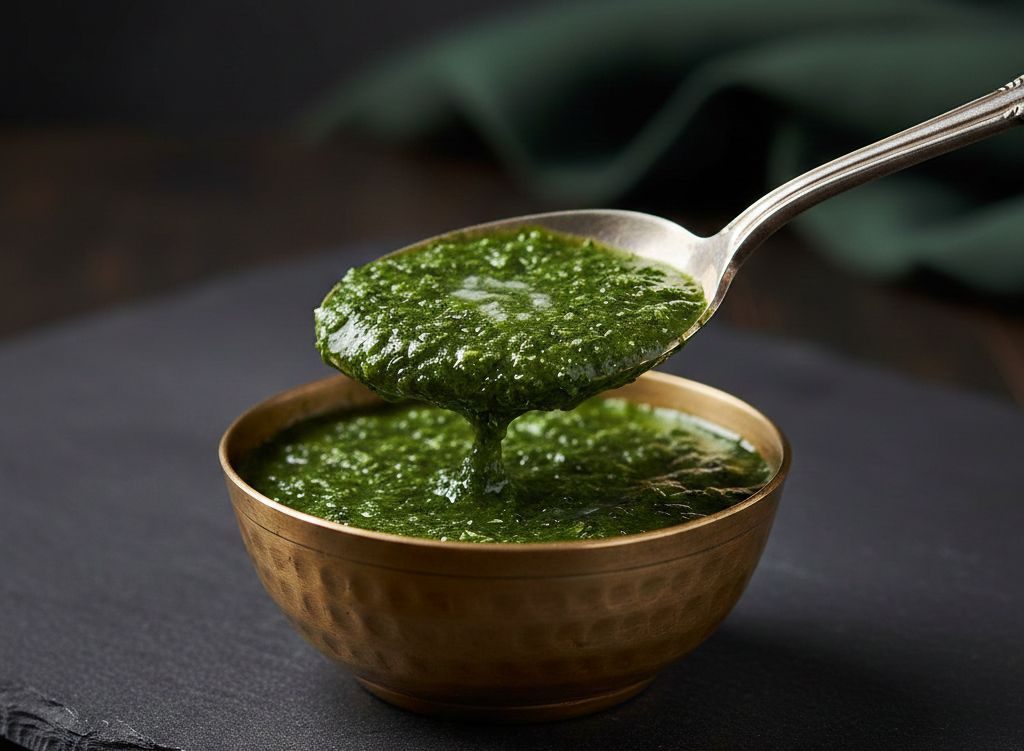
Ingredients:
2 cups Fresh Coriander (Dhaniya): Including the tender stems for maximum fiber.
1 cup Fresh Mint (Pudina): Leaves only (stems can be bitter).
The Aromatics: 2 Green Chillies (slit), 1 inch Ginger, and 3 cloves of Garlic.
The Sour Agent: 1 tbsp Lemon Juice or a small marble-sized ball of Tamarind.
The Crunch: 1 tbsp Roasted Peanuts or Roasted Gram (Dalia)—this provides a “velvet” texture and prevents the water from separating.
Spices: 1 tsp Cumin seeds (Jeera), ½ tsp Black Salt (Kala Namak) for umami, and regular salt to taste.
Instructions:
The Cleanse: Wash the coriander and mint 3-4 times in cold water to remove all grit.
The Prep: Roughly chop the coriander, including those nutrient-dense stems.
The Blend: Add the peanuts, ginger, garlic, chillies, and cumin seeds to the blender first. Pulse into a coarse paste.
The Greens: Add the coriander and mint along with the lemon juice and one ice cube.
The Pulse: Use the Pulse mode in short bursts. Do not over-process into a thin liquid. We are looking for a slightly textured, artisanal consistency.[3]
Final Seasoning: Stir in the salt and black salt only after you have finished blending.
Serve: This chutney is the perfect accompaniment for Beetroot Parathas, Chicken Tikka, or even a simple Dal-Chawal.
The “Pinch of Thrift” Tip (Zero Waste)
The Stalk Power: In the 2026 “Use-Up” economy, we value every part of the plant.[1] Do not discard the thicker coriander stems! While they are too fibrous for a smooth chutney, they are packed with more flavor and nutrients than the leaves.[2] Finely chop them and add them to your Paratha dough or Vegetable Soup for a concentrated hit of herbal aroma and “Fibremaxxing” benefits.

 The Pinch of Masala