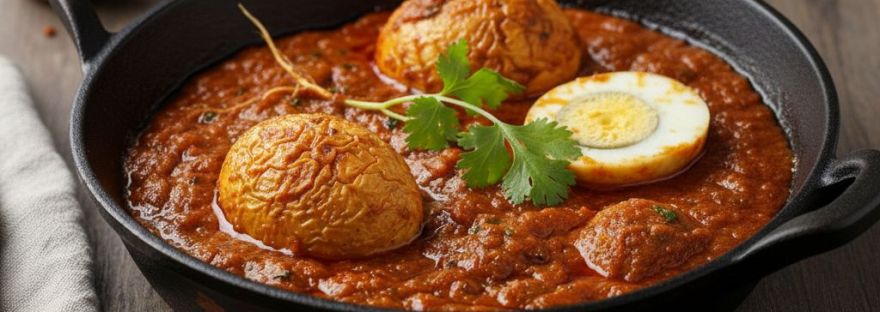
In our family, the humblest of ingredients often received the most royal treatment. I remember my mother standing by the stove on Sunday nights, transforming simple boiled eggs into a “Dhaba-style” masterpiece. She called it her “Anda Masala ritual,” and she believed that an egg was only as good as the texture of its skin.
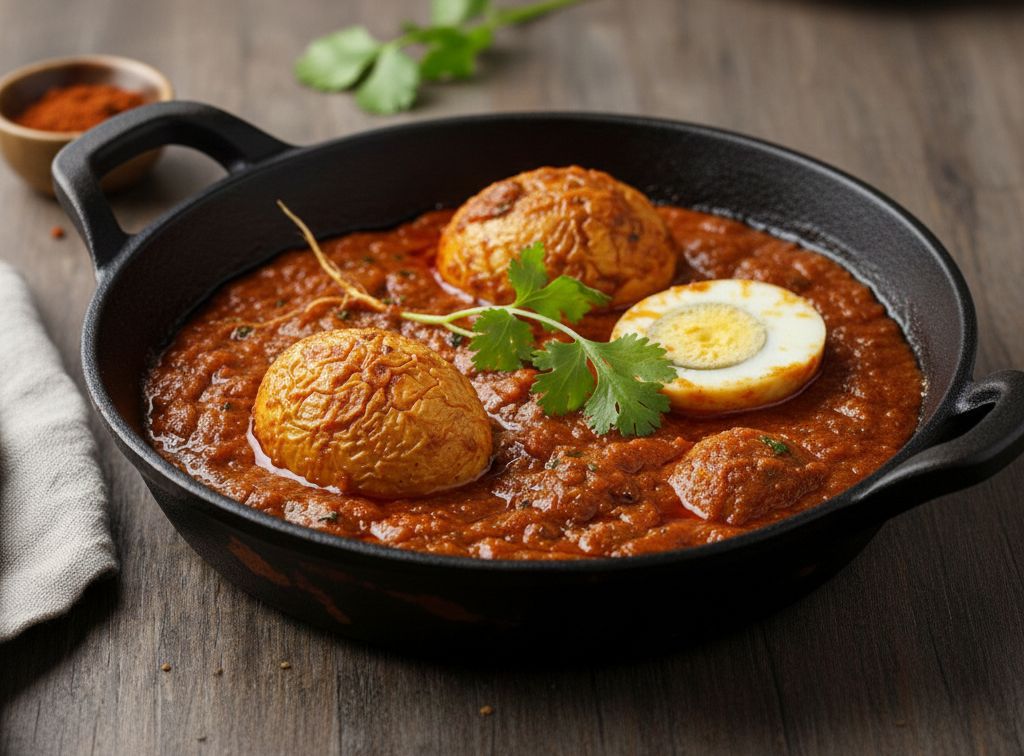
She never simply dropped a boiled egg into a gravy. To her, that was unfinished work. “The egg must earn its place in the masala,” she would say, as she carefully fried them until they developed a crinkly, golden-blistered exterior. My mother viewed this dish as a “Parasocial Companion” a sturdy, dependable meal that bridged the gap between rustic street food and the warmth of a home kitchen.
Today, at The Pinch of Masala, we are reclaiming the patience of the “Slow Bhuna.” We are moving away from watery, pale curries and returning to the “Quiet Luxury” of a thick, caramelized onion-tomato base that hugs the eggs like a velvet cloak.
The secret to an egg masala that tastes like it came from a highway Dhaba, yet feels refined, lies in my mother’s two non-negotiable rules:
The “Blister and Prick” Rule: Before frying, you must prick the boiled eggs with a fork or make tiny slits with a knife. This is the ultimate “Digital Anthropologist” secret. It serves two purposes: it prevents the eggs from bursting in the hot oil and, more importantly, it allows the spicy gravy to penetrate deep into the yolk, ensuring every bite is seasoned.
The “Slow Bhuna” Foundation: In 2026, we value “Ingredient Integrity”. My mother never rushed the onions. She would sauté them on a low flame for at least 8 to 10 minutes until they reached a deep, jammy translucent pink. This caramelization provides the natural sweetness that balances the sharp heat of the ginger and garlic.
Prep time: 15 mins | Cook time: 30 mins | Servings: 4
Diet: Vegetarian-Friendly (Egg-based), Gluten-Free | Cuisine: North Indian Dhaba
Ingredients:
6 Large Eggs: Hard-boiled and shelled.
The Aromatics: 2 Large Onions (finely chopped), 1 inch Ginger (crushed), 4 Garlic cloves (crushed), and 2 Green Chillies (slit).
The Base: 1 cup Tomato Puree (freshly blended).
Fat: 2 tbsp Ghee or Oil (Mustard oil adds an authentic pungent kick).
Whole Spices (The Bloom): 1 tsp Cumin seeds, 1 Bay leaf, 2 Green Cardamoms, and 1 stick Cinnamon.
Powder Spices: 1 tsp Kashmiri Red Chili powder (for that vibrant Dhaba red), ½ tsp Turmeric, 1 tsp Coriander powder, and ½ tsp Garam Masala.
The Finish: 1 tsp Kasuri Methi (crushed between palms) and a handful of fresh Coriander leaves.
Instructions:
The Prep: Prick the boiled eggs multiple times with a fork.
The Blister: Heat 1 tbsp oil in a pan. Add a pinch of turmeric and chili powder. Sauté the eggs until they are golden-brown and the skin looks slightly blistered. Remove and set aside.
The Bloom: In the same pan, add the remaining oil/ghee. Add the whole spices and let them sizzle until fragrant.
The Onions: Add the onions and sauté patiently on medium-low heat until they turn a deep golden brown. Add the ginger, garlic, and green chillies; sauté for another 2 minutes until the “raw” smell disappears.
The Bhuna: Pour in the tomato puree and salt. Add the turmeric, red chili, and coriander powders. Cook uncovered until the oil begins to separate from the sides of the masala.
The Union: Add 1 cup of warm water to adjust the gravy consistency. Bring to a boil, then slide in the blistered eggs.
The Simmer: Cover and simmer on low heat for 5 minutes to let the flavors meld.
Final Touch: Sprinkle garam masala, Kasuri Methi, and fresh coriander. Stir gently so as not to break the eggs. Serve hot with buttery Naan or Jeera Rice.
Leftover Masala Stir-Fry: In the 2026 “Use-Up” economy, we value concentrated flavor bases. If you have extra gravy left after the eggs are gone, do not discard it! Toss in some boiled potato cubes or chickpeas the next day. The matured flavors of the egg-infused masala will create an instant “Zero-Waste” side dish that tastes even better than the original meal.

 The Pinch of Masala