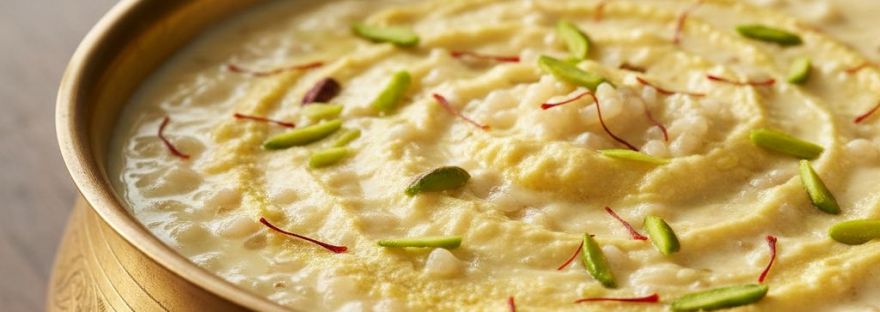
In our home, the smell of Rice Kheer slow-bubbling on the stove was the true soundtrack of a celebration. My grandmother (Nani) didn’t just see it as a dessert; she saw it as a blessing. She often reminded us that in the ancient texts of Ayurveda, this sweetened milk preparation then called Rasala was considered medicine for the soul.
I remember her standing by the heavy brass uruli, her wooden ladle moving in slow, meditative circles. She never rushed the milk. “Kheer is not a dish of ingredients,” she would say, “it is a dish of patience.” Whether it was for a child’s first solid food ceremony (Annaprashana) or the peak of Diwali, the Kheer was the anchor.
Today, at The Pinch of Masala, we are documenting the authentic, slow-cooked method. We are moving away from the “instant” condensed-milk hacks of the last few years and returning to the “Quiet Luxury” of milk reduced by time, heat, and devotion.
The “Digital Anthropologist” Technical Secret: The Starch Secret
To achieve a kheer that is “creamy like a cloud” rather than a watery mess, you must choose the right rice. While many use long-grain Basmati, Nani preferred medium-grain white rice or broken Basmati (Tukda).
Why? Long grains are designed to stay separate. For Kheer, we want the rice to “bleed” its starch into the milk, naturally thickening the pudding without the need for artificial thickeners.
The Ghee Toasted Start: Before adding the rice to the milk, lightly fry it in a teaspoon of ghee until the grains turn translucent. This adds a nutty depth that defines heritage Kheer.
****
Prep Time: 15 mins | Cook Time: 45 mins | Servings: 4-6
Diet: Vegetarian, Gluten-Free | Cuisine: North Indian Heritage
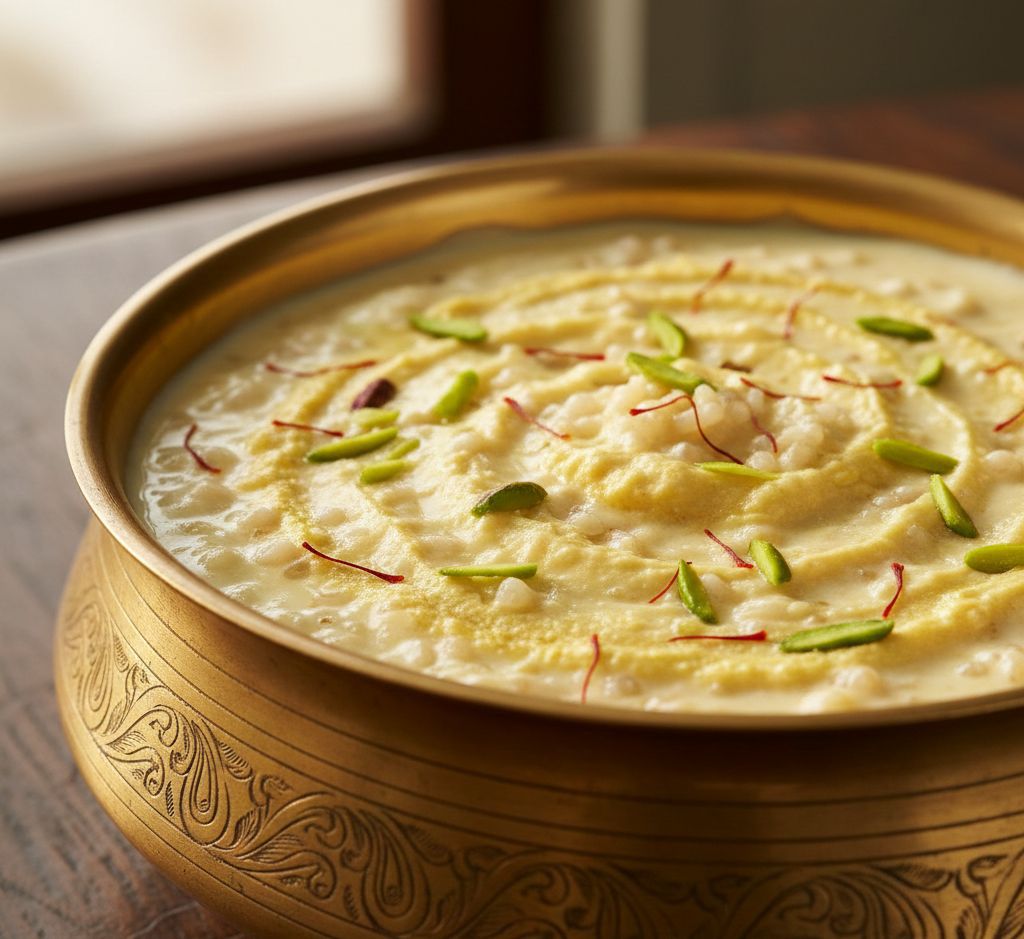
Ingredients:
1 Liter Full-Fat Milk: Organic cow or buffalo milk is preferred for the richest “malai” texture.
¼ Cup Short-to-Medium Grain Rice: (e.g., Gobindobhog or Sona Masoori) washed and soaked for 20 minutes.
1 tsp Ghee: For roasting the rice.
½ Cup Sugar: Adjust to taste. Raw sugar or jaggery powder works too (add jaggery only after the kheer cools slightly to avoid curdling).
4-5 Green Cardamom Pods: Freshly crushed.
10-12 Saffron Strands: Soaked in 2 tbsp warm milk.
¼ Cup Sliced Nuts: Almonds, pistachios, and cashews.
Instructions:
The Nutty Base: Heat ghee in a heavy-bottomed pot. Add the soaked and drained rice. Sauté for 3 minutes until the rice smells toasted and looks translucent.
The Simmer: Pour the milk into the pot. Bring to a rolling boil, then immediately turn the heat to its lowest setting.
The Slow Reduction: Let the milk simmer for 30-40 minutes. Stir every 4-5 minutes to prevent the rice from sticking to the bottom.
The “Malai” Scraping: As the milk boils, a layer of cream will form on the sides of the pot. Use your spatula to scrape this back into the milk. This is the secret to a thick, “Rabri-like” consistency.
Flavoring: Once the rice is so soft it mashes easily between your fingers and the milk has reduced significantly, add the sugar, saffron milk, and crushed cardamom.
The Finish: Simmer for another 5-8 minutes until the sugar dissolves and the kheer reaches your desired thickness. Remember, Kheer thickens further as it cools.
The Crunch: In a tiny pan, fry your nuts in a drop of ghee until golden and pour them over the Kheer before serving.
The “Pinch of Thrift” Tip (Zero Waste)
Liquid Gold Garnish: If you have the creamy residue that has slightly “burnt” or caramelized at the very bottom of the pot (known as khurchan), do not discard it! Scrape it out carefully and serve it right on top of a single bowl. In 2026’s “Use-Up” economy, these caramelized bits are considered the “truffles” of the Indian kitchen pure, concentrated flavor.

 The Pinch of Masala