Introduction
There is a distinct difference between “Fried Chicken” and what we Indians call a “Chicken Masala Fry.”
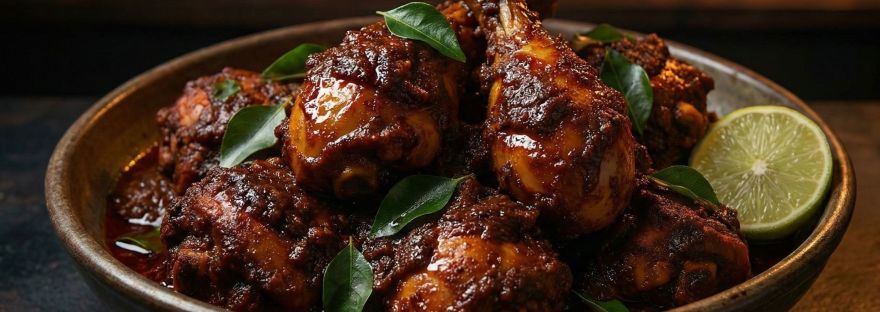
The Western version is about the crunch of the batter. The Indian coastal version specifically from the Mangalorean and Konkan belt is about the “Bhuna” (the roast). It’s about cooking the chicken in its own juices along with a fiery red masala paste until every drop of moisture evaporates, leaving behind meat that is coated in a dark, rich, caramelized spice crust.
This recipe is close to my heart. It uses the “Holy Trinity” of coastal non-veg cooking: Byadgi Chilies (for that stunning red color), Tamarind (for a sour kick), and Ghee (for the aroma).
This isn’t a quick 10-minute stir-fry. It’s a slow-roast ritual that turns simple ingredients into a dish that demands to be eaten with your hands.
The Secret: “Byadgi” & “Ghee”
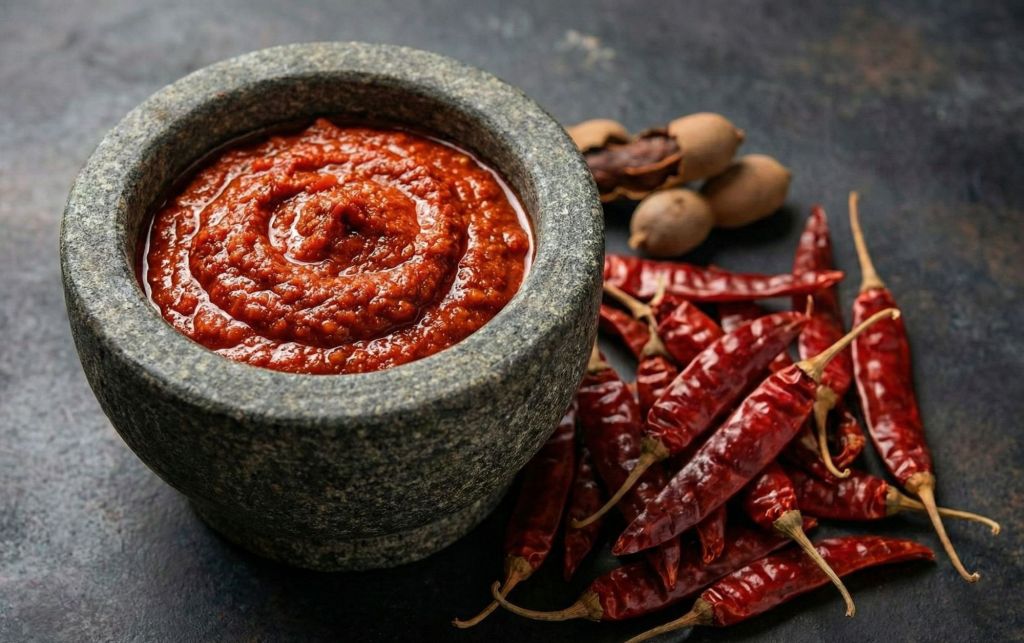
To get that authentic restaurant-style dark red color without food coloring, you need Byadgi Chilies. They are wrinkled, deep red, and mild in heat.
The Roasting: The flavor comes from slowly roasting the wet masala paste in Ghee (Clarified Butter) or Coconut Oil until it separates. If you rush this, the masala will taste raw.
The Recipe Card
Prep time: 20 mins | Cook time: 40 mins | Servings: 4
Ingredients:
1 kg Chicken: Curry cut (bone-in pieces taste best for this recipe).
The Aromatics: 2 Large Onions (finely chopped), 1 sprig Curry Leaves.
The Fat: 4 tbsp Ghee (or Coconut Oil for a more rustic taste).
The Masala Paste (Roast and Grind):
8-10 Dried Red Chilies (preferably Byadgi).
2 tbsp Coriander Seeds.
1 tsp Cumin Seeds (Jeera).
½ tsp Whole Black Peppercorns.
¼ tsp Fenugreek Seeds (Methi).
4 Cloves Garlic.
1 inch Ginger.
A small marble-sized ball of Tamarind (Imli).
Seasoning: Salt to taste, ½ tsp Turmeric powder.
Instructions:
Roast the Spices: In a dry pan, lightly roast the red chilies, coriander seeds, cumin, peppercorns, and fenugreek on low heat until fragrant. Do not burn them.
Make the Paste: Transfer the roasted spices to a blender. Add the raw garlic, ginger, and tamarind. Add a splash of water and grind to a thick, smooth, vibrant red paste.
The Onion Base: Heat the ghee in a heavy-bottomed Kadhai (wok). Add the curry leaves and the chopped onions. Sauté patiently until the onions turn golden brown. This caramelization is crucial for the “roast” flavor.
The Masala Bhuna: Add the ground red paste to the onions. Fry this mixture on medium heat for 5-8 minutes. You will see the ghee starting to separate and ooze out from the sides. This means the masala is cooked.
Add Chicken: Add the chicken pieces, turmeric, and salt. Crank the heat to high and toss the chicken vigorously for 2 minutes to seal the juices.
The Slow Roast: Lower the heat to medium-low. Cover the pan. Let the chicken cook in its own juices for 20 minutes. (Add a splash of hot water only if it’s sticking, but remember, this is a dry dish).
The “Sukka” Finish: Open the lid. The chicken should be cooked, but there might be some liquid left. Increase the heat and cook open (uncovered), stirring continuously. The moisture will evaporate, and the masala will thicken and coat the chicken pieces.
Final Touch: Roast until the masala turns a dark reddish-brown. Turn off the heat.
Serve: Squeeze a little lemon juice on top (optional) and serve hot with Neer Dosa, Roti, or Dal Rice.
The “Pinch of Thrift” Tip (Zero Waste)
Masala Rice: Once you finish serving the chicken, don’t wash that kadhai immediately! There is always a lot of flavorful masala stuck to the bottom of the pan.
The Hack: Throw a cup of cooked white rice into the empty pan. Toss it around to mop up all that spicy, ghee-laden masala. We call this “Charr” Rice in local dialects it’s often the tastiest part of the meal that the cook keeps for themselves!

 The Pinch of Masala