Introduction
Let’s be honest Cabbage (Patta Gobhi) often gets a bad reputation. It’s seen as “boring hostel food” or that watery vegetable you eat only when there is nothing else in the fridge.
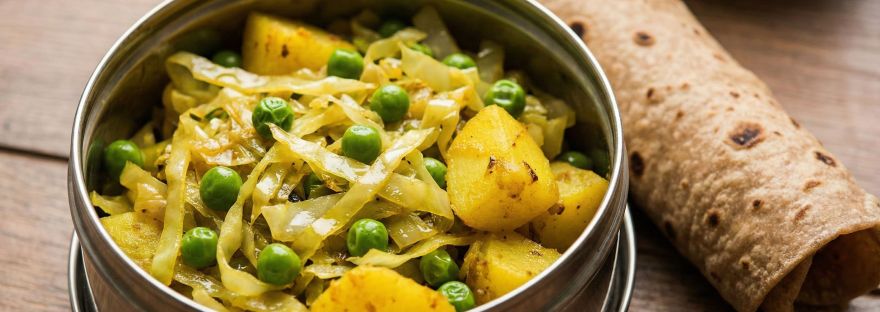
But if you ask any North Indian mother, she will tell you that a well-made Patta Gobhi Ki Sabzi is a masterpiece of texture. It shouldn’t be a soggy mash; it should be a vibrant stir-fry where the potatoes are soft as butter, the peas pop in your mouth, and the cabbage retains a slight “bite” and sweetness.
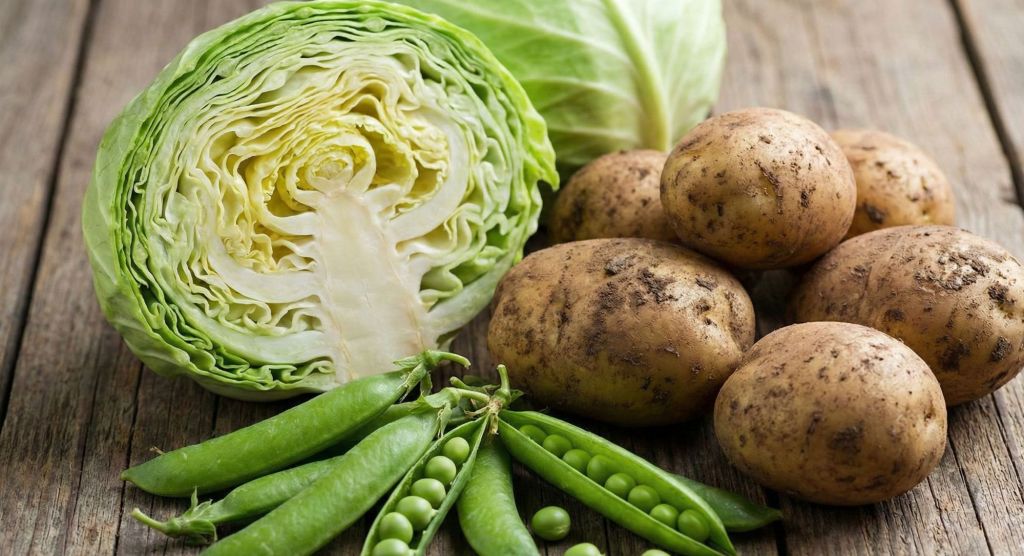
This recipe is the classic “Winter Tiffin” version. We are using the seasonal trio: Cabbage, New Potatoes (Naya Aloo), and Fresh Green Peas. There is no onion or garlic in this traditional version (often called Satvik style), allowing the natural sweetness of the veggies to shine through the spices.
The “Crunch” Secret
Why does restaurant cabbage stay crunchy while homemade cabbage gets watery?
The Cut: Don’t use a food processor. Hand-shredding the cabbage into long, thin ribbons ensures it cooks evenly without turning into a paste.
Salt Timing: This is the most crucial tip. Do not add salt at the beginning. Salt draws out moisture, making the cabbage soggy. We add salt only towards the end of the cooking process.
The Recipe Card
Prep time: 15 mins | Cook time: 20 mins | Servings: 3-4
Ingredients:
500g Cabbage: Shredded (remove the hard core/stalk).
2 Medium Potatoes: Peeled and cut into 1-inch cubes.
½ Cup Green Peas: Fresh (winter peas) are best, but frozen works too.
1 inch Ginger: Finely chopped (the main aromatic).
2 Green Chilies: Slit lengthwise.
2 tbsp Mustard Oil: For that authentic pungent kick (or any vegetable oil).
Spices: 1 tsp Cumin Seeds (Jeera), ½ tsp Turmeric (Haldi), 1 tsp Coriander Powder (Dhaniya), ½ tsp Red Chili Powder, ½ tsp Garam Masala, ½ tsp Amchur (Dry Mango Powder).
Fresh Coriander: Lots of it for garnish.
Instructions:
The Potato Fry: Heat the mustard oil in a heavy-bottomed pan (Kadhai) until it smokes gently. Lower the heat. Add cumin seeds and let them crackle. Add the chopped potatoes and sauté them on medium heat for 5-7 minutes. We want the potatoes to get a golden crust and be 80% cooked before the cabbage goes in.
The Aromatics: Add the chopped ginger, green chilies, and green peas. Sauté for another 2 minutes until the raw smell of ginger disappears.
The Cabbage Entry: Add the shredded cabbage. Increase the flame to high for 2 minutes and toss everything vigorously. This “sears” the cabbage.
The Spice Mix: Lower the heat. Add turmeric, coriander powder, and red chili powder. Mix well. Do NOT cover the pan. Covering it creates steam and makes the cabbage soggy. Let it cook open for 5-7 minutes, stirring occasionally.
The Final Seasoning: Once the potatoes are fully soft and the cabbage has shrunk but still looks vibrant, add Salt, Amchur, and Garam Masala.
The “Bhuna” Finish: Crank the heat up again for the last 1 minute to dry out any remaining moisture. Stir well.
Serve: Turn off the heat and mix in a generous handful of fresh coriander. Serve hot with Parathas and Dal.
The “Pinch of Thrift” Tip (Zero Waste)
The “Gobhi Paratha” Hack: Leftover cabbage sabzi is arguably better than fresh sabzi because the flavors have matured.
How to use: Mash the leftover sabzi with a fork (squash the potato chunks). Stuff this mixture inside whole wheat dough to make Stuffed Gobhi Parathas for breakfast. You don’t even need extra spices the filling is already seasoned!

 The Pinch of Masala