Bharli Vangi is a beloved Maharashtrian comfort dish – small eggplants (brinjals) stuffed with a rich peanut-coconut masala – often starring in festive thalis and wedding menus. A spicy, tangy curry of stuffed baby brinjals, it’s as much a part of everyday home cooking as it is of special occasion feasts. In Marathi, bharli means stuffed and vangi means eggplant, so the name literally describes the cooking method. This humble curry has a nostalgic pull: one blogger recalls that each time she makes it, “it reminds me of home, my mom, and my grandmother”.
Cultural Roots and Regional Variations
Maharashtra’s diverse regions each add their own twist to Bharli Vangi. In the coastal Konkan area (including Malvan), for example, cooks often add roasted peanuts and fresh coriander to the stuffing and may use a local Malvani spice mix for heat. Moving inland to the Deccan (around Pune and Satara), the curry is gently sweetened with jaggery and soured with tamarind, and scented with goda masala – a signature Marathi blend of warm spices. Further south in Kolhapur, the version is noticeably spicier: cooks layer in fiery Kanda Lasun masala (an onion-garlic chili blend) for extra kick. Despite these regional tweaks, the core idea remains the same everywhere: tender baby brinjals are slit and filled with a fragrant paste of peanuts, coconut, sesame and spices, then simmered until meltingly soft. Across Maharashtra, a festive thali simply isn’t complete without these stuffed eggplants – a testament to their deep roots in the state’s culinary culture.
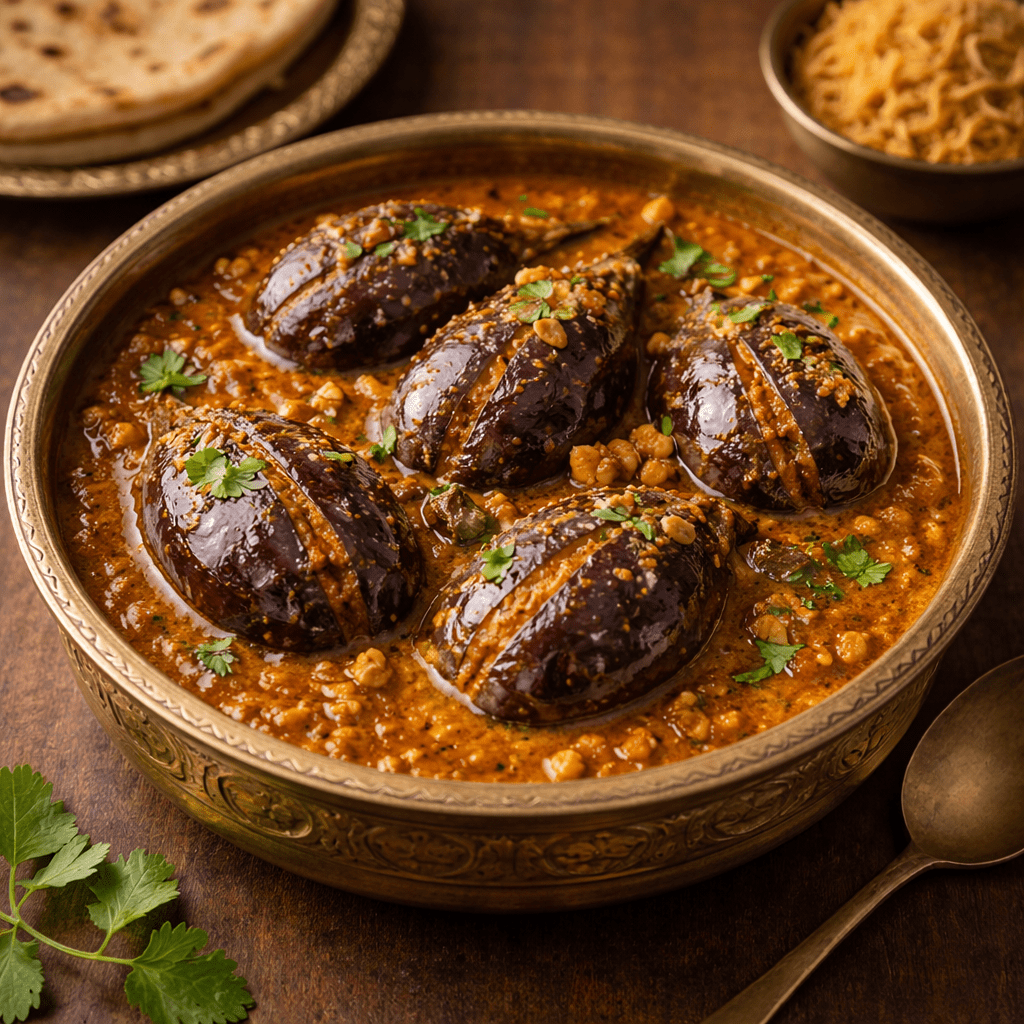
Ingredients for Traditional Bharli Vangi
To make Bharli Vangi the authentic way, gather: baby eggplants (the tiny, round variety), peanuts, white sesame seeds, desiccated or grated coconut, onion, garlic, ginger, green chili, tamarind, jaggery, goda masala, and basic spices (turmeric, chili powder, cumin, mustard, etc.). These ingredients reflect a classic Maharashtrian flavor profile: nutty and slightly sweet (from peanuts, coconut and jaggery), with heat and sour notes from chili and tamarind. For the stuffing, peanuts, sesame and coconut are first dry-roasted and ground with aromatics into a thick paste. This paste is then stuffed into the slitted brinjals, which are simmered in a tomato-onion gravy spiced with goda masala and a touch of tang (tamarind) and sweetness (jaggery).
How to Make Bharli Vangi (Step-by-Step)
Prepare the brinjals: Rinse 250–300g of small, tender brinjals. With a sharp knife, make 3–4 slits from the stem end towards the base (don’t cut all the way through) to create pockets for the filling. Soak the slit eggplants in a bowl of salted water for about 15 minutes to draw out any bitterness. (Tip: Light-purple or green baby brinjals with thin skins work best. If using larger ones, cut them into chunks instead, as big brinjals tend to remain tough.) Drain and pat them dry.
Make the stuffing paste: In a dry pan on medium heat, roast ¼ cup peanuts until golden and fragrant. Add 1–2 tablespoons of white sesame seeds and roast briefly. Then add ½ cup of unsweetened shredded/dry coconut and stir continuously until lightly browned. Transfer these to a grinder and let cool slightly. To the grinder add about 1 small chopped onion, 5–6 cloves of garlic, a 1-inch piece of ginger, and 1–2 green chilies. Grind everything to a coarse, moist paste. (You can add a splash of water if needed.)
Stuff the brinjals: Mix the ground paste with ½ teaspoon turmeric, 1 teaspoon goda masala, ¼ cup tamarind water (soaked and strained), 1 teaspoon jaggery, and salt to taste. Carefully open the slits of each eggplant and press about a tablespoon of the stuffing into each one. (Reserve any leftover masala for the curry.) The eggplants should be generously filled, as the stuffing will enrich the gravy when cooked.
Cook the curry: Heat 2 tablespoons oil in a deep pan or kadhai. Temper with 1 teaspoon cumin seeds and ½ teaspoon mustard seeds until they pop. Add a pinch of asafoetida and 10–12 curry leaves. Sauté 1 chopped onion and 1 chopped tomato until soft. Stir in the reserved peanut-coconut paste, along with ½ teaspoon chili powder and more goda masala or Kanda Lasun masala if you like it spicier. Add the stuffed brinjals, turning them gently to coat with the gravy. Pour in about 1 cup of hot water (enough to create a saucy curry) and bring to a boil. Finally, mix in the tamarind and jaggery (if not already added). Reduce heat to low, cover, and simmer for 10–15 minutes, stirring occasionally, until the brinjals are very tender and the gravy thickens. Uncover and cook a few more minutes if you prefer a drier consistency. Garnish with chopped coriander. The eggplants should be soft and fully infused with the spicy, nutty masala by the end.
After cooking, the stuffed brinjals are meltingly tender and drenched in a rich, reddish curry of coconut–peanut–tamarind gravy. Each bite delivers warm spices and a hint of sweetness – a truly soul-satisfying Maharashtrian curry.
Dry-Style Variation
For a less saucy version (often called a dry Bharli Vangi), simply reduce the water: after sautéing and adding the stuffed brinjals and masala, cover and cook on very low flame without adding extra water or with just a splash of oil. Let the stuffed eggplants cook slowly until the stuffing and juices coat them in a thick, drier glaze. This method yields a stir-fry–like dish that clings to the brinjals. (In fact, some sources note that a similar Gujarati stuffed eggplant is steamed or cooked with minimal liquid for a dryer result.) The choice between a juicy curry or dry-style is up to you and the occasion.
Tips for Perfect Bharli Vangi
Use the right brinjals: Small, round “Kateri” brinjals with thin skin and few seeds become soft and creamy when cooked. Avoid large purple ones, which can stay fibrous.
Soak to remove bitterness: Salted water soak (10–15 min) takes the bite out of eggplants. After soaking, rinse and dry them well.
Roast the stuffing ingredients: Dry-roasting peanuts, sesame, and coconut deepens their flavor and aroma. Don’t skip this step – it makes the stuffing far more flavorful.
Temper gentle cooking: Stuffed brinjals are best cooked covered on low heat. This traps steam, helping them cook through to a soft, creamy texture. Turn them gently so they don’t break apart.
Balance sweet and sour: Traditional recipes use both tamarind (or kokum) and a bit of jaggery. Adjust these to taste for the signature sweet-tangy bite.
Extra flavor boosters: Some cooks add a teaspoon of poppy seed powder or ground coriander to the paste for a richer gravy. Fresh curry leaves and a pinch of garam masala can also enhance the aroma.
Serving Suggestions
Bharli Vangi is typically enjoyed hot with hearty flatbreads or grain sides. In Maharashtra, it’s classic to serve this curry with jowar or bajra bhakri (millet flatbreads). It also goes wonderfully with soft phulkas or chapatis. A simple mound of steamed rice and a dollop of ghee pairs beautifully with the rich curry. Accompany the meal with varan-bhat (daal and rice) and crunchy papad for a traditional thali spread. One blog notes that Bharli Vangi “paired with Bajrichi Bhakri is a winter delight” and it can also be served with jeera rice, chapati, dal, papad and salad. A side of cooling yogurt raita or cucumber salad balances the heat. Whatever you choose, the tangy, nutty spice of Bharli Vangi brings warmth and nostalgia to the table – a taste of Maharashtrian home cooking at its best.

 The Pinch of Masala