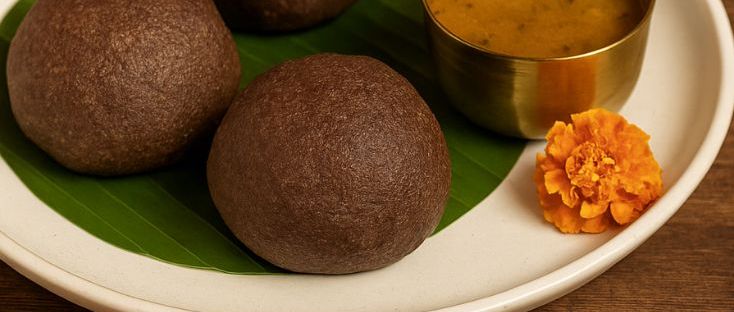
I still remember the smell of earthy millet flour and boiling water from my childhood kitchen in rural Karnataka. On those lazy afternoons my grandmother would scoop bright orange finger millet flour (ragi) into a heavy pot of bubbling water and stir with a wooden spatula. The rhythm of her stirring matched the beating of my heart in anticipation. We kids pressed our faces close as the mixture thickened into a soft dough, the familiar aroma of ragi mudde (finger millet balls) filling the air. As soon as it was ready, she’d break off a warm ball and hand it to me—no utensils, just bare hands—and I’d dip it into tangy chutney or a hot soppu saaru (greens curry). Each bite of those warm, soft dumplings was pure comfort: simple, wholesome, and nourishing.
For generations, Ragi Mudde has been a rural staple in Karnataka, loved for its simplicity and nutrition. Made with just finger millet flour and water, it’s naturally gluten-free and surprisingly healthy. Finger millet is known to be high in protein, fiber and even calcium, so these humble balls pack a nutritional punch. In fact, they were (and still are) a favorite among farmers and laborers – the energy and fiber in ragi helped give them strength for a hard day’s work. My family always served ragi mudde steaming hot alongside a spicy greens or lentil curry (massoppu or soppu saaru) and tangy chutneys. Those were simple meals, but they felt deeply satisfying and left us full and content.
Servings: 2–3
Prep Time: 5 minutes
Cook Time: 15 minutes

Ingredients
1 cup ragi (finger millet) flour
2 cups water (approximately)
¼ teaspoon salt (optional, to taste)
1 teaspoon ghee or oil (optional, for richness)
Instructions
1. Mix a smooth paste: In a small bowl, whisk 2 tablespoons of ragi flour with about ¼ cup water until smooth and lump-free. Set aside this slurry.
2. Boil water: In a heavy-bottomed pot, bring the remaining 1¾ cups of water to a rolling boil over medium-high heat. Stir in salt and ghee (or oil) if using.
3. Add the slurry: Pour the ragi-water slurry into the boiling water, stirring constantly. The mixture will thicken almost immediately.
4. Add remaining flour: Gradually add the rest of the ragi flour (remaining ⅔ cup) to the pot in small increments. After each addition, stir vigorously with a wooden spatula or ladle to incorporate the flour and prevent lumps. Continue adding and stirring until all the flour is mixed in and the dough forms a thick mass.
5. Simmer and cook: Lower the heat to medium-low, cover the pot, and let it steam for 2–3 minutes. Uncover and stir vigorously again – the dough should look glossy and pull away from the sides of the pot. If it’s very dry, add a splash of hot water and continue stirring until it comes together.
6. Form the balls: Remove the pot from heat and let it sit for a minute. Grease your palms with a little water or ghee, then scoop out portions of the mixture and roll into firm balls (mudde). (Tip: Using a bowl to shape each ball can make it easier to handle the hot dough.)
Tips
Use a heavy-bottomed pot and a sturdy wooden spatula to stir – ragi mudde batter is thick and can stick or burn easily.
Stir continuously when adding flour to prevent lumps. A smooth paste and constant stirring lead to silky, lump-free mudde.
A teaspoon of ghee or oil (even though optional) adds flavor and helps make the dough smoother. Traditionally many cooks prefer ghee for its taste and digestion benefits.
After covering the pot, let it steam on low for a few minutes before stirring again – this helps cook the dough through without burning.
Ragi Mudde is best enjoyed hot. Serve it with a vibrant soppu saaru (leafy greens curry), hot rasam or sambar, and your favorite chutneys. This plain, comforting dish pairs perfectly with spicy or tangy sides.
Closing Note
Ragi Mudde may seem like a humble dish, but it carries the warmth of home and tradition in every bite. These simple millet balls remind us of lazy village afternoons and the strength of the food that kept generations of Karnataka farmers going. I hope this recipe brings a bit of that comfort to your table. Try serving it with a favorite curry or dal, sit down with loved ones, and enjoy a taste of South India’s heritage.

 The Pinch of Masala