
My introduction to Chettinad Chicken Curry happened on a warm evening in Tamil Nadu. I wandered into a local eatery in Chennai, lured by the irresistible aroma of curry leaves crackling in hot oil and spices roasting. One bite of the fiery, coconut-infused gravy was enough to hook me – the chicken was tender, and the masala was bursting with flavor. This recipe, passed down and perfected over time, reminds me of that first taste and the rich culinary heritage of the Chettinad region.
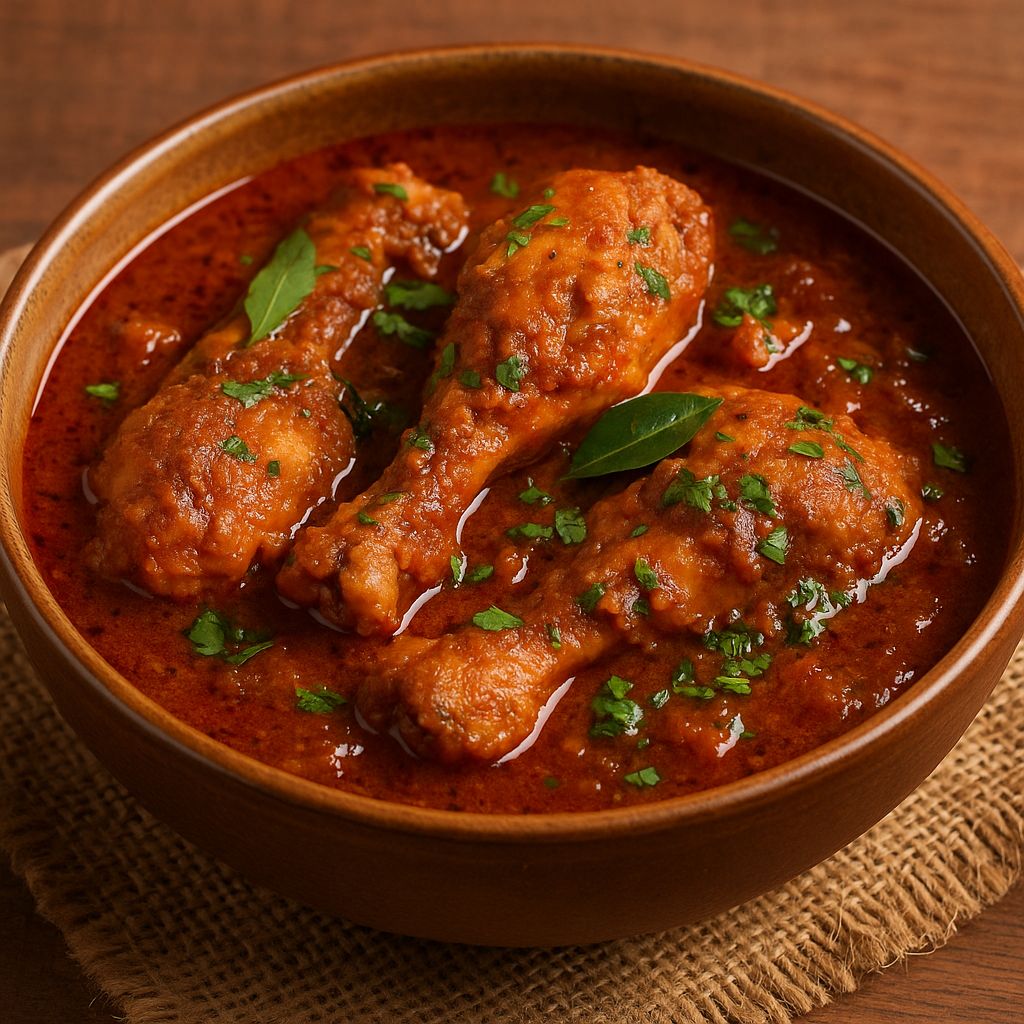
Chettinad Chicken Curry is a beloved dish from Tamil Nadu, known for its bold heat and aromatic gravy. The curry is enriched with a freshly ground spice paste (Chettinad masala) made of whole spices and coconut, giving it a distinctive depth of flavor. Chettinad cuisine is considered one of the spiciest and most aromatic in India, and this chicken curry showcases that reputation with a robust blend of spices like coriander, fennel, star anise, and a unique ingredient called kalpasi (black stone flower). Served in a hearty gravy style, this authentic Chettinad chicken pairs beautifully with rice, dosa, or appam for a comforting South Indian meal.
Ingredients
To Marinate the Chicken
Chicken – 500 g curry-cut pieces (bone-in recommended for more flavor)
Turmeric powder – 1 teaspoon
Salt – 1 teaspoon (or to taste)
Lemon juice – 2 tablespoons (from about 1 lemon)
Ginger-garlic paste – 1 tablespoon (optional, for deeper flavor)
(Marinating the chicken with turmeric, salt, and lemon tenderizes it and layers flavor into the meat.)
To Make the Chettinad Masala Paste (fresh spice blend)
Coriander seeds – 3 tablespoons
Dry red chilies – 5 (use a mix of spicy and mild Kashmiri chilies for heat and color)
Fennel seeds – 1 teaspoon
Cumin seeds – 1 teaspoon
Black peppercorns – 2 teaspoons
Green cardamom – 5 pods
Cloves – 4
Cinnamon – 1-inch stick
Star anise – 1
Black stone flower (kalpasi) – 1–2 pieces (a key Chettinad spice)
Fresh coconut – 1/4 cup, grated (or use unsweetened desiccated coconut)
(This aromatic blend of whole spices and coconut will be dry-roasted and ground to a paste. It is the heart of an authentic Chettinad curry, bringing magical flavor and thickness to the gravy.)
For the Curry
Oil – 3 tablespoons (traditionally gingelly (sesame) oil or coconut oil for authentic flavor)
Onions – 2 large, thinly sliced
Curry leaves – 2 sprigs (fresh if available)
Ginger-garlic paste – 2 tablespoons
Tomatoes – 2 medium, chopped
Turmeric powder – 1/2 teaspoon (for the curry base, in addition to marinade)
Water – ~1 to 1½ cups (as needed for gravy consistency)
Salt – to taste (about 1/2 teaspoon, adjust since chicken was marinated with salt)
Fresh coriander leaves – a handful, chopped (for garnish)
(Onion, tomato, curry leaves, and ginger-garlic form the flavorful base of the gravy, while a bit of turmeric adds color and health benefits. Use coconut oil or sesame oil for an extra layer of authentic aroma.)
Instructions
1. Marinate the Chicken: In a bowl, combine the cleaned chicken pieces with turmeric, salt, lemon juice, and ginger-garlic paste (if using). Rub this marinade into the chicken. Cover and set aside for at least 20–30 minutes while you prepare the masala. *(Marination infuses the meat with flavor and yields juicier chicken.)*
2. Prepare Chettinad Masala: Heat a dry heavy-bottomed pan or kadai on low-medium heat. Add all the whole spices for the masala (coriander seeds, dried red chilies, fennel, cumin, pepper, cardamom, cloves, cinnamon, star anise, kalpasi) except the coconut. Dry roast these spices, stirring frequently, until they become aromatic and lightly golden. Now add the grated coconut to the same pan and roast for another 2 minutes, stirring constantly, until the coconut turns light golden brown. Turn off the heat and transfer the roasted spices and coconut to a plate to cool. Once cool, grind them in a mixer or spice grinder with a few tablespoons of water to make a smooth Chettinad masala paste. *(Roasting on low heat is crucial to avoid burning the spices; you want a deep toasty aroma. The freshly ground paste will have a nutty, spicy fragrance.)*
3. Sauté Onions and Aromatics: Heat the oil in a large pot or deep pan over medium heat. Add the sliced onions and sauté until they turn translucent and light golden brown. This may take about 8–10 minutes; stir regularly so they cook evenly. Tip: Properly browned onions impart sweetness and depth to the gravy.
4. Add Curry Leaves and Ginger-Garlic: Toss in the fresh curry leaves and stir for a few seconds until they crackle and release their aroma. Then add the 2 tablespoons of ginger-garlic paste. Sauté this mixture for 1–2 minutes until the raw smell of ginger and garlic disappears. (Frying these aromatics in oil releases their flavors into the base of the curry.)
5. Cook Chicken: Add the marinated chicken pieces to the pan. Increase the heat to medium-high and sauté the chicken for about 5 minutes, stirring occasionally, until the exterior of the chicken turns opaque and lightly browned. This seals the juices and adds a nice flavor to the meat.
6. Tomatoes and Simmer: Add the chopped tomatoes to the pan and sprinkle in the 1/2 teaspoon of turmeric (if you didn’t use ginger-garlic in the marinade, you could also add a pinch of red chili powder for extra heat at this stage). Cook the tomatoes with the chicken for about 3–5 minutes, stirring often, until the tomatoes break down and become soft. The mixture will start to form a thick base. Pour in about 1 cup of water and stir well, scraping up any browned bits at the bottom of the pan. Bring the curry to a boil, then reduce the heat to low, cover with a lid, and let it simmer. Cook for about 20 minutes (or until the chicken is nearly tender), stirring occasionally. (Simmering gently allows the chicken to cook through and the flavors to meld. Add a bit more water if it starts looking too dry, but remember the masala paste will also thicken the gravy.)
7. Add Chettinad Masala Paste: Once the chicken is cooked and the gravy has reduced slightly, stir in the prepared Chettinad spice-coconut paste. Mix it thoroughly into the curry. If the gravy is very thick, add a splash of water to help blend the paste. Simmer the curry uncovered on low heat for another 10 minutes, stirring occasionally. You will see the gravy deepen in color and aroma, and a bit of oil may begin to surface on top. Tip: Check seasoning at this stage and add salt if needed. The roasted spice paste is what truly defines this Chettinad curry, so let it cook in the gravy for several minutes to infuse the chicken with its rich flavor.
8. Garnish and Serve: Turn off the heat. Sprinkle the chopped fresh coriander leaves over the curry and give it a final stir. Let the Chettinad Chicken Curry rest for 5 minutes before serving – this brief rest helps all the flavors settle. Serve hot and enjoy the explosion of spicy, savory goodness in each bite!
Tips & Tricks
Adjust Spice: Chettinad cuisine is famously spicy, but you can adjust the heat to your liking. Reduce the number of dry red chilies and peppercorns for a milder curry, or add an extra chili for more kick. Remember, you can also swap in Kashmiri red chilies for a vibrant red color with less heat.
Chicken Cut: You can use any cut of chicken, but curry-cut pieces with bone (like drumsticks, thighs, etc.) yield the best flavor in the gravy. The bones release juices that enrich the sauce. If using boneless chicken, opt for thighs over breast meat to avoid drying out during the simmer.
Fresh Ingredients: Wherever possible, use fresh ingredients – especially the curry leaves, ginger, garlic, and coconut. Fresh curry leaves and coconut give an authentic aroma and texture that really make a difference. If fresh coconut isn’t available, use unsweetened desiccated coconut, but do include it because it thickens the gravy and adds a subtle sweetness.
Cooking Vessel: If you don’t have a heavy pan or if you’re in a hurry, this curry can be made in a pressure cooker or Instant Pot (see Variations below). However, using a traditional pot and slow simmer allows greater control to develop the flavors and avoid overcooking the spices.
Variations
Chettinad Chicken Dry (Masala Fry): For a drier version of Chettinad chicken (often called Chicken Chettinad Varuval or Pepper Chicken), skip the extra water and cook the dish until the liquid evaporates and clings to the chicken. In this style, the masala becomes a thick coating on the chicken pieces rather than a pourable gravy. You can increase the black pepper and fennel for a sharper flavor, as Chettinad pepper chicken is a popular dry preparation. This makes an excellent appetizer or side dish – just be sure to stir frequently towards the end to prevent sticking or burning as the masala reduces.
Pressure Cooker Method: To speed things up, follow the recipe through step 4 (sautéing onions, curry leaves, ginger-garlic). After adding the marinated chicken and tomatoes, pour in only about 1/2 cup of water. Lock the pressure cooker lid and cook for about 2 whistles on medium heat (approximately 8–10 minutes). Allow the pressure to release naturally. Open the cooker, then stir in the ground Chettinad masala paste. Simmer the curry without the lid for 5–10 minutes to thicken the gravy and finish cooking the spices. (In an Instant Pot, use Pressure Cook on high for ~10 minutes, then natural release, and then sauté mode to simmer the masala paste.) The result is a quick yet authentic Chettinad chicken gravy with the same depth of flavor.
Serving Suggestions
Chettinad Chicken Curry is best enjoyed piping hot. It tastes wonderful with steamed rice – the gravy soaks into the rice, making each bite flavorful. For a special South Indian spread, serve it with soft dosas, fluffy appams (rice hoppers), or idlis. The curry’s spiciness also pairs well with plain biryani or ghee rice (buttery rice). If you prefer breads, try it with warm naan or chapati – they will scoop up the gravy nicely. On the side, include a cooling raita (yogurt dip) or simple cucumber salad to balance the heat. And don’t forget some fresh sliced onions and lemon wedges for an authentic touch – a squeeze of lemon and bite of onion can really elevate the enjoyment of this spicy, rich Chettinad chicken gravy.
Enjoy this Chettinad Chicken Curry with family and friends, and savor the warm, fiery flavors of Tamil Nadu in every mouthful. Happy cooking! 😋

 The Pinch of Masala