
For many Bengalis, Doi Boondi is more than just a dessert – it’s a spoonful of nostalgia. In festive times like Durga Puja or wedding feasts, families gather to end the meal on a sweet note. Even Bollywood star Prosenjit Chatterjee fondly recalls “boondi aar doi” (boondi with curd) as “the best sweet dish” of his childhood. Boondi sweets are so woven into Bengali tradition that golden fried boondi is offered as prasad in many Durga Puja celebrations. Each bite of Doi Boondi – creamy yogurt swirled with syrupy boondi balls – evokes memories of home kitchens, summer gatherings, and the soft click of Bengali click-clacks at the dinner table.
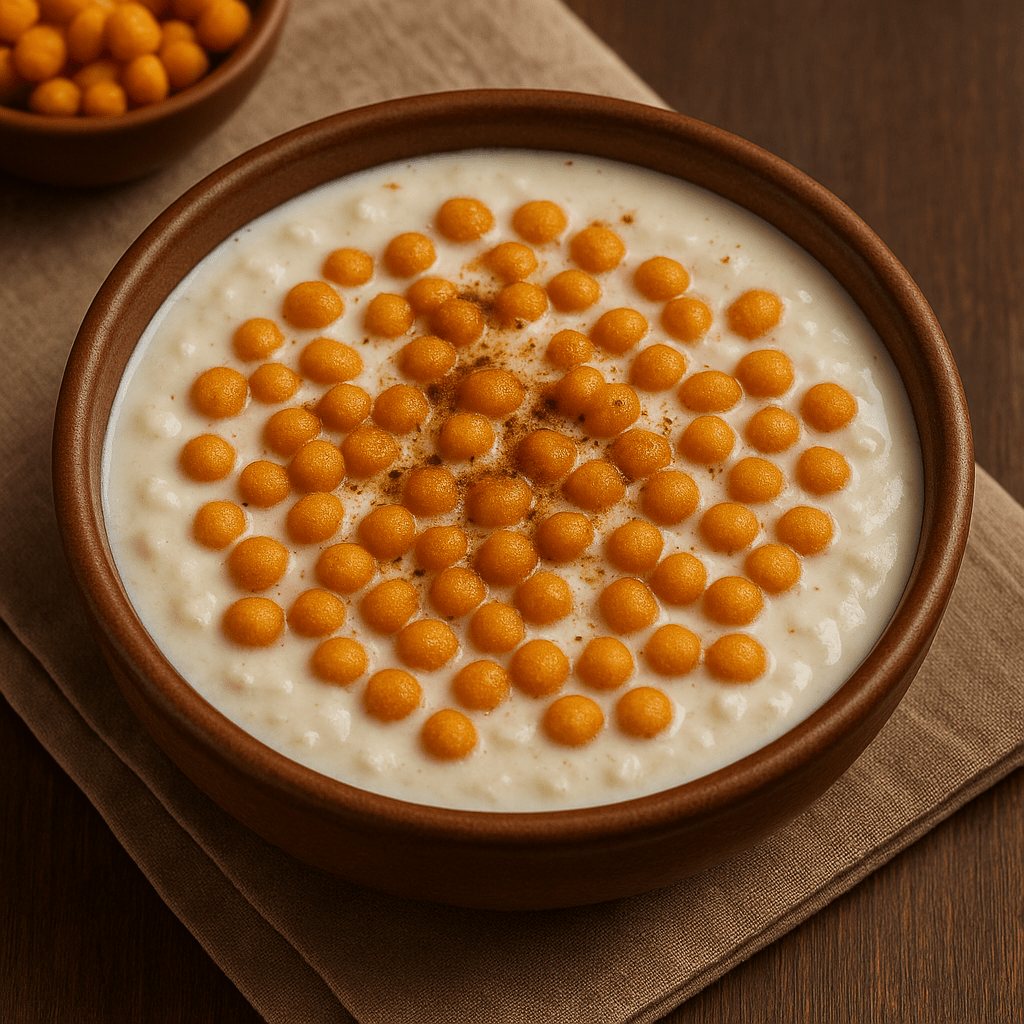
This festive bowl of sweetened curd with crispy boondi is often served chilled, garnished with nuts and rose petals for color. The curd (doi) is lightly sweetened and infused with warm spices, then layered with soft, golden boondi. A hint of cardamom or saffron in the curd gives it a rich aroma. Tradition says to set the sweet curd in an earthen pot (matka) – the porous clay lets extra whey evaporate, yielding a thicker, silkier mishti doi. The result is a cool, refreshing dessert that perfectly balances sweet and tangy flavors.
Ingredients
For boondi: 1 cup besan (gram flour), pinch of baking soda, water (to make a batter), oil or ghee for deep frying.
For sugar syrup: 2 cups sugar, 1½ cups water, 4–6 green cardamom pods (crushed).
For sweet curd (doi): 3 cups plain whole-milk yogurt (use full-fat yogurt for a rich curd), ½ cup sugar (or to taste), a pinch of saffron strands (optional), 3–4 cardamom pods (crushed).
Garnish (optional): Chopped almonds, pistachios or cashews; a few rose petals for color.
Tip: Always use full-fat milk or whole-milk yogurt. As one recipe notes, diluted or low-fat milk yields a runny curd, while full-fat milk gives the thick, creamy texture that Doi Boondi deserves. Setting the sweet curd in an earthen pot will also help absorb moisture and thicken it.
Preparation Steps
1. Make the boondi: Sift the besan and baking soda together. Gradually whisk in water to form a smooth batter (consistency like heavy cream). Heat oil or ghee in a deep kadai or pan. Hold a perforated ladle (boondi jhara) about 3–5 inches above the oil, pour the batter through it, and gently agitate so tiny droplets fall into the oil. Fry the boondi in batches: golden (about 30–40 seconds) is ideal – do not overcook, or they will become too hard. Drain on paper towels. Repeat until all batter is used.
2. Prepare the sugar syrup and soak: In a clean pan, combine sugar and water and bring to a boil. Let it boil 3–4 minutes until just syrupy (keep it thin rather than one-string consistency). Add the crushed cardamom pods. Turn off the heat and immediately stir in the fried boondi; mix well. Cover the pan and let the boondi soak for at least 1 hour at room temperature (or leave overnight). Stir gently every 15–20 minutes if possible. The boondi will plump up as they absorb the sweet syrup.
3. Sweeten the yogurt: While the boondi soaks, make the flavored curd. In a bowl, whisk the yogurt until smooth. Dissolve the sugar in a few tablespoons of warm milk and stir this syrup into the yogurt. (If using saffron, soak it in a tablespoon of warm milk first, then mix in – this gives a lovely color and aroma.) Add a pinch of cardamom. For an extra-thick mishti doi, pour this sweetened yogurt into an earthenware bowl, cover, and let it set in a warm place until firm (often 6–8 hours). Then chill until cold.
4. Assemble the dessert: In serving bowls, spoon some of the sweet curd and top with 2–3 tablespoons of the soaked boondi. You can layer or simply mix them. Cover the bowls and refrigerate for at least 1–2 hours before serving to let the flavors meld and the boondi soften.
Tips and Tricks
Balance the sweetness: Since both the syrup and the curd add sugar, taste the yogurt mixture before setting it. You may use slightly less sugar in the curd if the boondi are very sweet.
Syrup consistency: Keep the sugar syrup on the thinner side. A slightly runny syrup ensures the boondi absorb it well and don’t become overly cloying.
Spices: A pinch of ground cardamom and a few threads of saffron go a long way. One recipe instructs to add cardamom and saffron to the milk-yogurt mix for richness. The gentle perfume of these spices is classic in Bengali desserts.
Frying boondi: Fry quickly on medium heat. As noted, removing the boondi when they’re just golden (and still slightly soft) ensures they won’t turn rock-hard after soaking.
Thick curd: Use full-fat yogurt or whole milk to start. Setting the sweet curd in clay (or an earthenware pot) yields a smoother, drier mishti doi as excess whey seeps into the porous pot.
Chill it: Always serve Doi Boondi chilled. Refrigerate it well (at least 1 hour, preferably 2–3 hours) before serving for the best creamy texture and flavor.
Clay cups and bowls are traditional for serving mishti doi (sweet curd) in Bengal. Serving Doi Boondi in these earthen pots keeps it cool and allows excess moisture to evaporate. Garnish each portion with chopped nuts and rose petals for a festive look.
Serve in small clay cups (matkas) for authenticity. The earthenware not only looks charming but also helps the curd set firm by wicking away extra water.
Before serving, top each bowl with chopped pistachios or sliced almonds and a few rose petals. These touches add color and a hint of crunch or floral aroma to the creamy dessert.
Doi Boondi makes a perfect finale to a spicy Bengali meal. It’s also lovely after lunch on a hot day – the cool yogurt and soft boondi is very refreshing.
By blending homemade sweet yogurt with melt-in-your-mouth boondi, you get a dessert that is simple yet heartwarming. Whether it’s Durga Puja, a family wedding feast or a lazy summer afternoon, a chilled bowl of Doi Boondi – garnished with nuts and flowers – brings everyone to the table with a smile.

 The Pinch of Masala