
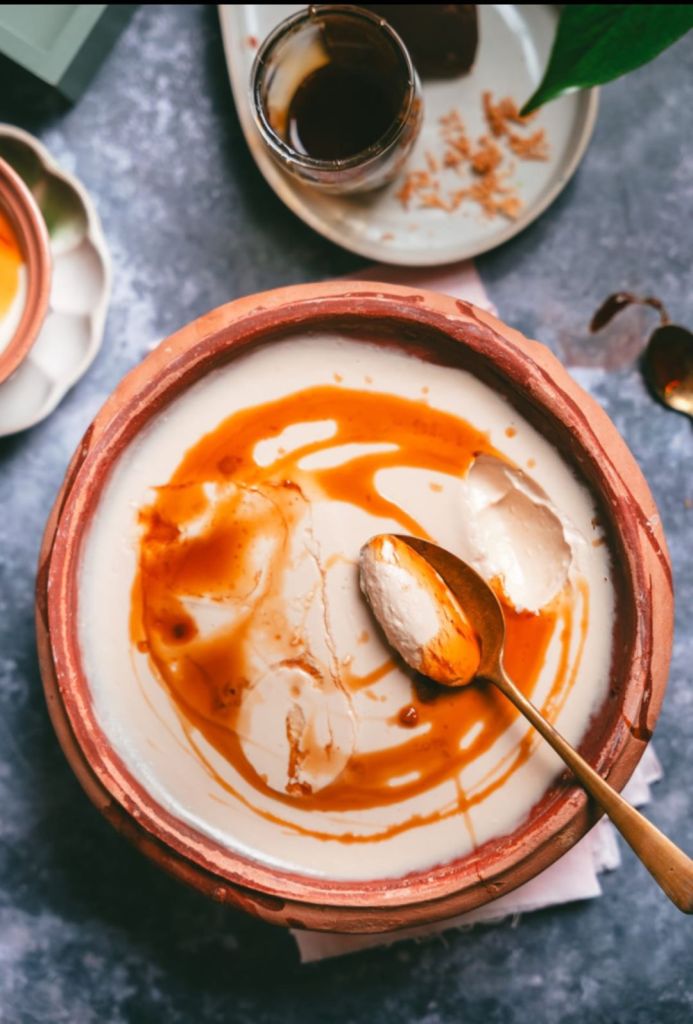
Image: A bowl of creamy mishti doi in a traditional clay pot, drizzled with a swirl of date-palm jaggery. One spoonful of this chilled sweet yogurt instantly transports me back to Durga Puja mornings at my grandparents’ home. In those festive days, the puja lunch always ended with Mishti Doi – its rich, creamy texture and caramel notes felt like a blessing after the feast. In Bengal, this dessert is more than a treat; it’s part of the tradition. No Puja or family gathering is complete without mishti doi – “a must-eat dessert in Durga Puja celebrations” – and each earthen pot of it seems to hold a sweet memory. The yogurt ferments slowly and takes on a pale brown hue, its flavor deepened by the fragrant nolen gur (date palm jaggery) or sugar used, making every bite a soulful taste of home.
Ingredients
Whole milk (full-fat) – 1 liter. Full-fat dairy yields the richest, creamiest texture. (You may add ½ cup cream for extra richness.)
Sweetener: ½–1 cup white sugar or ~1 cup grated nolen gur (date palm jaggery). Nolen gur is harvested in winter and gives a caramel-like aroma and flavor unique to Bengali sweets. (Choose sugar for a more neutral sweetness or nolen gur for an authentic winter twist.)
Yogurt starter (curd culture) – 2–3 tablespoons of plain yogurt. It should be thick and whole-milk; strain it through a cloth to remove excess whey so the mishti doi sets firm.
Optional flavorings: A pinch of saffron strands or ¼ tsp ground cardamom for aroma; chopped pistachios or almonds for garnish. These add a festive color and fragrance but aren’t strictly necessary.
Method
1. Heat and reduce the milk: In a heavy-bottomed pan, pour the milk (and cream if using) and warm it on medium heat. Stir often so the milk doesn’t scorch. Let it simmer for about 5–10 minutes until it reduces slightly and a light layer browns at the bottom. (This gentle reduction caramelizes the milk sugars, deepening the flavor.)
2. Add the sweetener: If using sugar, sprinkle it in and stir until it dissolves; you can allow it to turn a light amber by cooking gently first. If using jaggery (nolen gur), grate or break it into small pieces, add to the milk, and stir over low heat until fully melted. The milk will take on a golden-amber hue.
3. Cool the milk mixture: Remove the pan from heat and let the sweetened milk cool until it is just lukewarm – test with a clean finger to make sure it’s warm but not hot. This step is crucial: if the milk is too hot, it will kill the yogurt cultures.
4. Mix in the yogurt: Place the thick yogurt starter in a bowl and whisk in a few spoonfuls of the warm milk to temper it. Then pour the tempered yogurt into the rest of the milk and whisk gently until completely smooth. The mixture should be even and without lumps.
5. Set in containers: Lightly grease small clay pots (or heavy ramekins) with a bit of ghee or a smear of yogurt. Pour the milk–yogurt mixture into the pots. Cover each pot with a lid or foil, then wrap them in a warm towel or blanket. Leave the pots in a warm, undisturbed spot to ferment. In a warm kitchen, this takes 8–12 hours; if it’s cool, it may take up to 24 hours (you can turn on the oven light or use a warm oven as described in some recipes).
6. Chill and enjoy: Once the yogurt has set and become firm (it will have a caramel color), move the pots to the refrigerator and chill them for a few hours. Chilling stops fermentation and makes the mishti doi extra refreshing. When ready to serve, optionally drizzle a little melted jaggery or sprinkled nuts on top.
Tips for Creamy, Caramel Flavor and Perfect Fermentation
Full-fat milk and thick culture: Always use full-cream milk (or add some cream) for a luxuriously smooth mishti doi. Use a thick yogurt strain (low-fat milk often yields a runny set).
Caramelizing: Let the milk simmer long enough to develop a light brown color on the bottom of the pan. This imparts a natural caramel note even before you add sweetener.
Gentle temperature: Never add yogurt starter to piping-hot milk. Cool the milk to lukewarm (finger-warm) first. This preserves the bacteria so the curd can set.
Strain the yogurt: Drain the starter yogurt through cheesecloth for 30–60 minutes to remove excess liquid. Thicker starter means thicker final mishti doi.
Use earthen pots: Traditional clay pots absorb moisture and keep the mixture at just the right temperature, giving a uniquely earthy aroma and thick texture. If you can’t find clay, glass or ceramic will work.
Be patient: Mishti doi takes longer than plain curd to set. Plan for at least 8–12 hours. In cooler climates, place the pots in a warm spot (or inside the oven with just the light on) to help fermentation.
Serving Suggestions
Image: A garnished serving of mishti doi – creamy sweet yogurt topped with slivered nuts and saffron. Mishti Doi is traditionally enjoyed chilled at the end of a celebratory meal. It’s the perfect finale to a festive Bengali thali or Durga Puja feast. In Bengal, families often exchange clay pots of mishti doi as gifts during Puja, symbolizing sweet blessings. It also makes a lovely cooling summer dessert – a simple spoonful of chilled mishti doi is wonderfully refreshing on a hot day. Serve it plain, or sprinkle with chopped pistachios, rose petals or a pinch of extra saffron. Some modern twists include garnishing with fresh fruits (mango, berries) or a crumble of granola for texture. No matter how you present it, this creamy yogurt brings a sweet, soulful touch to any meal – a testament to Bengal’s rich dessert heritage.

 The Pinch of Masala