Introduction
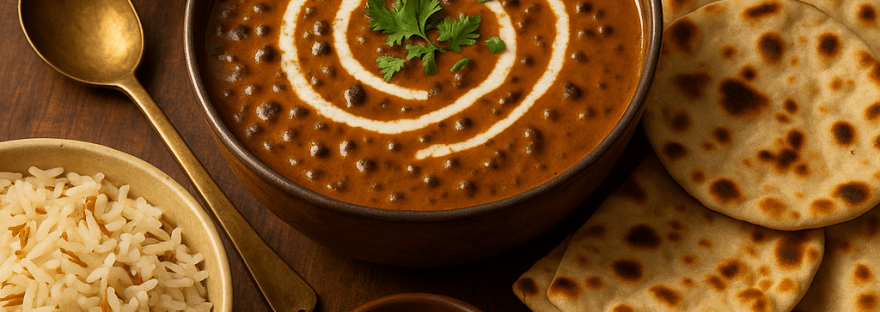
Every Sunday evening, I can still smell my grandmother’s kitchen filled with the rich aroma of butter, garlic, and spices. A big pot of Dal Makhani would be simmering on the stove, its creamy steam promising a hearty, comforting meal. We kids knew it was ready when the bubbling pot slurped gently and she ladled the velvety lentils into bowls. Sitting around the table, passing naan and rice, every bite felt like a warm hug – this slow-cooked black lentil curry was truly food for the soul.
Dal Makhani is renowned in Punjabi cuisine as “a rich, creamy and popular Punjabi dish made with slow-cooked black lentils (urad dal) and kidney beans (rajma), simmered with butter, cream and aromatic spices”. Its very name hints at indulgence – makhani means butter – and indeed “both cream and butter contribute to the richness” of this curry. The result is a luscious, buttery stew that is, as one recipe puts it, almost “bound to be decadent” with its generous dairy and spices. In many North Indian homes, Dal Makhani is considered a “labour of love,” because it’s traditionally left to cook for hours on a gentle flame or over coals until the lentils almost melt into gravy. Legend even credits Delhi’s famous Moti Mahal restaurant for inventing this dish (attributed to Kundan Lal Gujral), but any Punjabi grandmother will tell you the home-cooked version—simply seasoned and slowly simmered—is the true classic. After the long simmer, butter and fresh cream are stirred in to give it that signature thick, creamy finish.
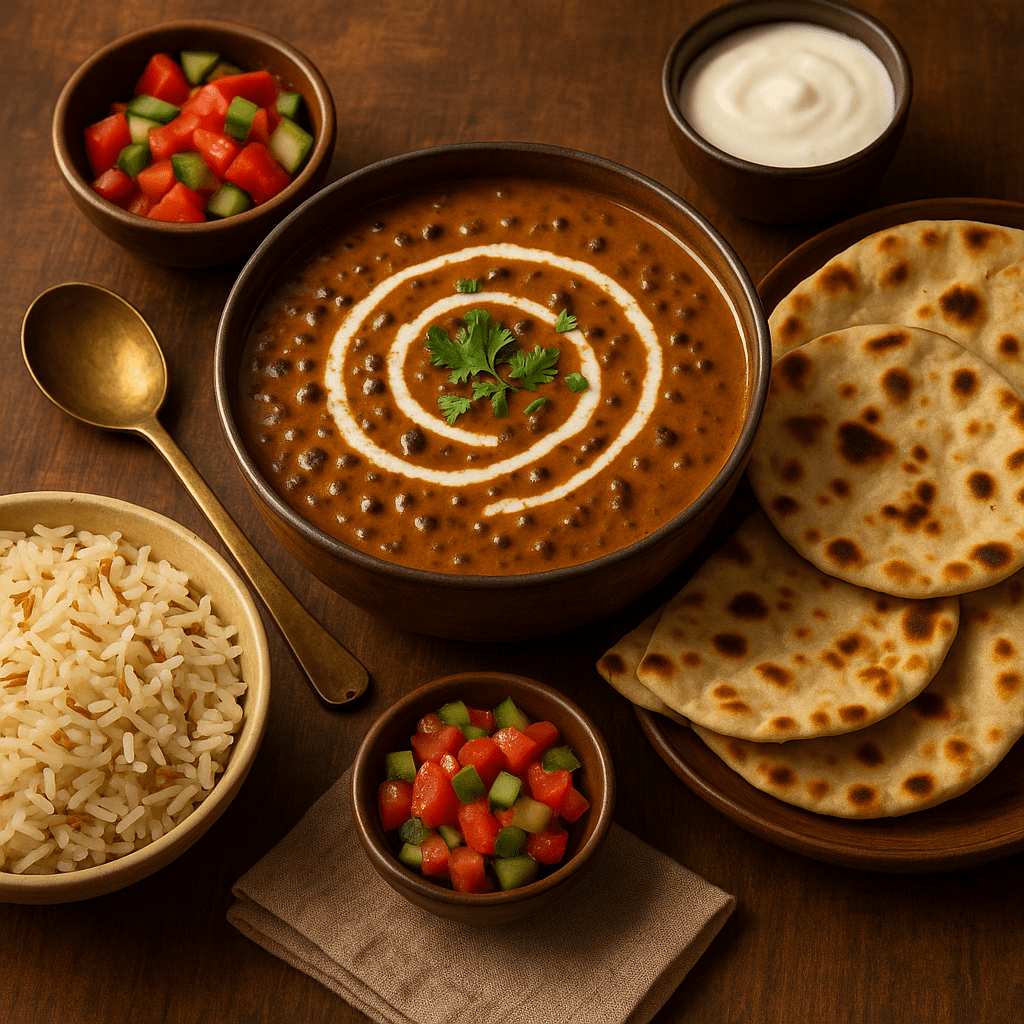
In our family, Dal Makhani always meant we gathered together. We’d serve it piping hot, with plenty of warm, buttered naan or fragrant cumin-spiced rice. The first taste of that creamy dal, draped over a fluffy piece of naan, brings back all those memories of home, warmth, and togetherness.
Ingredients
Whole black urad dal (kali dal): 1 cup (soaked overnight)
Red kidney beans (rajma): ¼ cup (soaked overnight)
Water: about 3 cups (for cooking the lentils)
Ghee or butter: 2–3 tablespoons (plus more for finishing)
Cumin seeds: 1 teaspoon
Whole spices: 2–3 cloves, 2 green cardamoms, 1 black cardamom, 1-inch cinnamon stick, 1 bay leaf (tej patta)
Onion: 1 medium, finely chopped
Green chilies: 1–2, slit (adjust to taste)
Ginger-garlic paste: 1 tablespoon (or freshly grated ginger + garlic)
Tomatoes: 2–3 medium, pureed (or 1 cup tomato puree)
Red chili powder: 1 teaspoon (Kashmiri chili for color, or paprika)
Nutmeg: a pinch, freshly grated (optional, for warmth)
Salt: to taste
Water or stock: 1 cup (to adjust consistency if needed)
Heavy cream: ½ cup (or fresh cream/yogurt, for richness)
Kasuri methi (dried fenugreek leaves): ½ teaspoon, crushed (optional)
Fresh cilantro (coriander): chopped, for garnish
Optional (smoky “dhungar”): 1 small piece charcoal (heated red-hot) and 1 tsp ghee
Method
1. Soak the lentils and beans. In a large bowl, cover the urad dal and rajma with plenty of water. Let them soak for 8–10 hours or overnight. Drain and rinse well before cooking.
2. Cook the dal and rajma. Transfer the drained lentils and beans to a pressure cooker. Add about 3 cups of fresh water and a pinch of salt. Cover and cook on high heat until the cooker whistles about 18–20 times (roughly 30–40 minutes). Then turn off the heat and allow the pressure to release naturally. The lentils should be very soft, almost falling apart – “melt in the mouth” tender.
3. Prepare the spice base (tadka). While the lentils cook, heat 2 tablespoons ghee or butter in a heavy-bottomed pot or deep pan over medium heat. Add the cumin seeds, cloves, green cardamoms, black cardamom, cinnamon stick, and bay leaf. Sauté for 30 seconds until fragrant.
4. Sauté onions and aromatics. Add the chopped onion and green chilies to the pot. Cook until the onion is translucent and just beginning to brown. Stir in the ginger-garlic paste and continue cooking for another minute, until the raw smell goes away.
5. Add tomatoes and spices. Pour in the tomato puree and a splash of water. Season with the red chili powder, a pinch of nutmeg, and salt. Cook the mixture, stirring often, until it thickens and the oil begins to separate from the masala.
6. Combine lentils and simmer. Stir the cooked dal and rajma (with its cooking liquid) into the pot. Add extra water or stock if needed to reach your desired consistency. Bring everything to a gentle boil, then reduce the heat to low. Slow simmer uncovered for 20–30 minutes, stirring occasionally. (As one chef notes, *“the more you slow cook it, the better it tastes.”*) This slow cooking helps the dal become creamy and develop a rich flavor.
7. Finish with dairy. Mash a few lentils against the side of the pot to naturally thicken the sauce. Stir in the heavy cream and mix well. Add a knob of butter or a splash of more ghee. Sprinkle in the crushed kasuri methi for a fragrant boost and adjust salt or spices to taste.
8. Optional smoke (dhungar). For the classic smoky aroma, light a piece of charcoal over an open flame until it glows. Carefully place it in a small metal cup or foil in the center of the pot, pour 1 teaspoon ghee over the hot coal, and immediately cover the pot for 2–3 minutes. The resulting smoke will infuse the dal with that restaurant-style smokiness. (Only do this if you’re comfortable with it and watch safety closely.)
9. Garnish and serve. Remove the whole spices if desired. Garnish the Dal Makhani with chopped cilantro and a drizzle of cream. Serve it hot as the star of a family dinner.
Suggested Accompaniments
Soft, buttery naan or garlic naan: Perfect for scooping up every last bit of dal.
Jeera (cumin) rice: Fragrant basmati rice tempered with cumin seeds complements the rich dal.
Roti or paratha: Warm flatbreads are also wonderful if you prefer.
Fresh salad or raita: A simple kachumber salad (chopped cucumber, tomato, onion with lemon) or cool yogurt raita balances the richness.
Pickles and lemon: Mango pickle, mixed achar or lemon wedges add a tangy punch.
Papadums (papads): Crispy lentil crackers make a nice crunchy side.

 The Pinch of Masala